





 Portuguese
  English
  Spanish
  5 min of reading
  0 comments


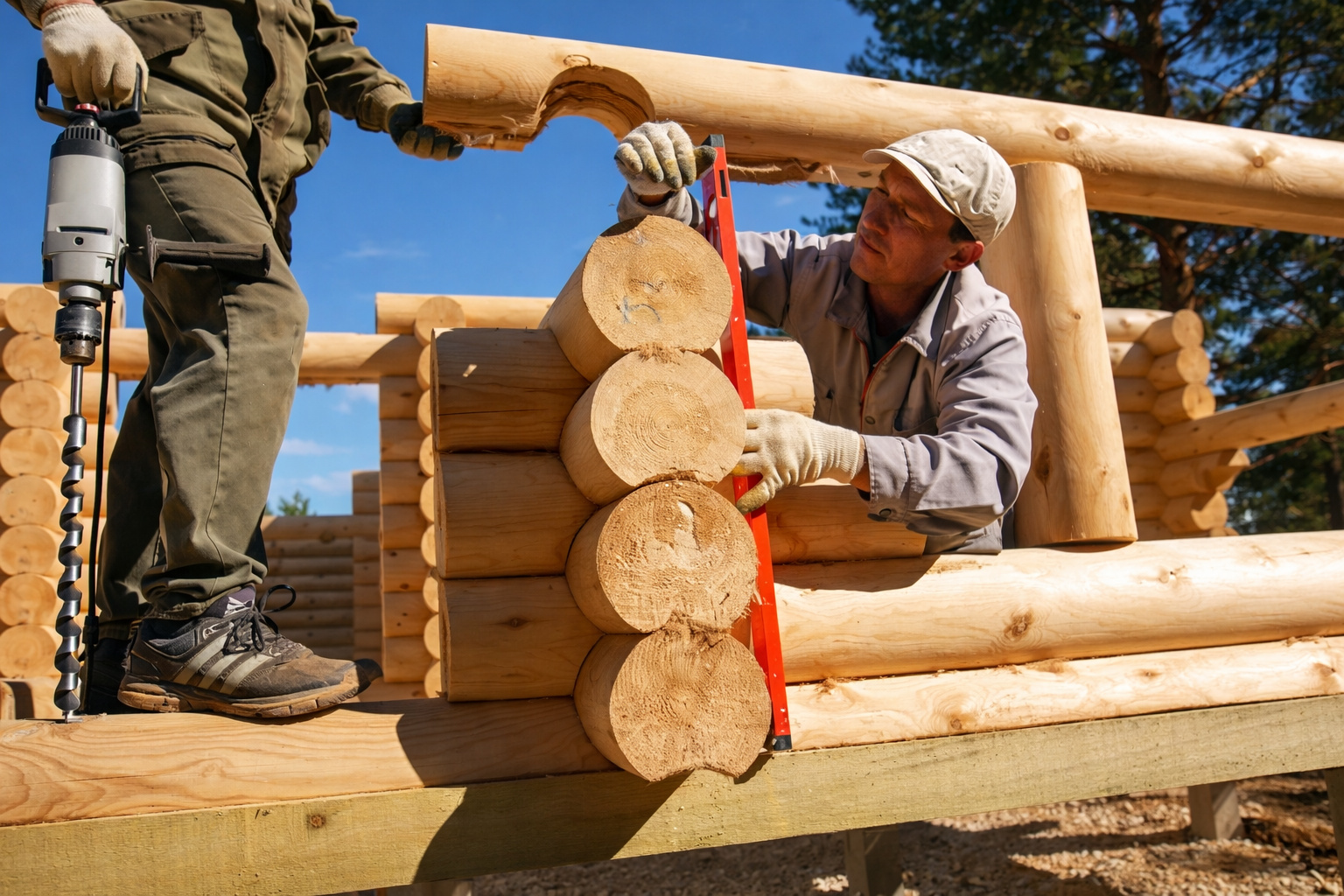
Group Of Workers Assembles A Complete Structure Using Solid Wood Logs, And The Perfect Fit Between Heavy Pieces Attracts The Attention Of Structural Engineering Experts
The workers carrying heavy pieces of wood logs portray a scene that seems simple at first. But in a few moments, it becomes clear that something unusual is happening there. They are assembling an entire house with a unique technique. No Conventional Walls. Each log is cut, adjusted, and placed exactly in the right spot.
What is truly impressive is the perfect fit between the pieces. The logs settle on top of one another with a precision that transforms raw trunks into a solid structure.


According to experts in construction with solid wood, this type of technique demonstrates how well-made cuts can create extremely stable structures even without complex building systems.
-
With 15 floors, an unusual building in Curitiba uses concrete, pilasters, and exposed roofs to create the effect of stacked houses.

-
Archaeologists opened a secret chamber that had been sealed by sand for 40,000 years inside a cave in Gibraltar and found what may be the last place where Neanderthals lived before disappearing from Europe forever.

-
The water that may have gone to the Moon with NASA during the Apollo 11 mission and been consumed by the astronauts springs in a Brazilian city at an altitude of 945 meters, famous for its thermal springs, above-average quality of life, and a natural radioactivity so unusual that it attracted Marie Curie.

-
In 200 days, a Finnish man builds with his own hands an 11-meter boat powered by solar energy with “infinite autonomy,” capable of dispensing with refueling and already used as a floating house.


The Beginning Of The Construction Reveals How Workers Transform A Simple Lot Into The Base Of A Log House
Before the logs come into play, the workers begin by preparing the ground. A layer of light gravel covers the soil, and several aligned concrete pillars emerge in the space.
These pillars create an elevated base for the structure. Soon after, solid wood beams are carefully positioned on metal supports atop the columns.
The work requires physical effort. The pieces are heavy and need to be moved with precision to achieve the correct alignment.
When all the beams are installed, the construction gains a kind of structural platform. It is there that the work with logs truly begins.
Metal Brackets And Screws Show That The Perfect Fit Technique Also Depends On Structural Reinforcement
Once the base is ready, the workers move on to another important phase. At various points in the structure, perforated metal brackets appear.
With an electric drill, they install metal screws that connect the wood beams.
Each tightened screw eliminates small gaps between the pieces and transforms the beams into a rigid assembly.
According to experts in wood engineering, this step ensures that the base can support the weight of the logs that will be stacked soon after.
Before Stacking, The Workers Prepare Each Piece To Ensure The Perfect Fit Of The Logs
Before they go up to the structure, each log receives manual treatment. Some surfaces are adjusted with a metal hand planer, removing any irregularities.
At other times, a long-blade chainsaw comes into action, responsible for making straight cuts or small recesses in the wood.
These adjustments may seem simple, but they are crucial. They create contact points that allow for the perfect fit between the logs.
During this process, the ground becomes covered with sawdust and wood chips. It is a clear sign that each piece is being shaped to fit with the others.
A Detail Among The Logs Reveals A Little-Known Secret Of The Construction Technique
When stacking begins, an element that often goes unnoticed by many appears. Before placing the next log, the workers spread a layer of light fibrous material over the wood.
This strip runs along the entire length of the lower piece.
Then, another log is positioned on top. The weight of the wood presses the material and helps fill small gaps between the surfaces.
After the perfect fit occurs, part of this fiber remains visible on the edges of the logs.
A Tool With A Helical Drill Shows How Workers Reinforce The Structure Alignment
Another moment catches attention during the assembly. A tool equipped with a long helical drill appears, used to drill into the logs vertically.
The metal tip spins and penetrates the upper piece until it reaches the log just below.
Meanwhile, wood shavings begin to appear around the drilled point.
This type of drilling helps keep the wood logs aligned and reinforces the wall’s stability.
The Stacking Of The Logs Reveals A Construction Taking Shape Before The Eyes
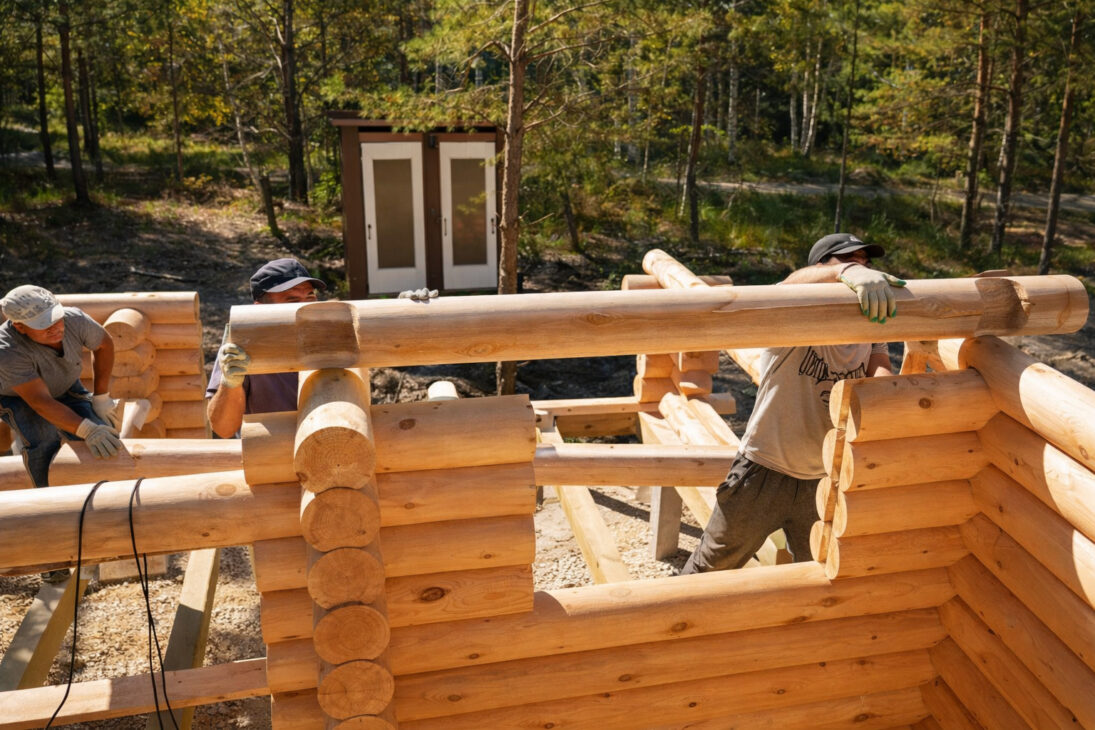
After being prepared and drilled, the logs then begin to rise quickly. The workers lift each piece and position it on top of the previous one.
Layer by layer, the wall grows. Gradually, rectangular openings appear, indicating space for doors and windows.
Each new log must then find exactly the correct position. When the perfect fit occurs, the piece simply accommodates itself in place.

In the end, the result captures the attention even of those who do not understand engineering. The walls made of wood logs form a solid and visually stunning structure.
Experts in wood construction emphasize that this type of technique is still valued precisely for its simplicity. Carefully worked trunks, straightforward tools, and a lot of precision are enough to create an entire house.
The final result is hard to ignore. A robust structure, made solely with stacked logs, that transforms raw wood into a construction that many describe as simply gorgeous.
If you have seen constructions made with wood logs or believe this technique can still find its place in modern engineering, leave your opinion in the comments and share it with anyone who enjoys engineering and construction.







-

2 pessoas reagiram a isso.