





 Portuguese
  English
  Spanish
  7 min of reading
  9 comments


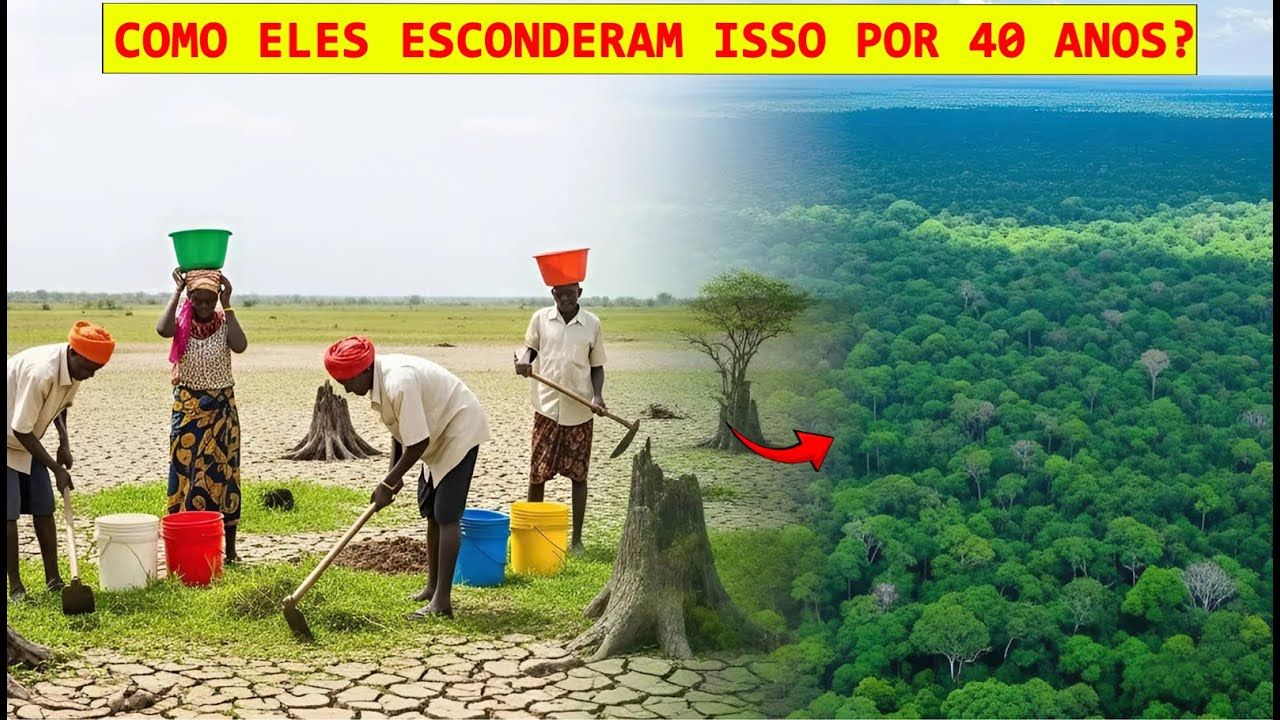


Billions in Seedlings Went Wrong, but Tanzania Discovered a “Subterranean Forest” and Uses Ancient Roots to Turn Deserts into Forests Without Planting a Single Tree
Billions of dollars have already been invested in reforestation campaigns in Africa. Millions of seedlings have been planted, but in many places the result has been virtually zero. In extremely dry regions, such as parts of Tanzania, the survival rate of trees barely reached 20 percent. Even with good slogans and grand promises, the plantations died a few months later. It is in this context of frustration that a radical idea emerges: to turn deserts into forests without planting a single tree, using what is already hidden beneath the ground.
Instead of insisting on new vulnerable seedlings, farmers and technicians began to look at the soil differently. Just below the surface, there exists a kind of subterranean forest, made of roots and ancient trunks still alive, waiting for an opportunity to sprout again.
From this discovery, Tanzania adopted a regeneration technique that allows for the transformation of degraded areas into dense forests, reducing costs, increasing productivity, and offering a real path for environmental recovery.
-
It looks like a movie scene: “Forgotten” Brazilian city surprises with a waterfront of nearly 11 km, tranquil beaches, and a GDP that exceeds R$ 6 billion; meet Navegantes, in Santa Catarina.

-
Milei’s government launches surprise police operations on the streets of Argentina to hunt undocumented immigrants, but the government’s own data reveals that only 4% were irregular. Critics say it is a copy of Trump’s policy without real necessity.

-
Indonesia is the largest producer of tropical seaweed in the world, and this market is already worth billions of dollars, but 90% of the production goes directly to China as raw material. Now the country wants to change the game and process everything on its own.

-
This extremely contagious virus has already affected 90% of the population of Brazil and has no cure.

The Failure of Mass Planting in Africa
For years, the most common response to environmental degradation was to plant seedlings in large campaigns. The reasoning seemed simple: the more trees planted, the better. In practice, however, the reality for African farmers was different. In places like Dodoma, in central Tanzania, the soil is hard, the sun is intense, and water is scarce.
A fragile seedling was planted in a hostile environment that required constant watering, shading, and daily care.
For those who need to walk many kilometers a day just to fetch water for their family, spending that limited resource on hundreds of seedlings was simply unfeasible. Trucks filled with plants arrived, photos were taken, technicians left, and, a few months later, what remained were dry branches.
In addition, traditional practices reinforced the problem. Many farmers believed that a “clean” field was a field without trees, only with the main crops.
Everything that sprouted was cut or burned to prepare the soil. Unbeknownst to them, the residents themselves were destroying the layer of protection that could keep moisture, hold nutrients, and prevent soil hardening. The desert advanced, productivity fell, and the cycle of poverty and degradation seemed hopeless.
The Discovery of the Subterranean Forest
The change in direction begins with a simple observation, originally made in another African region, but which would become crucial for Tanzania. While crossing an apparently empty area, an agronomist noticed a bush that everyone treated as a weed.
Looking closely, he realized that this small sprout was not just any plant: it was the shoot of a subterranean trunk of an ancient tree, which remained alive beneath the ground.
In many locations, native trees had been cut down over the decades, but their roots remained. Adapted to extreme climates, these species developed deep root systems capable of seeking water at great depths and storing energy for years.
What appeared to be just a sparse bush was, in fact, the visible tip of a subterranean forest ready to regrow.
This perception changes everything. Instead of spending resources bringing in new fragile seedlings, the idea becomes to harness the natural regeneration of the trees that were already there, using the strength of the ancient roots. The technique is named FMNR, farmer-managed natural regeneration, and in Tanzania, it is known as “Kisiki Hai,” which can be translated as “living trunk.”
How Farmer-Managed Natural Regeneration Works
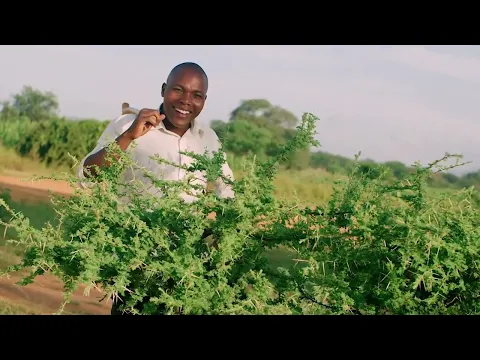

The principle of natural regeneration is simple: instead of pulling out the shrubs that emerge in the field, the farmer begins to select, prune, and protect them so that they become trees again. Behind this simplicity, there is a powerful biological mechanism.
When a tree is cut, the trunk disappears from the surface, but the roots continue to store water and nutrients. Without management, dozens of weak shoots emerge simultaneously, competing for light and energy. The plant remains low, appearing just like a bush.
The Kisiki Hai technique does the opposite of what was done before. The farmer observes the bush, chooses two or three of the strongest and straightest shoots, and removes the others. With proper pruning, all the energy accumulated in the root system is directed towards a few trunks, which grow at an impressive speed.
The result is that a tree regenerated from this living trunk can reach several meters in height in a short time, something that a newly planted seedling would take years to achieve. There is no need to buy seedlings or set up expensive irrigation systems.
Costs are reduced to simple tools and training for rural families. This is a form of low-cost regenerative agriculture based on knowledge and management, not on expensive inputs.
Tanzania: From Forest Loss to Recovery of Hundreds of Thousands of Hectares
By 2025, the pressure from climate change on Africa was enormous, and Tanzania was losing nearly half a million hectares of forest per year. With the adoption of natural regeneration and Kisiki Hai, this trend started to change.
More than 500 thousand hectares of previously degraded areas have been restored in regions like Dodoma and Singida, with formerly dry fields turning green again.
The process was not immediate. At first, many farmers were skeptical of the idea. There was fear that the shade from the trees would reduce grain production or attract birds that would eat the seeds. It took some pioneers to test the technique and show the results in practice.
Over time, entire communities began to experiment with natural regeneration, supported by local organizations that provided information, training, and even itinerant cinema sessions to explain the benefits.
As the first fields managed with Kisiki Hai fared better through the dry season, neighbors began to notice the difference. Where there were no trees, crops dried up quickly. Where natural regeneration was applied, the soil retained more moisture, plants fared better, and productivity increased.
In this way, trust spread and deserts into forests without planting a single tree ceased to be just an audacious idea and became a concrete experience in the daily lives of the villages.
Benefits for Soil, Water, Productivity, and Quality of Life
The impacts of natural regeneration go far beyond a greener landscape. The shade from the trees reduces soil temperature, helping to retain moisture and protecting crops from direct sunlight.
The falling leaves form a layer of organic matter that returns nutrients to the soil, reducing the need for purchased fertilizers.
With the soil more porous thanks to the roots, rainwater infiltrates instead of running off the surface. This decreases the risk of flooding and increases the recharge of underground reserves.
Wells that used to dry up during the summer now keep water longer, completely changing the daily routines of families.
There is also a direct effect on quality of life. Previously, women and children walked long distances to collect firewood from increasingly distant areas. With regenerated trees near homes and fields, it is possible to gather firewood through pruning, without cutting down the trunk. The time saved can be used for studying, working, or caring for the family.
Biodiversity also responds: birds return, bringing seeds of other species, pollinating insects reappear, and some communities begin to raise bees in the restored areas, generating a new source of income.
Deserts into Forests Without Planting a Single Tree as a Response to Climate and Economy
As the technique spread throughout Africa, natural regeneration began to be seen as an important tool in addressing climate change. Continental initiatives, such as projects aimed at halting the advance of large deserts, began to view this approach as one of the pillars for cheaply rehabilitating arid areas.
Studies and estimates indicate that if adopted on a large scale in dry zones, the technique could restore millions of hectares of tree cover and help absorb large quantities of carbon dioxide each year.
All of this without relying on complex technologies, just with the intelligent use of the subterranean forest and regenerative agriculture practiced by communities.
With the popularization of carbon credits in 2025, the impact became even more visible for Tanzanian farmers.
They not only recovered their lands and began to live in areas that once seemed like deserts turned into forests without planting a single tree, but also started generating income by preserving these green areas.
Large organizations began to compensate communities that maintain and expand forest cover, making the standing tree more valuable than the felled one.
The Lesson from Tanzania for the World
The story of Tanzania shows that the solution to some of the planet’s greatest environmental challenges may be closer than we imagine.
Often, humanity bets on large projects, sophisticated machines, and impressive campaigns, without realizing that nature already offers powerful mechanisms for regeneration.
The idea of turning deserts into forests without planting a single tree is not magical; it is the recognition that the soil holds memory and energy in its ancient roots.
When farmers, technicians, and communities begin to see these living trunks as allies, the entire logic of management changes. Instead of fighting against nature, humans begin to work with it.
In the end, the central message is simple: before trying to impose external solutions, it is worth looking at what already exists beneath our feet. In many places, life does not need to be imported in truckloads of seedlings; it just needs to be awakened.
In your opinion, does Tanzania’s experience show that techniques such as natural regeneration can be sufficient to transform other dry regions of the world into forests without planting a single tree?







Yes it does. FMNR is already working in Mali and other countries in the Sahel region.
Hi which organisations can I contact so as to get carbon credit information. Am a tree farmer in Kenya
Brilliant