





 Portuguese
  English
  Spanish
  4 min of reading
  0 comments


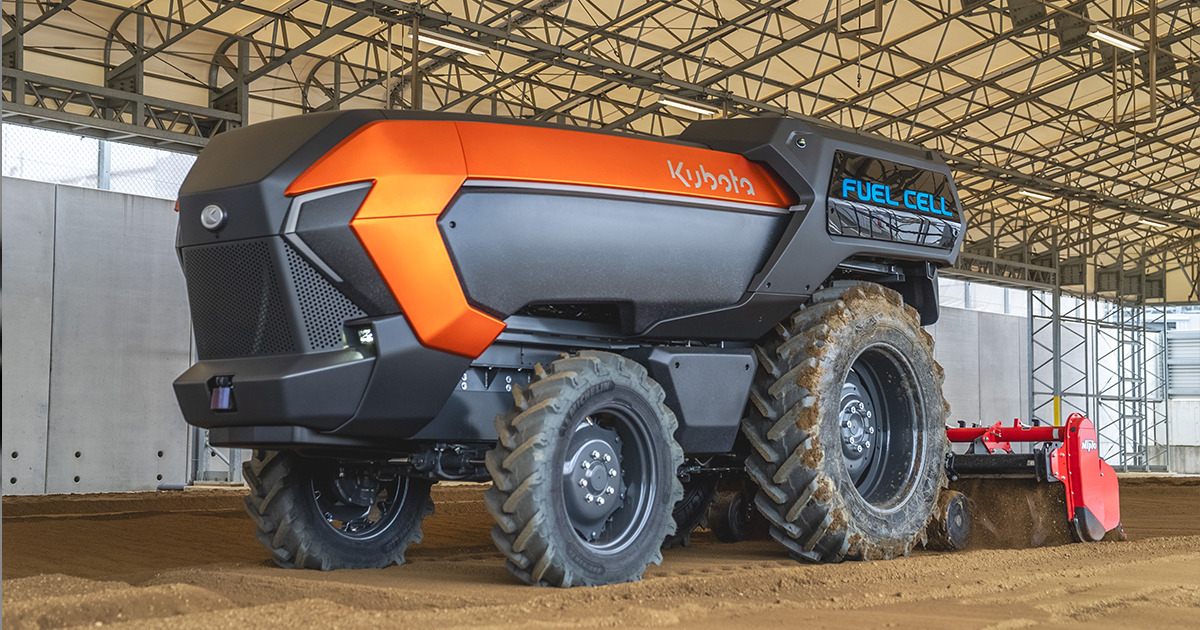
Hydrogen-Powered Autonomous Tractor Made From Manure Eliminates Diesel Use and Begins a New Era of Sustainability and Automation in Farming.
Imagine a tractor that doesn’t rely on diesel, doesn’t emit smoke, and can be operated remotely—a farming machine that turns manure into fuel to move crops. This is no longer science fiction. In October 2025, the Japanese manufacturer Kubota unveiled an autonomous tractor with a hydrogen fuel cell, whose energy can be generated locally from waste produced on the farm.
This innovation has the potential to forever change the way agriculture is done: less dependence on fossil fuels, more sustainable operations, and drastically reduced environmental impact.
From Farm to Tomorrow’s Motorization
The project was officially revealed on October 10, 2025, during CES 2025, and caused a significant stir in the technology and agricultural sectors. Kubota describes this machine as the first hydrogen-powered autonomous tractor, combining electric propulsion, fuel cell technology, and remote and autonomous control systems.
-
A French brand placed a car on four huge red balloons to prove that its suspension made the vehicle “float,” and the surreal scene became one of the most iconic and unusual images in automotive history.

-
Jeep Avenger begins production in Brazil, debuting as the brand’s new entry-level SUV and inaugurating an unprecedented phase by becoming the first national Jeep manufactured outside of Goiana, as part of a R$ 3 billion plan.
-
Costing R$ 12,490, the new Shineray Urban Lite 150 “cheap one” arrives in Brazil with a CVT transmission, digital dashboard, and LED lights, making it more affordable than the Biz and targeting those who want to abandon the bus.

-
Ducati brings to Brazil the Superleggera V4 Centenario: 228 hp that become 247 with a track kit, carbon fiber and carbon-ceramic brakes, estimated price between R$ 1.5 and 2 million, deliveries only in 2027.

The most impressive feature is that hydrogen can be produced on the farm itself, from organic waste such as manure, crop remnants, and other biodegradable materials—creating a local energy cycle.
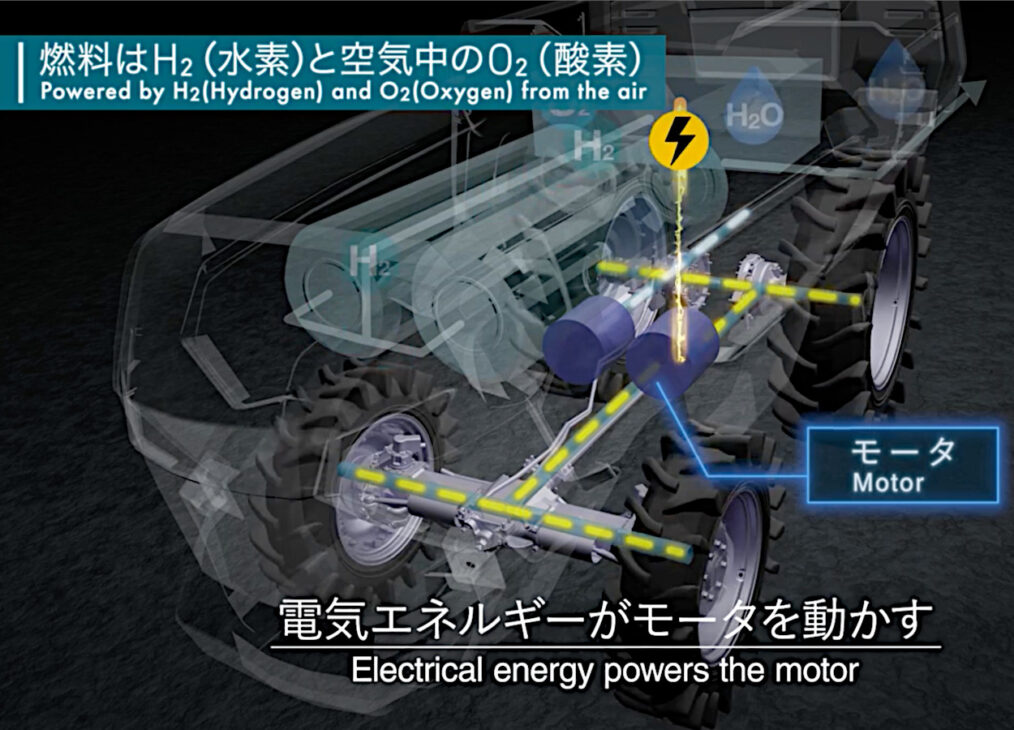
Instead of relying on the electrical grid or external fuels, farmers could generate part of the fuel directly on their land, closing the energy cycle and reducing operational costs.
How It Works: Technology Behind the Tractor
The system is based on the use of organic waste (manure, plant residues, and biomass) to generate methane gas, which undergoes conversion and purification processes to become hydrogen. This gas is then stored in pressurized tanks, ready to be used in the tractor’s fuel cell.
This proposal inserts the tractor into a circular energy economy, where agricultural production waste is no longer trash but becomes the fuel that powers the farm itself.
Fuel Cell and Electric Motor
Unlike conventional tractors, which rely on combustion engines and diesel, this machine uses a fuel cell capable of converting hydrogen into clean and continuous electrical energy. The electricity generated powers highly efficient electric motors, allowing the tractor to move without any emission of polluting gases.
During operation, the only “waste” emitted is water vapor. This completely eliminates carbon dioxide (CO₂) and other emissions typical of fossil fuel combustion.
Autonomy and Remote Control
The tractor also represents an advancement in agricultural automation. Equipped with sensors, cameras, and navigation intelligence, it can be controlled remotely or operate fully autonomously.
The farmer can program work routes and monitor all operations via a tablet or control station. The system can detect obstacles, adjust speed, and correct its path in real-time, even on uneven terrain.
Why This Could Revolutionize Farming
In many agricultural regions, the cost of diesel is one of the major expense factors for producers. With the ability to generate hydrogen locally, using renewable resources, this tractor can eliminate much of the external fuel dependence, reducing costs and logistical risks.
The energy transition in agriculture is one of the major global challenges. By eliminating diesel use, this technology drastically reduces the carbon footprint of agricultural operations, contributing to decarbonization goals and sustainable production practices.
Overcoming the Limitations of Electric Tractors
Fully electric tractors face limitations related to autonomy and the need for constant recharging.
The fuel cell system offers a more efficient alternative, with quick recharging and extended autonomy, without compromising performance on large rural properties.
Solution to Labor Shortages
Agriculture is facing a growing problem of a lack of skilled workers. Automation and remote control allow a single operator to manage multiple machines simultaneously, increasing productivity and decreasing dependence on human labor.
A New Paradigm in Sustainable Agriculture
Kubota’s tractor symbolizes the convergence of innovation, sustainability, and automation. It is not just a machine, but a mobile laboratory capable of demonstrating how agriculture can evolve without depending on oil, without increasing emissions, and with intelligent use of local resources.
This vision of a closed cycle, where manure feeds the farm’s energy system, could serve as a model for other industries, paving the way for a green revolution in livestock farming and the sugar-alcohol sector.
Current Situation and Next Steps
As of October 2025, the tractor is still in the testing and demonstration phase, with no official commercialization date. Kubota plans to conduct pilot programs on experimental farms in Japan and the United States before starting mass production.
The company emphasized that the goal is to prove the economic viability of the system, reducing costs and ensuring operational safety. There are also plans for partnerships with universities and research centers to improve hydrogen generation on a small scale.
If successful, the project could usher in a new era of agricultural mechanization, where tractors cease to pollute and operate with clean energy generated on the farm itself. The future of agriculture may be closer to a self-sufficient energy farm—and the fuel for this revolution may very well come from what was once merely manure.










-

Uma pessoa reagiu a isso.