





 Portuguese
  English
  Spanish
  4 min of reading
  0 comments


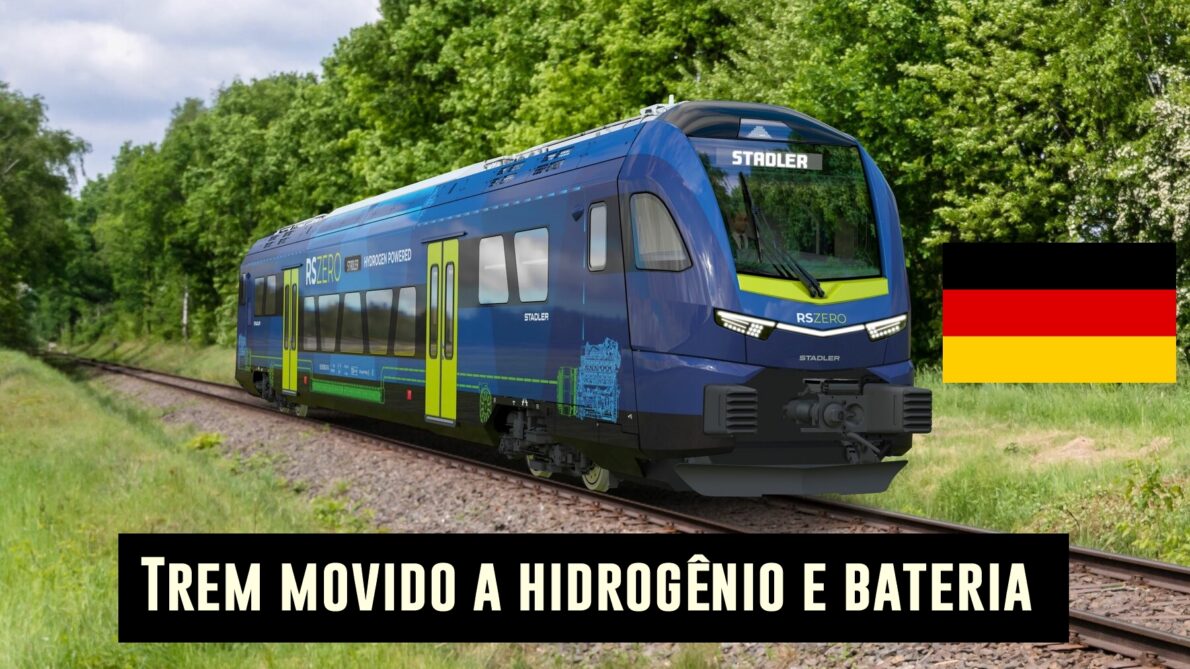
Rail Innovation: German Company Launches The First Hydrogen And Battery-Powered Electric Train, Promising To Drastically Cut CO2 Emissions And Revolutionize Sustainable Transport
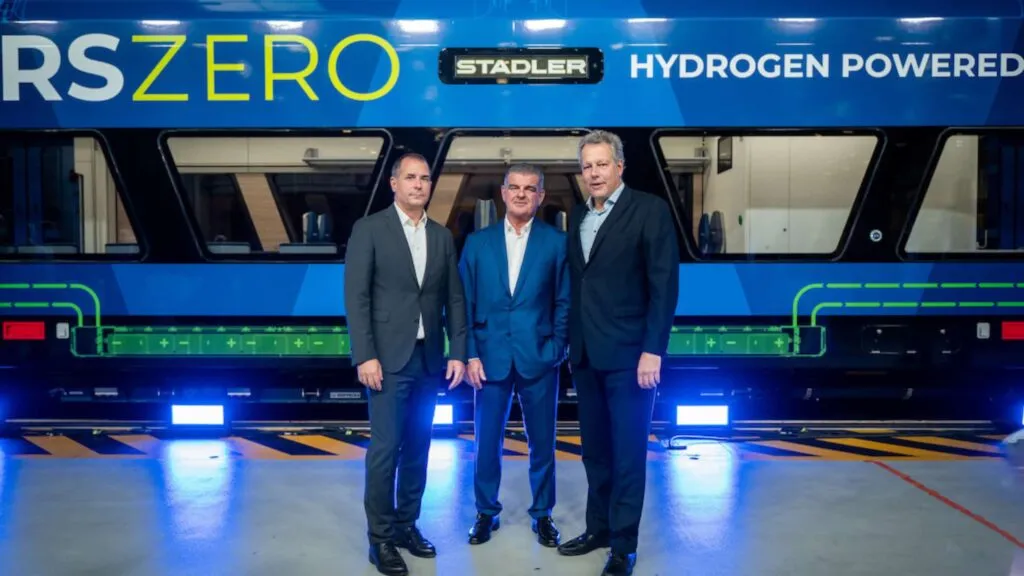
The German company Stadler Rail announced an innovation in the railway sector by introducing the world’s first electric train powered simultaneously by hydrogen and battery. This novelty comes just a few months after the company broke the Guinness world record with its hydrogen-powered train, the Flirt H2, which traveled 2,803 km on a single tank of fuel.
Now, Stadler raises the bar even further with the creation of the RS Zero, a train that promises to redefine rail transport with its proposal of zero emissions of CO2.
The RS Zero has been designed to meet the growing demand for sustainable alternatives in the transport sector, especially in areas where the electrification of railway lines is limited. Currently, around 38% of railway lines in Germany are still not electrified, making this solution particularly attractive for railway operators who rely on branches and feeder lines.
-
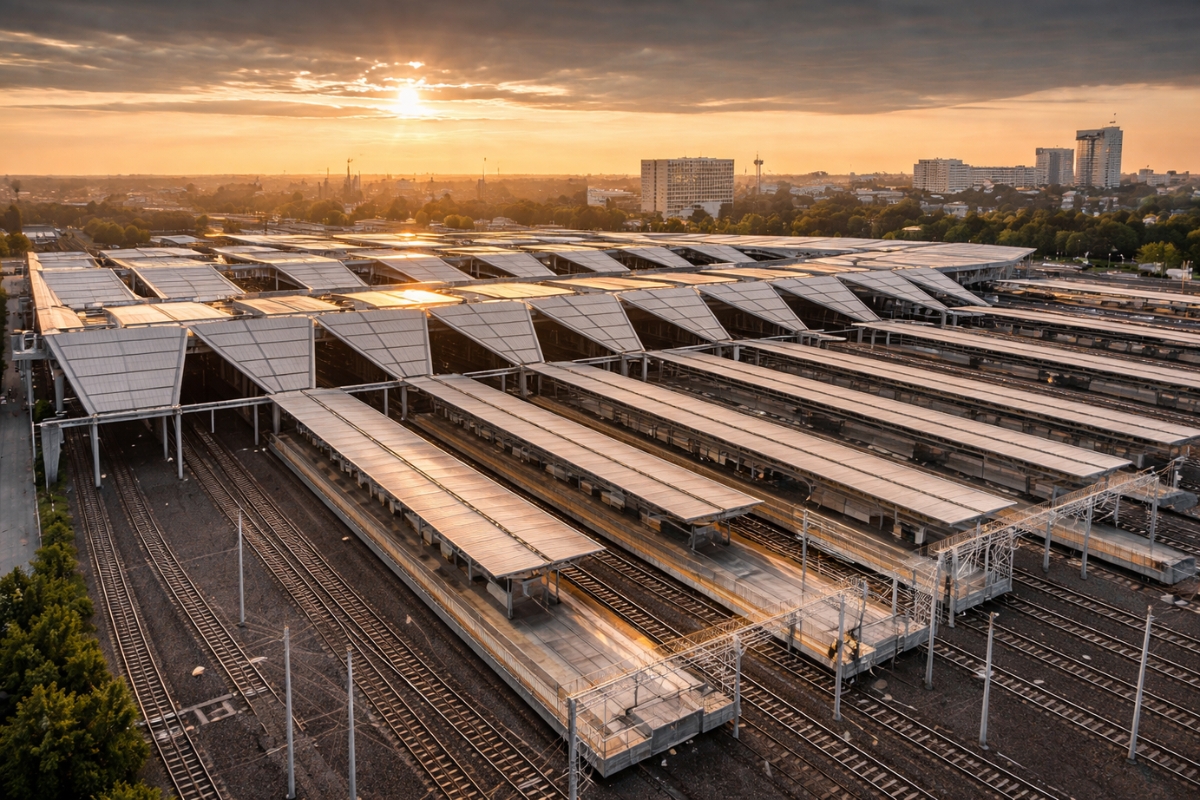
In A European City, The Country’s Largest Railway Junction Was Modernized Without Closing Its Doors, Kept Trains Running During Years Of Construction, Now Serves Up To 60,000 Passengers Per Day, And Installed Solar Panels That Generate About 30% Of Its Energy
-
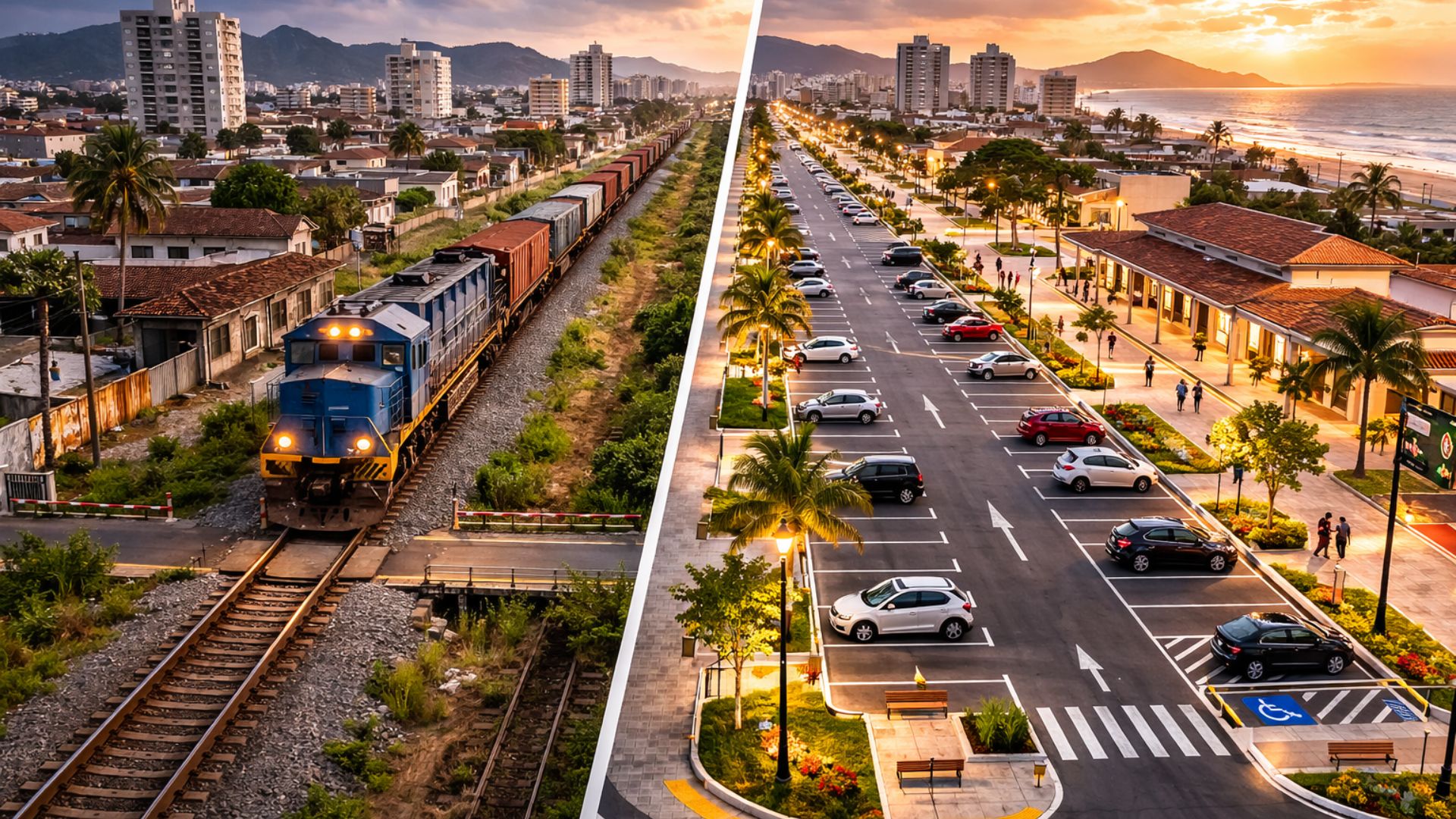
Famous Brazilian Railway May Become a Parking Lot
-
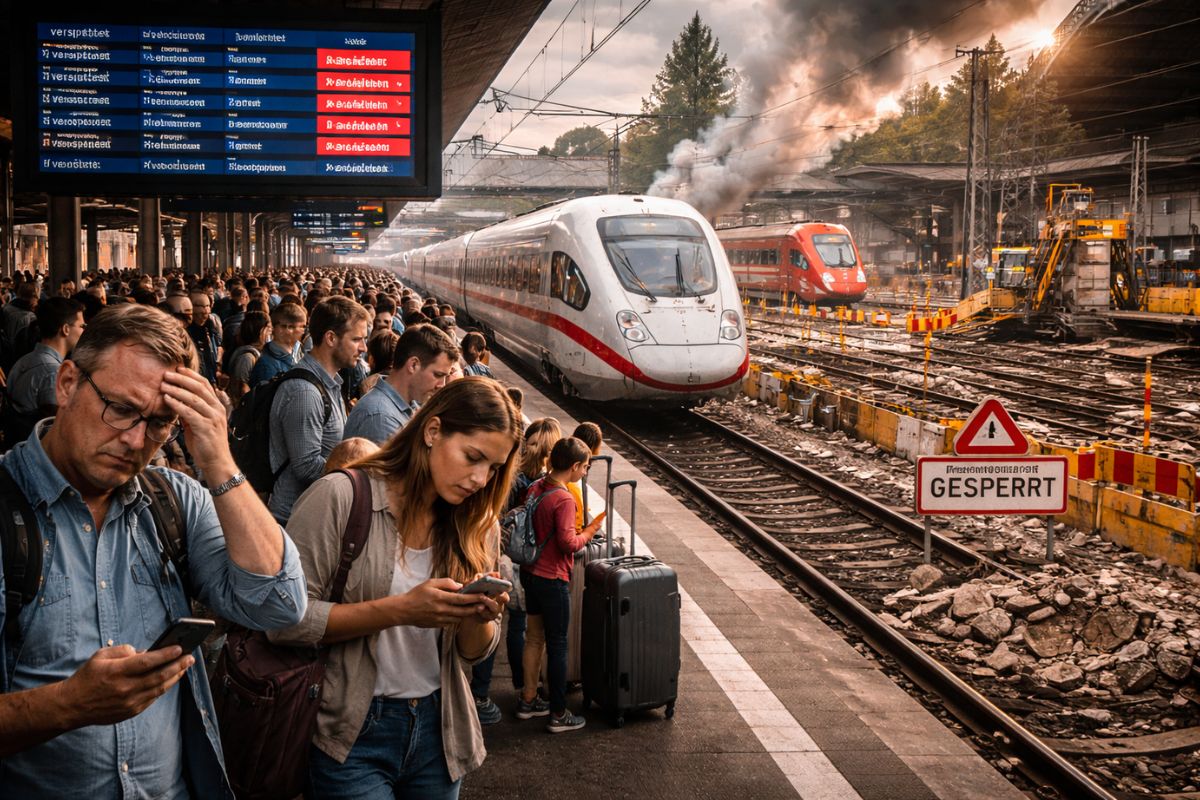
The Country of “Punctual As a Train” Admits It Has Lost Control: High-Speed Trains Delay, Stop, Disappear from the Map and Turn 6-Hour Trips into 10, While Deutsche Bahn Promises Restructuring in 2026 But Faces 19th Century Infrastructure, Staff Shortages and Sections Closed for Months
-
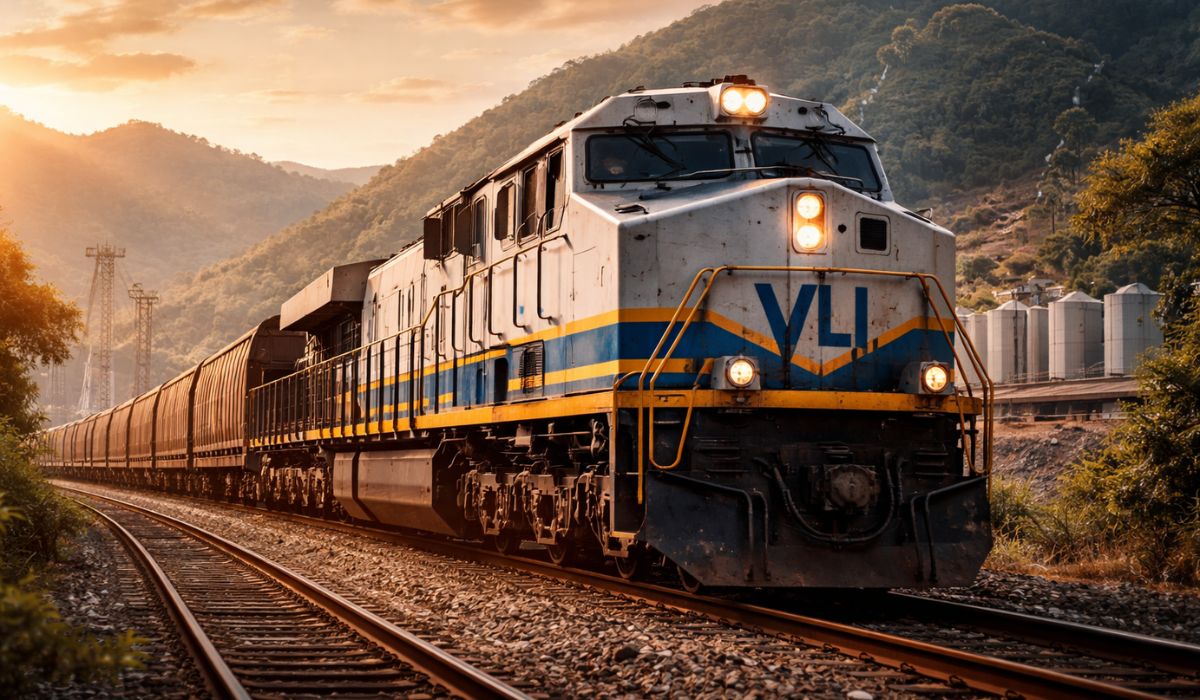
With an Investment of R$ 700 Million in One of the Country’s Main Rail Networks, VLI Reinforces Infrastructure, Receives 8 New Locomotives, and Expands the Corridor Connecting 7 States, Boosting Jobs and the Transportation of Grains, Ore, and Oil Products to the Port of Santos

The electric train can operate using both electric power and hydrogen, or a combination of both, adapting to different operational needs.
The Legacy of RS1 And The Evolution to RS Zero
Stadler Rail has a remarkable history in the development of innovative trains. Since 1996, the RS1 Railbus, one of the most iconic models in Europe, has been operating on the railways of Germany and the Czech Republic.
Characterized by its bold design, with trapezoidal window panels and an aesthetic reminiscent of bridge design, the RS1 was one of the first next-generation diesel trains, making a significant mark on the railway landscape. Currently, there are about 500 of these trains in operation.
However, many RS1 trains are nearing the end of their useful lives, and the transition to the RS Zero represents a crucial upgrade in terms of sustainability and technology. The new model, besides being zero emissions, incorporates innovations in design and operation, including the ability to switch between electric power and hydrogen, solidifying its place as one of the most modern electric trains.
Versatility And Energy Efficiency Of The Electric Train
The RS Zero is a direct response to the needs of railway operators working on secondary routes. Thanks to its lightweight and efficient design, it is ideal for branches connecting to main railway tracks, offering a sustainable and cost-effective operation.
A single hydrogen-powered carriage can travel up to 700 km, while the configuration with two carriages reaches 1,000 km. The battery-powered models, on the other hand, have a shorter range, with a single carriage reaching 80-100 km and a double configuration traveling up to 180 km.
Moreover, the RS Zero electric train achieves a maximum speed of 120 km/h, providing flexibility for railway operators to choose the configuration that best meets their needs.
The ability to switch between hydrogen and electric power also enables more economical and sustainable operation in partially electrified regions, where the train can use overhead wires for power.

Comfort And Accessibility
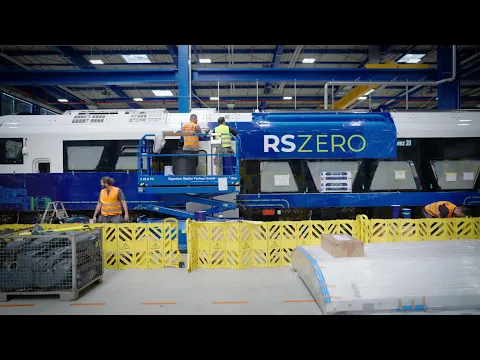
In addition to its technical performance, the RS Zero has been designed with a focus on the comfort and accessibility of passengers. With a low entry height and step-free floor, the electric train facilitates boarding for people with reduced mobility. There is also a multi-purpose area intended for the transport of bicycles and other bulky items, aligning with Stadler’s philosophy of promoting flexible use of space in carriages. The company is known for its foldable seating system, which can be adjusted to accommodate more bicycles as needed.
In terms of sustainability, the electric train upholds Stadler’s environmental commitment. The internal floor is made from 98% materials sourced from renewable energies, while the side walls are manufactured from recycled materials, including PET bottles. The train’s climate control system also uses an eco-friendly refrigerant, reinforcing the company’s commitment to environmental preservation.
Innovation On Display
The hydrogen-powered prototype of the RS Zero will be showcased at the InnoTrans 2024 convention in Berlin later this month. This international event is known for bringing together the leading innovations in the railway sector, and the RS Zero is sure to be at the center of attention, highlighting itself as a major milestone in the transition to more sustainable and efficient rail transport.
With this new line of electric trains, Stadler not only reaffirms its leadership position in railway innovation but also contributes to reducing greenhouse gas emissions in the sector, providing a practical and viable solution for transport in non-electrified regions.
The RS Zero, with its versatility and focus on sustainability, marks an important step towards a cleaner and more efficient future for public transport.





-

Uma pessoa reagiu a isso.