





 Portuguese
  English
  Spanish
  4 min of reading
  0 comments


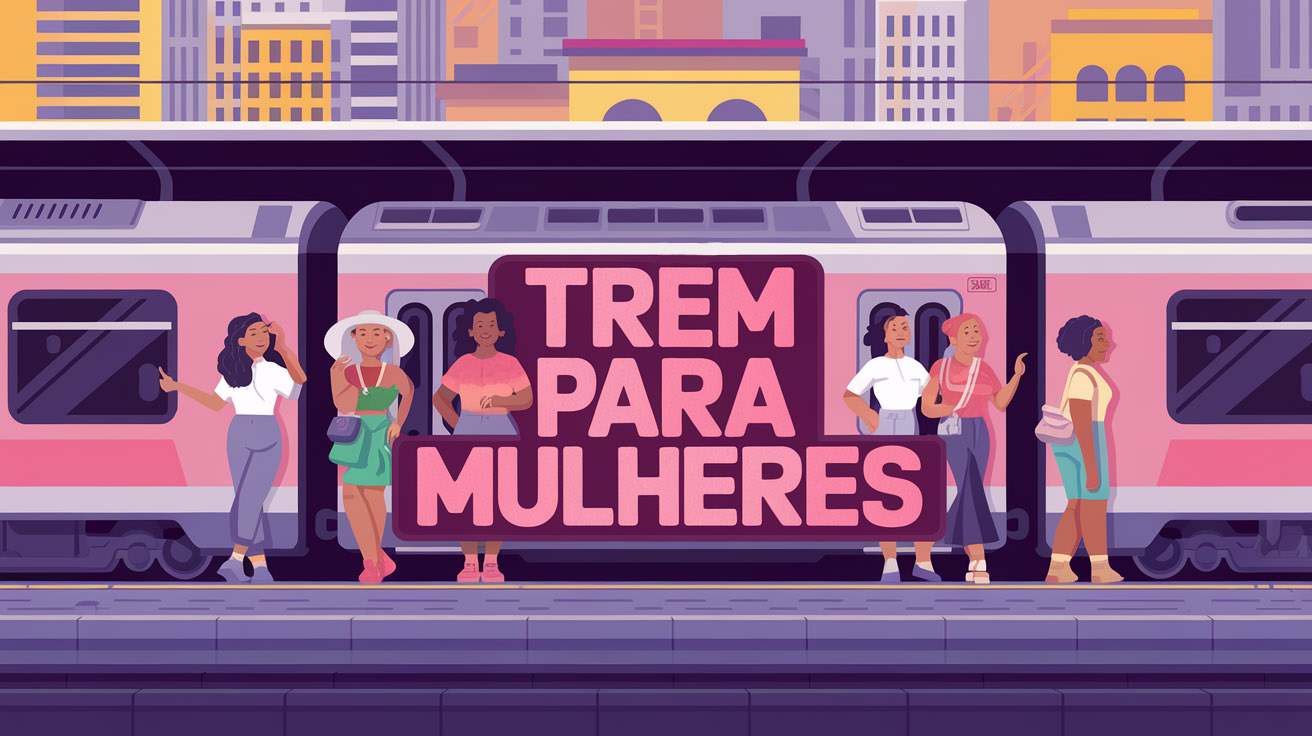
In an Initiative That Promises to Transform Public Transport in São Paulo, the City Is Studying the Implementation of Exclusive Carriages for Women. The Measure, Which Has Previously Been the Subject of Heated Debates, Returns to the Agenda with the Promise of Providing More Safety and Comfort to Passengers.
In the context of major metropolitan areas, safety in public transport is a constant concern, especially for women who face daily challenges during their commutes.
Measures to ensure a safer and more comfortable environment have been discussed in various cities around the world.
Recently, São Paulo has revisited a proposal aimed at addressing this specific demand.
-
“No one will make us change the Pix,” says Lula after the US report.

-
He started running at 66 years old, broke records at 82, and is now a subject of study for having a metabolic age comparable to that of a 20-year-old, in a case that is intriguing scientists and inspiring the world.

-
Oldest tree on the planet reappears after 130 years of searches: Wattieza, 385 million years old, was 10 meters tall and had no leaves or seeds; Gilboa fossils in New York solved the mystery in 2007.

-
A 48-square-meter house assembled in hours with 4,000 bricks made of recycled plastic that does not absorb moisture, has natural thermal insulation, and costs less than 90,000 reais in a complete kit.


During the first public hearing of Lot ABC-Guarulhos, which deals with the concession of Lines 10-Turquoise and 14-Onyx of the Companhia Paulista de Trens Metropolitanos (CPTM) to the private initiative, the proposal for the implementation of exclusive carriages for women was presented.
This initiative aims to provide greater safety and comfort for the female public during trips.
The measure is already implemented in other locations, such as Rio de Janeiro, where exclusive carriages for women are in operation.
In São Paulo, similar proposals were studied in the past. In 1995, CPTM allocated preferred carriages for women, but the initiative did not achieve the expected success.
In 2014, then-governor Geraldo Alckmin vetoed a bill that mandated the creation of exclusive carriages for women in trains and the São Paulo Metro, arguing that segregation would not be the proper way to solve the problem of harassment.
History of Attempts in São Paulo
The discussion about exclusive carriages for women is not new in the capital.
In 2013, the Metropolitan Transport Secretariat deemed the adoption of exclusive carriages unfeasible, stating that the measure would infringe on the right to equal mobility among genders.
However, the growing concern for women’s safety in public transport has led to a re-evaluation of these proposals.
Details of the Concession and Planned Investments
The concession process for Lines 10-Turquoise and 14-Onyx includes the acquisition of new trains: 16 units for Line 10 and 46 Light Rail Vehicles (LRVs) for the future Line 14, which will connect ABC to Guarulhos.
The total investment is expected to be approximately R$ 19 billion. In addition to operating these lines, the new concessionaire will be responsible for two sections of the Tourist Express, departing from Estação da Luz to Paranapiacaba and Mogi das Cruzes.
Challenges and Considerations
The implementation of exclusive carriages for women faces operational and social challenges.
Critics argue that segregation may not be the ideal solution and that educational and punitive measures against harassers would be more effective.
On the other hand, supporters of the measure believe that exclusive carriages can offer a temporarily safer environment while long-term solutions are developed.
Experiences in Other Cities with Women-Only Carriages
In Rio de Janeiro, exclusive carriages for women were implemented to reduce instances of sexual harassment.
The measure, albeit controversial, has been maintained and has support from some users.
In other major cities around the world, similar initiatives have been adopted, with varying results depending on local culture and enforcement effectiveness.
Next Steps for Women-Only Trains
The proposal for the concession of lines 10 and 14 is currently in the public hearing stage, where project details, including the possible implementation of exclusive carriages for women, are being discussed.
Civil society’s participation in these discussions is crucial to ensure that the measure, if implemented, meets the real needs of users and is effective in promoting safer and more inclusive public transport.
For the São Paulo government, the reintroduction of the proposal for exclusive carriages for women in São Paulo reflects a continuous concern for safety in public transport.
Although the measure has faced resistance in the past, the current context and experiences from other cities may influence its acceptance and effectiveness.
In any case, experts point out that the success of this initiative will depend on careful implementation, coupled with other educational and punitive actions that promote respect and safety for all individuals in public transport.







Seja o primeiro a reagir!