





 Portuguese
  English
  Spanish
 3 min of reading
  0 comments


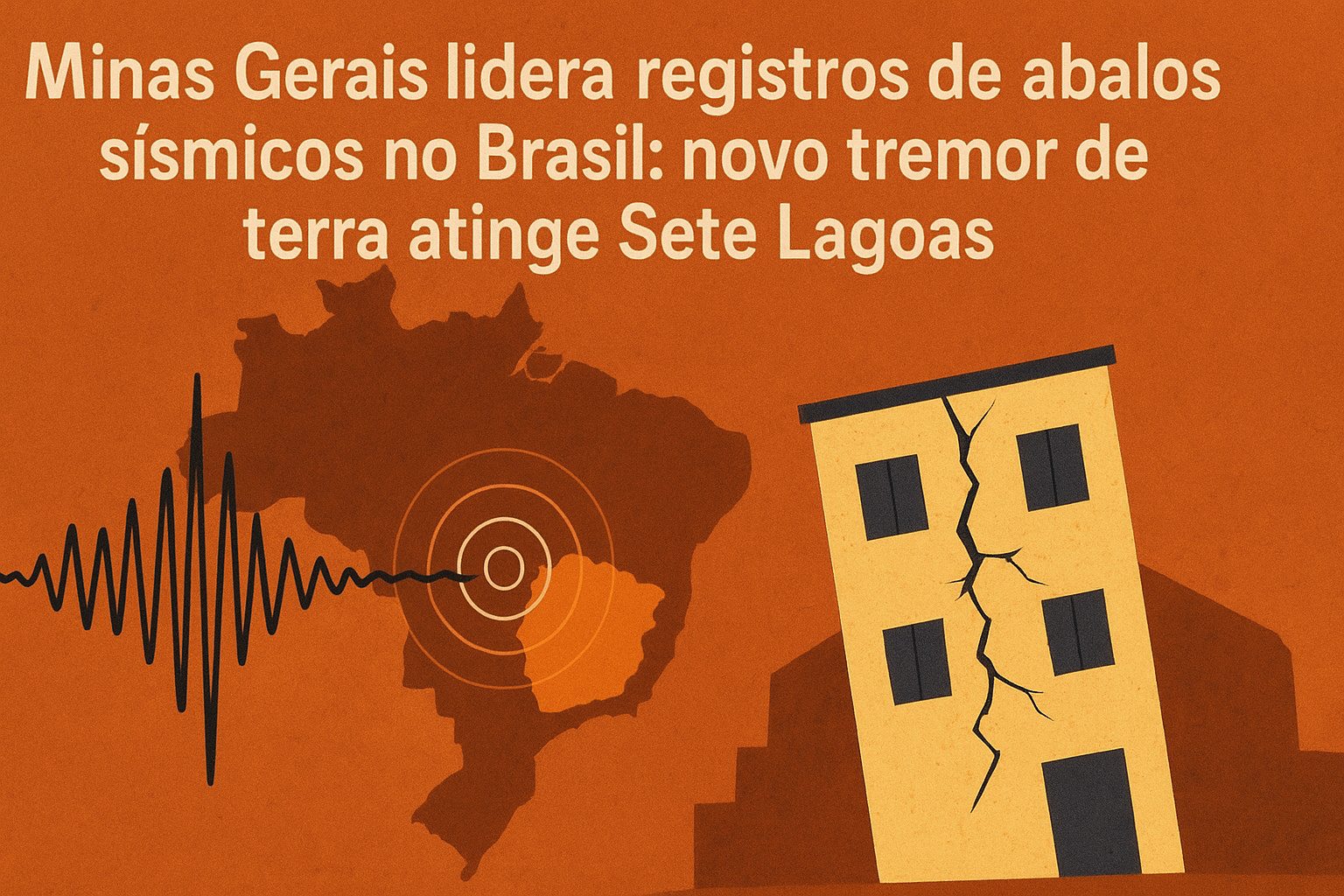
Sete Lagoas (MG) Registers Earthquake of 2.0 on the Richter Scale; Residents Report Shock, but No Damage Occurred.
An earthquake with a magnitude of 2.0 on the Richter Scale surprised residents of Sete Lagoas (MG) in the early hours of this Thursday (11). The quake occurred around 4:12 AM and was felt more intensely in the Interlagos neighborhood.
The municipal Civil Defense conducted rounds in several areas of the city shortly after the episode and confirmed that there were no casualties or structural damage.
Minas Gerais: The State with the Most Seismic Shocks in Brazil
Experts identify Minas Gerais as the Brazilian state with the highest number of seismic shocks. Seismologist Bruno Collaço from the Institute of Astronomy, Geophysics and Atmospheric Sciences (USP) and the Brazilian Seismographic Network (RSBR) emphasizes that the tremors are part of the geological reality of the region.
-
Historic building in the United States reports electrical fire, calls firefighters, and exposes an issue with an appliance that most Brazilians also have at home.
-
Elevator Plummets From Tenth Floor in Commercial Building in Recife, Raising Concerns About Safety and Engineering of Vertical Transport Systems Used Daily in Urban Buildings
-
Cyclist Hit by Car in Sobradinho, DF Is Rescued After Traffic Accident This Sunday

-
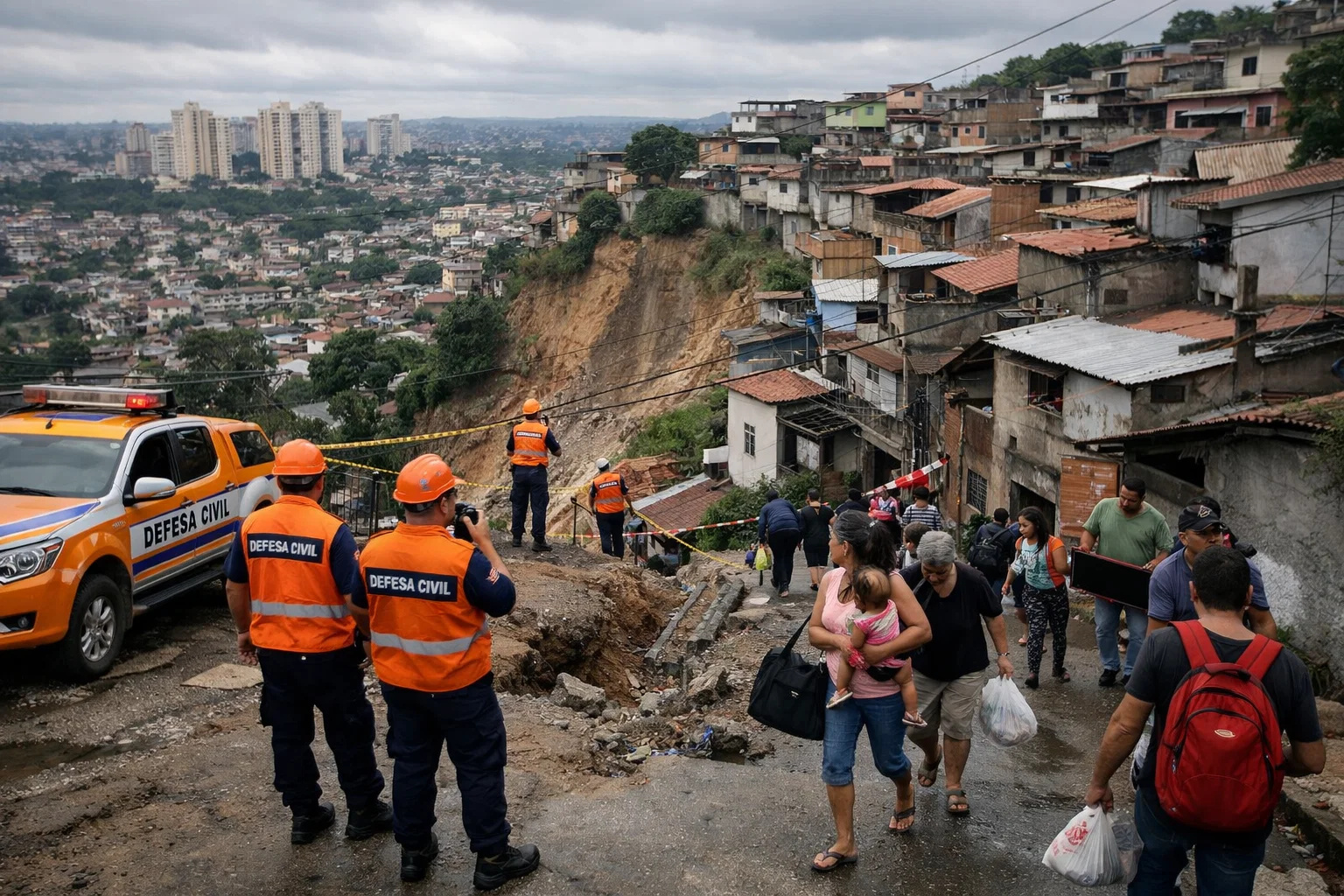
Civil Defense Issues Alert and Advises Evacuation in 51 Streets of Juiz de Fora After Risk of Instability; See the Complete List of Affected Neighborhoods

“Small earthquakes in Minas Gerais are not uncommon, quite the opposite. It is the state with the highest number of recorded seismic shocks. Natural tremors, for the most part, are due to the great geological pressures acting on the Earth’s crust,” he explained.
The incident in Sete Lagoas was not isolated. On September 8, two seismic shocks also affected Capim Branco, in the Metropolitan Region of Belo Horizonte. In just 15 minutes, the city recorded magnitudes of 1.9 and 2.0 on the Richter Scale.
How the Tremor Was Detected and Analyzed
The stations of the Brazilian Seismographic Network (RSBR) registered the tremor in Sete Lagoas, and the Seismology Center at USP analyzed the data. The National Observatory (ON/MCTI) coordinates the RSBR in partnership with the Geological Service of Brazil (SGB/CPRM), reinforcing the importance of an integrated system to monitor seismic activity in the country.
Additionally, on September 3, the city received new monitoring equipment which, according to the City Hall, will allow for more precise identification of the causes of the tremors and the implementation of preventive safety measures.
Civil Defense Advises on How to Act in Case of Earthquakes
The Civil Defense of Sete Lagoas has developed a booklet explaining how the population should behave during seismic shocks. Among the recommendations are:
- Avoid running in panic.
- Seek shelter in safe places, such as under sturdy tables.
- Do not use elevators during the tremor.
These guidelines aim to reduce risks in future situations, even though the tremors recorded in the municipality have been classified as low magnitude.
Richter Scale: What Does Magnitude 2.0 Mean?
Seismologist Charles Richter created the Richter Scale in 1935, a logarithmic method that measures the energy released by an earthquake based on the amplitude of the waves recorded by seismographs. Thus, each additional point on the scale indicates a tenfold increase in the amplitude of the waves and a much greater release of energy.
Furthermore, tremors of up to 2.0 are classified as “micro”: generally, they are not perceived by the population but are detected by monitoring equipment. On the other hand, magnitudes above 9.0 receive the classification of “exceptional” and can devastate large areas.
In the case of Sete Lagoas, although the tremor registered 2.0, it did not cause any impacts beyond the shock reported by some residents.
Continuous Monitoring is Essential
The new earthquake in MG reinforces the need to increase investments in technology and research. Moreover, Minas Gerais leads in the recording of seismic events in the country, although most are of low intensity.
With the equipment already in operation and the integration between Civil Defense, USP, RSBR, and national agencies, authorities thus hope to better understand the geological pressures at work in the region.
Even though they are small, seismic shocks in Minas Gerais maintain the alert about the importance of prevention and accessible information for the population. Additionally, these records highlight the need for continuous awareness of risks and safety measures.









Seja o primeiro a reagir!