





 Portuguese
  English
  Spanish
  7 min of reading
  0 comments


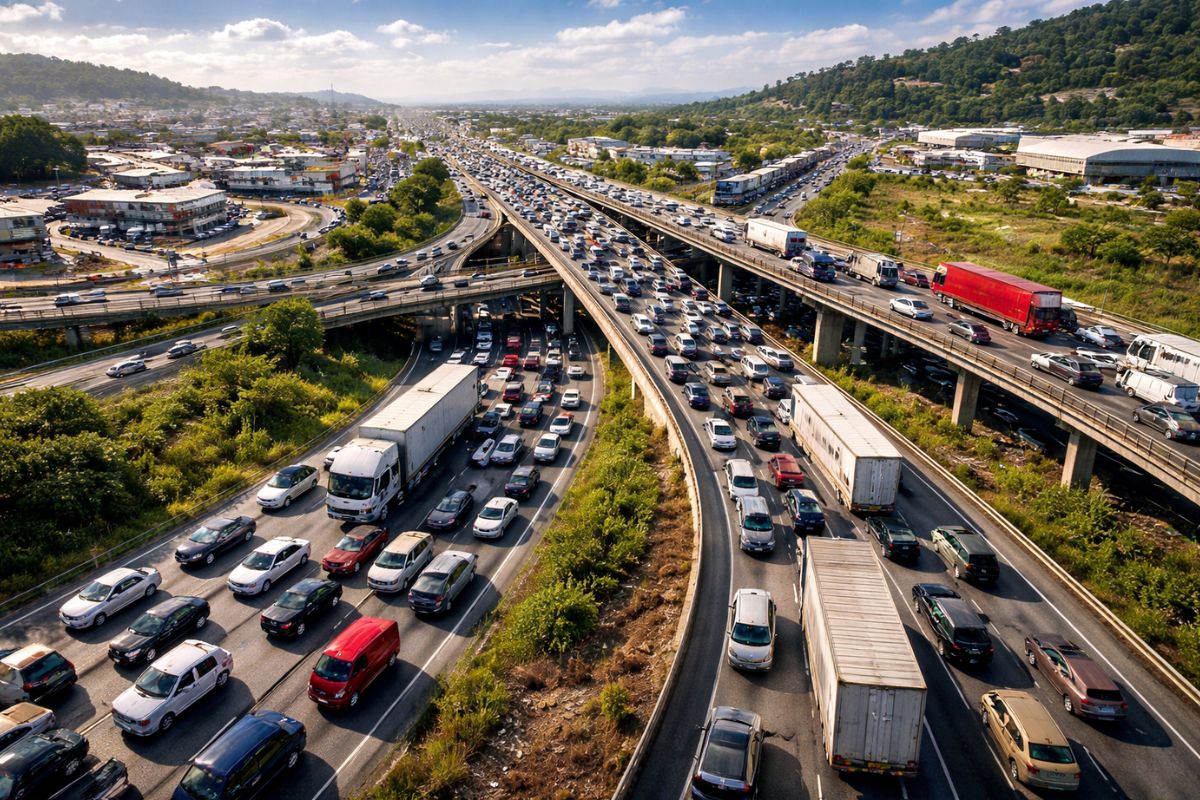
The BR-101 in Itajaí Halts at the Jorge Lacerda Interchange, Where Congestion Mixes Local and Regional Traffic Between the Coast and the Itajaí Valley.
The BR-101 stretch between Itajaí, Navegantes, and Balneário Camboriú has become one of the most critical circulation points on the Santa Catarina coast, with frequent slowdowns, long queues, and moments when traffic simply halts. At the center of this problem is the junction with the Jorge Lacerda highway, SC-412, which concentrates local and regional movements and ends up functioning as a funnel for those traveling between the coast and the Itajaí Valley.
The situation has worsened with the increase in the fleet, urban expansion, and the region’s economic strength, which encompasses a port, airport, logistics activities, and intense daily commuting. The problem no longer appears only on days of accidents or mechanical failures because the sheer volume of vehicles has become sufficient to cause recurring congestion at a point that is already operating at its limit.
BR-101 Concentrates Long-Distance Traffic and Local Commuting
Those who rely on the BR-101 in the northern part of Santa Catarina coexist with a scenario that mixes long-distance travel and urban circulation within the same structure.
-
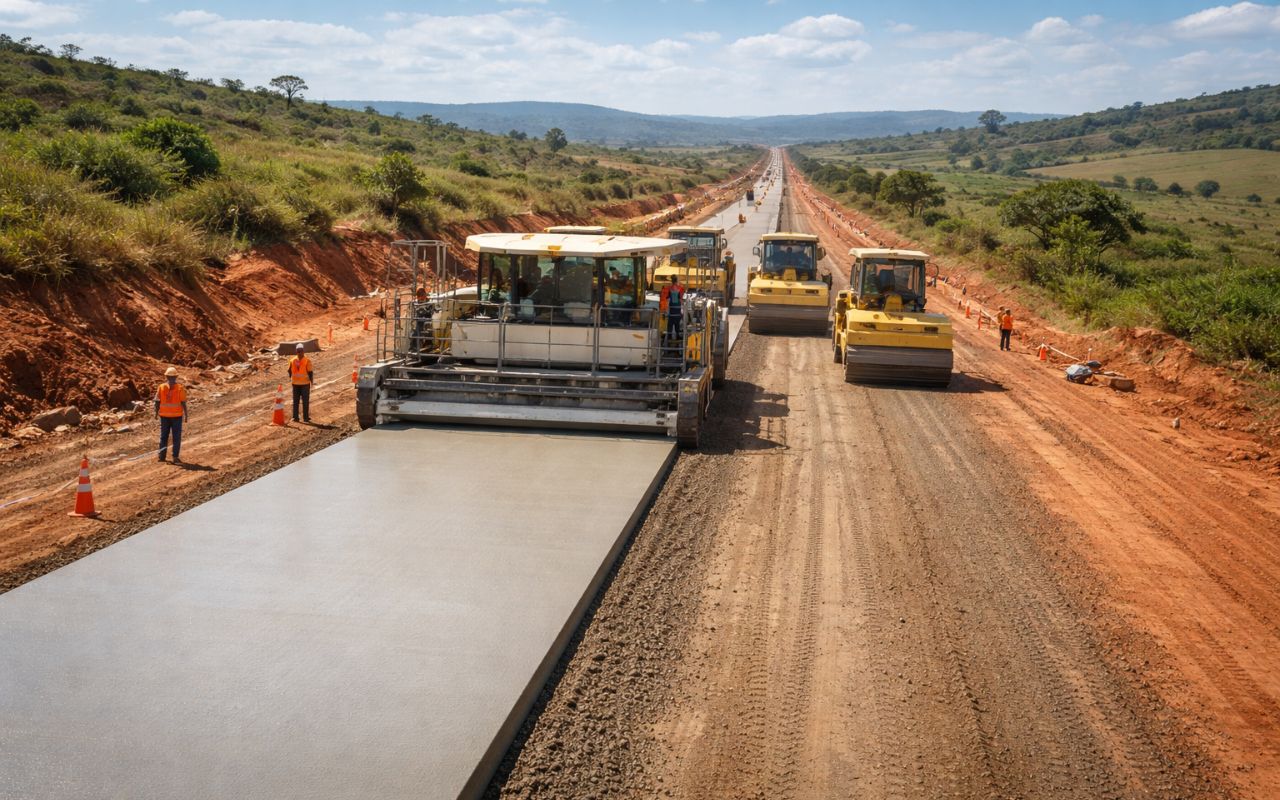
New CCR concrete paving technology promises roads up to 3x more durable, less maintenance, and cost reduction in Brazil.
-
Made from recycled plastic, plastic wood is gaining space in the construction industry because it does not rot, resists moisture, and reduces maintenance costs over the years.

-
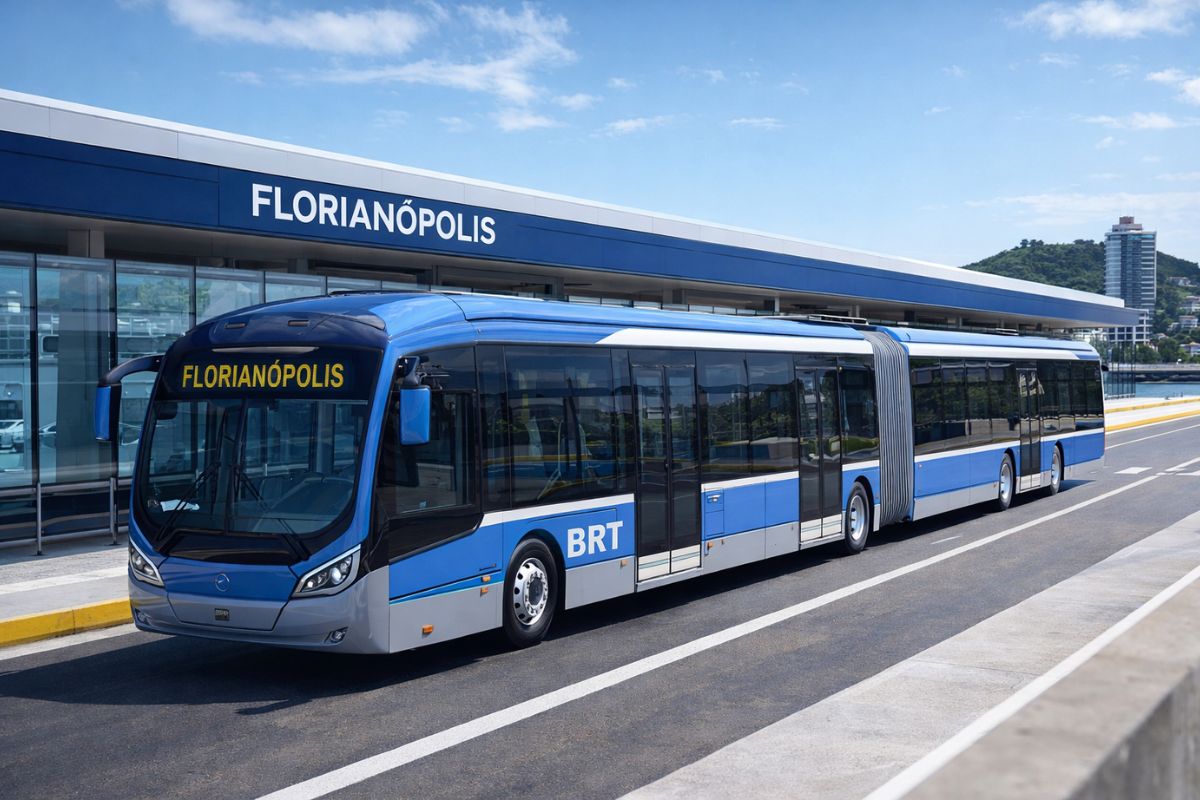
Florianópolis will receive a million-dollar BRT that will begin construction in 2026 with nearly 400 million in funding from the federal government and the Inter-American Development Bank, and the map already shows the routes for the exclusive bus corridors.
-
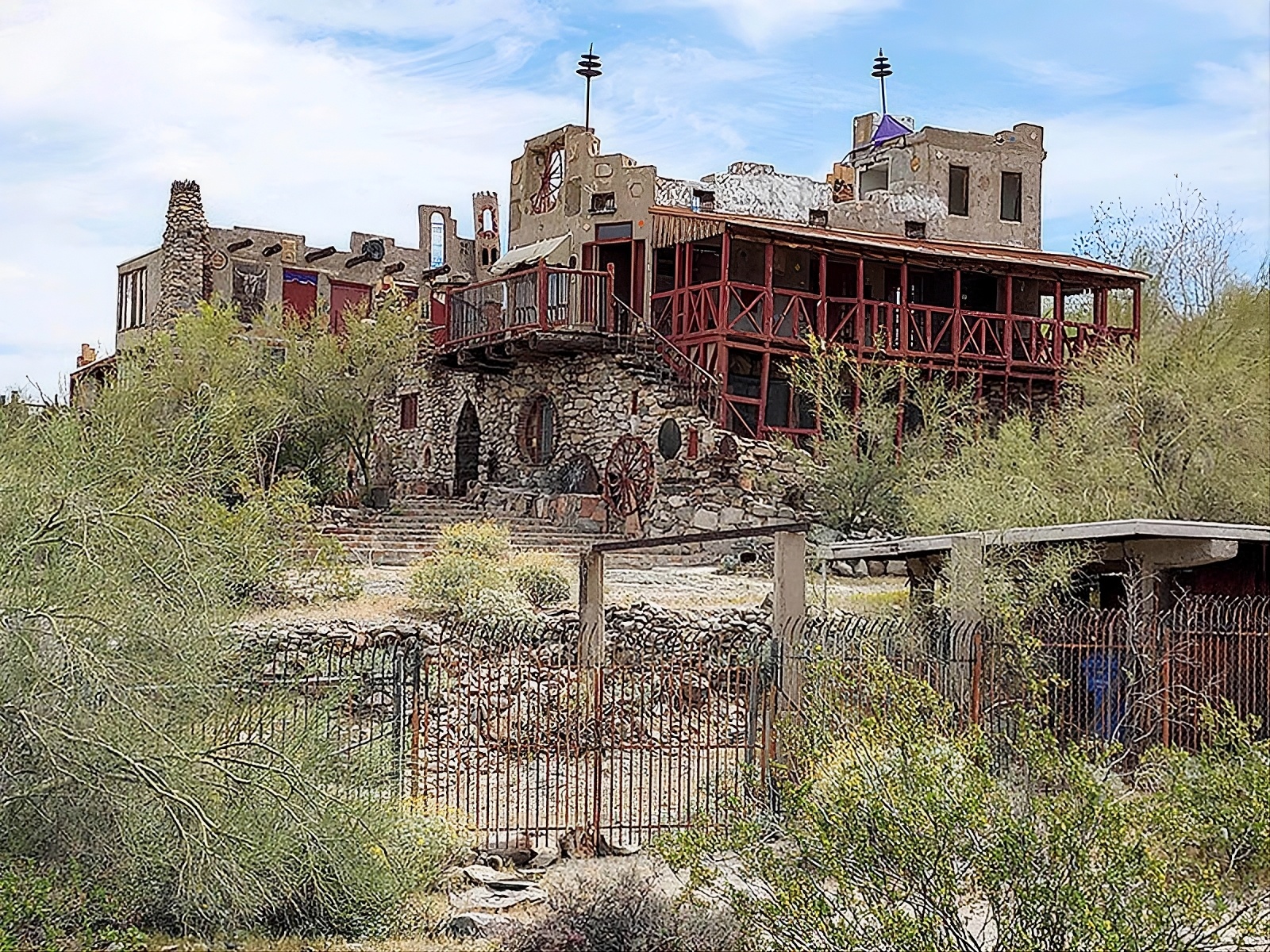
Without a blueprint, without an engineer, and using scrap from the dump, a father spends 15 years building an 18-room castle for his daughter, featuring tram tracks, 13 fireplaces, and over 700 m², which may now be demolished.

On one side are drivers heading to Joinville, Curitiba, Florianópolis, Itapema, and other coastal cities in the south of the country. On the other, there is heavy traffic from those entering and exiting Itajaí, Navegantes, Ilhota, Gaspar, and Blumenau.
This crossing of demands helps explain why the BR-101 comes to a halt even without specific incidents. The problem doesn’t stem only from isolated events, but from the sum of many simultaneous movements on a highway that is already showing signs of saturation.
The road was duplicated in the past to improve the flow, but today this improvement is no longer sufficient for the region’s growth.
The Interchange with Jorge Lacerda Became a Bottleneck
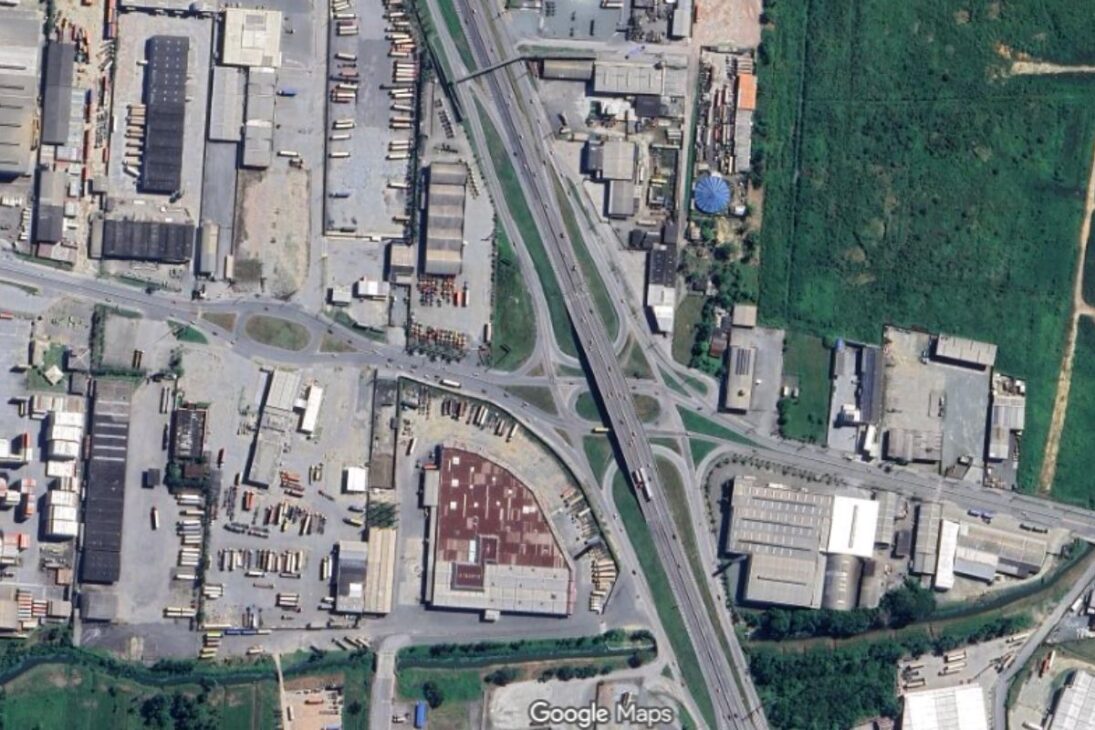
The most critical point highlighted is the junction of the BR-101 with the Jorge Lacerda highway, also known as SC-412, in Itajaí. There, a large volume of vehicles attempts to change direction, access Blumenau, head north, return to the urban area, or enter the main highway.
The result is a daily bottleneck. Those coming from the south on the BR-101 who want to access the SC-412 to go to Blumenau face intense queues, especially during dawn and dusk.
At the same time, those arriving from Jorge Lacerda and trying to access Itajaí or head north also encounter significant delays. The interchange concentrates too many functions in a space that can no longer support this traffic load.
At-Grade Intersections Increase Queues and Raise the Risk of Collapse
One of the most problematic points of the junction is the presence of at-grade intersections at the lower part of the overpass. This type of configuration forces different flows to compete for the same space, reducing speed, requiring waiting times, and creating permanent retention points.
According to the analysis presented, there has been an improvement with the creation of primary turns on both sides, which removed part of the traffic that previously was completely stuck under the overpass.
Even so, the BR-101 continues to suffer directly from congestion below because queues accumulate quickly and rise to reach the main lane. When traffic halts below, the effect quickly appears on the federal highway.
Short Marginals Cause the Congestion to Return to the Main Lane
Another significant problem is the short length of the marginals. Since they are short, they cannot absorb the volume of vehicles trying to exit the BR-101 or enter it for long. As soon as the flow increases, the retention moves backward and invades the main lane of the highway.
This behavior is particularly felt by those coming from the south, leaving Balneário Camboriú and Florianópolis towards Blumenau. The queue starts at the access point, grows on the ramps, and soon projects into the BR-101, creating a chain effect.
The bottleneck ceases to be merely local and begins to compromise the fluidity of the entire highway in that stretch.
Changes Already Made Alleviated Part of the Problem but Did Not Solve It
The foundation shows that some alterations have already been implemented to reduce the impact at the junction. An example is the change that allows part of the traffic coming from Blumenau to only access the BR-101 about two kilometers ahead, at the height of the rectified canal of the Itajaí-Mirim river.
There was also the installation of a roundabout on a stretch of the SC-412 to improve local movements and avoid unnecessary turns.
These interventions helped but did not eliminate the issue. They function more as a temporary relief than as a structural solution because the overall volume of vehicles continues to grow in an area that is already under significant pressure.
The Problem Does Not Stem Solely from the Highway or Only from Urban Traffic
The analysis makes it clear that it is not correct to blame only local traffic or only the federal highway. At times, the heavy flow of the BR-101 blocks access points and pushes the problem into the urban fabric. At other times, the congestion formed on Jorge Lacerda and local connections returns to the main highway.
This reciprocal relationship allows chaos to spread easily. There is no longer a real separation between the highway problem and the city problem because both feed back into the same bottleneck. This is exactly why the junction has gained such significant weight in the daily lives of those who depend on this corridor.
The Third or Fourth Lane Appears as a Temporary Measure
In the evaluation presented in the content, widening the BR-101 with a third or fourth lane may provide some temporary relief but would not resolve the central cause of the problem. The main bottleneck lies in how the flows intersect at the interchange and the limitations of access and traffic distribution.
Therefore, it is read that a simple lane expansion would be merely temporary. The main knot remains the design of the interchange, which currently forces long-distance vehicles, trucks, urban traffic, and regional movements to share the same space in a configuration that is already outdated for the current volume.
The Most Effective Solution Would Require a Complete Redesign of the Interchange


The most appropriate proposal is a deeper redesign of the interchange, similar to what was done a few kilometers ahead at the interchange with SC-486, Antônio Heil. There, the project was cited as an example of a more robust solution, capable of offering greater assurance of fluidity for a longer period.
In the case of the BR-101 in Itajaí, the assessment is that only a structural change of this magnitude could better separate the flows and reduce the impacts both on the upper and lower parts of the interchange. Without a more comprehensive reconfiguration, the risk is merely continuing to push the problem forward.
The Stretch Still Needs Other Improvements Beyond the Interchange
The base video also points out that the problem does not end at the junction with Jorge Lacerda. There are other deficiencies along the BR-101 in this area, such as the absence of marginals in the subsequent stretches and the need for improvements on the bridges over the Itajaí-Açu river.
This shows that the bottleneck at the interchange is just the most visible face of a broader saturation. The stretch between the coast and the Itajaí Valley already demands long-term planning, with interventions that consider the future growth of the region and not just the current scenario. The economic and urban volume of the area has already exceeded the capacity of an improvised solution.
BR-101 in Itajaí Became a Symbol of a Regional Problem
The case of the interchange in Itajaí well summarizes the mobility challenge in northern Santa Catarina. The BR-101 needs to accommodate population growth, logistical expansion, an increase in the fleet, and connections with a region that includes strategic transportation and production hubs.
When an interchange like this reaches saturation, the effects spread throughout the network. What was a passage point has turned into a permanent bottleneck, capable of halting movements between the coast and the interior and transforming the daily lives of drivers, truckers, and local residents into a routine of queues and delays.
In your opinion, can the BR-101 in Itajaí still be alleviated with targeted works, or is only a complete redesign of the interchange with Jorge Lacerda capable of truly ending this chaos?







-

-

-

-

6 pessoas reagiram a isso.