





 Portuguese
  English
  Spanish
  10 min of reading
  0 comments


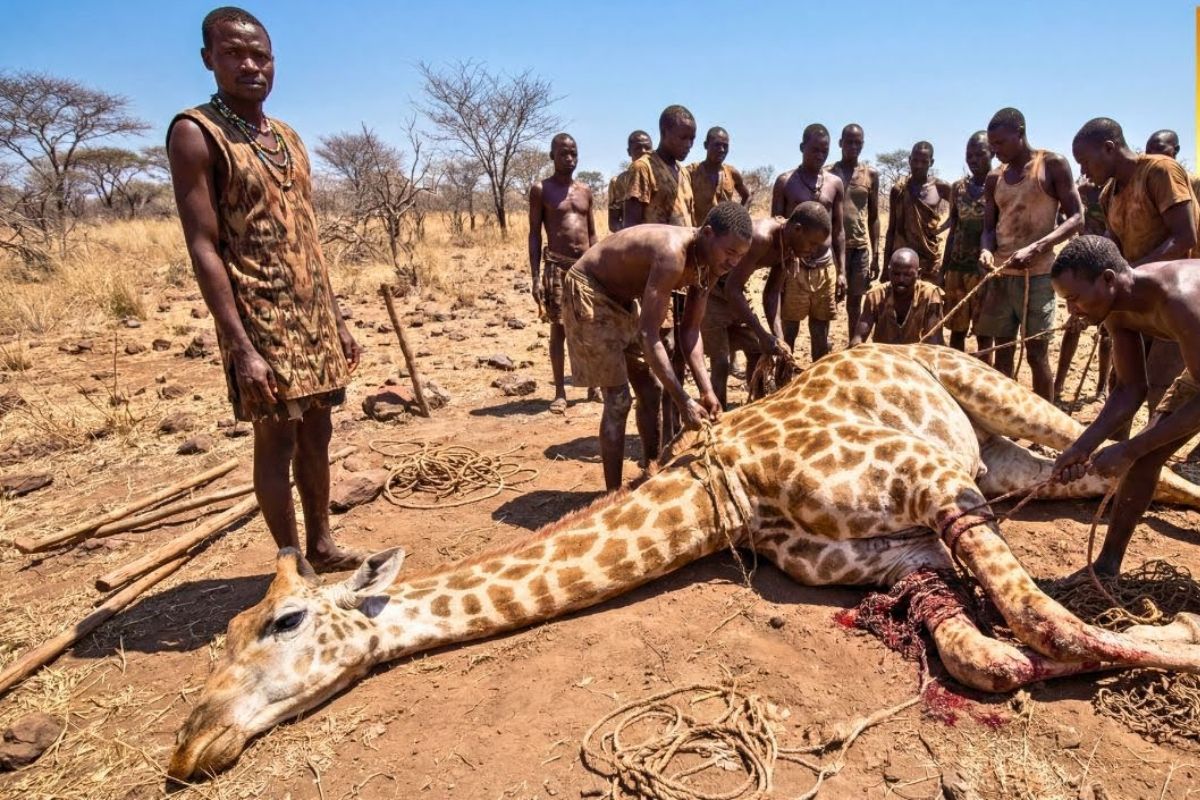
On the Banks of Lake Eyasi, About 1,300 Hadzabe Follow Hunter-Gatherers. They Leave Before Dawn, with 15 to 20°C, Carrying Only a Bow and Quiver. The Maasai Giraffe Reaches 5.8 M and 11 Kg of Heart. Poison from Adenium Obesum Determines the Hunt and Feeds 30 People for Weeks.
The Hadzabe Tribe of Tanzania Preserves One of the Most Impressive and Ancient Human Survival Routines: Hunting and Gathering Without Planting, Raising Animals, or Storing Food, Guiding the Day by the Sun, the Stars, and the Cycle of the Seasons on the Banks of Lake Eyasi, in the North of the Country.
When the Hadzabe Tribe Decides to Pursue the Largest Prey in the Savannah, the Giraffe, It Is Not a “Quick Hunt”: It Is a Rare Event, Prepared in Advance, Executed in Absolute Silence and Sustained by Knowledge Accumulated Over Tens of Thousands of Years, with Technique, Patience, Tracking, and Collective Mobilization of the Camp.
Where They Live and Why Territory Shapes Everything

The Hadzabe Tribe Lives Around Lake Eyasi, Surrounded by the Rift Valley and the Plains Connected to the Serengeti.
-
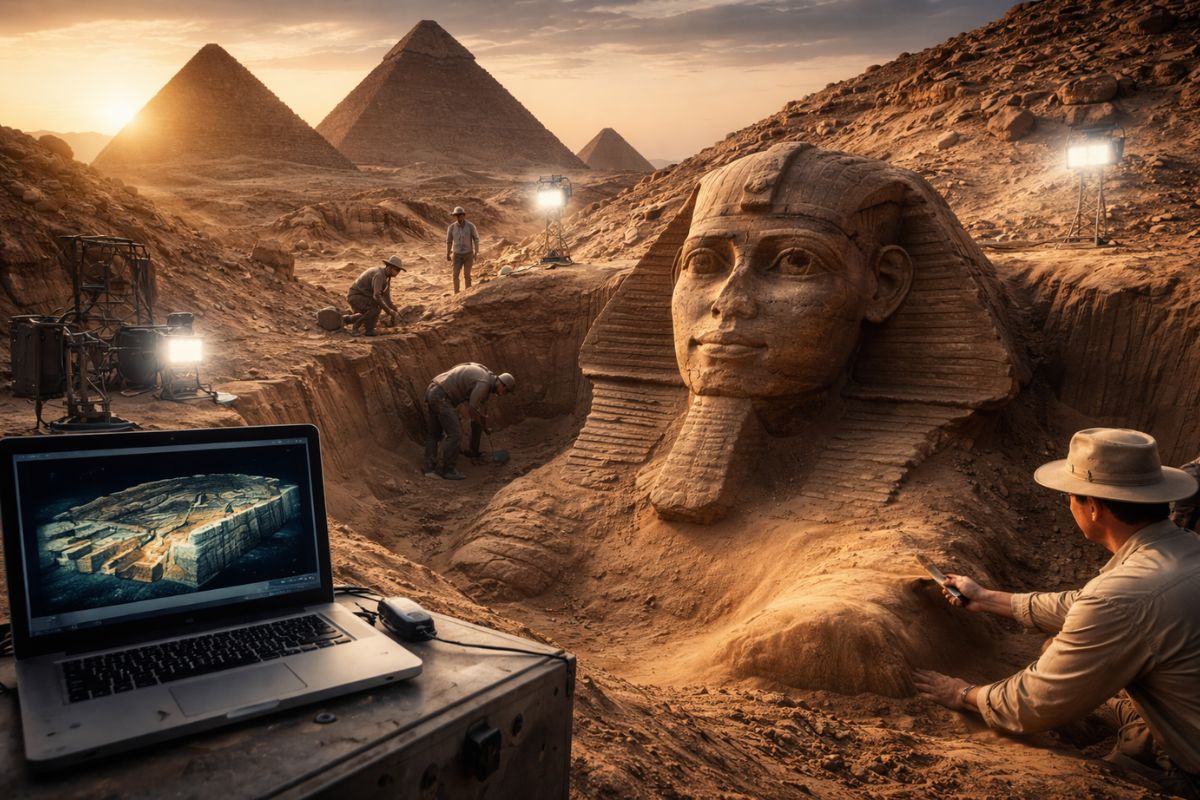
Italian researchers have detected what appears to be a second Sphinx buried under the sands of Egypt, and satellite scans reveal a gigantic underground megastructure hidden beneath the Giza Plateau for over 3,000 years.
-
There are 4,223 drums and 1,343 metal boxes concreted with 50-centimeter walls that store the radioactive waste from Cesium-137 in the worst radiological accident in Brazil, just 23 kilometers from Goiânia, with environmental monitoring every three months.

-
Giant Roman treasure found at the bottom of Lake Neuchâtel in Switzerland reveals an advanced trade system, circulation of goods, and armed escort in the Roman Empire about two thousand years ago.

-
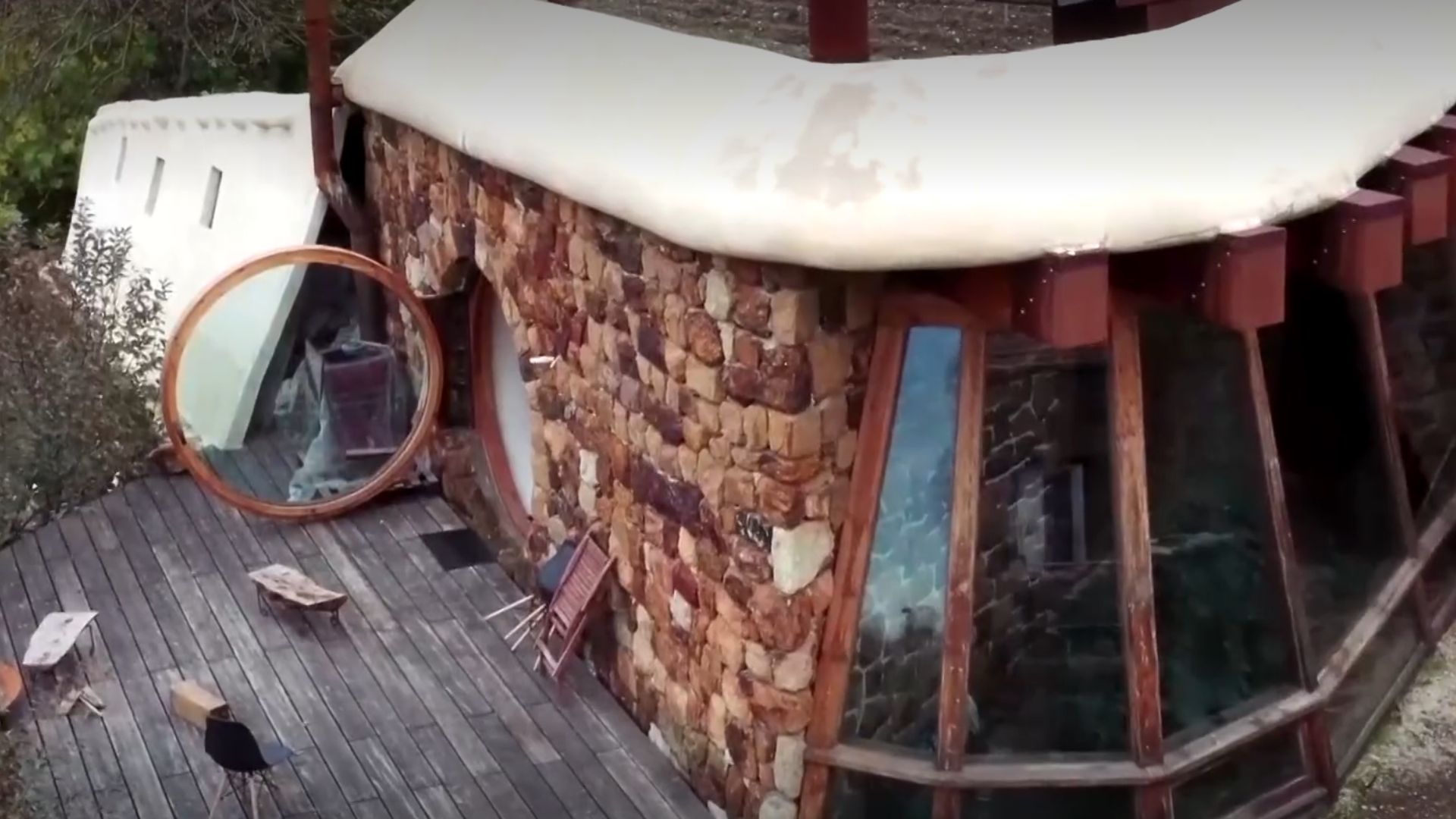
He buried 1,200 old tires in the walls to build his own self-sufficient house in the mountains with glass bottles, rainwater, and an integrated greenhouse.

The Traditional Territory Is Described as About 4,000 km² with a Landscape of Strong Contrasts: Rocky Hills with Thorny Acacias, Valleys with Dense Shrubs, Open Plains, and Dry Grass Rolling Like a “Golden Ocean.”
Among These Scenarios, Giant Baobabs Appear Dominating the Horizon, with Trunks That Can Reach 10 Meters in Diameter and An Estimated Age of Over 1,000 Years.
These Trees Are Not Just Landscape: They Serve as Reference Points, Shade, Source of Fruits, and Part of the Mental Map of a Community That Navigates Without Watches, Calendars, or Modern Signage.
A Hunter-Gatherer People Still Active and Extremely Small

The Total Population Is Indicated as About 1,300 People, a Number That Would Fit, in Comparison, in a Single Apartment Building in a Large City.
Still, Within This Total, There Is a Decisive Cut: Only About 300 Would Live Exclusively as Hunter-Gatherers, Going Out Every Day to Seek Food and Sleeping Where Night Finds Them.
Other Groups Live in Camps Closer to Villages, Supplementing the Traditional Diet with Purchased Items Such as Processed Cornmeal, Sugar, and Cooking Oil.
This Division Shows a Way of Life in Tension, Between Ancestral Practice and the Pressures of a World That Approaches from All Sides.
The Exit Before Dawn and the Rule of Silence

The Hunting Routine, Especially for Large Animals, Begins Before the Sun Rises. The Account Places the Initial Movement When the Lake Is Still in Twilight, with Temperatures Between 15 and 20°C, Considered Ideal for Tracking.
Three Men, Sometimes Four, Leave the Camp in Absolute Silence.
They Don’t Bring Water or Food. They Carry the Bow, a Quiver with Arrows of Different Sizes, and, as Described, “50,000 Years of Knowledge” in Their Muscles and Instincts.
Bare Feet Know Stone, Root, and Terrain, and Even the Care to Remove Sandals Made of Old Tires Appears as a Strategy to Avoid the Noise of Dry Branches.
The Prey: Why the Giraffe Is Treated as a “Colossus”

The Maasai Giraffe, Cited as the Species of the Region, Can Reach 5.80 Meters in Height, with a Neck Measuring Approximately 2 Meters, About One Third of the Body.
The Adult Male Is Described as Weighing the Equivalent of a Mid-Sized SUV, in Addition to a Running Capacity of Up to 64 Km/h.
The Account Also Highlights the Attributes that Make the Animal So Difficult to Take Down: Eyes Compared to Golf Balls, Capable of Detecting Predators from Miles Away, Color Vision, Good Night Vision, and a Kick Powerful Enough to Kill a Lion.
And There Is a Central Symbolic and Physiological Detail: the Heart, Measuring About 60 Cm and 11 Kg, Pumping Blood at Three Times the Pressure of Humans, Necessary to Overcome the Long Neck.
The Bow: Right Wood, Drying, Fire, and Zero Error

The Bow Making Begins Weeks Before the Hunt. Not Just Any Stick Will Do. There Is a Search for Specific Woods, Such as Bicolor Grebe and Dombeya Kirkii, Valued for Combining Flexibility and Strength.

The Process Involves Selecting the Correct Diameter, Proper Natural Curvature, and Avoiding Knots and Imperfections. Drying and Shaping Can Take Two to Three Days.
The Wood Is Heated Over Fire, Carefully Bent, and Cooled in the Desired Position. One Mistake Means Starting Over, because a Flawed Bow Compromises the Entire Hunt.
The String, in Turn, Can Be Made from Ligaments of Animals Such as Eland, Buffalo, Zebra, and, in Some Cases, from Tendons of Giraffe Previously Hunted.
Nothing Is Wasted and Nothing Is Bought, because, Internally, the Community Does Not Use Money Among Itself.
Exchanges with Neighbors and Metal Tools through Barter
When They Need Metal, They Enter into Relationships with Neighboring Tribes, Citing Blacksmiths from Toga. The Exchanges Are Based on Barter: Meat and Honey in Exchange for Metal Tips for Arrows, Knives, and Axes.
The Completed Bow Is Described as Approximately 1.5 Meters Long.
The Physical Effort Required Is Also Quantified: A Pulling Force of 311 N, Equivalent to About 70% of the Body Weight of an Adult Man.
The Arrow Reaches 45 M/s, About 162 Km/h, and Studies Cited Attributed to Harvard University Indicate Energy Transfer Efficiency Around 70%, Comparable to Modern Recurve Bows, Even Being an Instrument Made of Sticks and Tendons.
Different Arrows for Different Prey and the Choice of the “Big Arrow”

The Quiver Does Not Carry a Unique Type. The Account Describes at Least Four Categories: Arrows with Sharp Wooden Tips for Birds and Lizards, Arrows with Blunt Tips to Take Down Small Prey Without Damaging the Meat, Arrows with Simple Metal Tips for Medium Animals, and Arrows with Larger Metal Tips with the Application of Poison for Large Animals.
In Giraffe Hunting, the Main Archer Selects the Larger, Poisoned Arrow.
The Typical Shooting Distance Is Described as Between 15 and 50 Meters, and the Aim Prioritizes Areas Where the Skin Would Be Relatively Thinner and Where Blood Vessels Would Be More Accessible.
The Shot Does Not End the Hunt; It Initiates Another Phase.
The Decisive Secret: The Poison from the Desert Rose
The Poison Is Presented as the Differentiator That Makes It Viable to Face Such a Large Animal. In the Lake Eyasi Region, the Plant Locally Called Panduko, With the Scientific Name Adenium Obesum, Is Identified as the Base of the Poison, Known Outside as Desert Rose.
The Presence of Cardiac Glycosides, Compounds That Interfere with Heart Function When They Enter the Bloodstream, Comparing Them to Compounds Associated with Digitalis.
The Discovery and Use of This Effect Are Attributed to Knowledge Accumulated for Millennia, Preceding Modern Pharmaceutical Chemistry.
The Extraction Is Narrated as a Technical Ritual: Collecting at a Specific Point, Crushing the Branch Until It Becomes Pulp, Extracting the White, Milky Sap, Slowly Boiling Until the Water Evaporates and Obtaining a Black, Sticky Substance, Like Tar.
This Paste Is Applied Beneath the Metal Tip. There Is Also a Distinction of Colors Among Poisons: The Poison from Adenium Is Described as Black, Another from Strophanthus Eminii as Brown, Besides a Third, Kalakazi, Obtained Ready via Barter for Meat or Honey.
Tracking for Hours or Days: The Hunt of Patience
The Tracking Phase Is Described as Long and Demanding. The Hunters Take Advantage of Shrubs, Rocks, Termite Mounds, and Any Break in the Terrain to Avoid Being Seen.
The Wind Needs to Be Favorable. A Mistake in Sound or Movement Makes the Prey Disappear on the Horizon.
After the Shot, the Account Describes That the Animal May Continue to Move, and the Hunt Becomes a Wait Based on Signs in the Ground, Tracks, and Behavior.
The Process Can Take Hours and, in Some Cases Documented by Anthropologists, Up to Three Days of Following, with Rest Outdoors and Minimal Resource Consumption.
Not Every Hunt Succeeds, and There Is the Risk That the Poison Is Insufficient and the Attempt Fails.
The Important Point Is That, in the Practice of the Hadzabe Tribe, Giraffe Hunting Is Not Everyday. It Is Treated as Rare, Reserved for Favorable Conditions, with Experienced Hunters and a Great Need for Meat.
The Impact of a Giraffe: Food for Weeks and a Genius Logistics
When a Giraffe Falls, the Social Transformation Is Immediate. The Account Speaks of 300 to 500 Kg of Usable Meat in an Adult Animal. For a Typical Camp of 20 to 40 People, This Represents Weeks of Food.
But the Challenge Arises: Transporting Half a Ton of Meat Without Vehicles, Without Carts, Without Pack Animals, and Without Refrigeration, Under a Sun That Can Exceed 35°C. The Solution Described Is Direct and Efficient: They Do Not Transport the Meat; They Transport the Camp.
A Messenger Returns to Warn. In a Few Hours, Families Take Down Simple Shelters Made of Bent Sticks and Dry Grass, Structures That Can Be Set Up in Less Than Two Hours, and Walk to the Site. Children, Women, and Elderly Go.
The New Camp Around the Carcass Can Last From Three Days to Two Weeks, Depending on the Size of the Animal and the Number of People.
Distribution, Social Rules, and the Status of Epeme
The Society Is Described Without Formal Hierarchy: There Are No Fixed Chiefs, No Accumulation of Power, Decisions Are Collective, and Conflicts Can Be Resolved by Changing Camps.
At the Same Time, There Is a Concept of Status Related to Hunting: Epeme, Associated with Full Masculinity and the Status of a True Hunter.
A Man Becomes Epeme When He Kills His First Large Animal, Often Around Age 20, Which Could Be a Giraffe, Buffalo, Wild Boar, or Lion.
From Then On, He Would Have the Right to Specific Parts of the Animal, Cited as Heart, Lungs, Kidneys, Tongue, Neck, and Genitals, Consumed in a Restricted Context.
Aside from That, the Central Rule Is Sharing: What Is Hunted Belongs to the Group, and the Distribution Sustains Reciprocity Among Families Over Time.
Fire, Preparation, and the Total Utilization of the Animal
The Fire Is Lit as Soon as the Community Establishes Itself, Even Using the Traditional Technique of Friction Between Woods, Taking 30 Seconds to 2 Minutes for Those Who Are Experienced, and Being a Skill Already Present in Children Around 6 Years.
The Meat Is Roasted Directly over Coals or on Improvised Sticks, Without Elaborate Seasonings. Women May Bring Wild Tubers Rich in Carbohydrates and Baobab Fruits with Nutrients. The Community Is Described as Knowledgeable of More Than 90 Edible Plant Species in the Territory.
The Utilization Is Total: Bone Marrow Extracted from Large Bones, Fat Valued as Concentrated Energy, Skin Used for Ropes, Bags, and Blankets, Tendons Saved for New Bow Strings, Smaller Bones Turned into Tools and Ornaments.
Even the Content of the Stomach Is Cited as a Liquid Source in Extreme Situations. It Is a Survival Economy Without Waste.
A Unique Language and a Culture That Does Not Repeat Itself Anywhere Else
The Hadzabe Language, Called Hadzani, Is Described as a Linguistic Isolate, Without Relationship to Other Known Languages. It Includes Click Sounds, and Genetic and Linguistic Analyses Mentioned in the Account Reinforce the Uniqueness of the Group.
At Night, There Is the Epeme Dance, One of the Rare Moments of Collective Spiritual Expression in a Society Without Formal Religion.
There Are No Temples or Priests. There Are References to the Sun Called Ioko and the Husband of the Sun, Haine, and the Belief That They Go to the Sun When They Die, with Myths in Which Humans Descend to Earth Through the Neck of a Giraffe or from a Baobab.
The Giraffe, Therefore, Is Also a Symbol, Not Just Food.
Current Pressures: Shrinking Territory, Laws, Tourism, and Rapid Changes
In the Last Three Decades, the Traditional Territory Is Described as Shrinking by 90%, with the Influx of Farmers and Cattle Ranchers, Competition for Water, and Occupation of Areas Previously Used for Hunting.
At the Same Time, Parks and Reserves Protect Large Animals, but Also Prevent Legal Hunting as It Was in the Past, Making Many Animals “State Property” or Part of Tourism.
There Is an Episode Cited from 2007 When 6,500 km² Were Reportedly Leased to the Royal Family of the United Arab Emirates for a Private Hunting Reserve, Cancelled After International Protests and Pressure from Indigenous Rights Organizations.
Tourism Appears as a Double-Edged Sword: It Brought Money, But Also Problems, Highlighting Alcohol, Described as Devastating in Some Communities, Including Cases of Alcohol Poisoning. The Greater Risk Identified Is the Loss of Knowledge, Because Tracking and Hunting Skills Require Continuous Training.
Life Expectancy and a Data That Seems Scary but Has Nuance
Life Expectancy at Birth Is Described as Around 33 to 37 Years, with the Explanation That High Infant Mortality Pulls the Average Down.
The Account States That Those Who Reach Adulthood Often Can Live Up to 60 or 70 Years, Remaining Active.
This Difference Reinforces the Harshness of the Environment for Small Children, with Infections, Malnutrition, and Lack of Access to Medications, While Also Showing the Resilience of Those Who Survive Childhood.
A Historical Recognition and the Struggle for Space to Continue Existing
In 2011, a Hadzabe Community of 700 People Received Legal Title to More Than 20,000 Hectares of Land, Described as the First Time the Tanzanian Government Formally Recognized the Territorial Rights of a Minority Tribe, with International Support Cited as Coming from Survival International.
Nonetheless, This Area Is Presented as Only a Fraction of the Original Territory, and the Pressure for More Agricultural and Pasture Land Continues with Population and Economic Growth.
It Is the Central Conflict of the Present: Maintaining a Mobile Way of Life, Based on Nature, on an Increasingly Constrained Map.
In Your Opinion, Does the Hadzabe Tribe Manage to Maintain This Way of Living for a Few More Generations, or Will the Advance of Tourism, Farms, and Laws Make This Ancestral Hunting Just a Memory?










-

-

4 pessoas reagiram a isso.