





 Portuguese
  English
  Spanish
  4 min of reading
  0 comments


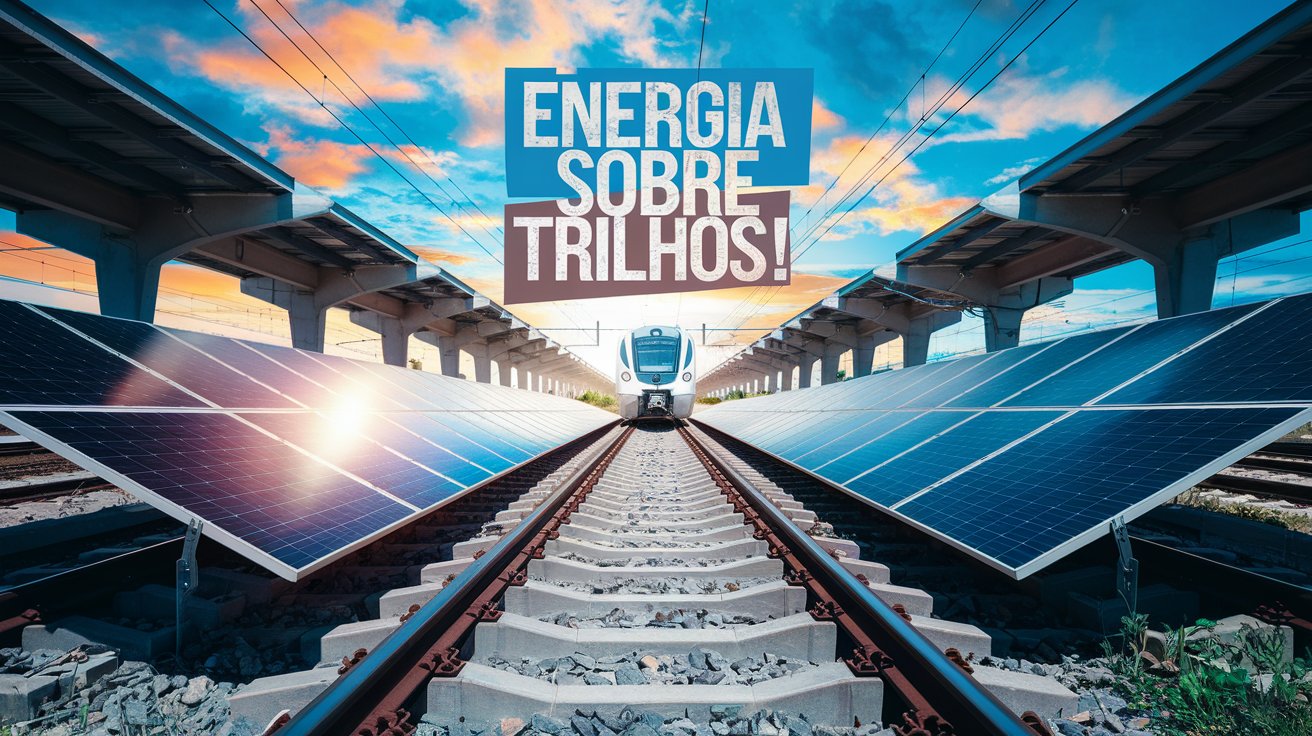
Country Follows Switzerland And Installs Solar Panels On Train Tracks! With Huge Potential, The Project Could Revolutionize Renewable Energy. Imagine Roads And Railways Generating Electricity On A Large Scale!
The search for renewable energy sources is driving countries to invest in innovative solutions to make the most of available space.
In France, a new project aims to transform railway tracks into true solar power plants, generating electricity without compromising the environment.
Inspired by a similar initiative in Switzerland, the French railway operator SNCF is testing the feasibility of installing solar panels on the tracks, which could represent a significant advance for the country’s energy transition.
-
Archaeologists find an intact tomb over 2,500 years old, with more than 100 preserved objects, weapons, jewelry, and human remains never touched.

-
Volcanic lava transforms into threads as fine as human hair that travel over 30 kilometers by wind and fall like cutting rain on roofs and backyards in Hawaii and Iceland.

-
NASA issues a warning for the feared Godzilla El Niño that could change the planet’s climate in 2026 with extreme warming of the Pacific capable of causing devastating droughts in some regions and historic floods in others simultaneously.

-
Archaeologists discover a 100-meter ship graveyard in a submerged Greek city, and what has appeared on the seabed of Libya could change what was known about this ancient port.


Hidden Solar Panels: An Efficient Solution
Called Project Solveig, the plan was developed by SNCF through its subsidiary AREP and consists of installing solar panels directly on railway tracks.
With a network of 32,000 kilometers of lines under its supervision, the operator could create a massive solar park if the initiative is successful.
The pilot project is already underway, with eight panels installed at the technical center in Achères, where they will be tested for six months to assess their efficiency and durability.
The unique aspect of this approach is how the panels are installed.
The technology used allows the photovoltaic modules to be deployed without the need for complex construction or deep foundations, making the installation quick and low-cost.
The panels are fixed directly onto the tracks and held in place by supports that prevent movement caused by wind or vibrations.
Storage And Transport Made Easy
To make the system even more efficient, the equipment needed for converting and storing the generated energy is housed in modular ISO containers.
These containers function as mobile energy distribution units and can be transported to where the need is greatest.
According to AREP, this format brings benefits for both the installation of the panels and their removal, making the project flexible and adaptable to different regions.
The installation of the panels is also simplified by an automated mechanical arm, which unloads and positions them directly onto the tracks.
As the structure does not interfere with the railway infrastructure, the technology can be applied on a large scale without compromising train operations.
Energy For Internal Use And The Power Grid
The main goal of Project Solveig is to power the SNCF’s own infrastructure, ensuring a sustainable source of electricity for stations and technical facilities.
Additionally, there is potential to expand the initiative to generate energy for the public grid, especially on decommissioned railway stretches.
SNCF operates one of the largest electric railway networks in the world, with 80% of its national trains powered by electricity, and aims to add 1,000 megawatts (MW) of solar capacity by 2030.
If the project is expanded across France, it could represent a significant contribution to the country’s energy transition, reducing dependence on fossil fuels and optimizing the use of underutilized areas.

Next Steps And Challenges
Although the potential of the initiative is promising, there are still challenges to be overcome.
SNCF needs to prove that the solar panels on tracks are economically viable and efficient in energy generation.
The pilot project will serve to identify possible limitations and necessary adjustments before large-scale expansion.
Another challenge involves the maintenance and durability of the panels under adverse conditions.
As they will be exposed to railway traffic, climate changes, and other interferences, it will be necessary to ensure that the system withstands over time without compromising its efficiency.
If the tests are successful, SNCF could expand the technology to other regions of France and even export it to other countries interested in innovative solutions for clean energy generation.
Global Trend Of Solar Integration
The idea of integrating solar panels into existing infrastructures is not new.
In Switzerland, a similar project is already underway, and solar panels are also being tested on walls along roads.
Other European countries, such as Germany and the Netherlands, have invested in solar coverings for highways and bike paths, utilizing urban spaces to increase the capacity for renewable energy generation.
In light of the urgency of the climate crisis and the need to reduce carbon emissions, solutions like Project Solveig demonstrate that innovation can transform even traditional structures, such as railway tracks, into sources of sustainable energy.
If expanded globally, this model could represent a breakthrough in how the world uses its infrastructures to produce clean electricity.







Seja o primeiro a reagir!