





 Portuguese
  English
  Spanish
 4 min of reading
  29 comments


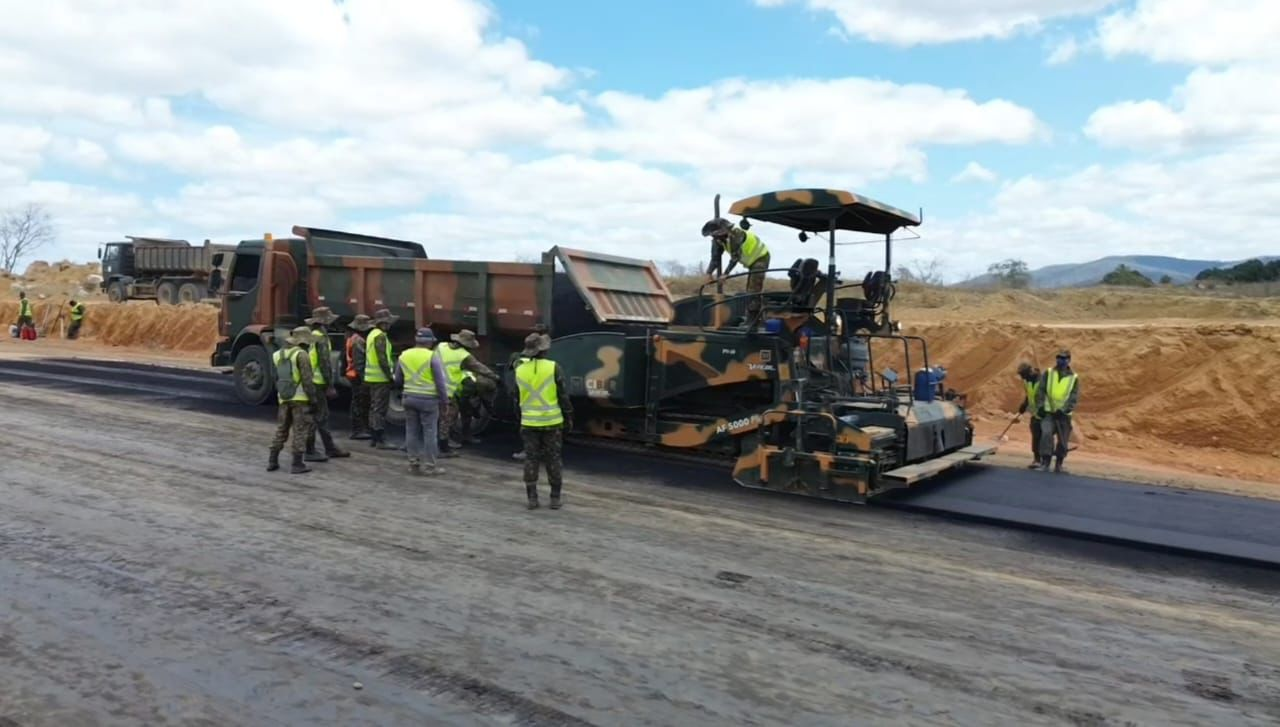

Military Personnel Pave Important Highway (BR), Creating a Vital Connection Between Bahia and Minas and Enhancing Their Operational Skills. A Mega Engineering Operation Guarantees National Security and Mobility, Elevating Road Infrastructure to a New Level.
When it comes to infrastructure projects in Brazil, it is rarely imagined that the armed forces are involved, especially in strategic highway projects for the country.
However, an important mission is underway on BR-367, a key route connecting Southern Bahia to Northern Minas Gerais.
Led by the 2nd Battalion of Construction Engineering (2nd BEC) of the Brazilian Army, this paving and infrastructure development project not only transforms regional mobility but also serves as an example of military readiness and training, essential for maintaining the readiness of ground forces in Brazil.
-
A new Brazilian shopping center worth R$ 400 million will be built in an area equivalent to more than 4 football fields, featuring 90 stores, 5 cinemas, a supermarket, a college, and parking for 1,700 cars, potentially generating 3,000 jobs.

-
Larger than entire cities in Brazil: BYD is building a 4.6 km² complex in Bahia with a capacity for 600,000 vehicles per year, but the discovery of 163 workers in conditions analogous to slavery has shaken the entire project.

-
With an investment of R$ 612 million, a capacity to process 1.2 million liters of milk per day, Piracanjuba inaugurates a mega cheese factory that increases national production, reduces dependence on imports, and repositions Brazil on the global dairy map.
-
Brazilian city gains industrial hub for 85 companies that is equivalent to 55 football fields.


The project, conducted in partnership with the National Department of Transport Infrastructure (DNIT), utilizes cutting-edge military and technological resources to ensure the quality and durability of the highway.
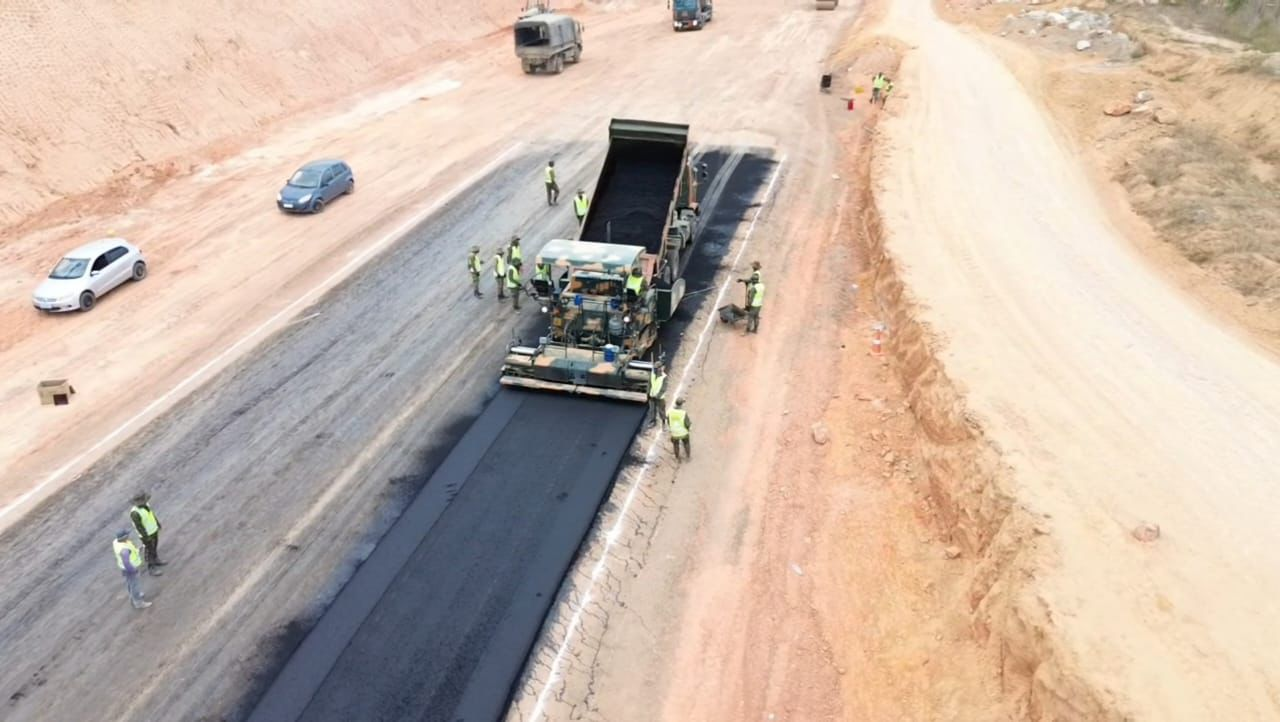
In the municipality of Jacinto, Minas Gerais, around 150 military personnel and more than 120 engineering equipment are actively engaged in essential tasks such as earthworks, soil compaction, installation of culverts, and finally, the asphalt paving of BR-367, a project that promises to facilitate transportation and foster economic development between the states of Bahia and Minas Gerais.
The mission of the Brazilian Army in this operation goes beyond simply paving a highway; it is a strategic exercise that allows for the continuous improvement of operational and technical skills of the military, something that directly benefits national security.
The Process and Military Operation
With robust machinery, specialized materials, and detailed planning, the Brazilian Army has been carrying out meticulous stages to ensure a durable and safe road structure.
The work begins with laboratory tests, where the soils of the region are analyzed to ensure the selection of the best material for paving.
Additionally, the team builds a specific yard for the asphalt plant, facilitating the transport and application of material along the highway stretch.
According to the engineers of the project, this initial stage is essential to avoid future problems and ensure that the road can withstand the weight of the vehicles that will transit daily.
Next comes the earthworks, where the soil is leveled and prepared to receive the asphalt.
This phase requires precision, as any mistakes can compromise the durability of the asphalt.
Subsequently, soil compaction occurs, ensuring that the base is firm enough to receive the layers of asphalt, increasing the road’s resistance against daily wear.
Technical Inspection and Project Safety
To ensure quality at every stage, the Army conducts regular technical inspections at the construction site, including visits by senior officers responsible for the project.
Recently, Army General Anísio David de Oliveira Júnior, head of the Department of Engineering and Construction (DEC), visited the site for a detailed inspection.
Accompanied by a delegation, the general not only inspected the progress of the work but also provided strategic guidance, ensuring that the project complies with the rigorous standards of DNIT and the safety requirements of the Army.
This type of operation involves various aspects, from handling heavy materials to adhering to environmental regulations, all closely supervised to ensure that the project meets both quality standards and environmental responsibility.
According to Army sources, this is an opportunity to develop the operational capabilities of the troops under real working conditions, enhancing the mobility and rapid response capacity of the armed forces.
Highway: Benefits for Society and Military Training
The Army’s role in paving BR-367 goes far beyond engineering; it represents a crucial opportunity for the continuous training of troops.
Each paving operation provides the military team with a chance to enhance their skills in areas such as mobility and protection, competencies that are essential in defense operations and logistical support.
The military presence in civil works may seem atypical, but it is a practice adopted in several countries as a way to maintain the operational readiness of the armed forces.
The development of these capabilities also strengthens national security, as military personnel are always ready to act in emergency situations or to support large-scale operations in any region of the country.
As experts point out, these experiences in construction engineering strengthen the Army’s performance in different scenarios, ensuring that the Ground Force is equipped to support the Brazilian population in various fronts, whether logistical, defense, or assistance in disasters.
A New Phase for Infrastructure in Brazil
The paving work on BR-367 highlights the importance of military engineering for Brazilian infrastructure.
Each paved kilometer represents an advance in connectivity between regions and promotes economic development by facilitating the transport of goods.
For the local population, the completion of the project will bring safety and agility, benefiting both commerce and tourism between Bahia and Minas Gerais.
And for the Army, it is an opportunity to showcase the technical capabilities of its troops, demonstrating to the nation that the armed forces are prepared to operate on multiple fronts, always for the benefit of the nation.
This initiative emphasizes the role of the armed forces in promoting quality infrastructure, reinforcing the idea that the Brazilian Army is not just a defense institution, but also an active agent in national development.









Eu sou contra colocar o exército para tais trabalhos, deviam colocar presidiários para trabalhar e deixar o exército somente por conta das fronteiras do país… teríamos uma economia de bilhões de reais por ano
Anos e anos e os 60km nunca ficam asfaltados.
Obra que nunca sai da terraplanagem. Nunca vem o asfalto. Sou da região da 367. Fazem a preparação para o asfalto, vem período chuvoso e perde o que foi feito, aí começam outro ano de terraplanagem, um absurdo. Deve ter alguém ganhando com isso. Na China ou Japão, fariam este asfaltamento em 6 meses. Desperdicio de dinheiro público.
Vc entende de terraplanagem??? Sabe o q é base e sub-base, sabe o que é estudo de solo, o q é borrachudo no asfalto, se não sabe cala a **** da boca