





 Portuguese
  English
  Spanish
  3 min of reading
  0 comments


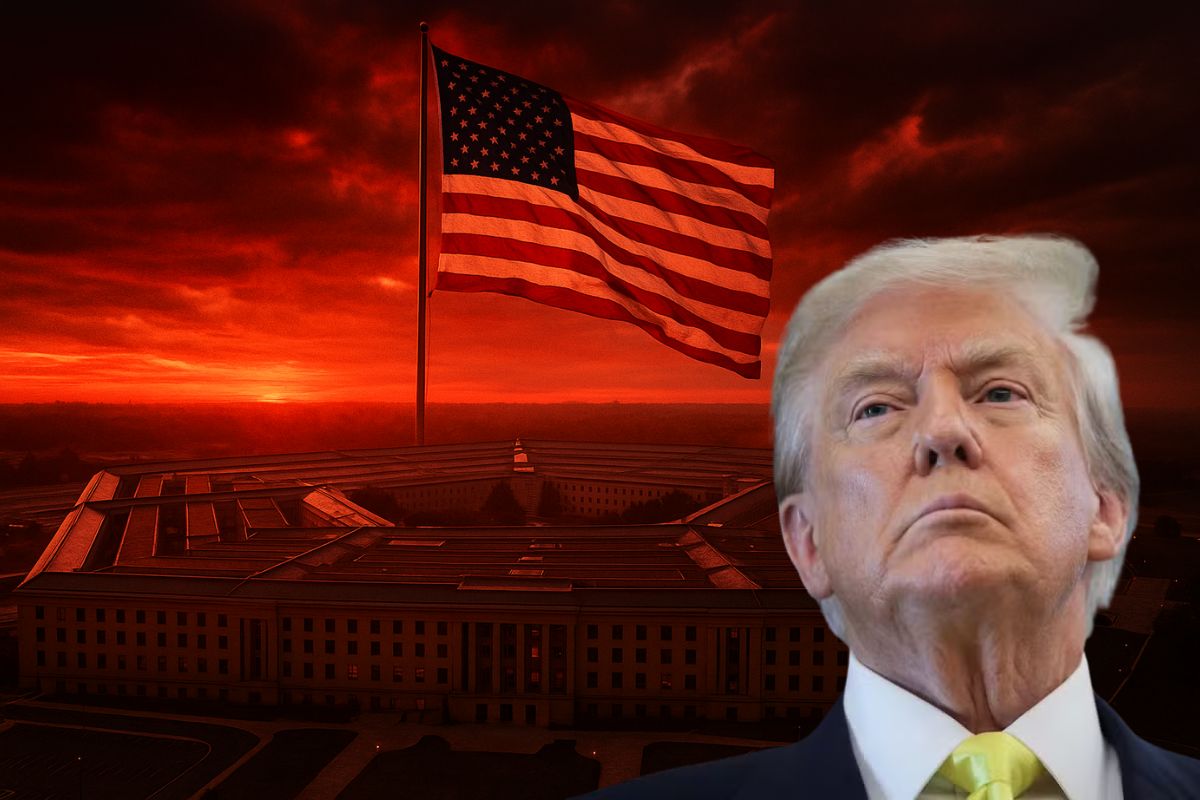
Change Announced by Trump Is Symbolic: Without Congressional Approval, the Official Name of the Pentagon Remains Department of Defense.
The President of the United States, Donald Trump, declared on September 5 that he intends to rename the Pentagon from Department of Defense to Department of War. According to IstoÉDinheiro, the White House confirmed that the executive order will only be ceremonial, as any official change depends on Congressional approval.
In practice, the order signed by Trump will allow the use of terms like “Secretary of War” in events, internal communications, and unofficial documents of the Executive.
Without legislative backing, the legal name of the agency does not change, but the measure reinforces the political message that Trump wants to convey about the country’s military stance.
-
Classified as a “amphibious monster” weighing 555 tons, 57 meters long, and featuring three propellers with a diameter of 5.5 meters, the Zubr is the largest military hovercraft ever built, capable of transporting 3 tanks or 500 soldiers at speeds exceeding 100 km/h over water, ice, and sand, and China has resumed production of it to project power in the South China Sea.

-
The U.S. Army receives the first Black Hawk helicopter that can fly without pilots, be controlled by a tablet, and even land on its own during high-risk missions.

-
With 11,000 tons and sensors capable of hunting submarines at long distances, the Type 055 has become one of the most feared floating arsenals of the Chinese navy.

-
With over 15,000 tons, radars capable of tracking hundreds of targets simultaneously, and more than 120 missiles ready for launch in seconds, modern destroyers cease to be escorts and begin to dominate the naval battlefield.


Who Is Involved in the Change
According to IstoÉDinheiro, the announcement was accompanied by the current Secretary of Defense, Pete Hegseth, who is expected to propose legislative measures to formalize the change.
War veteran and former Fox News presenter, Hegseth shared the phrase “DEPARTMENT OF WAR” on his social media, aligning himself with Trump’s decision.
Trump justified the choice by stating that “Department of Defense” sounds “too defensive” and that “Department of War” conveys a stronger message of readiness.
He reminded that the agency had that name in the past, including during World War I and World War II, when the U.S. achieved decisive victories.
Where This Decision Connects with History
The Pentagon was originally created in 1789 as the Department of War, during George Washington’s presidency.
In 1947, after World War II, it was renamed the Department of Defense as part of the reorganization that unified the Army, Navy, and Air Force.
Trump’s attempt to revert to the old name is part of a symbolic strategy that seeks to recover historical tradition and reinforce a vision of “warrior ethics” in the Armed Forces.
Why the Measure Is Controversial
The renaming of the Pentagon carries significant political weight. According to IstoÉDinheiro, Hegseth and Trump have criticized policies referred to as “woke,” a term used pejoratively to refer to progressive agendas such as diversity and inclusion.
The secretary has defended, for example, the exclusion of transgender service members and the reversal of social inclusion programs in the Armed Forces.
For critics, the proposal is another move of warlike rhetoric that could further polarize the political and military environment in the United States.
Supporters, however, see the measure as a reaffirmation of the country’s military strength and identity.
Is It Worth Taking This Change Seriously?
Despite the symbolic impact, experts point out that the effective change will only occur if Congress approves it.
This means that, for now, the Department of Defense remains the official name of the Pentagon, and Trump’s order only holds in ceremonial context.
Nonetheless, the initiative reinforces Trump’s political brand and signals a potential hardening of his administration regarding defense and national security policy.
The announcement by Trump to rename the Pentagon as the Department of War is, for now, merely symbolic.
The measure depends on the Congress to become official, but already reveals the president’s political strategy to revive military traditions and confront progressive agendas within the Armed Forces.
And you, do you believe that the return of the name “Department of War” strengthens the military image of the U.S. or represents just a political gesture with limited impact?
Leave your opinion in the comments—we want to hear from those who experience this debate up close.










-

Uma pessoa reagiu a isso.