





 Portuguese
  English
  Spanish
  4 min of reading


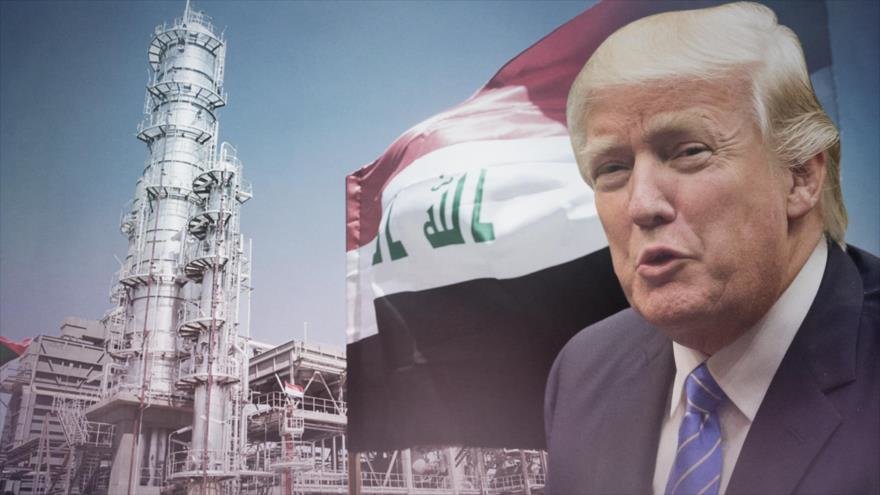
The Increase in Oil Production Was Not Discussed at the Joint Ministerial Monitoring Committee OPEC-Non-OPEC on Sunday, Despite U.S. President Donald Trump Asking OPEC to Lower Oil Prices via Twitter.
Oil – According to the Iranian energy news website Shana, OPEC Governor Hussein Kazempour Ardebily, who represented Iran in Algiers, stated that the member countries present at the meeting emphasized 100% compliance with the previously agreed production cut agreement between OPEC and OPEC. Before the OPEC-NON-OPEC meetings in Algiers over the weekend, Trump asked on Thursday for OPEC to increase production.
He said: “We protect the countries of the Middle East, they would not be safe for very long without us, and yet they continue to push for higher and higher oil prices! We will remember. The OPEC monopoly must get prices down now!”
We protect the countries of the Middle East, they would not be safe for very long without us, and yet they continue to push for higher and higher oil prices! We will remember. The OPEC monopoly must get prices down now!
ARTICLE CONTINUES BELOWSee also
Haiti’s capital is experiencing an energy and construction crisis, facing blackouts, a blocked port, and buildings at risk after years of instability and a significant earthquake.
Government unlocks R$ 554 million for a highway that has been requested for decades and accelerates the duplication of BR.
Without bricks, without cement, and without endless construction: the cardboard house that is assembled in modules and can be moved.

Billions of barrels on the equatorial margin could lead Amapá to double its oil production in Brazil — the state aims to enter the route of companies in the Campos Basin, attract investments, and boost jobs and businesses in the oil and gas sector.
— Donald J. Trump (@realDonaldTrump) September 20, 2018
However, it seems that OPEC/non-OPEC members were not swayed by the tweets, as Khalid A. Al-Falih, Minister of Energy, Industry, and Mineral Resources of Saudi Arabia; and Chairman of the Joint Ministerial Monitoring Committee (JMMC), responsible for monitoring compliance by members with maintaining production at a certain level, stated that the oil supply and demand balances remain satisfactory.

He also expects oil demand to grow: “When it comes to oil demand, we are seeing reasonably healthy growth close to 1.5 million barrels per day on average this year and next. This is quite encouraging, but should be viewed with caution in light of ongoing concerns about global trade and tariff issues and monetary crises in some developing economies, and their potential implications for the global economy.
“Although stocks have fluctuated due to short-term factors, the broader inventory trend remains reassuring, with U.S. and OECD stocks falling to the five-year average range.”
“Investment is also returning to the industry, as increased market stability inspires greater confidence in the oil sector. Given the time horizons of such spending, renewed investment activity is a vote of confidence in the long-term prospects of the sector.
“And when it comes to the functioning of our joint efforts, cooperation between OPEC and non-OPEC has remained strong, which undoubtedly has played a key role in creating market stability.”
At the end of 2016, OPEC, led by Saudi Arabia, and several non-OPEC oil producers led by Russia, signed an agreement to cut production by 1.8 million barrels per day to raise oil prices from historic lows caused by the surge in U.S. shale oil production. Members agreed in June to ease some of the cuts, as compliance had reached over 100%, meaning they were cutting more than originally pledged.
The committee noted on Sunday that the participating countries in the agreement achieved a compliance level of 129% in August 2018 and 109% in July 2018, progressing toward the decisions of the 174th OPEC Meeting convened in June to adjust overall compliance to 100%.
It is worth noting that Al-Falih stated over the weekend that despite the satisfactory balance between supply and demand, members continued to closely monitor supply and demand “and will respond appropriately and in a timely manner as necessary.”
These words may be very important in the coming months, as U.S. sanctions are expected to hit Iran’s oil production in November, aimed at reducing oil exports.
As previously reported, following Trump’s announcement that he would be reinstating sanctions on Iran, Al-Falih tweeted: “After the U.S. withdrawal from the #IranDeal, I would like to confirm our commitment to oil market stability for the benefit of producers and consumers. The #Saudi will work closely with major OPEC, non-OPEC producers and key consumers to mitigate the effects of any supply shortages.”
While he did not name the countries, Bloomberg speculated that Saudi Arabia and the United Arab Emirates “are the largest U.S. supporters within OPEC and are politically aligned against Iran in the Middle East.”
Brent crude oil rose to the highest level since May, at $80.43 per barrel, and increased $1.57, or 2%, to $80.37 per barrel, at 0642 GMT on Monday morning, Reuters reported.






Seja o primeiro a reagir!