





 Portuguese
  English
  Spanish
  4 min of reading
  1 comment


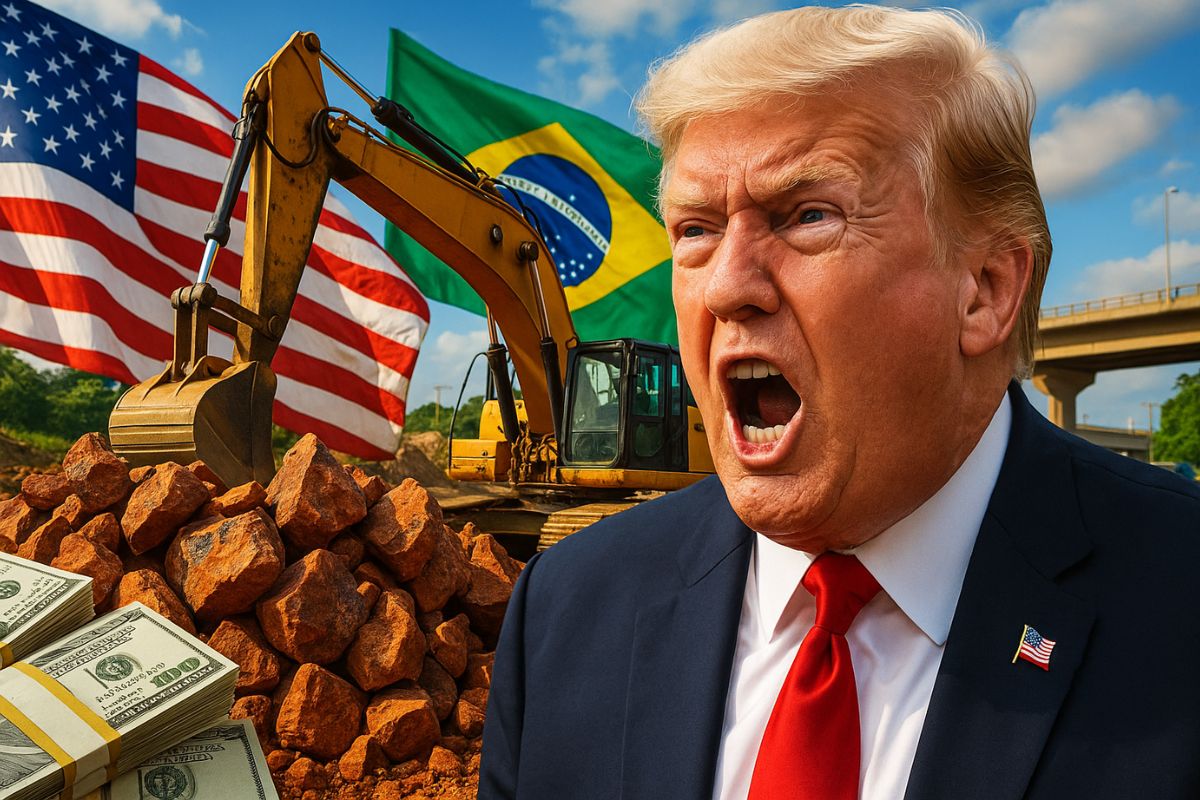


In A New Round Of Talks, The White House Signals It May Reconsider Sanctions And The 50% Tariff On Brazilian Products In Exchange For Access To Critical Minerals, Changes In Digital Platform Rules And Reduction Of Barriers In Sectors Such As Ethanol, Automobiles And Audiovisual, While Brasília Tries To Balance Counterparties, Industrial Protection And Sovereignty Over Strategic Resources
The Discussion About The 50% Tariff Was Revived After Donald Trump Claimed He Is Ready To “Start Doing Business” With Brazil And Put On The Table The Access To Critical And Strategic Minerals. The Planalto Admits To Negotiate, But Conditions Any Advancement On Concrete Counterparties, Such As Productive Investments And Technology Transfer In High Value-Added Chains.
In Parallel, The Brazilian Government Is Seeking To Eliminate Sanctions Applied To Brazilian Citizens And Reverse Surcharges Affecting Local Exporters. The Message Is Pragmatic: There Will Be Discussion About Mining, Digital Platforms, Ethanol And Automobiles, But Without Giving Up On Domestic Priorities And Dialogue With The Private Sector Before Finalizing Sensitive Terms.
What Is On The Table And Why It Matters
According To O Globo, Washington Signals The Possibility To Reconsider The 50% Tariff And Ease Sanctions If Brazil Can Provide Competitive Access To Raw Materials Such As Lithium, Copper, Silicon, Graphite And Rare Earths.
-
A new Brazilian shopping center worth R$ 400 million will be built in an area equivalent to more than 4 football fields, featuring 90 stores, 5 cinemas, a supermarket, a college, and parking for 1,700 cars, potentially generating 3,000 jobs.

-
Larger than entire cities in Brazil: BYD is building a 4.6 km² complex in Bahia with a capacity for 600,000 vehicles per year, but the discovery of 163 workers in conditions analogous to slavery has shaken the entire project.

-
With an investment of R$ 612 million, a capacity to process 1.2 million liters of milk per day, Piracanjuba inaugurates a mega cheese factory that increases national production, reduces dependence on imports, and repositions Brazil on the global dairy map.

-
Brazilian city gains industrial hub for 85 companies that is equivalent to 55 football fields.


The American Objective Is To Strengthen Supply Chains In Renewable Energy, Electric Mobility, Defense And High Technology, Reducing Global Dependencies.
On The Brazilian Side, The Strategy Is To Negotiate Deliberately. Opening Access Without Capturing Technology And Investments Can Cement The Role Of Simply Providing Inputs.
The Planalto’s Signal Is To Tie Concessions To Verifiable Commitments Of Local Industrialization, R&D And National Content, Avoiding The End Of The 50% Tariff From Becoming A Short-Term Gain Only.
Critical Minerals: Access, Governance And Counterparties
The Pressure For Minerals Involves Volumes, Deadlines And Environmental Governance.
Brazil Wants Guarantees That New Projects Respect Licensing, Traceability And Socio-Environmental Rules, In Addition To Industrial Partnerships That Internalize Stages Of Processing And Component Manufacturing.
To Unblock The 50% Tariff With Lasting Benefits, The Design Of The Agreement May Include Processing Zones, Value Aggregation Goals And Formation Of Local Suppliers.
Without This, The Risk Is To Increase The Export Of Raw Materials And Miss The Window To Consolidate A Technological Chain In The Country.
Tariffs, Sanctions And The Opportunity Cost
In Addition To Minerals, There Are Sanctions Against Brazilian Citizens That Are Part Of The Negotiation Package. Brasília Wants Predictability For Companies And Individuals, Reducing Legal Risk.
In Exchange, The U.S. Seeks Signs Of Alignment On Trade And Digital Regulation Issues.
The 50% Tariff Generates Opportunity Cost For Brazilian Exporters By Increasing The Cost Of Accessing The American Market.
Eliminating Or Reducing This Surcharge May Reopen Contracts And Improve Margins, Provided That It Does Not Imply Disproportionate Concessions In Strategic Sectors.
Sensitive Sectors: Ethanol, Beverages And Audiovisual
Washington Wants Reduction Of The Ethanol Import Tariff, Currently At 18%, And Questions IPI Rates For Beverages Such As Whiskey Compared To Cachaça, In Addition To Bureaucracy For Wines.
For Brazil, Altering These Barriers Touches On Regional And Fiscal Interests, Requiring Delicate Calculations To Not Disorganize Internal Chains.
In The Audiovisual Sector, The United States Considers The Taxation On Foreign Productions To Be Excessive And Asks For More Space On TV.
The Brazilian Government Is Handling This Cautiously And May Even Raise Charges If There Is No Convergence. The Dilemma Is To Stimulate The Market Without Weakening The Local Industry Or Limiting Cultural Policies.
Government Purchases, Used Goods And Technical Barriers
Included In The Agenda Are Public Purchases, The Used Market Such As Tires And Medical Equipment, And Regulatory Transparency For Footwear And Clothing.
The U.S. Also Criticizes Anatel’s Requirements For Telecom, Besides Bringing Up Satellites, Data And Pharmaceutical Patents As Pain Points.
To Unblock The 50% Tariff Without Opening Flanks, Brazil Is Trying To Harmonize Rules Where It Makes Sense And Preserve Technical Safeguards In Sectors Sensitive To Security, Health And Competition.
Blindly Relaxing Regulations May Transfer Market Power And Harm Local Innovation.
Digital Platforms, Pix And Intellectual Property
The White House Wants To Discuss Regulation Of Large Platforms And Cites Pix Amidst Concerns About Payment Methods.
The Brazilian Position Is To Defend That Pix Does Not Distort Competition, While Advancing Data Protection And Security Rules.
On The Intellectual Property Front, The U.S. Demands Speed In Patents.
The Challenge Is To Unblock Delays Without Compromising Access To Medications And Public Health Policies. Regulatory Balance Is The Key Word To Avoid Asymmetries.
Who Leads And What Are The Next Steps
On The Political Front, Trump And Lula Kept The Dialogue Focused On Economy And Trade And Defined Coordination With U.S. Secretary Of State Marco Rubio To Drive The Negotiations.
Brazilian Diplomats Emphasize That There Will Be No Decision Without Listening To The Private Sector And Mapping Regional Impacts.
The Next Meetings Should Detail Lists Of Concessions And Demands.
The Pace Of Negotiation Will Be Dictated By The Ability To Turn Promises Into Executable Commitments, With Deadlines, Metrics And Review Mechanisms That Reduce Uncertainty For Companies And Workers.
The Equation Is Clear: How To Exchange The End Of The 50% Tariff For Access To Minerals Without Lowering Brazil’s Role In Technological Chains.
It Is Worth Accepting Tariff Cuts In Ethanol And Audiovisual In Exchange For Investment And Technology Transfer In Batteries And Semiconductors.






I must say this article is extremely well written, insightful, and packed with valuable knowledge that shows the author’s deep expertise on the subject, and I truly appreciate the time and effort that has gone into creating such high-quality content because it is not only helpful but also inspiring for readers like me who are always looking for trustworthy resources online. Keep up the good work and write more. i am a follower.