





 Portuguese
  English
  Spanish
  6 min of reading
  0 comments


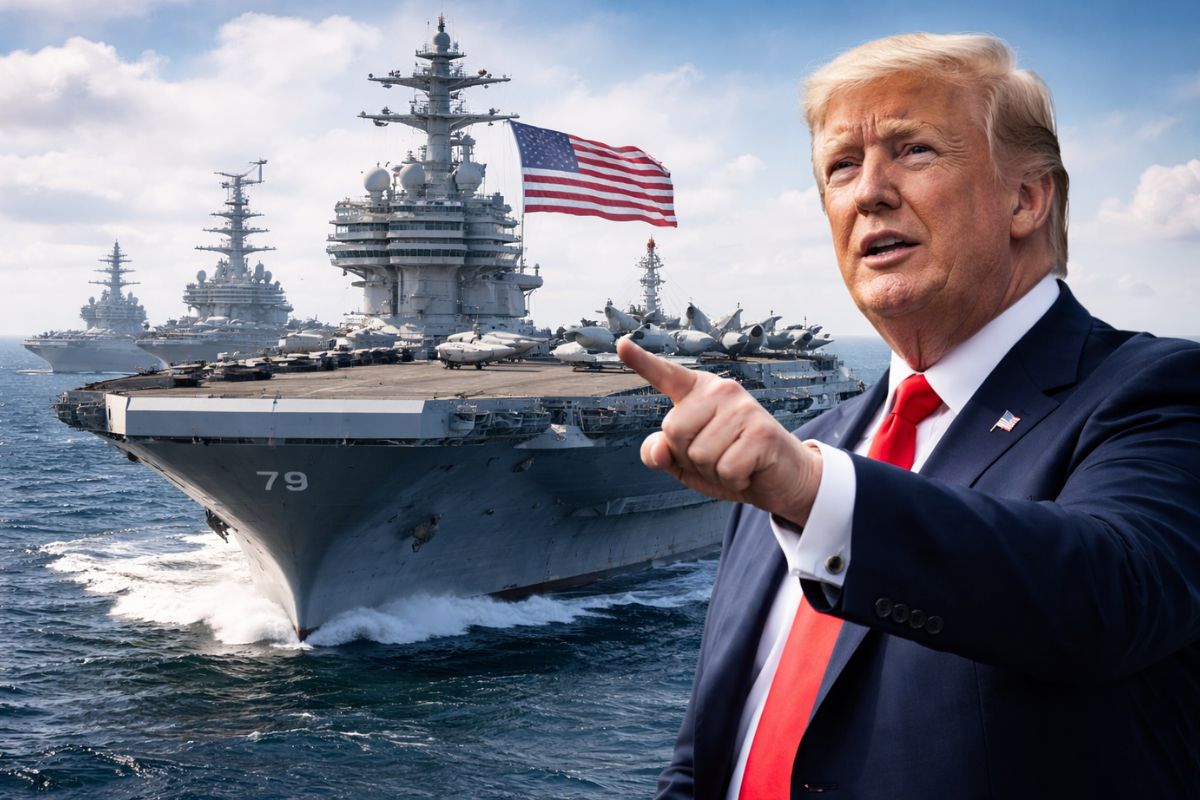
On December 22, 2025, at the White House, Trump announces that the new Trump-Class warships with artificial intelligence will be the US Navy’s response to the Chinese Navy, in a plan to maintain superiority at sea and strengthen US naval power in the coming decades
The President of the United States, Donald Trump, announced the construction of new Trump-Class warships for the US Navy, in direct response to the accelerated expansion of the Chinese fleet. According to the official speech, the first phase of the program plans for at least two large battleships and a total of 25 ships, all designed to operate with advanced artificial intelligence systems.
In recent years, China has steadily expanded its naval military fleet and, since the middle of the last decade, has surpassed the US Navy in the number of vessels, although Washington still leads in tonnage and in more advanced types of ships. The announcement of the new Trump-Class warships comes just a month after the US Navy itself abandoned the project for a small warship, which was canceled due to repeated delays and budget overruns, increasing the political and strategic weight of the new initiative.
China Expands Fleet and Pressures US Naval Power
Behind the scenes of American defense, the expansion of the Chinese navy is treated as a structural change in the balance of power in the Indo-Pacific.
-
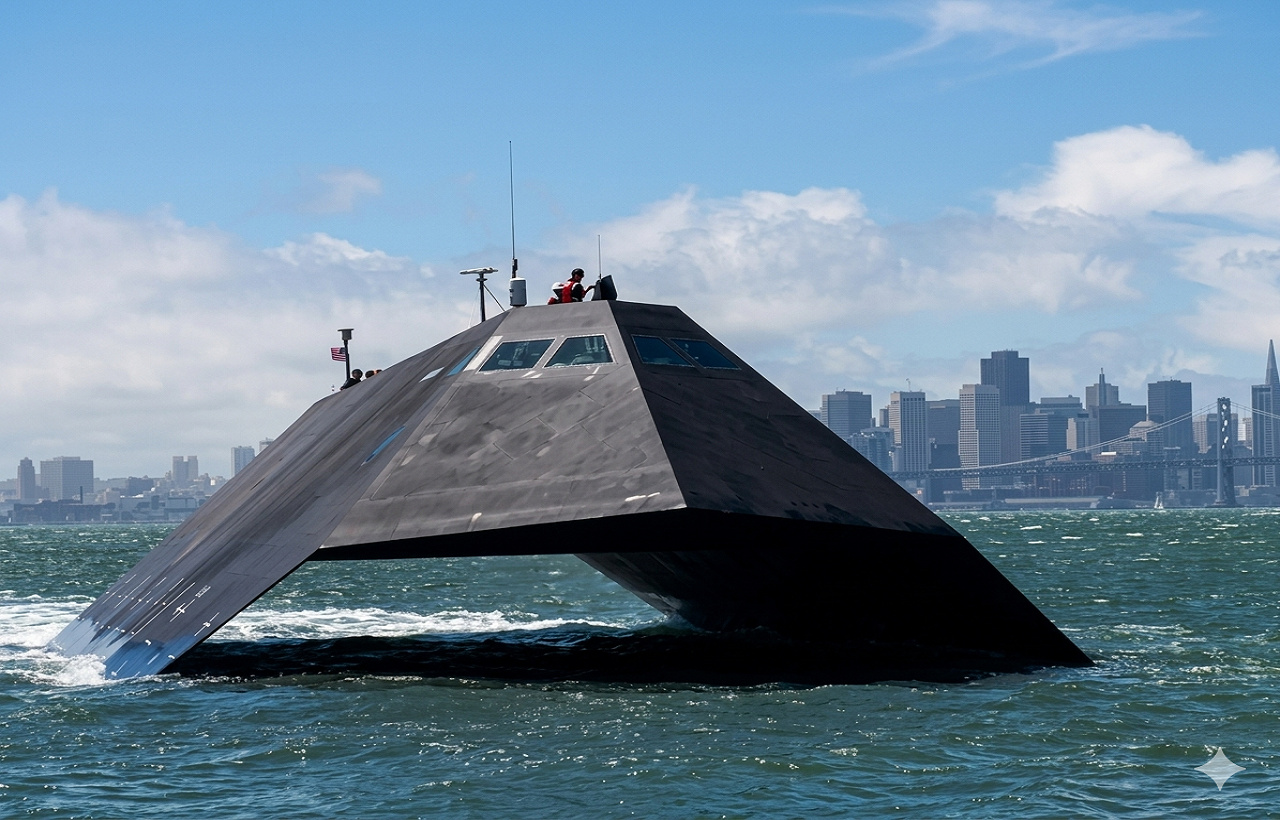
Built in secret inside a barge with a satellite-proof roof, the 49-meter, 560-ton ship with stealth technology deflected radar waves like an F-117 fighter, sailed invisibly for nearly 10 years at night, and, despite costing 170 million dollars, ended up being dismantled and sold as scrap for only 2.5 million.
-
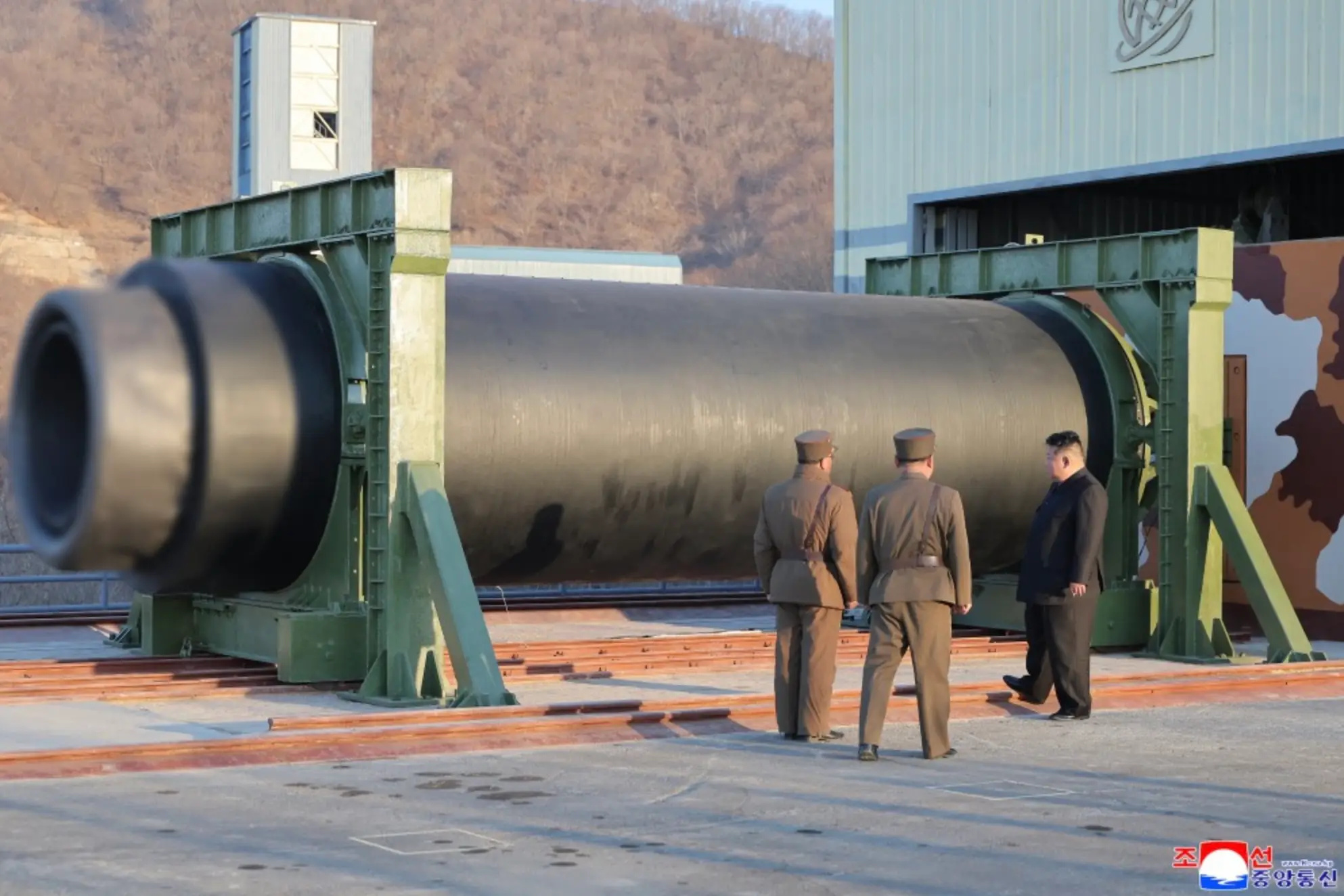
North Korea tests intercontinental range rocket with a 2,500 kN solid fuel engine supervised by Kim Jong Un and advances in a five-year strategic plan.
-
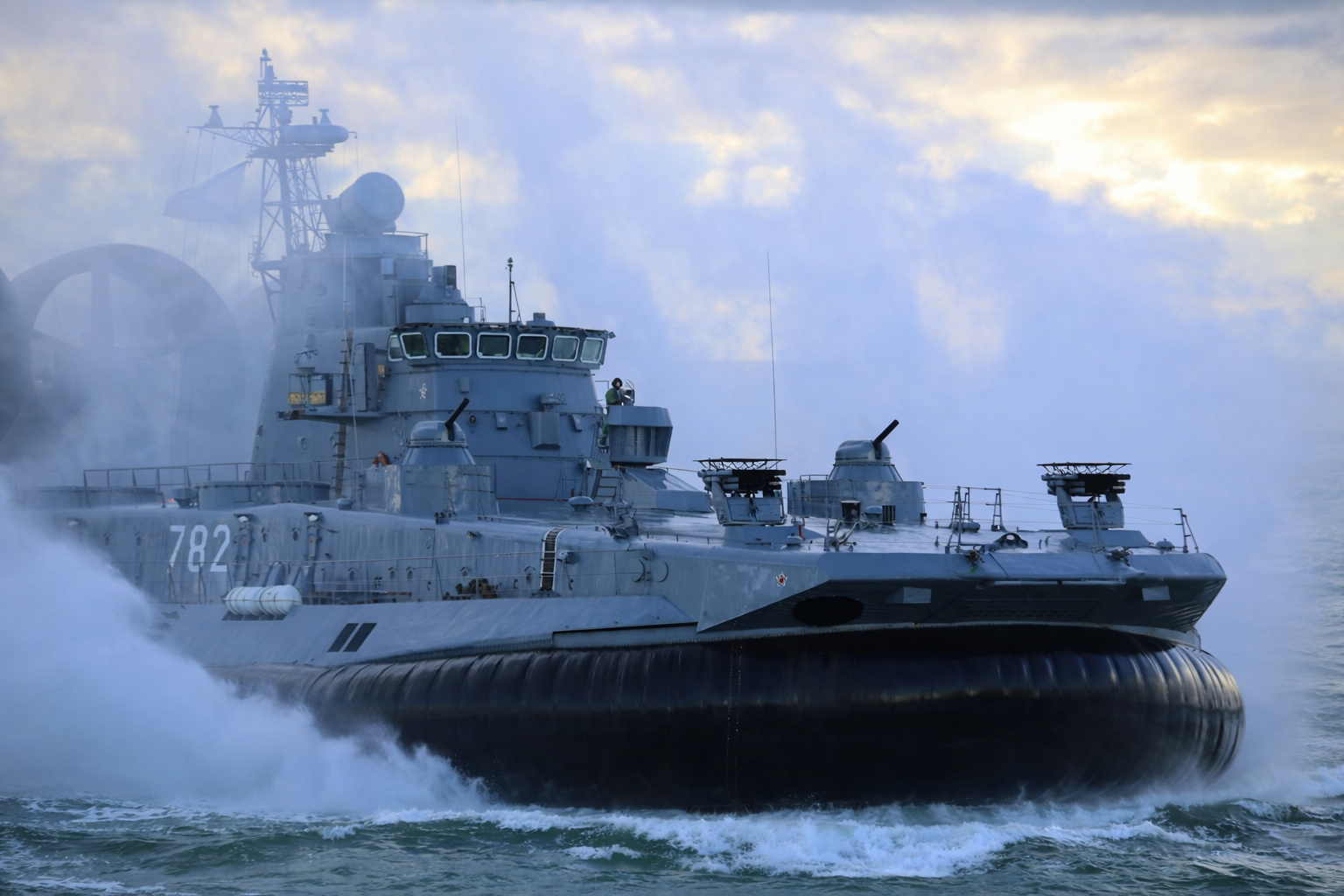
Classified as a “amphibious monster” weighing 555 tons, 57 meters long, and featuring three propellers with a diameter of 5.5 meters, the Zubr is the largest military hovercraft ever built, capable of transporting 3 tanks or 500 soldiers at speeds exceeding 100 km/h over water, ice, and sand, and China has resumed production of it to project power in the South China Sea.
-
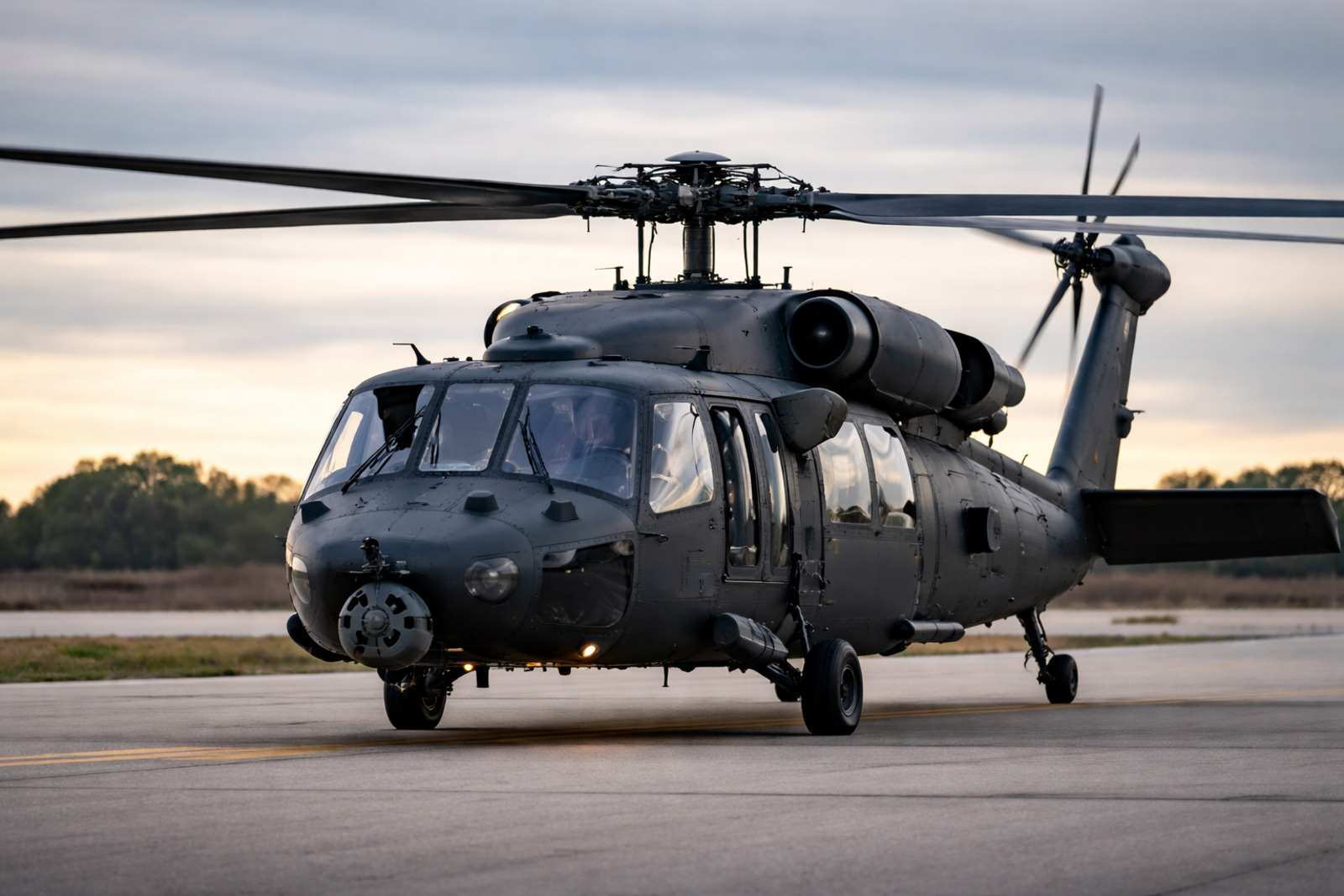
The U.S. Army receives the first Black Hawk helicopter that can fly without pilots, be controlled by a tablet, and even land on its own during high-risk missions.

Beijing has begun launching ships at an industrial pace, combining destroyers, frigates, support ships, and amphibious means on a scale that exceeds that of the United States.
Although the US Navy still maintains an advantage in ship size, sensor quality, and missile range, the difference in the gross number of hulls has begun to concern the White House and the naval command itself.
In Trump’s view, this movement demands a visible response, capable of signaling that Washington does not intend to lose ground in the main global maritime corridors.
In this context, the new Trump-Class warships are presented as a symbol of the resurgence of American initiative, combining the historical weight of battleships with modern technologies that did not exist during the Cold War.
What Are the New Trump-Class Warships
According to the presidential announcement, the commissioned ships will officially be named Trump-Class Warships, inscribing the president’s surname in the very nomenclature of the fleet.
The first stage of the program talks about at least two battleships, with a total expectation of 25 units over the complete construction cycle.
In practice, Trump revives the classic concept of heavy warships but tries to associate it with a command and fire platform guided by artificial intelligence, something that did not exist when the last battleships were retired from service.
The proposal is to combine great striking power with greater automation in threat detection, route calculations, target prioritization, and coordination with other fleet assets.
The new Trump-Class warships are described as the core of a broader modernization effort, aimed at reinforcing American presence in areas where the Chinese navy has gained density of assets in recent years.
From the Peak of Iowa-Class Battleships to the Current Bet
Historically, the term “warship” referred to a very specific type of vessel, large, heavily armored, and armed with large-caliber guns, designed to bombard other ships or land targets.
This model reached its peak during World War II, when the largest American warships, of the Iowa class, reached about 60,000 tons of displacement.
After 1945, the role of battleships in modern fleets quickly declined with the rise of aircraft carriers and long-range missiles.
In the 1980s, the US Navy modernized four Iowa-class ships, adding cruise missiles, anti-ship missiles, and upgraded radars.
However, in the 1990s, all of these ships were again decommissioned, leaving the concept of heavy warships practically out of the frontline.
By deciding to invest in new Trump-Class warships, the government revives this legacy, now with the promise of integrating digital sensors and automated systems into a large hull, instead of concentrating all efforts on aerial platforms or just on destroyers and cruisers.
Trump, Old Technologies and the Turn to Artificial Intelligence
Trump had already shown, at different times, a preference for maintaining technologies deemed old in parts of the fleet, advocating for the preservation of certain systems instead of replacing them with entirely new solutions.
This view sparked debates among experts, who pointed to risks of technological lag in a scenario of intense competition with other powers.
However, in this Monday’s statement, the president emphasized that he intends to equip the warships with more modern technologies, partially breaking with the image of attachment to past structures.
The new Trump-Class warships were presented as a showcase of this change, with explicit emphasis on artificial intelligence resources applied to naval combat.
AI was cited by Trump as an “important factor” in the development of the vessels, an argument that indicates the intention to equip the future Trump Class with systems capable of analyzing large volumes of data in real-time, classifying threats, and suggesting responses in complex maritime warfare scenarios.
Artificial Intelligence at the Center of the Naval Project
The bet on artificial intelligence in the new Trump-Class warships has direct effects on how future crews should operate.
The logic is to bring the battleships closer to a floating command center role, capable of integrating information from satellites, aircraft, submarines, and other ships around.
In theory, automated systems can reduce the time between target detection and the decision to fire, as well as prioritize risks based on pre-programmed criteria and continuous analyses of the combat environment.
This includes, for example, quickly distinguishing between merchant ships, military escorts, manned aircraft, and attack drones.
Despite the optimistic discourse, the intensive use of AI in combat platforms raises technical and ethical questions, such as the allowed level of autonomy, the need for human oversight, and the risk of software failures in high-pressure situations.
None of these points were detailed by Trump in the announcement, which focused more on political goals and the volume of intended ships.
Pressure on the Military Industry and Tight Schedules
When presenting the plan, Trump stated that he wants to see the new Trump-Class warships ready as soon as possible, making it clear that he considers the current industry schedules “very slow.”
He informed that he will meet the following week in Florida with companies that provide services to the Department of Defense to discuss production deadlines.
The meeting with the major suppliers of the American military complex sends a direct message to the naval industrial chain, traditionally marked by long projects, specification revisions, and budget disputes in Congress.
The mention of “very slow production schedules” indicates that the government intends to push for deliveries at a faster pace than usual in large defense programs.
This initiative comes right after the Navy abandoned the plan to build a new small warship, canceled due to delays and budget overruns.
The shift towards a heavy Trump-Class battleship with AI, therefore, arises at a moment when the credibility of naval project schedules and costs is under scrutiny.
The Race Against Time and Impact on Maritime Superiority
By putting the new Trump-Class warships at the center of the discourse,
Trump tries to demonstrate that the United States still intends to lead the global naval game even in the face of Chinese expansion.
The message is directed both to external adversaries and to allies and the domestic public that follows defense policy.
If the 25 planned ships come to fruition with the promised capabilities, the US Navy will see a significant increase in firepower and command platforms at sea.
On the other hand, any delays, scope reductions, or budget cuts could turn the program into yet another example of an unfulfilled promise, especially in a scenario of tight competition with the Chinese fleet.
In your opinion, do the new Trump-Class warships with artificial intelligence have real potential to change the naval balance between the United States and China, or is the announcement more of a political move than a concrete transformation in US power at sea?









-

-

-

3 pessoas reagiram a isso.