





 Portuguese
  English
  Spanish
  4 min of reading
  0 comments


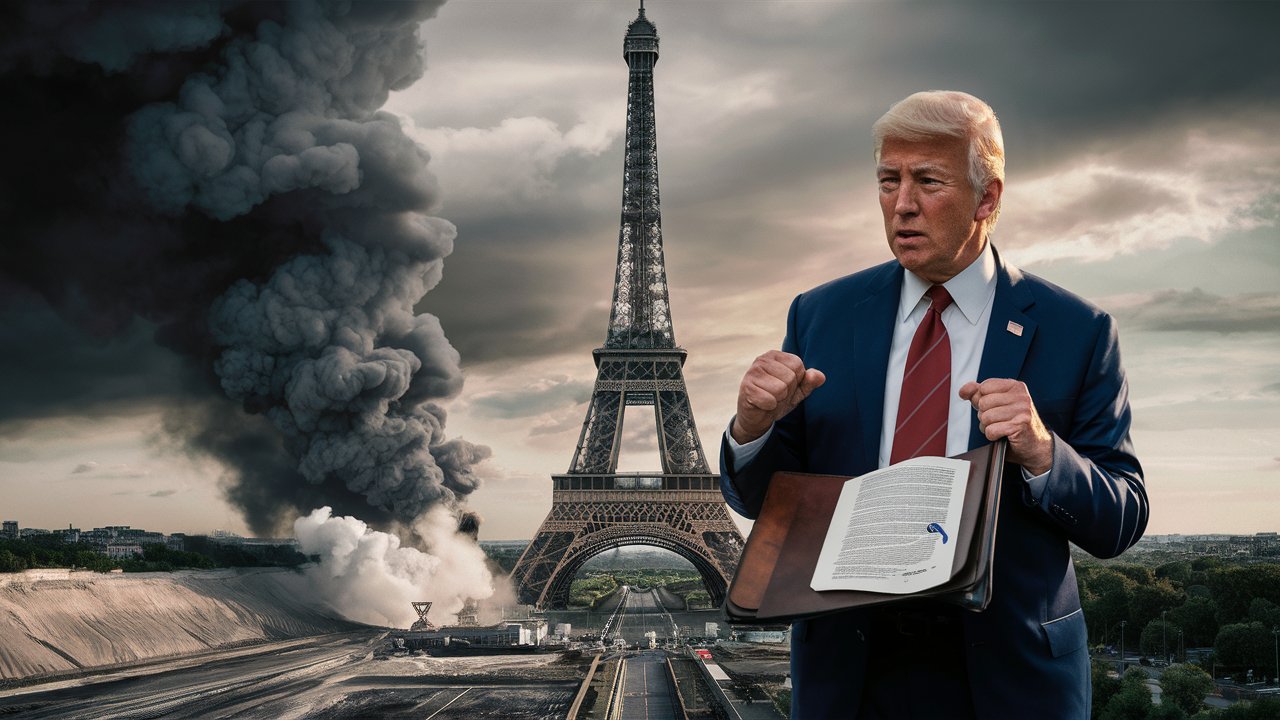
Donald Trump, During His Second Term as President, Withdraws the U.S. from the Paris Agreement and Prioritizes Fossil Fuels. Learn How These Decisions Impact the Environment, the Economy, and International Relations.
Initially, on June 1, 2017, Donald Trump announced the intention to withdraw the United States from the Paris Agreement. The decision was finalized on November 4, 2020. However, after the U.S. rejoined the agreement on February 19, 2021, under Joe Biden, Trump made drastic changes in 2025.
Impactfully, on January 20, 2025, Donald Trump withdrew the U.S. from the Paris Agreement for the second time. This decision reignited global debates about American leadership in combating climate change, as reported by The New York Times and The Washington Post.
The Paris Agreement was established on December 12, 2015, during COP21, with 195 signatory countries. It aims to limit global warming to below 2°C and to reach 1.5°C. Nevertheless, Trump claimed that the withdrawal would protect jobs and strengthen the American economy, a view widely contested by experts from the World Meteorological Organization.
-
The Ukraine war exposes the strength of the M113 armored vehicle amid modern warfare with military drones.

-
Maritime geopolitics: China and the USA compete for strategic ports in Peru.

-
Iran shoots down two US aircraft: F-15 fighter crashes in mountainous area, one crew member is rescued and another is still missing; second crash in the Persian Gulf exposes still active air defense, says US intelligence.

-
USA and China compete for Brazil over resources that could be worth trillions — rare earths put the country at the center of a global dispute

While industrial sectors supported the measure, analysts from the International Energy Agency highlighted that this represents a significant blow to global climate efforts. Without U.S. participation, climate goals become harder to achieve.
Measures to Promote Fossil Fuels
Furthermore, Trump announced, on January 25, 2025, a series of executive orders favoring fossil fuels. Among the main measures, the following stand out:
- Expansion of Oil and Natural Gas Exploration on Federal Lands and Waters, something he has publicly advocated since 2017.
- Suspension of Subsidies and Incentives for Electric Vehicles, detailed in official statements on January 26, 2025.
- Reduction of Environmental Regulations Limiting Mining and Energy Exploration Activities, initiated in February 2025.
As reported by Reuters, Trump justified these initiatives as necessary to ensure the energy independence of the United States. However, the Environmental Defense Fund warned that these actions could hinder global progress in reducing emissions, as well as compromise public health.
Critics argue that prioritizing fossil fuels may harm the U.S. position in the global clean technology market. According to BloombergNEF, this sector has grown exponentially since 2020.
International and Domestic Reactions
Meanwhile, the withdrawal of the U.S. from the Paris Agreement generated immediate reactions, both internally and externally. On January 21, 2025, leaders like Emmanuel Macron and Justin Trudeau expressed concern over the impact of this decision on international climate efforts.
At the same time, the U.N. highlighted, on January 22, 2025, that this decision could destabilize global climate financing, especially for developing countries. During the same week, American states, such as California and New York, reaffirmed their climate commitments, according to The Guardian.
While local initiatives offer hope, the World Resources Institute warned, on January 24, that the lack of federal leadership hampers coordinated efforts. Groups like Greenpeace emphasize that local actions remain essential to mitigate climate impacts.
Economic and Environmental Consequences
In addition to political controversies, the economic and environmental implications of Trump’s decisions also concern experts. The journal Nature Climate Change analyzed, on January 30, 2025, how these policies may exacerbate climate disasters.
For instance, natural disasters such as Hurricane Harvey in August 2017 and the wildfires in California in 2021 have already caused high financial and human costs. Furthermore, pollutant emissions increase respiratory diseases and public health expenditures, as reported by the American Lung Association in February 2025.
Meanwhile, the focus on fossil fuels may create jobs and generate short-term revenues. However, analysts from the World Economic Forum warn that the U.S. may lose competitiveness in the clean technology market. This market has been expanding globally since 2018.
What to Expect in the Future?
In light of these changes, the United States now joins countries outside the Paris Agreement, such as Iran and Libya, according to the Financial Times on January 27, 2025. This isolated stance may harm both the U.S. commercial and diplomatic relations, especially in a world seeking sustainable solutions.
Despite this, the international community remains committed to climate goals, as emphasized by the International Renewable Energy Agency (IRENA) on January 28, 2025. Even in the absence of the U.S., other countries continue to be determined to maintain global efforts.
As reported by the Intergovernmental Panel on Climate Change (IPCC) on January 29, partnerships among governments, businesses, and citizens will be crucial to mitigate climate effects and protect the planet.
A Setback with Deep Effects
In summary, the withdrawal of the U.S. from the Paris Agreement in 2025 and the prioritization of fossil fuels represent a significant setback in global sustainability efforts. Although presented as strategic economic measures, the environmental and social consequences of these policies are serious and concerning.
However, local and global initiatives continue to offer hope. With coordinated actions and a renewed commitment, it will be possible to tackle climate challenges and ensure a sustainable future for the next generations.








Seja o primeiro a reagir!