Portuguese
  Spanish



International meeting led by the United Kingdom gathers global powers to discuss crisis in the world’s main energy corridor and points to immediate risks for supply chains and economic stability
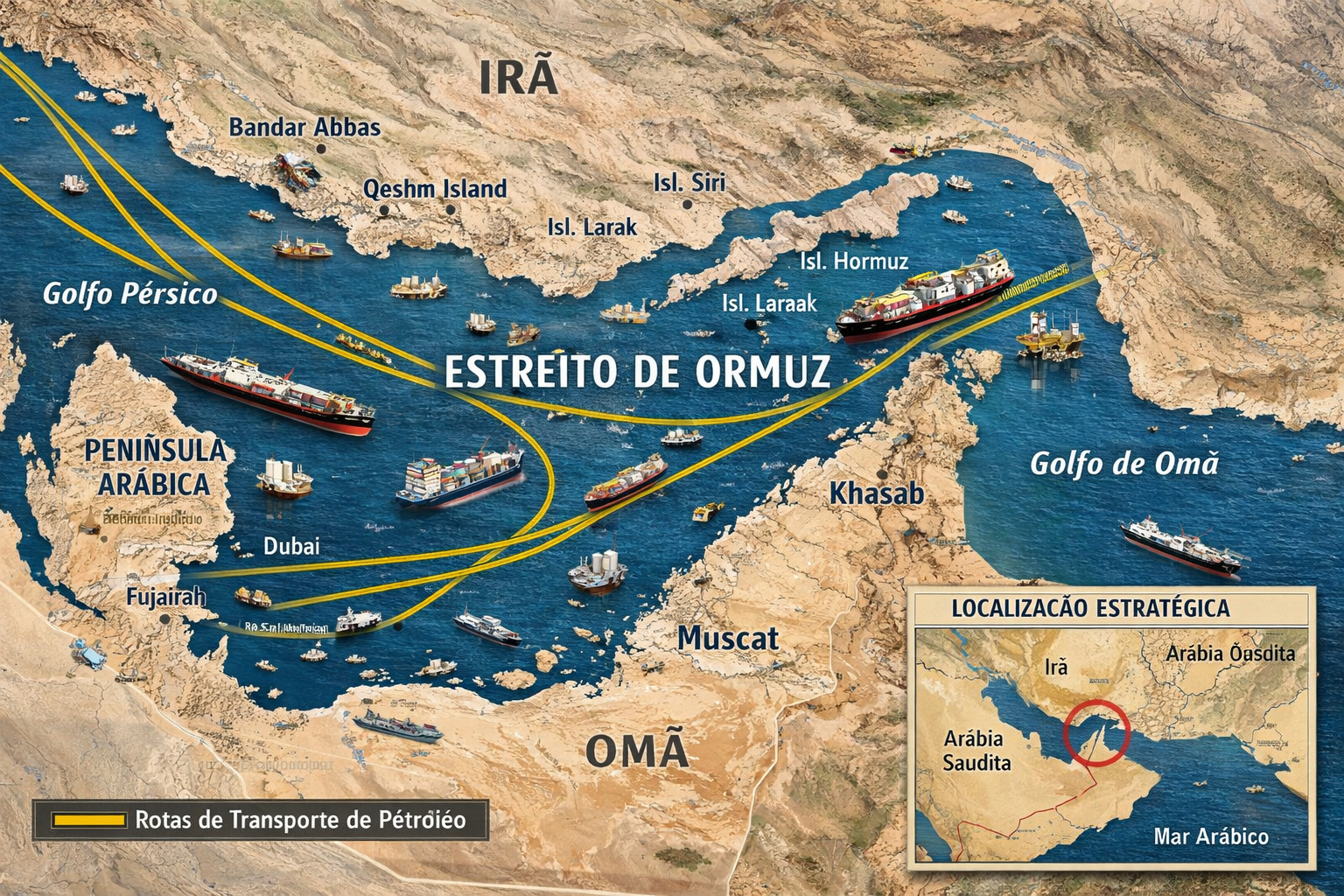
A virtual summit with representatives from over 40 countries placed Iran at the center of international criticism following the blockade of the Strait of Hormuz, one of the world’s most strategic maritime routes for the transport of oil and energy. The meeting took place this Thursday (2) and brought together leaders and authorities to discuss urgent solutions in light of the global impact of the crisis.
The information was released by international authorities after the meeting led by the UK government, which sought to coordinate a joint diplomatic response to ensure the reopening of the maritime route.
The Strait of Hormuz is responsible for a significant portion of the world’s oil flow, and any disruption in this region can directly affect fuel prices, food, and various sectors of the global economy.
-
U.S. Establishes Permanent Embassy in Jerusalem, Reigniting International Debate Over Israel’s Capital

-
The world has nearly 12,000 nuclear warheads, with the majority held by the United States and Russia; see the figures for China, France, and the United Kingdom.

-
Venezuela Faces UN Alert for Hunger, Disease, and Service Collapse After Earthquakes Cause Nearly 2,000 Deaths and $6.7 Billion in Damages

-
Brazil Deploys Navy Field Hospital with ICU, Orthopedics, Pediatrics to Earthquake-Stricken Area in Venezuela, Offering 30 Beds and 150 Daily Consultations


Countries demand immediate action to reopen strategic route
During the meeting, led by British Foreign Secretary Yvette Cooper, representatives from nations such as France, Germany, Canada, the United Arab Emirates, and India emphasized the need for coordinated measures.
The main objective, according to the participants, is to restore freedom of navigation and protect international trade, which is already beginning to feel the effects of instability in the region.
Furthermore, Cooper highlighted that Iran’s actions have direct consequences on various sectors of the global economy. According to her, the impacts are already affecting fuel prices, air transport, and even agricultural production chains.
Crisis in the Strait of Hormuz threatens global economy
According to statements made after the meeting, the blockade of the Strait of Hormuz goes far beyond a regional dispute. In practice, it directly affects the functioning of the global economy.
This is because the route is essential for the transport of oil and gas, in addition to influencing the shipment of fertilizers, food, and medicines to various regions.
Consequently, the disruption in flow can generate:
- Increase in gasoline prices
- Impact on aviation fuel
- Increase in fertilizer costs
- Risks to supply in vulnerable regions
In this context, the crisis is seen as a global problem, not just a geopolitical one.
Statements reinforce international tension and pressure
After the meeting, the British minister stated that Iranian attacks are directly compromising international trade and putting global economic stability at risk.
Meanwhile, the President of the United States, Donald Trump, declared on Wednesday (1st) that the reopening of the Strait of Hormuz could occur naturally, but emphasized that the responsibility for navigation security should lie with the countries that depend on the route.
On the other hand, experts warn that the lack of a quick solution could intensify economic and social impacts, especially in regions that heavily depend on energy and food imports.
What is at stake with the blockade of the Strait of Hormuz
In light of this scenario, the international summit reinforced an important consensus: the situation represents a direct threat to global stability.
In addition to oil, the blockade compromises the transport of:
- Food
- Medicines
- Humanitarian supplies
Therefore, the risk is not limited to the economy, but also involves humanitarian issues, especially in already fragile regions.
Do you believe that crises like this can directly affect your daily life, even happening on the other side of the world?