





 English
  Francês
  Alemão
  Italiano
  Japonês
  Norueguês
  Portuguese
  Spanish
  4 min of reading
  0 comments


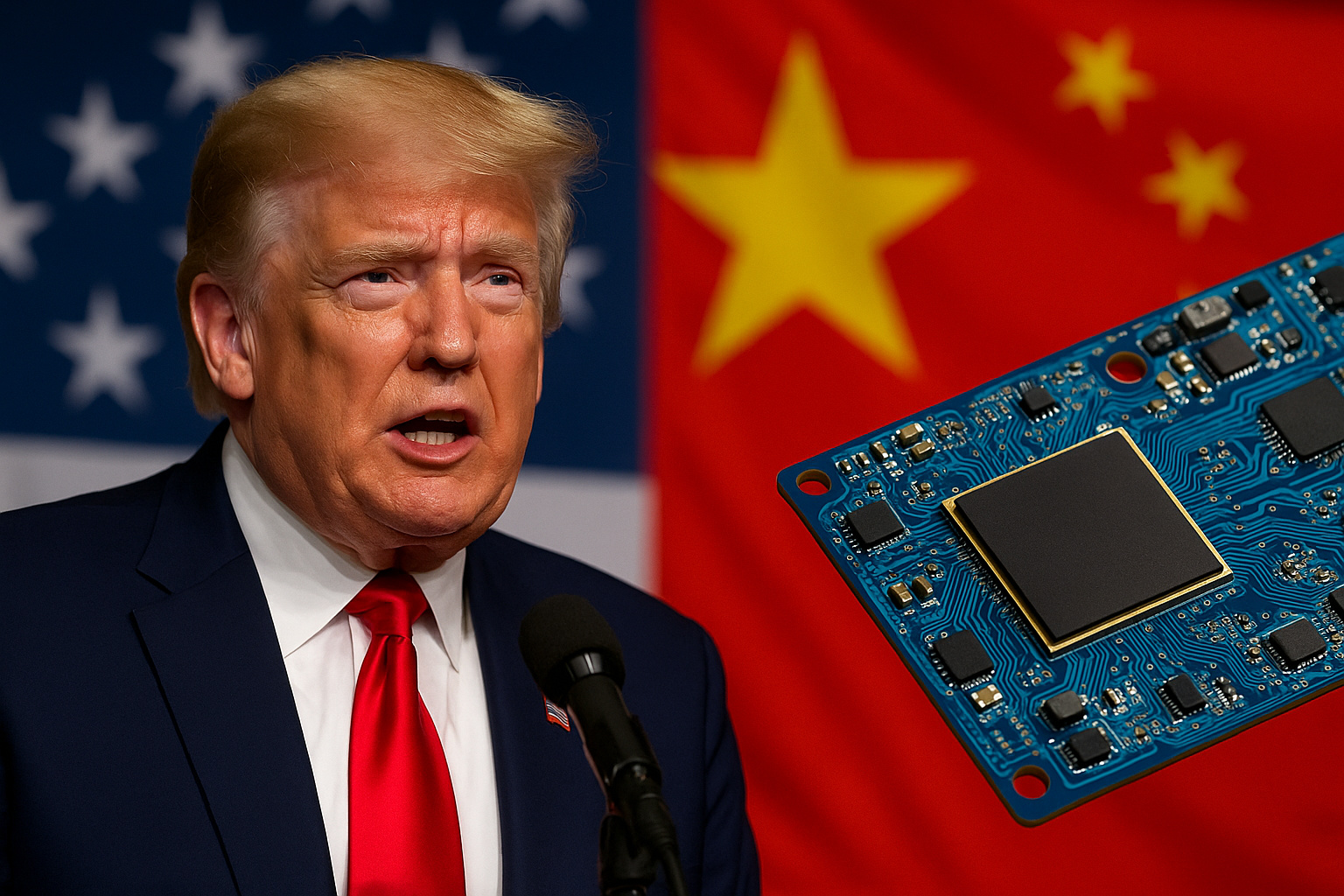
United States Backtrack To Reestablish Ties With Beijing And Boost Negotiations With Xi Jinping
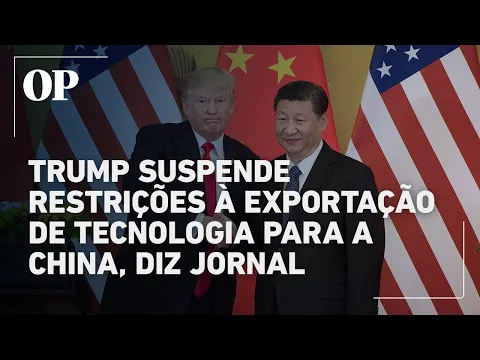
The United States lifted export restrictions on technology to China on July 28, 2025. The information comes from the Financial Times.
The measure aims to strengthen a new trade agreement between the countries. It also seeks to ensure a meeting between Donald Trump and Xi Jinping later this year.
Additionally, the U.S. Department of Commerce has been directed to ease actions against the Chinese technology sector in recent months.
-
Middle East War Hits Fertilizers and Transportation and May Strain Brazilian Wallets
-
Russia Considers Suspending Gas to Europe After Surge in Energy Prices
-
How A War Thousands of Miles From Brazil Started Disrupting Global Shipping Routes, Raising Container Costs, and Putting Up to 40% of Brazilian Beef Exports at Risk

-
Iran-U.S. War Drives Up Oil Prices and Pressures Global Financial Markets

This marks a shift in posture. Previously, Trump had blocked the shipment of Nvidia chips to the Chinese market.
After talks with Nvidia CEO Jensen Huang, Trump decided to allow the export of the H20 chip.
The team designed this component specifically to cater to the Chinese market. The Biden administration had vetoed the sale.
The announcement also coincides with discussions regarding strategic minerals. This includes rare earths and magnets, as stated by Howard Lutnick, Secretary of Commerce.
Tariff Truce of 90 Days Is Resumed at New International Meeting
The two countries renewed the tariff truce for another 90 days. The South China Morning Post published the decision on July 27.
The extension precedes the third round of trade negotiations, held on July 28 in Stockholm, Sweden.
According to sources cited by the newspaper, the countries committed to avoiding new tariffs and not escalating the trade war through other means.
During the meeting, the Chinese delegation pressured the U.S. regarding tariffs related to fentanyl. The drug has been a point of tariff dispute since March 2025.
At the time, Trump had imposed an extra 20% tax on Chinese products, citing China’s failure to combat the trafficking of the substance.
The Chinese government signaled it might accept a basic tariff of 10% on all imports, as long as additional rates are removed.
This proposal paves the way for a more durable agreement in the coming weeks. The measure could reduce trade tensions.

American Experts Warn of Strategic Risks
Despite the relief in tensions, U.S. security experts harshly criticized Trump’s decision.
According to the Financial Times, at least 20 experts and former officials signed an open letter on July 28, 2025.
Among them is Matt Pottinger, former deputy national security advisor of the U.S. All expressed concern over the rollback of restrictions.
The letter warned that the suspension of sanctions could compromise American leadership in artificial intelligence and military defense.
For the signatories, the rollback represents a strategic error. This would weaken American technological advantage in the medium and long term.
Nonetheless, the government maintains that the measure aims to unlock negotiations over crucial inputs for the global industry.
Tariff War Intensified Between April and May 2025
The tariff conflict between China and the U.S. intensified in April 2025. Trump increased tariffs on Chinese products from 20% to 34%.
In response, China applied the same rate on American products. The dispute escalated rapidly in a matter of days.
Trump threatened to raise tariffs to 104% if China did not back down by April 8. However, the Chinese responded the next day.
The Chinese government raised its tariffs to 84%. Trump then increased tariffs to a total of 125%.
On April 10, the White House explained that the total burden reached 145%. This added a rate of 125% plus 20% already in place.
On April 11, China matched the measure, imposing tariffs of 125% on U.S. imports.
Trump announced a pause in tariffs for 180 countries. However, he kept China as an exception, raising the tension.
May Temporary Agreement Is Shaken by New Accusations
On May 12, 2025, the countries finally reached a temporary relief. Additionally, American tariffs fell from 145% to just 30%.
Meanwhile, Chinese rates on U.S. products decreased from 125% to 10%. However, the truce lasted only a short time.
On May 26, Trump posted on his Truth Social network that the China had supposedly completely violated the agreement reached.
Shortly after, the Chinese embassy in Washington released an official statement. Furthermore, it harshly rebutted the former American president’s accusations.
For its part, spokesperson Liu Pengyu called for an end to “discriminatory restrictions.” He also requested that the consensus of the negotiations be maintained in full.
As stated, economic and trade negotiations continued in various forums, both bilateral and multilateral.
Even with the rollbacks and conciliatory remarks, the tension between the United States and China remains a global concern.









Seja o primeiro a reagir!