





 Portuguese
  English
  Spanish
  3 min of reading
  7 comments


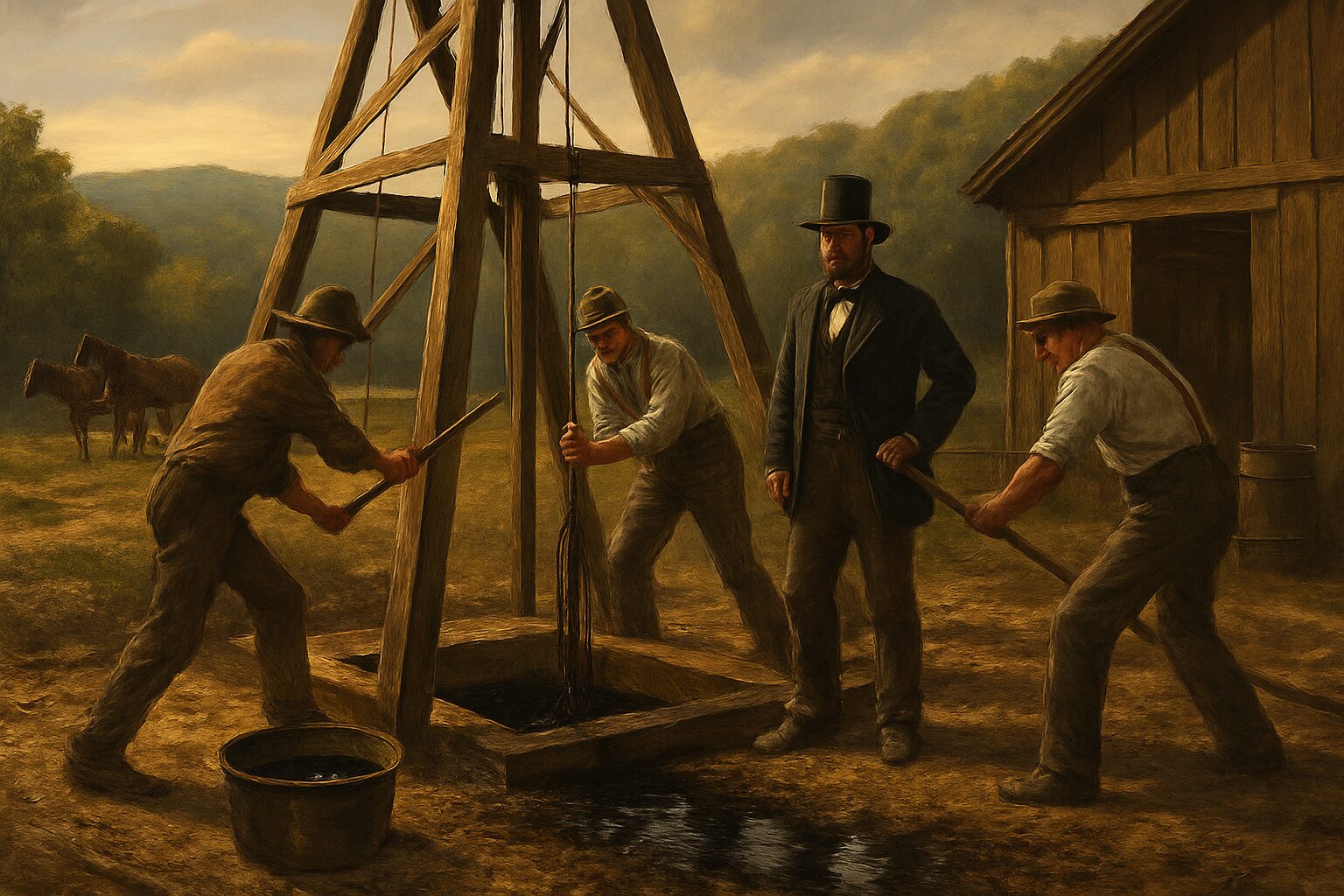

The Historical Drilling of Edwin Drake in 1859 Transformed Titusville into the Birthplace of the Oil Industry and Began the Global Energy Revolution
In 1859, an event in the small town of Titusville, in the state of Pennsylvania, United States, marked the beginning of a new era for global energy. Edwin L. Drake, a former train conductor, was responsible for the first extraction of oil through drilling the soil. The achievement is recognized as the birth of the modern oil industry.
At that time, oil was primarily used for medicinal purposes and was obtained from natural seepage. The collection was done in small quantities.
But there was a growing demand for kerosene, used for lighting, especially with the decline of the whaling industry. This led entrepreneurs like George Bissell and Jonathan Eveleth to see an opportunity.
-
The rise in oil prices could ensure an extra revenue of R$ 100 billion for the Federal Government, indicates a recent economic study.

-
Naturgy begins an investment of R$ 1.6 million to expand the gas network in Niterói and benefit thousands of new residences and businesses.

-
A major turn in the Justice system suspends tax increases and directly impacts oil and gas companies in Brazil by affecting costs, contracts, and financial planning, leaving uncertain what could happen to the sector if these costs had increased.

-
Brava Energia begins drilling in Papa-Terra and Atlanta and could change the game by reducing costs in oil while increasing production and strengthening competitiveness in the offshore market.


They founded the Pennsylvania Rock Oil Company, which would later become the Seneca Oil Company. The company decided to invest in the exploration of so-called “rock oil” as an energy source.
The Mission of Edwin Drake
Edwin Drake was hired to lead the project. Without experience in the field, he relied on the help of William A. “Uncle Billy” Smith, a salt well driller.
After several unsuccessful attempts and criticism from the local population, Drake made an innovation that would become fundamental to the mission’s success. He used a cast iron pipe to line the well, preventing the walls from collapsing and allowing for greater depths to be reached.
The Success in August 1859
The result came on August 27, 1859. That day, at about 21 meters deep, the team found an oil reserve.
The well began producing about 25 barrels a day, a significant number for the standards of the time. The discovery quickly attracted investors and curious onlookers to Titusville, which became the center of a true oil boom.
The Legacy of the Discovery
With the success of the venture, the drilling technique began to spread worldwide. Oil became widely used, initially as a raw material for kerosene production.
The achievement established the United States as the first country to produce oil commercially viable.
Despite the importance of his work, Edwin Drake did not patent his technique. Over time, he faced financial difficulties.
Recognizing his contribution, the state of Pennsylvania granted him an annual pension in 1873. Today, the pioneering story is preserved in the Drake Well Museum, located in Titusville.
The site houses a replica of the original well and serves as a memorial center about the early steps of the oil industry.
The First Step Toward a Global Industry
The event that occurred in 1859 not only inaugurated the commercial exploration of oil but also established the technical and economic foundations for the development of the industry that would transform the world.









Começou a poluir o mundo.
Tá enganado, o carvão mineral já vinha poluindo há muito mais tempo
Pode crer. Bagulho embaçado.
Êita pêga!
Só você andar a pé, e usar nada que vem do petróleo, ****.
Começaram os comentários dos idiot@s inúteis. Nem pra ativista pseudo-ambientalistas servem. São usados por um discurso que já encheu o s@co e não convence mais ninguem. Quer ajudar o mundo? Então kalaboka.
Uma história que eu desconhecia. Mto interessante.