





 Portuguese
  English
  Spanish
  6 min of reading
  0 comments


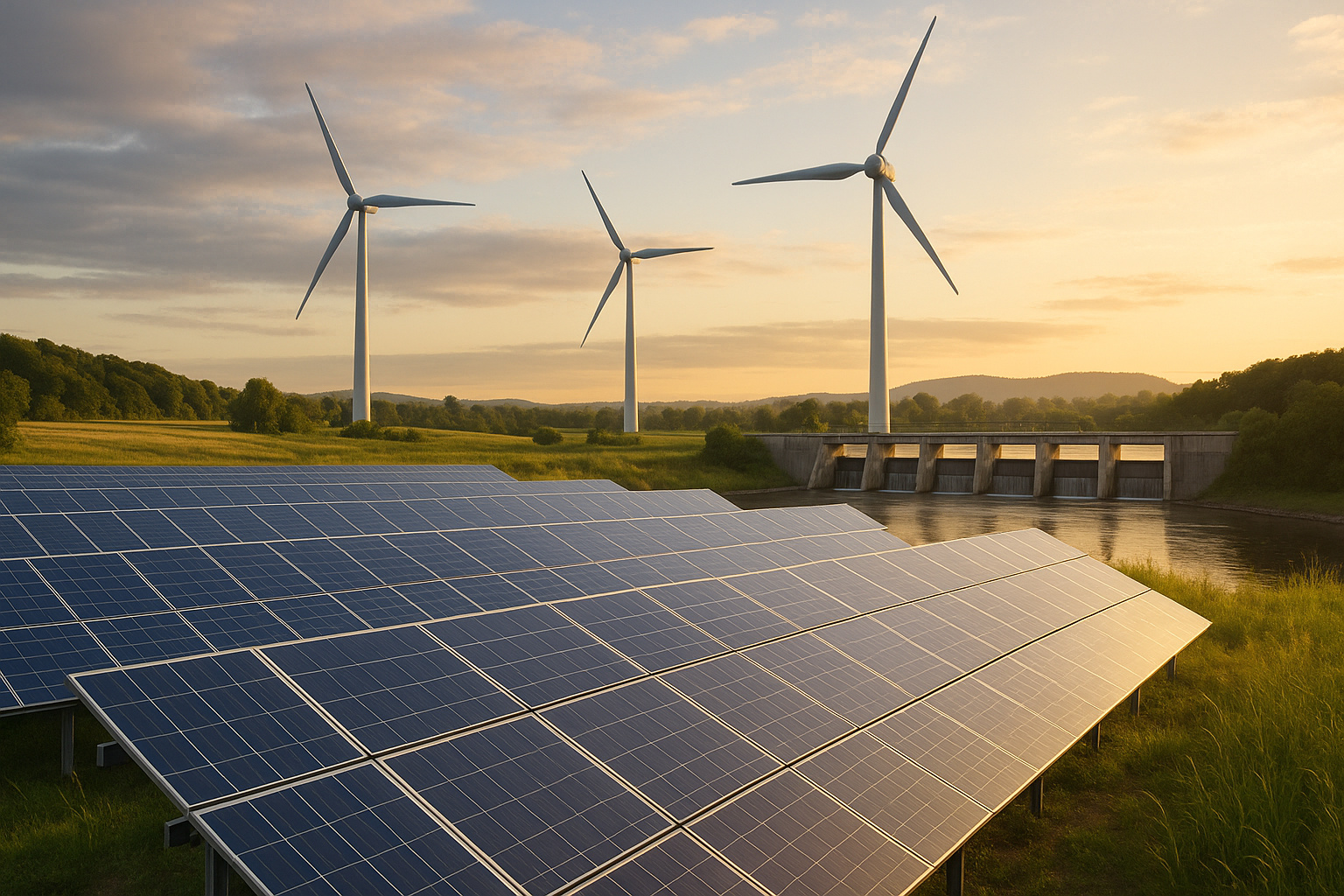
Discover How Renewable Energy Projects Transform Electricity Generation with Clean, Sustainable, and Essential Sources for the Future of the Planet and the Global Economy.
Nowadays, the search for sustainable energy alternatives is not only important but has become an urgent necessity.
Therefore, renewable energy projects directly address the growing concerns about climate change, depletion of natural resources, and the global demand for electricity.
Moreover, this type of project harnesses clean and inexhaustible sources — such as the sun, wind, water, and even geothermal heat — to produce electricity in a less environmentally aggressive manner.
-
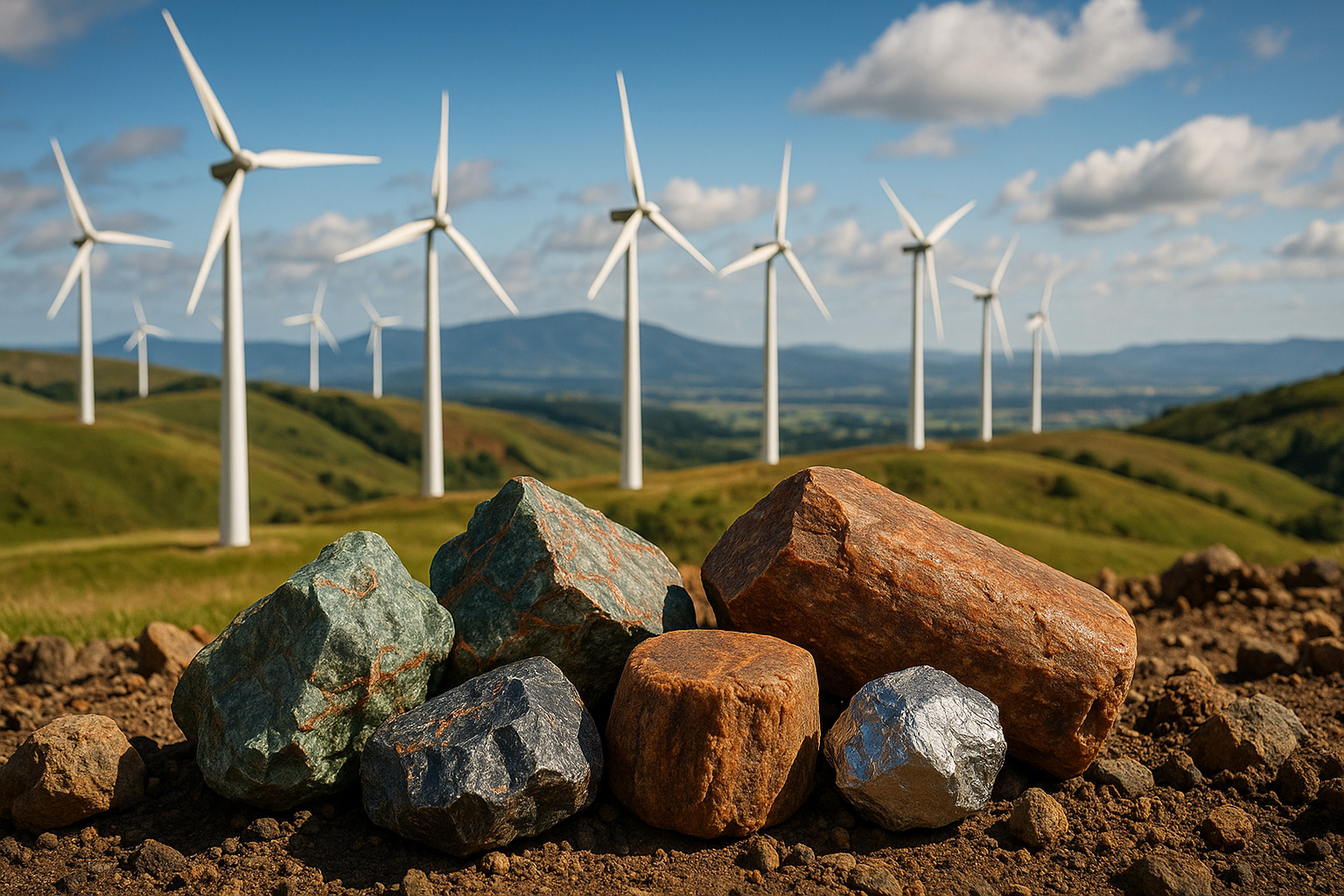
The Brazilian state accelerates industrial competitiveness with a focus on the extraction of strategic minerals to boost the energy transition in Goiás.
-
A Canadian retiree creates a hydroelectric system on a real river, generating energy continuously throughout the day and demonstrating how the power of water can supply a house with stability even in a simple structure.

-
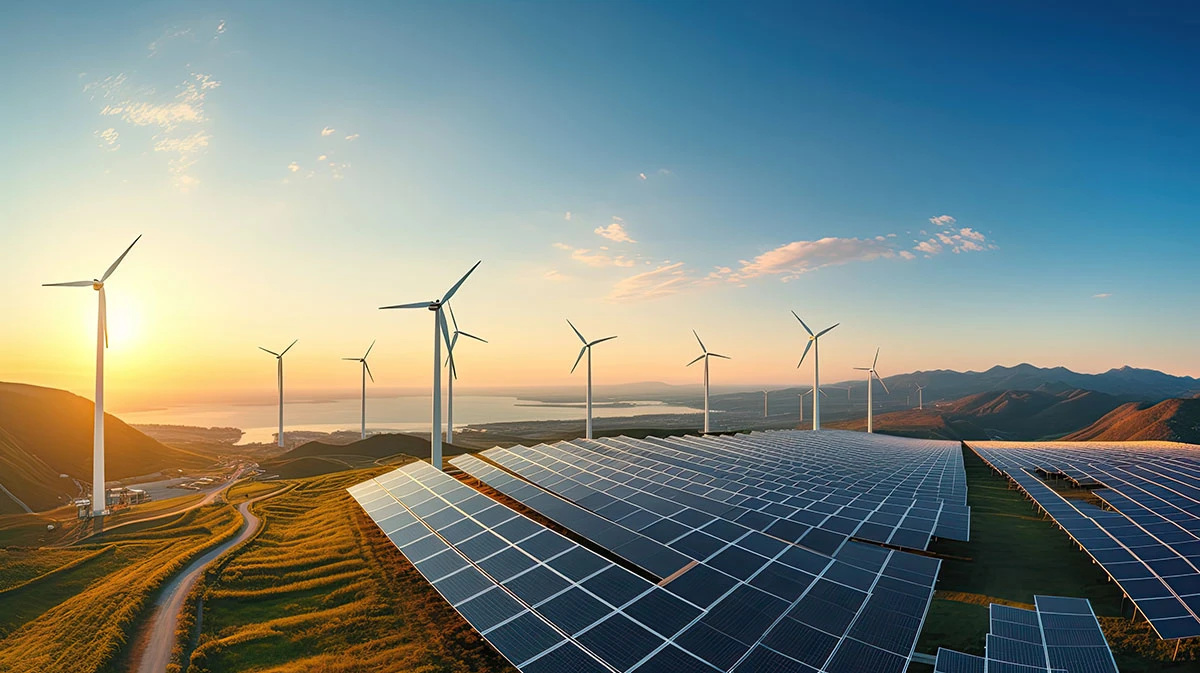
Petrobras reaffirms its commitment to the market and ensures that it will carry out the energy transition safely to maintain national sovereignty.
-
Researchers discover a possible hydrogen deposit of up to 46 million tons beneath an ancient coal basin, and the volume could exceed half of the entire global production.


Historically, the first major energy revolutions were based on fossil fuels. For example, the Industrial Revolution, which started in the mid-18th century, had coal as its main engine.
Over time, oil and natural gas took center stage, driving economic and urban development in many countries.
However, this progress brought about severe environmental consequences, such as air and water pollution and increasing greenhouse gas emissions, which, in turn, contributed to global warming.
According to the International Energy Agency (IEA), global investment in renewable energy began to grow significantly from the 1970s;
Especially after the oil crisis in 1973, when many countries began seeking alternatives to reduce reliance on imported oil.
Since then, technological advances have enabled sources such as solar, wind, hydro, biomass, and geothermal energy to become viable options for various regions of the planet.
Additionally, this energy transition is closely linked to the energy security of countries. Excessive dependence on imported fossil fuels creates economic and political vulnerabilities.
Therefore, renewable energy projects help reduce this dependence, bringing greater autonomy to electricity production.
This is especially important for developing countries, which, in this way, seek to grow economically without repeating the environmental mistakes of the past.
How Renewable Energy Projects Are Structured
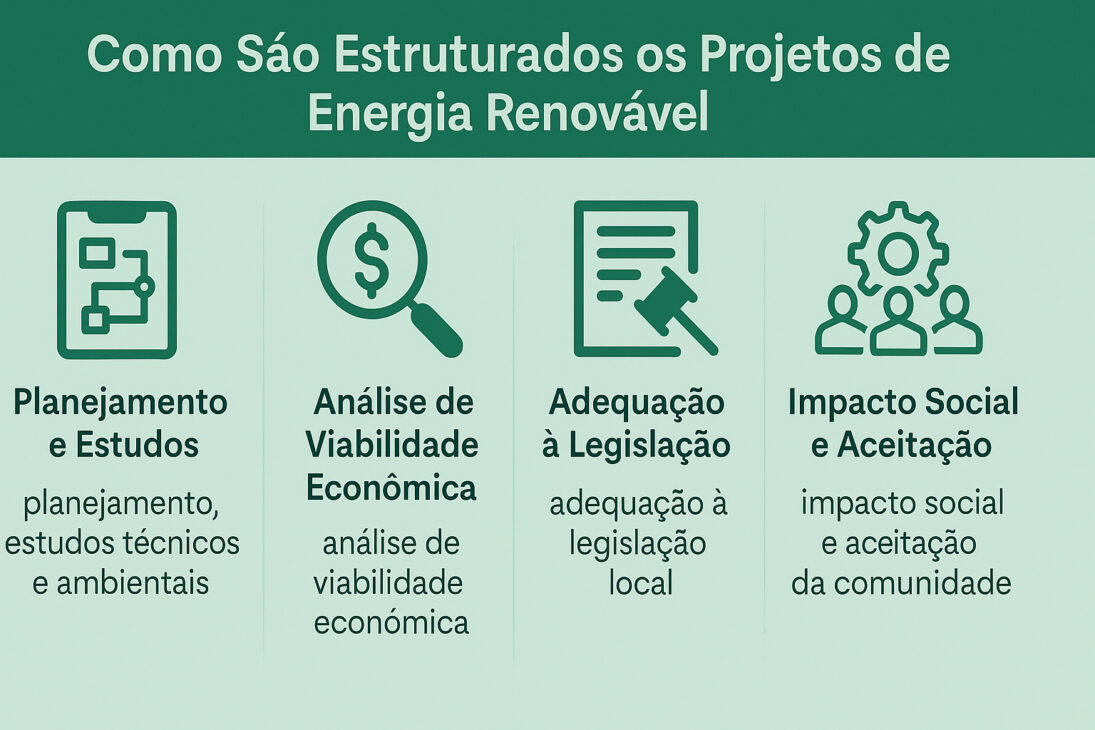
Firstly, it requires planning, technical and environmental studies, economic feasibility analysis, and compliance with local legislation.
Additionally, those in charge must consider the social impact and the acceptance of the community where it will be implemented. Generally, energy sector companies, governments, or organized communities develop these projects, depending on the scale and objective.
These processes ensure that the project is sustainable in all its phases, from construction to operation.
For example, the environmental impact study assesses how the venture will affect flora, fauna, water and soil quality, as well as the local population.
Therefore, this care prevents future problems, such as community resistance or irreversible damage to the ecosystem.
Solar energy, for example, is one of the most popular today. Its growth occurs because solar radiation is available in almost every part of the world.
Photovoltaic projects convert sunlight directly into electricity and can be installed in homes, businesses, farms, and even large solar power plants.
Thus, this source has gained traction especially in tropical countries like Brazil, where the incidence of sunlight remains high throughout the entire year.
Wind energy, on the other hand, mainly harnesses areas with good wind circulation, such as coastal regions and plains.
Wind turbines convert wind movement into electricity and, when organized in wind farms, generate large amounts of clean energy.
Therefore, this type of project has expanded significantly, especially in European countries and China, which lead global wind energy production.
The advancement of monitoring and automation technologies has been decisive for the success of renewable projects.
In other words, smart systems optimize the use of generated energy, improve the efficiency of turbines and panels, and integrate these sources into the electrical grid with greater safety.
Other Renewable Sources and Their Impacts
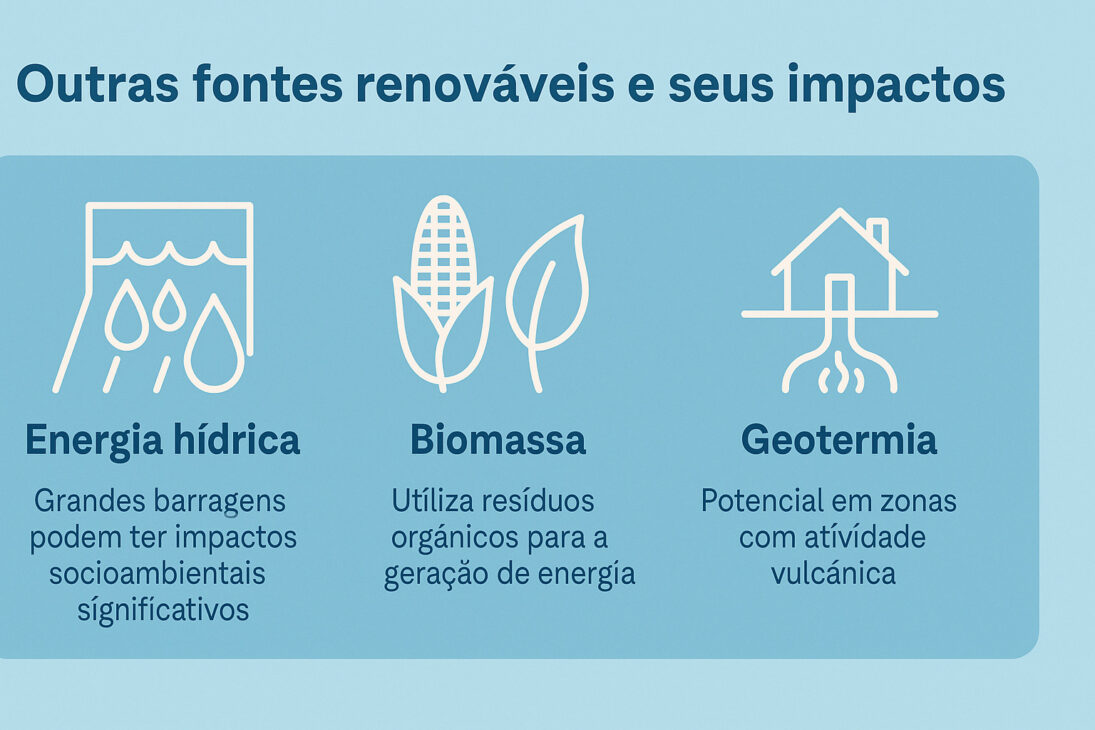
Hydropower, traditionally used in large hydroelectric plants, is also part of the renewable group.
However, large dams cause socio-environmental impacts, such as flooding areas, displacing populations, and altering ecosystems, which has led to a reassessment of their sustainability.
Thus, many projects have opted for small hydroelectric plants (SHPs), which cause less environmental impact and integrate better with local communities.
Another promising example is biomass, which uses organic waste — such as sugarcane bagasse, agricultural leftovers, and animal waste — to generate thermal or electric energy.
Additionally, this type of project helps to manage waste and can be a sustainable solution for rural areas.
Geothermal energy, which harnesses heat from the Earth’s interior, is more common in volcanic activity countries like Iceland and Indonesia, but has great potential for expansion.
Exploring these alternative sources is essential to diversifying the energy matrix and reducing the risks associated with relying on a single source.
Moreover, energy diversity facilitates adaptation to different climatic and geographical conditions, ensuring a more stable and efficient supply for the population.
Benefits and Challenges of Renewable Energy Projects
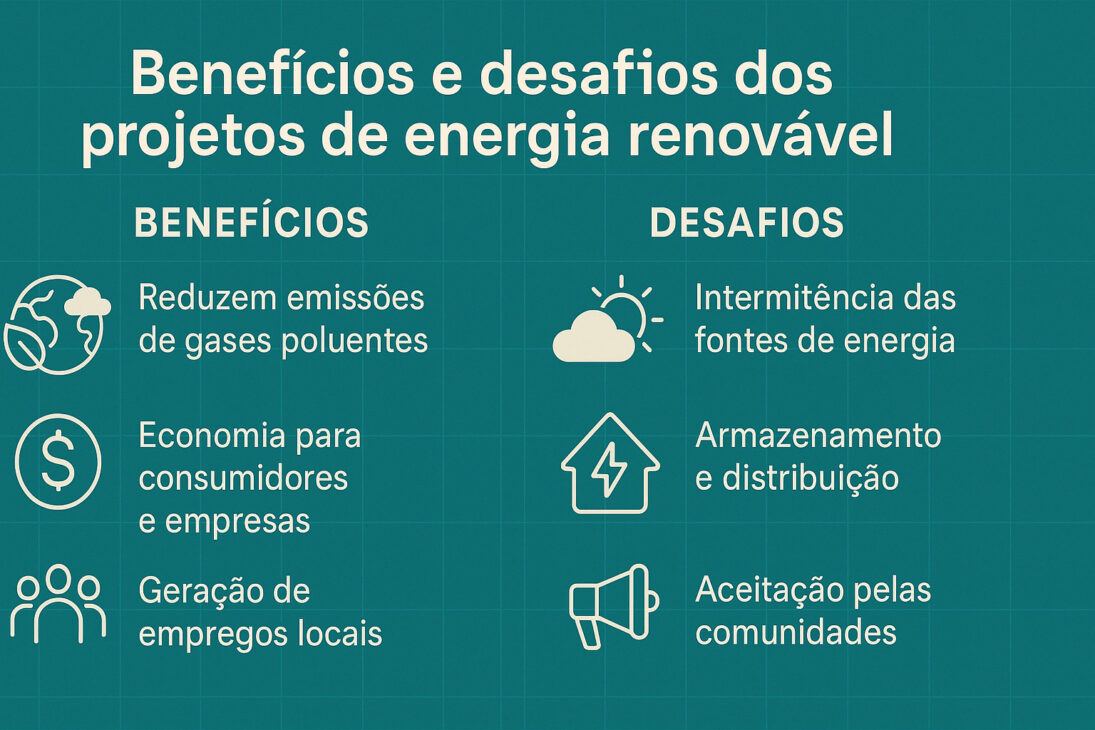
Renewable energy projects bring many benefits. In addition to significantly reducing pollutant gas emissions, they promote the conscious use of natural resources and decrease dependence on fossil fuels.
Another positive aspect is the generation of local jobs in all phases of the project, from planning to operation and maintenance.
Furthermore, these projects contribute to decentralizing energy production, which enhances energy security for isolated regions or those with inadequate infrastructure.
Beyond the environmental and social aspect, adopting renewable energy represents savings for consumers and companies.
The cost of energy generated from sources like solar and wind has decreased significantly, becoming competitive or even cheaper than traditional energy.
Therefore, this can result in lower rates and greater access to electricity for different segments of the population.
Renewable energy projects also offer a significant economic opportunity.
As installation costs decrease each year and government incentives increase, investing in clean energy has become feasible and profitable.
Thus, many companies and investors find in these projects a way to combine financial return with environmental responsibility, aligning with the demands of a market increasingly focused on sustainability.
However, like any venture, these projects face challenges. One of the main issues involves the intermittency of some sources, such as solar and wind, which depend on weather conditions.
Therefore, it is necessary for storage technologies and integration with other sources to ensure supply stability.
Another challenge consists of preparing the electrical grids to receive and distribute this energy efficiently.
Additionally, social acceptance does not always occur immediately. Communities near wind or solar parks may show resistance due to visual impacts, noise, or changes in land use.
Thus, open dialogue and public participation are essential for the success and sustainability of these projects.
The Future of Clean Energy in the World
Still, the future of renewable energy projects remains promising. With constant technological advancements, increased environmental awareness, and support from public policies, the participation of these sources in the global energy matrix tends to grow.
Therefore, in an increasingly connected world concerned about the future of the planet, the energy transition has become a priority.
The growing adoption of renewable energies also aligns with international agreements to curb global warming, such as the Paris Agreement, established in 2015 and ratified by more than 190 countries.
These commitments set ambitious emission reduction targets, making renewable projects essential tools for countries to achieve these goals.
In summary, renewable energy projects represent a silent yet powerful revolution in how we produce and consume electricity.
They help protect the environment and promote social, economic, and technological development. Therefore, understanding how these projects work and their impacts is essential for anyone who wants to be part of a more sustainable world.









Seja o primeiro a reagir!