





 Portuguese
  English
  Spanish
  5 min of reading
  0 comments


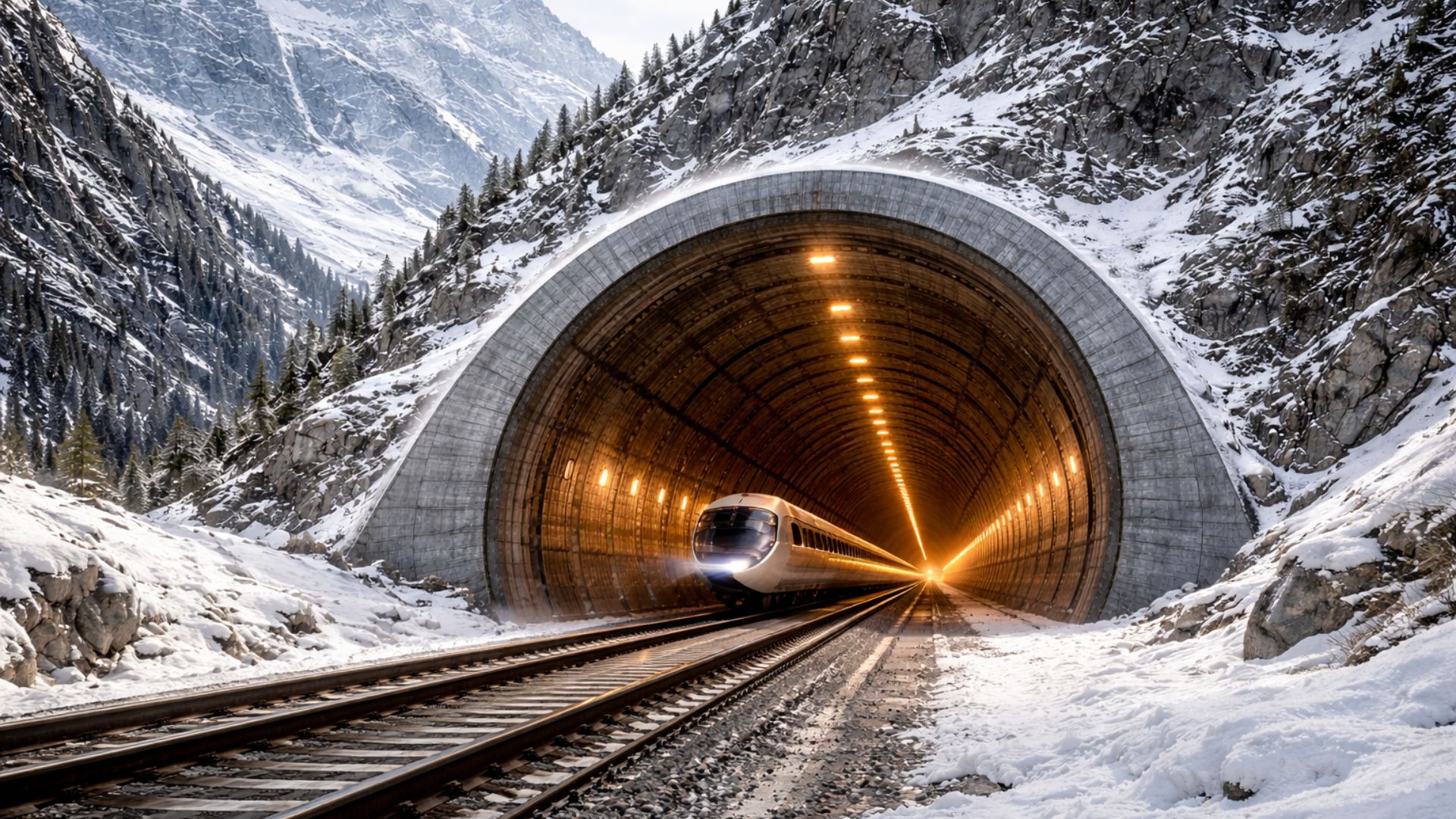
33-Kilometer Underpass Shortens Travel Between Regional Capitals in Austria and Reorganizes Rail Connections Under the Alps, With Significant Time Gains for Passengers and New Logic for Cargo Transport in a Strategic Corridor Integrated with European Routes.
Koralm Tunnel and the 33-Kilometer Crossing Under the Alps
An underpass under the Alps now condenses, in less than an hour, a trip that for decades required planning and buffer time.
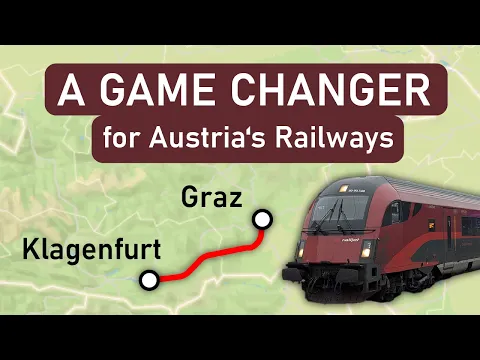
In southern Austria, the Koralm Tunnel, approximately 33 kilometers long, has become the centerpiece of a new railway connection between Graz in Styria and Klagenfurt in Carinthia, bringing the fastest journey between the two regional capitals down to 41 minutes, according to Austrian operator ÖBB.
The change is not just an engineering curiosity due to its scale and depth, but a direct adjustment to the geography of time.
-
He started running at 66 years old, broke records at 82, and is now a subject of study for having a metabolic age comparable to that of a 20-year-old, in a case that is intriguing scientists and inspiring the world.

-
Oldest tree on the planet reappears after 130 years of searches: Wattieza, 385 million years old, was 10 meters tall and had no leaves or seeds; Gilboa fossils in New York solved the mystery in 2007.

-
A 48-square-meter house assembled in hours with 4,000 bricks made of recycled plastic that does not absorb moisture, has natural thermal insulation, and costs less than 90,000 reais in a complete kit.

-
Luciano Hang revealed that Havan’s air fleet has already accumulated more than 20,000 landings, 10,000 flight hours, and 6 million kilometers traveled, and he says that without the planes, the company would never have grown so quickly.


By replacing mountain segments with a straighter underground route, the infrastructure shortens the passenger experience and alters the circulation pattern for cargo transport, impacting the so-called “south route” that crosses Austria and connects to broader European corridors.
Koralm Railway Connects Graz and Klagenfurt in a New Railway Corridor
At the center of this redesign is the Koralm Railway, a high-performance line built to connect a region marked by historical terrain and bottlenecks via double-track railway.
ÖBB describes the project as an axis of approximately 130 kilometers between Graz and Klagenfurt, with substantial tunnel and bridge works, featuring the Koralm Tunnel as the longest and most emblematic piece of the set.
The declared operational aim is to provide a faster and more frequent service, bringing urban and industrial areas closer together that previously relied on slower, winding routes.

Railway Tunnel Engineering: Two Tubes, High Capacity, and Safety Systems
The project draws attention due to its size: there are two parallel tunnels, each with its own track, forming an underground railway corridor designed to support heavy traffic.
The length, around 33 kilometers, ranks the structure among the largest railway tunnels in the world and makes it the largest railway tunnel in Austria, according to information provided by the operator and institutional materials related to the project.
The most visible effect appears in the routine of those traveling between the two regional capitals.
ÖBB claims that the fastest direct connection between Graz and Klagenfurt can be made in 41 minutes, in contrast to previous travel times of over two hours on slower routes.
The difference, in this case, does not depend on a “miracle” of punctual speed but on the whole: a line designed for high performance, with more favorable curve radii and inclines, and with a tunnel that eliminates the detour imposed by the mountains.
41 Minutes Between Graz and Klagenfurt and the Impact on Passengers
At the same time, the alteration changes how people organize their lives between nearby cities on the map but distant on the clock.
When a trip drops to less than an hour, work meetings, studies, medical appointments, and connections to other trains can fit within the same time window that was previously spent just “getting out of the region.”
This compression of the journey tends to influence even decisions about where to live or work, as it reduces the penalty of daily commuting, although the intensity of this effect depends on the supply, price, and frequency of service, variables defined by operators.
Cargo Transport and the South Route of Austria in the European Corridor
The cargo component, in turn, is an explicit part of the project design.
In statements and pages dedicated to the Koralm Railway, ÖBB characterizes the line as relevant for logistics and transport, connecting production and consumption areas and providing a more efficient route through the Austrian south route.
In railway lines, minutes matter, but regularity and capacity often weigh even more for freight: predictable intervals, less need for maneuvers in difficult sections, and an infrastructure ready to safely and smoothly accommodate more trains.
The economic logic behind a tunnel of this magnitude is often associated with the cost of the terrain.
In alpine regions, mountains impose curves, ramps, and speed restrictions that affect both travel time and the energy expenditure of trains, especially when there are heavy compositions.
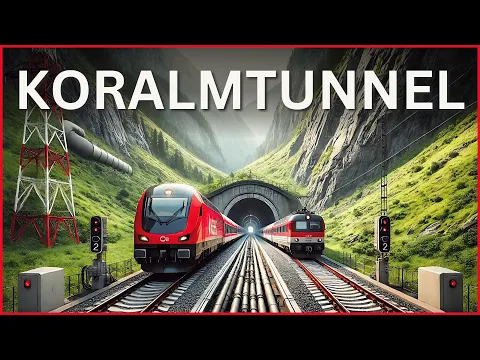
A long underground segment does not eliminate engineering challenges, but it circumvents natural barriers with a more direct route and, when well-planned, with gradients that favor performance and regularity.
This type of solution also requires robust systems for ventilation, evacuation, telecommunications, control, and safety, because a long railway tunnel needs to operate with redundancy and clear protocols for emergencies.
Speed, Signaling, and Operation Start with Schedule Changes
The Koralm Railway was conceived as a modern railway, and ÖBB informs that the line was designed for high speeds, with the capacity to accommodate fast trains on part of the course.
In practice, the time of 41 minutes between Graz and Klagenfurt becomes the most “tangible” data for the public, but behind it lies a chain of technical decisions, from civil infrastructure to signaling, integration with existing services, and the operating model with different types of trains.
The operation start of the new corridor, due to its importance, was associated with the schedule of railway timetable changes in Austria.
ÖBB linked the debut of the new connectivity standard to the deployment schedule of the service on the network, emphasizing that the Koralm Railway brings regions closer together and expands options for passengers while reinforcing a strategic axis for transport.
This kind of milestone is usually accompanied by adjustments in schedules, frequency, and connections, as a sharp reduction in time alters intersections between lines and opens up the possibility for new direct services.
Why a Tunnel Becomes a Global Topic When It Shortens Distances
There is also a “mental map” component that helps explain why tunnels like this attract global attention.
For many people outside Austria, Graz and Klagenfurt were distant names, with little daily connection, but a number like “33 kilometers under the Alps” and a concrete promise like “41 minutes” serve as an instant translation of the impact.
The project ceases to be merely local and becomes an example of how infrastructure can reconfigure perceived distances in mountainous regions.
On a continent where trains compete with cars and short flights, shortening travel times is a direct way to reorganize choices.
A faster connection can attract passengers who previously drove for hours, while simultaneously improving integration between different rail services and strengthening corridors that connect urban centers to logistical hubs.
In the case of the Koralm Tunnel and Koralm Railway, the public promise is anchored in a simple fact, reiterated as a reference by the operator: to turn the crossing between Graz and Klagenfurt into a journey of 41 minutes, redefining the relationship between two regions separated by mountains.






-

-

-

-

-

-

14 pessoas reagiram a isso.