





 English
  Francês
  Alemão
  Italiano
  Japonês
  Norueguês
  Portuguese
  Spanish
  2 min of reading
  0 comments


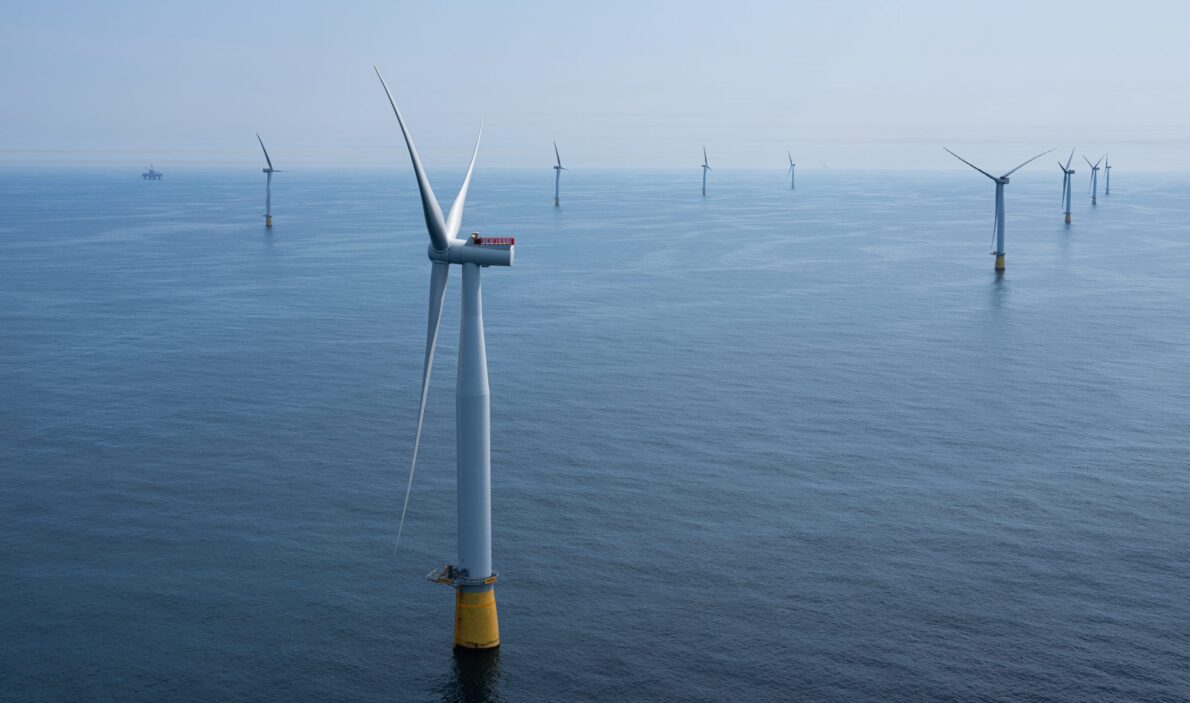
Project in Scotland Leads New Era of Clean Energy with Floating Wind Turbines, Revolutionizing the Sector
Just 10 miles off the coast of Aberdeen, Scotland, five gigantic wind turbines, standing 190 meters tall, spin over the North Sea, generating enough clean electricity to power around 35,000 homes. This is the Kincardine project, the largest floating wind farm in the world, which is paving the way for a new era in clean energy production, according to the Ekkogreen website.
Innovation in the Depths of the North Sea
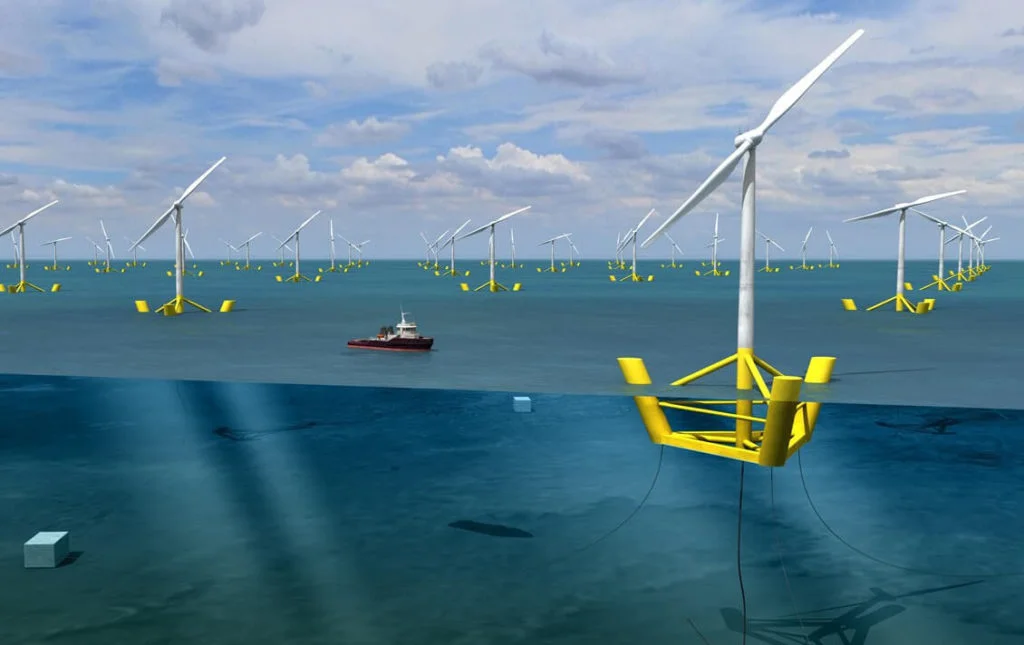
Each of the Kincardine turbines is installed on floating foundations, a technology that allows their deployment in waters up to 80 meters deep. Unlike traditional foundations, which are fixed to the seabed, these foundations are anchored by cables, making installation easier in deeper water regions that were previously inaccessible for wind energy.

This innovative technology, inspired by floating oil platforms from the 1960s, represents a new direction for offshore wind energy. Countries with a strong tradition in oil production, such as Norway, the United Kingdom, and Italy are now also leading the development of floating wind energy.
-
Renewable energy advances over protected areas in Brazil, and a survey by the Energy Transition Observatory reveals silent impacts that challenge environmental conservation and pressure sensitive traditional territories.

-
Rio Grande do Sul accelerates energy transition: State invests in renewable technologies and consolidates decarbonization strategies and pathways to attract billions in new industrial investments.

-
With 160,000 m² of collectors, an area larger than 20 football fields, Silkeborg, in Denmark, hosts a solar thermal plant that heats 19,500 homes and could become the largest solar heating plant in the world.

-
A study reveals the expansion of renewable energy procurement in Brazil and shows how companies are taking advantage of opportunities to reduce expenses, ensure energy efficiency, and strengthen strategic environmental commitments.


Comparison with Traditional Projects
Although the Kincardine project has a capacity of 50 megawatts, it is still modest compared to projects like Hornsea 2, the largest fixed wind farm in the world, located off the Humber estuary, which has the capacity to power more than 1.4 million homes. Currently, the United Kingdom has 80 megawatts of floating wind capacity, the second largest in the world, after Norway. However, the country is a global leader in fixed offshore wind energy, with 14 gigawatts installed.
The Future of Floating Wind Energy
The future promises significant expansion. By 2030, the capacity of floating turbines in the United Kingdom is expected to reach 5 gigawatts, while fixed turbines are projected to achieve 60 gigawatts, aligning with the British government’s goals for net-zero emissions. This expansion is essential for reducing the cost of energy and contributing to the country’s sustainability goals.
Recently, Crown Estate requested proposals for three new floating wind farms in the Celtic Sea, aiming to accelerate the construction of these innovative installations. Renewable UK, an industry association, projects that by the 2040s, more than half of the offshore wind generation in the United Kingdom will come from floating turbines.









Seja o primeiro a reagir!