





 English
  Francês
  Alemão
  Italiano
  Japonês
  Norueguês
  Portuguese
  Spanish
  3 min of reading


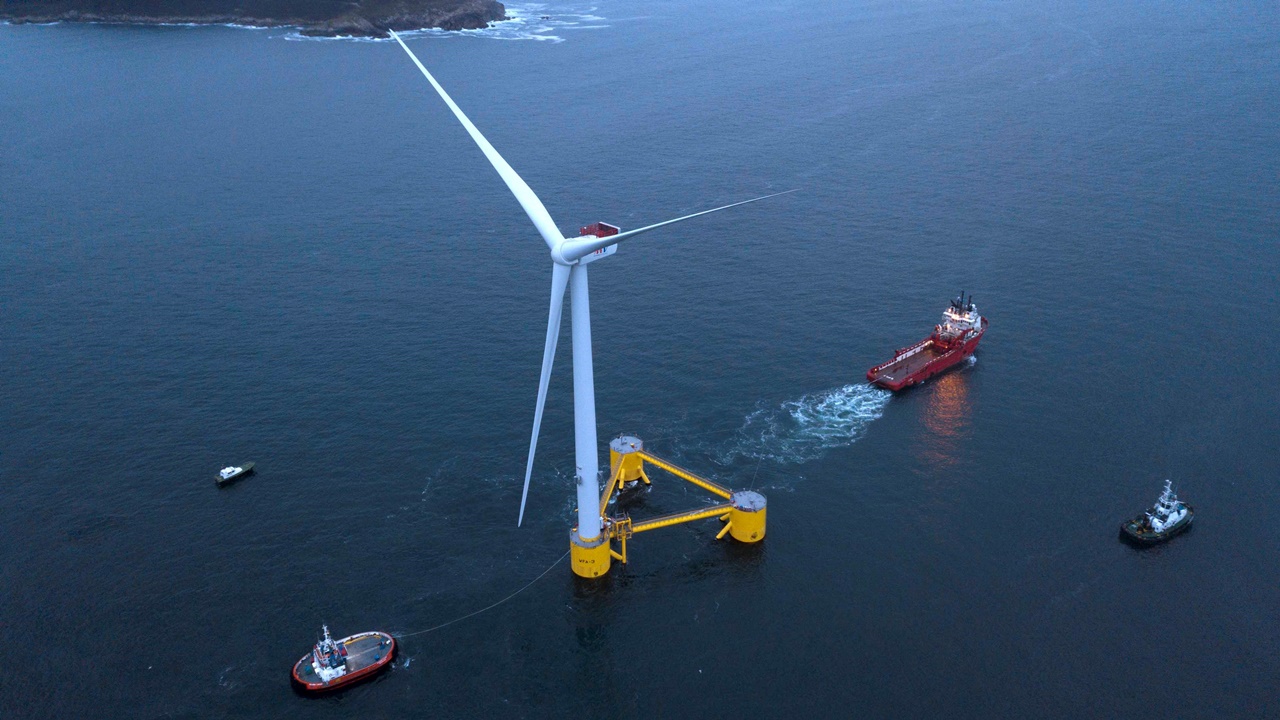
The Cost Of Wind Energy Can Be Reduced By Half Or More In The Next 30 Years, Allowing Wind To Play A Greater Role In Future Renewable Energy Grids Around The World
Offshore wind energy, which is more expensive and therefore much less common than onshore wind energy, will see the largest price declines. Much larger turbines will increase capacity threefold, creating economies of scale that will reduce the cost of energy per megawatt-hour.
Read Also
- Portable Blade-less Wind Turbine For Urban Spaces Can Revolutionize Renewable Energy Generation Around The World
- Rolls-Royce Of The BMW Group Begins Construction Of The World’s Largest Aircraft Engine That Combines Turbines And Gears
- New Portable Wind Turbine Generates Power Anywhere And Can Operate In Conjunction With Solar Panels
- Ambev Implements 5G For Beverage Delivery Via Drones In Brazil
- Odebrecht Distributes Million-Dollar Bonuses To Employees; Meanwhile, Ethanol Plants Of The Group Have Filed For Bankruptcy
Floating offshore wind energy, which is currently the rarest and most expensive form of wind energy, is expected to become much cheaper and could account for a quarter of all offshore developments by 2035.
These improved costs could significantly expand the potential sites for economically viable offshore wind farms, as they will not be as limited to areas where wind is suitable and the water is shallow enough to anchor them to the ocean floor.
-
With 160,000 m² of collectors, an area larger than 20 football fields, Silkeborg, in Denmark, hosts a solar thermal plant that heats 19,500 homes and could become the largest solar heating plant in the world.

-
A study reveals the expansion of renewable energy procurement in Brazil and shows how companies are taking advantage of opportunities to reduce expenses, ensure energy efficiency, and strengthen strategic environmental commitments.

-
Mato Grosso do Sul excels in the sugar-energy sector: the state reaches a milestone of 22 operating mills and accelerates the production of clean energy in MS with a focus on sustainability.

-
National energy dilemma: Brazilians support clean energy but reject increases in tariff costs to finance the sustainable transition.

Giant Offshore Turbines Will Reduce The Cost Of Wind Energy By 37 To 49 Percent By 2050
The article, led by the Lawrence Berkeley National Laboratory in the United States, with contributions from a variety of other academic institutions, interviewed 140 wind energy experts, a process known as “expert elicitation”. It found that a combination of factors, particularly turbine size, would reduce the cost of wind by 37 to 49 percent by 2050.
This represents a 50% improvement in outlook compared to a similar study conducted in 2015. This is yet another example of the trend to massively underestimate the trajectory of renewable energy costs over time, and it bodes well for other technologies, such as large-scale batteries and green hydrogen.
All Three Forms Of Wind Energy: Onshore, Offshore And Floating Offshore Will Become Cheaper
Experts have predicted cost reductions across all three forms of wind energy: onshore, offshore, and floating offshore.
Experts say that fixed-bottom offshore wind energy is likely to have the largest cost drop, with an average cost drop of 49 percent, and in the most optimistic scenarios, placing it at 64 percent.
Floating offshore wind energy had an average price drop of 40 percent and a maximum of 56 percent, while onshore saw an average price drop of 37 percent and a maximum of 54 percent.
Bladeless Turbines Can Revolutionize Wind Farms And Change The Renewable Energy World


Vortex Bladeless, a technology start-up based in Spain, is developing wind turbines that do not require blades (or propellers). One of the goals is to be able to use these turbines in urban and residential spaces, where the impact of ecological parks would be too great. Similar to a “giant straw,” according to its creators, it has come to change the world of renewable energy.
David Yáñez, the inventor of these turbines, claims that it can complement photovoltaic energy “because solar panels produce electricity during the day, while wind speeds tend to be higher at night.” “But the main benefit of the technology is to reduce its environmental impact, visual impact, and the cost of operating and maintaining the turbine,” he adds.
Vortex Bladeless claims that the turbine poses no danger to bird migration standards or wildlife, especially if used in urban environments. Additionally, it states that the noise it generates would be at a frequency practically undetectable to humans.










Seja o primeiro a reagir!