





 Portuguese
  English
  Spanish
  5 min of reading
  0 comments


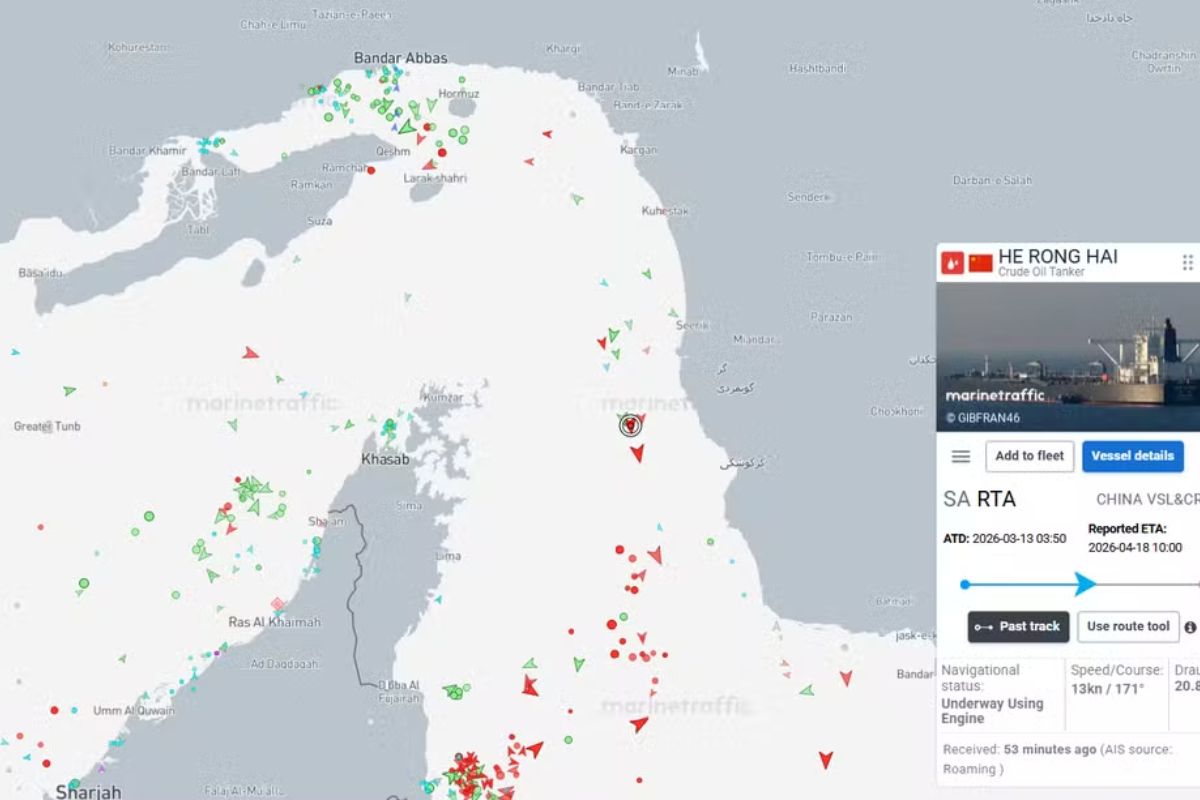
The Chinese super tankers Cospearl Lake and He Rong Hai, chartered by Unipec, Sinopec’s commercial arm, crossed the Strait of Hormuz on Saturday (11), likely being the first vessels to leave the Persian Gulf since the ceasefire agreement between the United States and Iran, amid peace negotiations in Islamabad.
Two Chinese super tankers have just done what no large commercial ship had done since the beginning of the war between the United States and Iran on February 28: cross the Strait of Hormuz loaded with crude oil. The ships Cospearl Lake and He Rong Hai, both classified as VLCCs (Very Large Crude Carriers), were chartered by Unipec, the trading arm of Sinopec, Asia’s largest refiner. According to navigation data from LSEG, the two vessels entered and exited the experimental anchorage area surrounding the Iranian island of Larak on Saturday morning, following a route north of the strait that passes through Iranian waters, as required by Tehran.
The crossing occurs days after the announcement of a two-week ceasefire between the United States and Iran, established earlier in the week, and while delegations from both countries negotiate in Islamabad, Pakistan, the terms of a possible peace agreement. If the Chinese super tankers completed the passage without incidents, along with a third Greek ship, the Serifos, this Saturday marked the day of the largest oil exit through Hormuz since the war paralyzed almost all traffic in the region. The three ships together have the capacity to transport about 6 million barrels of crude oil, a significant volume but still far below pre-war levels.
Why the Chinese super tankers are the first to cross Hormuz
The presence of Chinese super tankers as the first commercial vessels to leave the Persian Gulf is no coincidence. China is the world’s largest oil importer and the country most dependent on the flow that passes through Hormuz, through which 20% of the world’s oil and liquefied natural gas passed before the war. The Cospearl Lake loaded its supply in Iraq and the He Rong Hai in Saudi Arabia, meaning that neither of the ships was carrying Iranian oil nor had obvious direct ties to Iran, a diplomatically relevant detail.
-
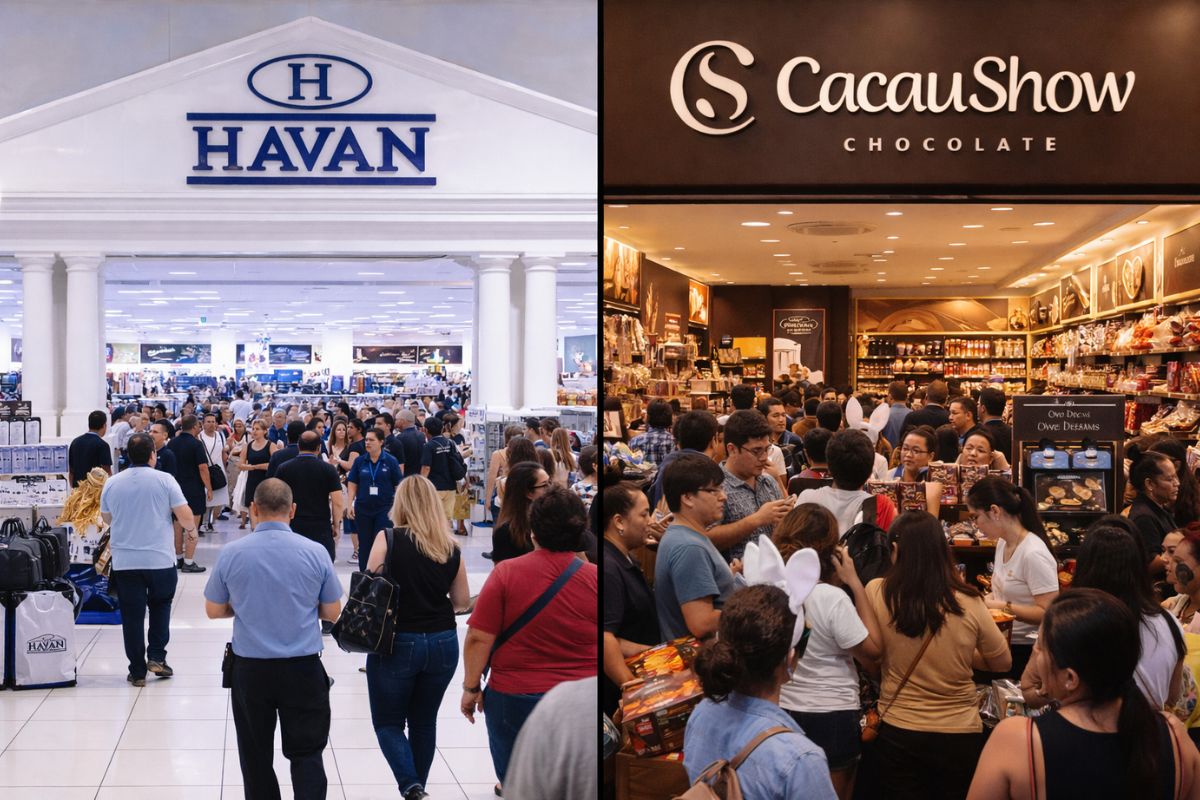
While Havan earns R$ 50 million per day throughout the year, Cacau Show managed six times more in just 24 hours, totaling half a billion reais in two days of Easter.
-
Weak dollar or strong real? The American currency plummets for the third day, approaching R$ 5 and surprising the market with global inflation and tensions in the Middle East that continue to create global uncertainty.

-
China’s investments in Brazil in factories, energy, oil, electric cars, and new industrial projects double to $4.2 billion, making the country the 3rd largest global destination for Chinese capital.

-
Lula announced that 160,000 students in debt with FIES will be included in the federal government’s renegotiation package and compared the cost of an inmate to that of a student by saying that Brazil invests in criminals when it does not invest in education.

The fact that Chinese super tankers are leading the return of traffic to the Persian Gulf also reflects Beijing’s priorities. While peace negotiations continue in Islamabad, China is practically demonstrating that it intends to restore its supply flow as quickly as possible, even with the ceasefire being considered fragile by analysts. There was also a third Chinese tanker in the region that did not emit signals on Saturday and was waiting near the first two before the crossing, suggesting that more vessels may leave the Persian Gulf in the coming days.
The dangerous route the Chinese super tankers were forced to follow
According to the G1 portal, the Chinese super tankers did not cross the Strait of Hormuz via the traditional navigation route. They were forced to follow a path to the north, passing through Iranian waters and along the coasts of the islands of Qeshm and Larak, moving away from the conventional routes that hug the southern coast of the waterway. This alternative route is a requirement of Iran and implies a level of risk that, in normal times, would be unacceptable for commercial operators.
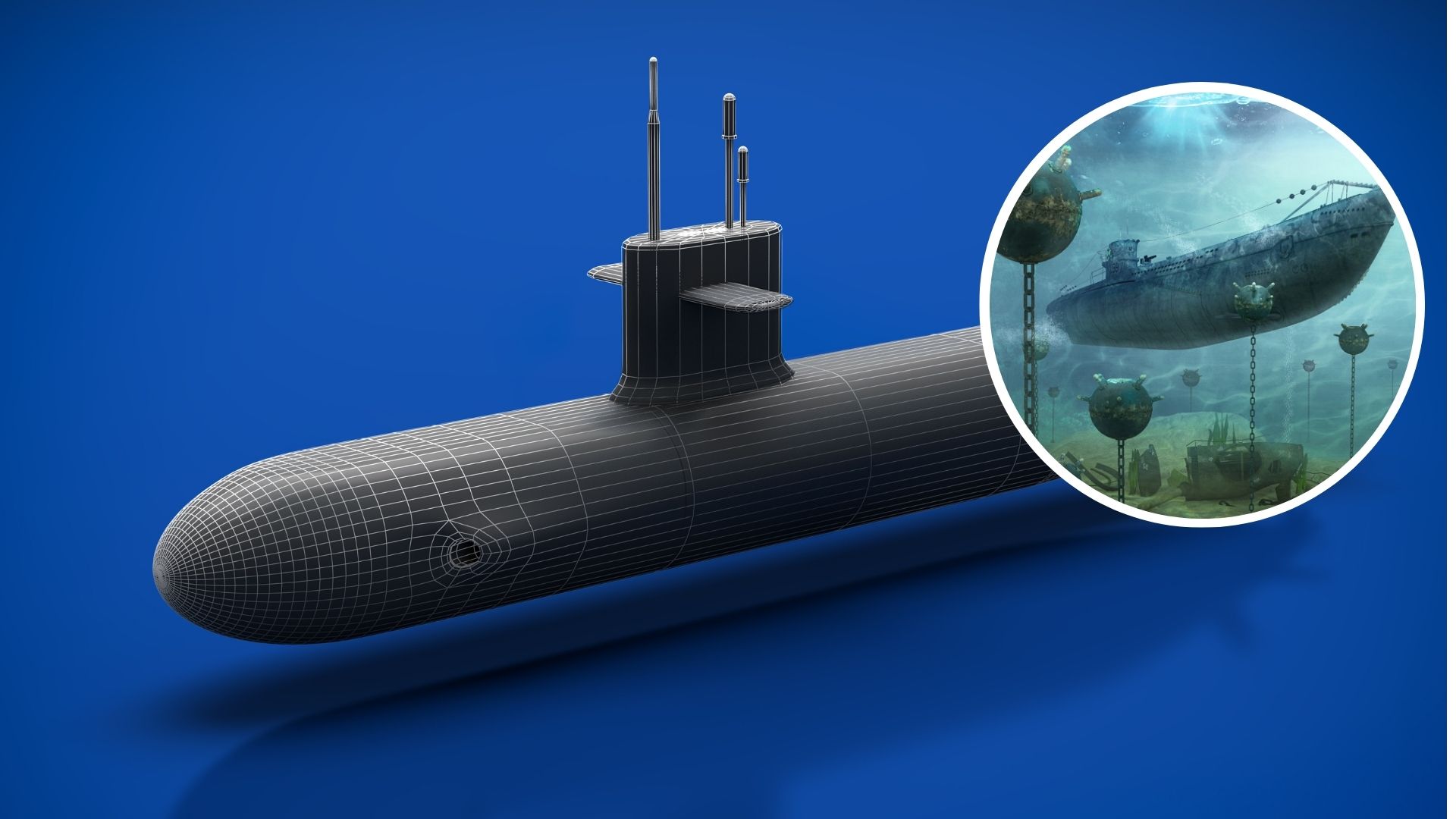
The danger is not just theoretical. President Donald Trump stated on social media that the U.S. armed forces “initiated the process of clearing the Strait of Hormuz” and that 28 Iranian ships laying mines were sunk. The presence of naval mines in the strait is a real concern: Iran maintains a varied arsenal of mines of Soviet, Western, and domestically produced origin, according to analyses from the Strauss Center for International Security and Law at the University of Texas. The Chinese super tankers crossed the strait during a window when the risk had decreased, but not disappeared.
What the crossing means for the global oil market
The passage of the Chinese super tankers through Hormuz is significant, but it is far from normalizing global supply. The flow on Saturday represented only a fraction of what was transiting before the war, when Iran exported about 1.7 million barrels per day through the waterway. The three ships that crossed the strait together carry approximately 6 million barrels, equivalent to a few days of Iranian exports and a tiny fraction of Asian demand.
The physical oil market reflects this tension. The Dated Brent, the main price benchmark, reached $144 per barrel before the ceasefire, surpassing the historical highs of 2008. On Friday, it fell to $126, still more than $30 above futures. Traders like Trafigura and Gunvor were making offers with premiums exceeding $22 per barrel for cargoes in the North Sea. The Chinese super tankers represent a first sign that traffic may return, but as long as the ceasefire remains fragile and negotiations in Islamabad do not produce a definitive agreement, the market will continue to operate in crisis mode.
The negotiations in Islamabad and the future of the Strait of Hormuz
The crossing of the Chinese super tankers occurs in parallel with peace negotiations between the United States and Iran in Islamabad, mediated by Pakistan. The American delegation, led by Vice President JD Vance, and the Iranian delegation, headed by the Speaker of Parliament, Mohammad Bagher Qalibaf, are discussing how to advance the ceasefire that has already been threatened by misunderstandings and continued Israeli attacks in Lebanon against Hezbollah.
The full reopening of the Strait of Hormuz was one of the conditions imposed by Trump for the ceasefire. However, following the continuation of Israeli attacks on Lebanon, which were not part of the initial agreement, Iran again restricted traffic. The negotiations concluded the first phase without a definitive agreement, moving to what the parties call the “expert phase.” Trump stated that the strait will be reopened “soon, with or without Iran’s cooperation,” while Iran claimed to maintain “goodwill” to negotiate but emphasized that it does not trust the United States. The Chinese super tankers that crossed Hormuz this Saturday are concrete evidence that the flow can be resumed, but also a reminder of how fragile the situation is.
Two Chinese super tankers crossed the Strait of Hormuz for the first time since the beginning of the war between the U.S. and Iran. Do you think the ceasefire will hold, or will the strait close again? How does the crisis affect fuel prices in Brazil? Leave your opinion in the comments.







Seja o primeiro a reagir!