





 English
  Francês
  Alemão
  Italiano
  Japonês
  Norueguês
  Portuguese
  Spanish
  4 min of reading
  0 comments


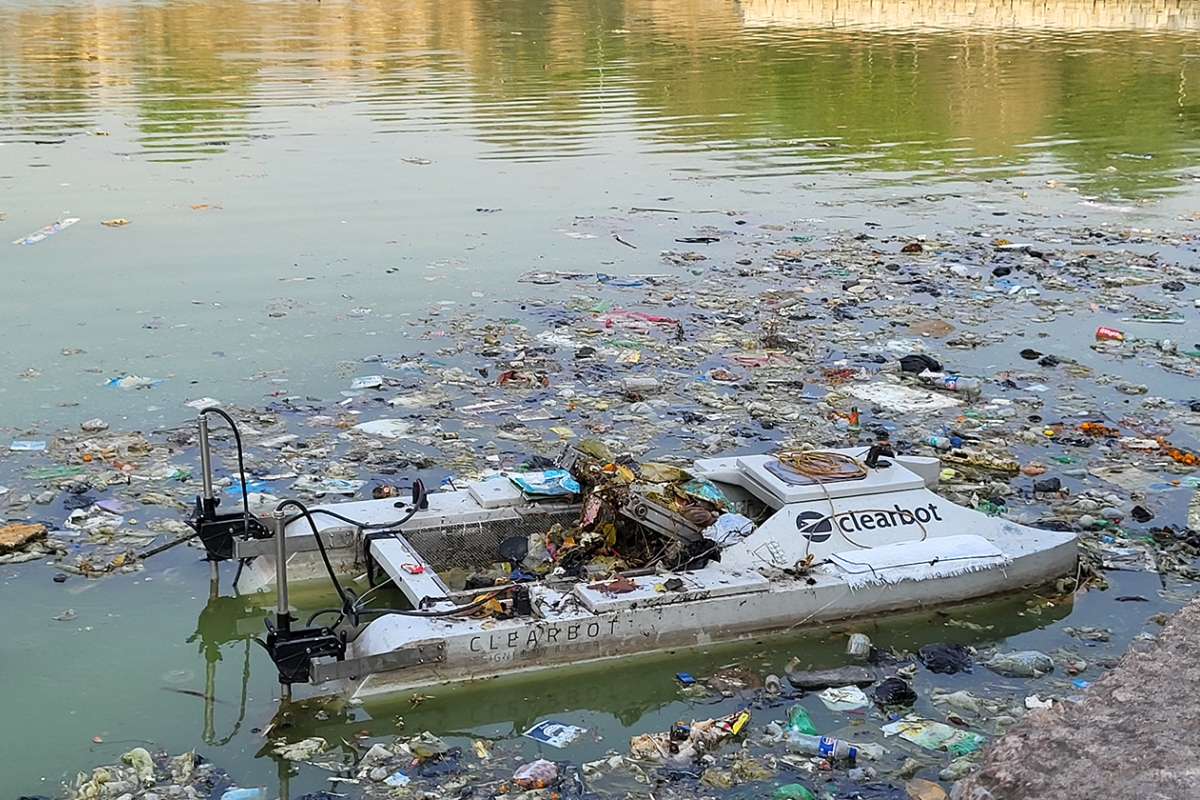
A startup from Hong Kong has begun using autonomous vessels to collect waste before it reaches the sea, with operations in India, the Philippines, and Indonesia, achieving measurable productivity gains.
The advance of bottles, bags, and packaging through rivers now faces a direct blockade in the water. Small autonomous electric boats have started operating in urban and port areas to collect floating waste before it heads towards beaches and open sea.
The proposal combines collection, smart navigation, and real-time data recording. In practice, the system reduces reliance on combustion vessels, decreases crew exposure to contaminated waters, and enhances cleaning in areas where trash frequently reappears.
Electric boats operate where waste accumulates the most
The logic of the operation is simple and effective. Instead of waiting for dirt to spread through canals, mangroves, and coastal areas, the boats enter precisely the sections where disposal is most concentrated.
-
350-year mystery may have been solved: remains of a soldier who inspired the hero of The Three Musketeers found beneath a church in the Netherlands.

-
NASA photographed a nearly perfect square with 3 km sides on Mars, 13 times larger than the Great Pyramid of Giza, but the official explanation is natural erosion; still, no one has explained why the four sides have almost identical lengths.

-
Starlink breaks the barrier of 10,000 satellites in orbit and takes its expansion to an unprecedented level, with a direct impact on global internet, technological competition, and the race for space.

-
Japan finds an alternative to oil amid rising prices by transforming ocean balance into electricity with a new technology that maintains efficiency even when the sea changes.

The Clearbot was born in Hong Kong and has been expanding its presence in countries like India, the Philippines, and Indonesia. The focus is on urban rivers, canals, and port areas, where the flow of floating waste is usually continuous.

Cameras, sensors, and belt collect up to 250 kilos per day
Each unit functions as a small boat with cameras, sensors, and a belt that pulls bottles, polystyrene packaging, and other lightweight materials that remain on the surface.
The latest models can operate for up to eight consecutive hours with rechargeable batteries. In some versions, solar panels also help maintain activity for longer, which increases autonomy and further reduces environmental impact.
Artificial intelligence separates waste, avoids obstacles, and improves the route
Artificial intelligence plays a central role in two stages. First, it helps differentiate waste, vegetation, oil slicks, and other elements present in the water, which avoids unnecessary collection and improves work efficiency.
Then, the system uses these readings to adjust the path and avoid buoys, pillars, vessels, and shallow areas. This control allows for the removal of between 200 and 250 kilos per day, depending on the current and concentration of waste in the area.

India concentrates operations with 4,691 kilos removed in Bharatpur
The results already show a concrete impact in specific areas. In the moat of Fort Lohagarh, in Bharatpur, 4,691 kilos of floating waste were removed from an area of five thousand square meters, with vessels capable of carrying 200 kilos per trip.
At the port managed by the Jawaharlal Nehru Port Authority in Mumbai, the capacity reaches 500 kilos per operation. Since the start of the project, about three thousand kilos of waste have already been removed, with a visible decrease in the presence of plastics in the water in the first months.
Pasig River tests model with lower cost and higher productivity
According to the Asian Development Bank (ADB), a multilateral development bank for Asia, the pilot project on the Pasig River combines robots and data to cut operational costs by about 30 percent and increase productivity by nearly 300 percent compared to manual cleaning.
The replacement of combustion-powered vessels with solar electric units also helps reduce emissions. This gain reinforces an important shift: cleaning is no longer just a reactive response but becomes a continuous service, measured and adjusted with data.
System registers weight, time, and location to map critical points
Each operation generates information about weight, time, position, and basic type of waste collected. This data feeds panels used by public administrations and port authorities, creating a more accurate reading of the points where waste reappears.
With this history, it becomes easier to identify failures in drainage networks, irregular disposal upstream, and accumulation patterns after heavy rains. The effect goes beyond visual cleaning and helps direct practical actions on land.
Technology solves part of the problem, but does not close the account alone
The boats remove what is floating, but the next step remains challenging. After collection, the mix of plastic, foam, wood, and organic waste still needs to be unloaded, separated, and treated, which limits the reuse of some of this material.
Invisible contaminants, such as very small particles and chemical waste, also remain beyond immediate reach. This shows that technology buys time, improves response, and organizes data, but does not replace public policies and efficient waste management.
The expansion of these boats changes the way pollution in rivers and ports is tackled. Waste is no longer seen only when it is already spread out but is intercepted early in its journey.
With real capacity numbers, cost reduction, and productivity gains, the model begins to move from the realm of promise to practical operation. This reinforces the pressure for a quick response from cities and changes the strategic reading.







Seja o primeiro a reagir!