





 Portuguese
  English
  Spanish
 4 min of reading
  0 comments



UFRJ, In Partnership with Cederj, Launches 1,235 Spots in Free EAD (Blended) Courses for 2026. See Deadlines, Courses, Enrollments, and Requirements.
On this Thursday, (10/09), UFRJ is offering 1,235 spots in free courses for admission in 2026, through the Cederj Entrance Exam 2026/1. This offer results from the partnership between the Federal University of Rio de Janeiro (UFRJ), the Cederj Consortium, and the Cecierj Foundation.
The opportunities are intended for candidates from across the State of Rio de Janeiro, in blended courses with in-person activities at regional centers.
Enrollment will be free, but it requires interested parties to complete the selection process by October 30, with the exam in December or by using the ENEM score.
-
Federal Institute opens over 700 vacancies in free technical courses in Civil Engineering, Mechanics, Electrotechnics, Computer Science, and Nursing; see how to enroll and study at IFPB.

-
Become a professional in logistics, mechanics, computer science, chemistry, or gastronomy at the Federal Institute: Ifes opens more than 1,000 spots in free technical courses with selection without an exam.

-
Take a 100% online and free course at Itaú: Foundation releases 156 options with certificates, registrations open for all of Brazil, unlimited access, areas such as technology, education, and management, and a flexible schedule without tutoring.

-
Senai will pay up to R$ 700 per month for those who take free technical courses: there are 12,000 open positions across Brazil and training with access to the technology market.


The aim is to expand access to higher education in the EAD model, balancing flexibility and commitment to quality.
Take a Free Higher Education Course at UFRJ
UFRJ opens 1,235 spots in free courses through the Cederj Entrance Exam 2026/1, part of a total of 7,355 spots offered by consortium institutions in Rio de Janeiro.
This initiative is significant because it expands access to higher education at no direct cost to students, in a modality that combines remote learning and in-person meetings.
In a context of high demand for higher education and the need for flexibility, this modality may particularly reach those living far from large urban centers.
UFRJ Free Courses and Distribution of Spots
UFRJ offers four courses in this EAD call:
- Bachelor’s Degree in Biological Sciences: 356 spots
- Bachelor’s Degree in Physics: 320 spots
- Bachelor’s Degree in Chemistry: 219 spots
- Accounting: 340 spots
These courses follow the blended format: predominance of distance classes, but with mandatory in-person activities at regional centers, with exams held on Saturdays and Sundays.
Who Can Apply — Requirements and Enrollment
Eligible candidates are those who have completed High School or equivalent by the enrollment date.
Registrations will be conducted exclusively online, until October 30, 2025, with a fee of R$ 89.90.
The selection will be conducted in two ways:
- In-person exam: 45 multiple-choice questions + essay, scheduled for December 7, 2025.
- ENEM score: from the 2022, 2023, or 2024 editions. Those who do not pass the ENEM will participate in the regular exam.
The results will be published on a date defined in the official announcement, yet to be released.
When and Where the In-Person Stages of UFRJ Courses Occur
The in-person exams will be held on weekends, on Saturdays and Sundays, at Cederj regional centers, spread across various municipalities in the state of Rio de Janeiro.
Although the courses are primarily EAD, these in-person activities aim to ensure oversight, evaluation, and local interaction, maintaining a connection with the regional structure.
Advantages and Challenges of the Blended EAD Model
Advantages
- Geographical Accessibility: Allows students from distant cities to participate without needing to relocate.
- Schedule Flexibility: Greater autonomy in the study pace.
- Reduced Costs for the Student: Free enrollment and lower need for frequent travel.
Challenges
- Dependence on Technological Infrastructure: It is essential for the student to have reliable internet access and suitable devices.
- Discipline and Self-Management: The format requires engagement and consistency in studies.
- Logistics for In-Person Attendance: Traveling to centers for exams can be an obstacle for some candidates.
About UFRJ
The Federal University of Rio de Janeiro (UFRJ) is a public institution of great tradition, recognized nationally and internationally.
Officially established in 1920 as the first university of the Federal Government, its origins encompass academic units with even older histories, such as the Polytechnic School, founded in 1792 and considered the seventh oldest in the world for Engineering education, as well as being pioneering in the Americas.
Initially named University of Rio de Janeiro, UFRJ resulted from the union of the Polytechnic School with the National Faculty of Medicine, founded in 1808, and the National Faculty of Law, established in 1891.
Consistently highlighted in the major Latin American rankings, UFRJ currently offers 176 undergraduate programs and 136 strictu sensu graduate programs, including master’s and doctoral degrees.
According to the 2019 Folha University Ranking, the university leads in innovation in Brazil, supported by its academic diversity: it has over 4,000 faculty members, approximately 65,000 students, 3,000 staff working in its hospitals, and around 5,000 administrative technicians.
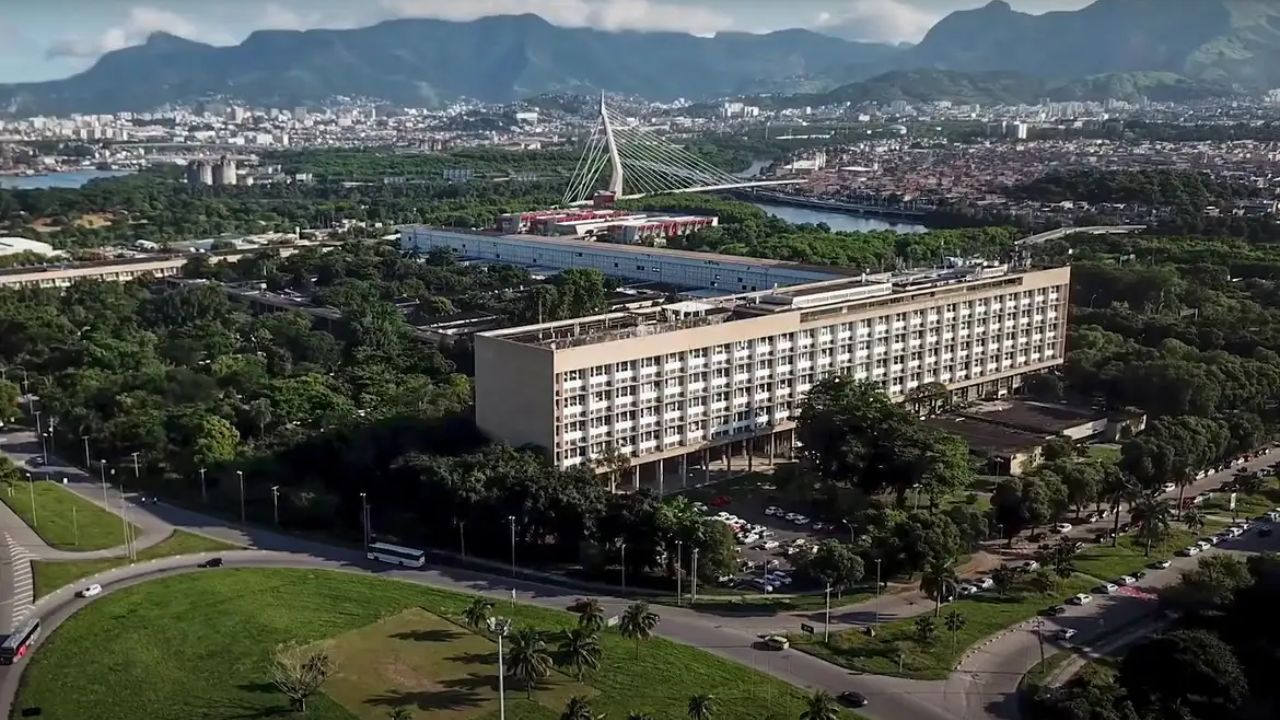
The scope of UFRJ resembles that of a medium-sized city, reflecting its strategic importance for the country’s development.
Among Brazilian universities, UFRJ ranks fourth in scientific production and maintains two campuses outside Rio de Janeiro: in Macaé and Duque de Caxias.
With cutting-edge performance in scientific, technological, and cultural fields, the university manages nine hospitals and health institutes, 21 museums, 1,970 laboratories, 1,863 extension projects, 14 protected historical buildings, 43 libraries, and a Documentation Center, in addition to a Technology Park of 350,000 square meters, where startups and companies develop projects of national and international relevance.










-

-

-

-

-

-

46 pessoas reagiram a isso.