





 Portuguese
  English
  Spanish
  3 min of reading
  0 comments


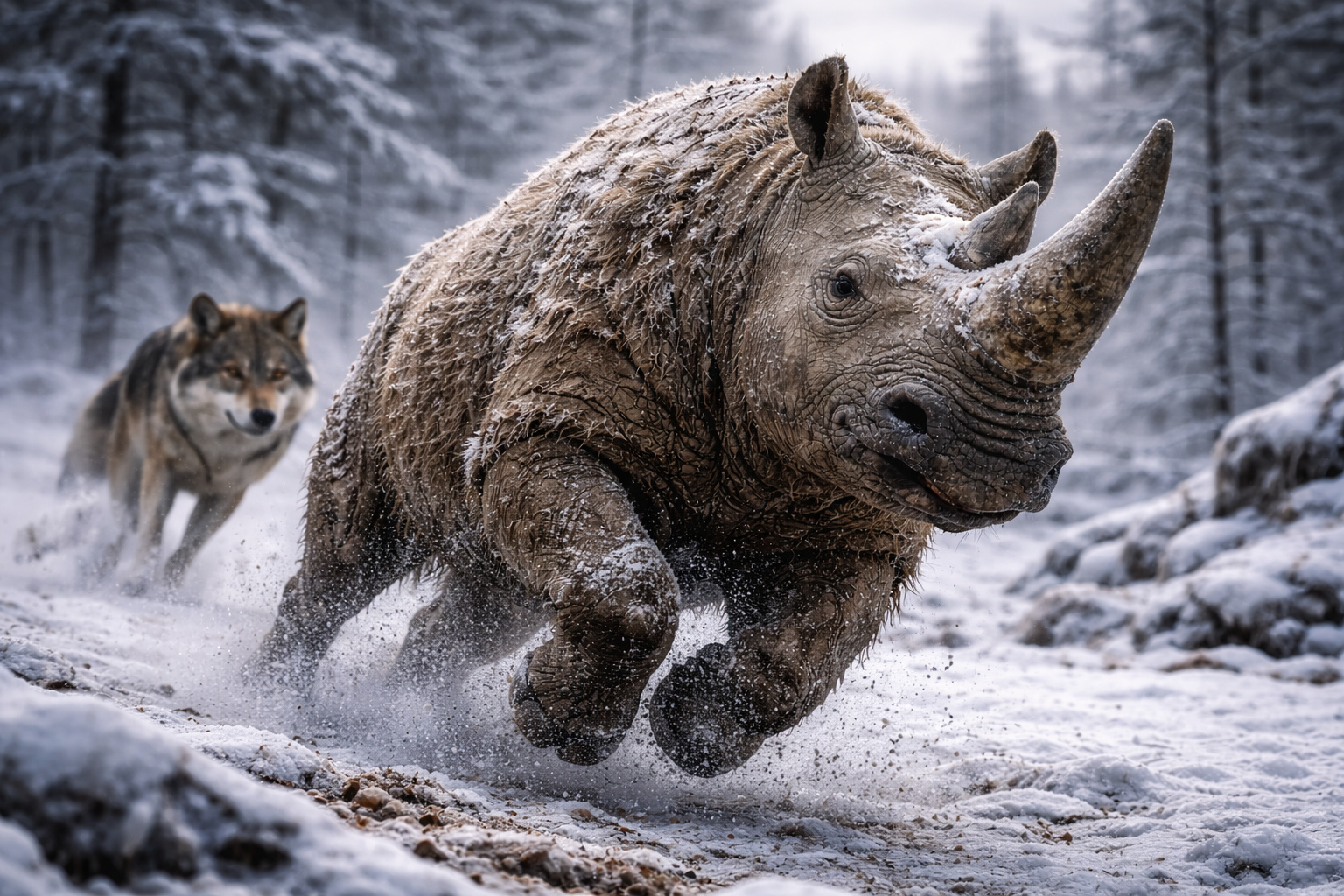
An Unexpected Scientific Discovery Showed How A Common Prehistoric Event Can Reveal Unpublished Genetic Information And Clarify The Disappearance Of An Iconic Ice Age Species
A wolf pup lived about 14,000 years ago, at the end of the last Ice Age, and unknowingly preserved one of the most complete genetic records ever obtained from a woolly rhinoceros, an extinct species from the cold regions of the Northern Hemisphere.
Researchers found the animal mummified in the Siberian permafrost, an area known for the exceptional preservation of organic tissues. In 2024, analyses showed that the wolf’s stomach contained fragments of soft tissue from its last meal, which allowed for a rare scientific advance.
The scientific journal Genome Biology and Evolution published the research, which for the first time enabled the complete reconstruction of the DNA of a woolly rhinoceros from digestive material, a groundbreaking feat in paleogenetics.
-
With a cost per shot close to zero, the DragonFire laser could change naval warfare in 2027 and provide British ships with nearly unlimited defense against drones.

-
A British startup creates tires that generate electricity in electric vehicles when passing over potholes, speed bumps, and cracks.

-
Scientists have created robots made with living cells that have their own nervous system, swim on their own, explore the environment, and self-organize without any genetic engineering, and now they want to do the same with human cells.

-
Students create a solar-powered ambulance that operates without a plug, without fuel, and still keeps medical equipment running in remote areas.


Scientific Investigation Reveals Unique Genetic Material
European researchers conducted a detailed analysis of the pup’s stomach, preserved by the continuous freezing of the Siberian soil since the glacial period.
During the study, the team identified organic remains sufficiently intact to extract high-quality DNA, even after thousands of years.
Next, the scientists compared this genetic material with two other partial genomes of woolly rhinoceroses obtained previously from bone fossils.
According to the researchers, the quality of the DNA allowed for an in-depth analysis of the biological status of the species just before extinction.
What DNA Revealed About The Disappearance Of The Species
The genetic analysis provided a relevant conclusion for science. The data indicated that the woolly rhinoceros showed no signs of severe population collapse when it disappeared.
The researchers found no evidence of elevated inbreeding or significant accumulation of harmful mutations, common factors in species that enter prolonged decline.
These results show that the species maintained genetically viable populations until shortly before extinction, contradicting old hypotheses of gradual decay.
Climate Change Accelerated Extinction
Based on the genetic data and environmental context, scientists reinforce a hypothesis increasingly accepted since the 2010s.
The woolly rhinoceros disappeared rapidly, driven by intense climate changes associated with the end of the last Ice Age, between 15,000 and 11,000 years ago.
The global warming of that period drastically altered cold ecosystems and reduced habitats and food sources for large herbivores adapted to ice.
In this scenario, environmental pressure played a more decisive role than human hunting in the final collapse of the species.
Permafrost Preserves Biological Time Capsules
The study also highlights the scientific value of animals preserved in permafrost, especially in Siberia.
These frozen bodies retain soft tissues, internal organs, and digestive contents, unlike conventional fossils, and provide a broad view of ancient ecosystems.
These findings allow the reconstruction of food chains, environmental conditions, and ecological interactions from remote periods in Earth’s history.
When A Simple Event Rewrites Natural History
By revealing the complete genetic code of an extinct animal from the last meal of a predator, the study shows how everyday occurrences from the distant past can lead to transformative discoveries thousands of years later.
The research reinforces the scientific potential of findings in permafrost and expands our understanding of how abrupt climate changes shaped the planet’s biodiversity.
In light of this evidence, do you believe that new discoveries in permafrost can deeply change what we know about other Ice Age extinctions?








-

2 pessoas reagiram a isso.