





 Portuguese
  English
  Spanish
  7 min of reading
  15 comments


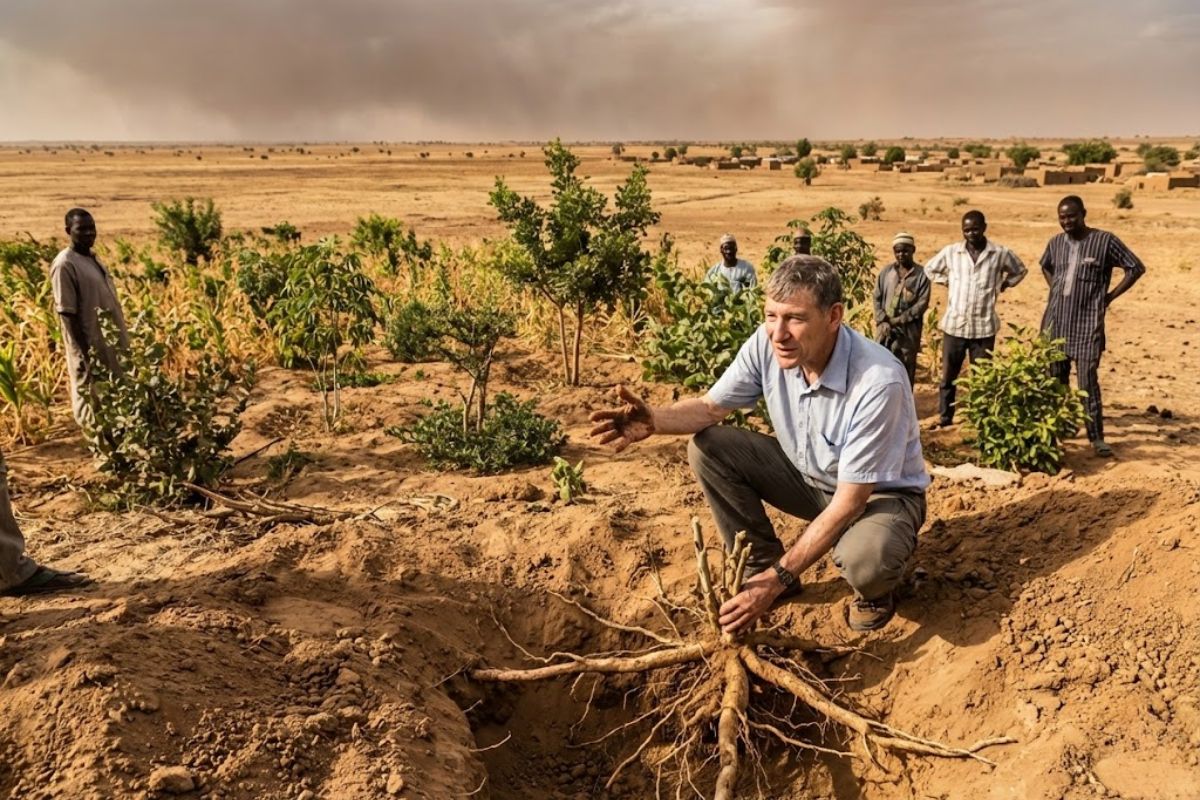


In Southern Niger, A World Vision Agronomist Insisted For Over 35 Years On A Simple Technique That Seemed Crazy. Instead Of Planting Seedlings That Died, He Taught Farmers To Regenerate Dormant Trees, Restoring Millions Of Hectares, Increasing Productivity, Income, Shade, And Food Security.
In Niger, an agronomist named Tony Rinaudo arrived in 1981 and found parched farmland, hunger, drought, and a landscape nearly devoid of trees, with an average density of about four trees per hectare, often zero. It seemed impossible to stop the advance of the desert.
Decades later, the same region began to exhibit such a significant change that it can be seen in satellite images, with vegetation cover visibly increasing between 1975 and 2005, as farmers transformed arid plains into productive, tree-filled areas.
The Scenario In Niger When Everything Seemed Lost

What the agronomist saw upon arriving in southern Niger was not just a lack of trees.
-
A startup sends robotic gloves for users to wear at home while washing dishes, folding clothes, and making coffee; every finger movement is recorded and sent back to train a domestic robot that has already learned 10 million real tasks without ever having entered a kitchen.

-
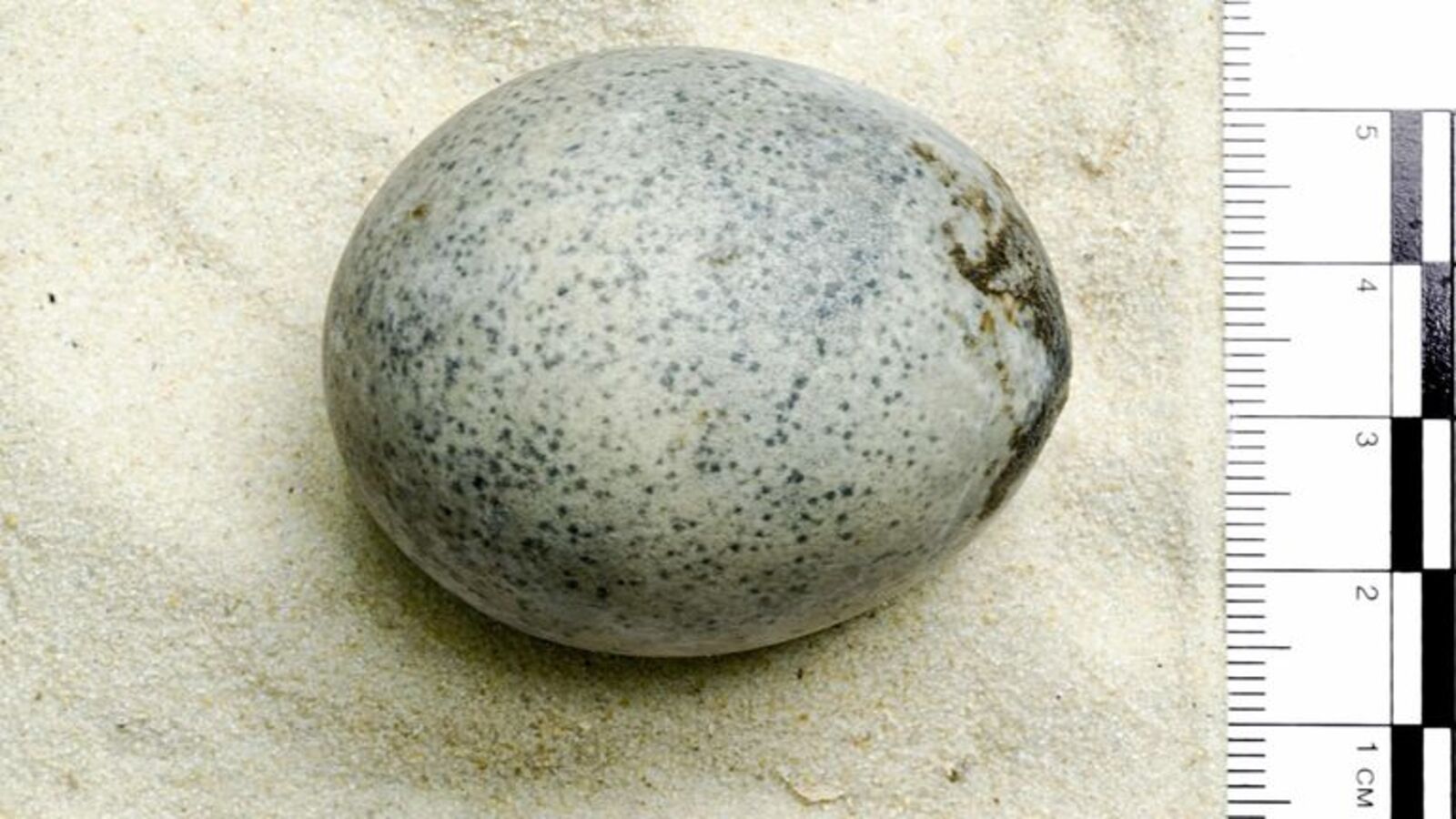
In a flooded well, archaeologists found a 1,700-year-old Roman egg that still contains clear and yolk intact inside the very thin shell.
-
Something is happening around the Earth: Inside the huge explosion of fireballs in 2026

-
A hot air bubble coming from Argentina expands over Brazil, causing thermometers to exceed 38 degrees with a thermal sensation of 40 degrees in late March, affecting 6 states at once.


It was a set of factors that hindered any attempt at recovery.
The drought ravaged agriculture, hunger eroded trust in long-term solutions, and the soil appeared fragile, exposed and unprotected against the intense heat.
There was a cruel paradox. People needed to produce food immediately, but the landscape itself offered no help.
Without trees, the soil lost stability, shade, and moisture.
The land became more vulnerable to wind and sun, and each bad season pushed communities into an even more desperate situation.
The most important detail was both cultural and practical: trees were treated as enemies of planting.
Many farmers believed that trees competed with crops. In a context of poverty and hunger, anything that seemed to “steal” water, light, or space was seen as a threat.
The Agronomist, World Vision, And The Insistence That Became A Breaking Point

With a bachelor’s degree in Rural Sciences, agronomist Tony Rinaudo, affiliated with World Vision, decided to tackle desertification in the most obvious way: by planting trees.
For two years, he tried to introduce sustainable agricultural practices and traditional reforestation.
The result was devastating. The majority of the trees planted simply died.

People were not interested, and he became known as the “crazy white farmer” for insisting on trees when the priority was survival and putting food on the table.
This clash between urgency and long-term vision was the initial great wall.
Even with respect, patience, and persistence, adherence was low.
And when trees died, failure seemed to confirm the argument of those who said it would never work.
The Discovery That Changed The Game: The Invisible Forest

In 1983, during a trip on a dirt road in Niger, the agronomist stopped for a mundane reason: a flat tire.
It was at that moment, in a moment of exhaustion and frustration, that he noticed something that had always been there but went unnoticed.
What seemed like a bush was, in fact, a tree trying to regenerate. Small green leaves were sprouting from a living stump.
The agronomist realized that this landscape was not a complete void. There existed a “subterranean forest” that was dormant, composed of stumps, living roots, and seeds that had survived in the soil, waiting for a chance to return.
This turning point was decisive because it swapped the impossible for the viable.
If the trees were already there, it was unnecessary to replant from scratch. It was necessary to allow nature to reclaim what had been interrupted.
What Is Farmer-Managed Natural Regeneration

The technique is called Farmer-Managed Natural Regeneration, known as FMNR.
Instead of relying on seedlings, nurseries, and conventional planting, it is based on the management and selection of what already exists on the land.
Here’s how it works, directly and repeatably:
1) Identify living stumps, roots, and seeds present in the landscape
They often look like worthless bushes, but they are potential trees.
2) Select shoots and guide growth
Choose the ones that are stronger to continue, and remove what hinders with pruning.
3) Prune selectively and consistently
The pruning is not destruction.
It is guidance.
It reduces competition among shoots and redirects energy to form stronger trees.
4) Protect what has been guided to prevent it from being cut again
The management relies on ongoing care, so that regeneration is not interrupted.
The central point is simple and powerful: the original population of trees is regenerated, and that changes the landscape without requiring a new forest to be “built” from scratch.
Why Trees Change Everything In Dry Agricultural Areas
The agronomist insisted on an idea that seemed obvious to him but was not obvious to those who were starving: trees hold the soil together.
They help protect the soil and animals from intense heat, create shade, reduce thermal stress, and favor conditions for the land to maintain fertility and stability.
In arid regions, this protection can be the difference between a crop that endures and one that collapses.
When trees come back into the field, the property ceases to be a “bare” space and becomes a more balanced system. The farmer does not just gain wood or shade; they gain productivity.
The Numbers That Show The Scale Of The Turnaround In Niger

The impact in Niger has been described as one of the largest environmental transformations possible in Africa. The data provided indicates that:
- Five million hectares of land were restored in Niger.
- More than 200 million trees became part of this recovered landscape.
- The direct effect reached two and a half million lives, with a real change in land use and productive potential.
Moreover, the transformation appears concretely in satellite images.

Between 1975 and 2005, vegetation cover in southern Niger significantly increased, with trees represented by dark dots, highlighting the expansion of green in areas previously dominated by aridity.
These numbers matter for a practical reason: this is not a small or localized experiment.
It is on a scale capable of altering the dynamics of an entire region, with consequences for agriculture, income, and food security.
The Technique That Came Out Of Niger And Became A Global Tool Against Hunger
The practice has expanded and is now reported to be adopted in over 27 countries where World Vision operates, including Somalia, Ethiopia, Kenya, Tanzania, Rwanda, Uganda, Malawi, Zambia, Zimbabwe, Lesotho, Eswatini, the Democratic Republic of the Congo, South Sudan, Chad, Niger, Mali, Burundi, Ghana, Senegal, India, Myanmar, Indonesia, East Timor, Haiti, Lebanon, and Sri Lanka.
In this collection of places, the adoption is associated with a practical goal: reducing the risk of hunger and improving child nutrition, with more productive and resilient land use.
The message supporting the expansion is straightforward: working in harmony with nature, instead of fighting against it, can unlock results that conventional programs cannot deliver.
The Role Of Children And The Bet On The Next Generation
The continuity of the technique does not depend solely on adults in the field.
There is an explicit effort for training in schools.
Field teams visit communities to teach the logic of management, and the narrative is very concrete: children report that they need to gather firewood for school kitchens and for home, and this weighs on their routine.
When they learn to prune bushes that seemed useless and guide them to become trees, they understand two things at once: how to produce a future resource and why not to cut down what is growing.
The feedback is one of changing attitudes and social vigilance.
Children go home, test the management, and influence their parents. They also react when they see trees being cut down because they associate that with a lost future.
Why The Solution Seems Simple, But Is Not Easy
The technique is simple in method, but difficult in adoption, because it requires breaking long-held beliefs.
The agronomist realized that deforestation was not mainly caused by drought and goats, but by false beliefs, negative attitudes, and destructive behaviors towards trees and land.
That’s why the transformation carries historical weight.
It is not just about shoots and pruning.
It’s about convincing people in dire situations that trees are not enemies, but rather a living infrastructure of the field.
What seemed like “losing space” becomes gaining productivity.
What seemed to “compete with crops” becomes supporting crops.
The Turnaround That Exposes A Bigger Message About Environmental Restoration
When a discredited agronomist finds life where everyone else saw death, the message is harsh for poorly designed policies: not always a lack of nature exists; sometimes, a lack of perspective prevails.
The invisible forest of Niger became a metaphor and a reality at the same time.
It was invisible because it was hidden beneath the soil and under the culture of the “clean field.”
And it became a reality when management returned trees, shade, structure, and productive capacity.
In the end, desertification was contained without the strategy that the world repeats the most: planting trees.
It was contained with something more basic: stopping the killing of what was trying to be born.









This needs to be expanded vigorously. Need to roll out an aggressive education in communities with clear guidelines.
My genetics are East African, English, Irish, German. Does it matter where I help the world? I live in America.
Why didn’t he do that in his country but rather coming to Africa
I saw my country Uganda listed among the countries where regenerative forestry is implemented. But it looks our Ugandan problem may be different because Niger is a desert country while here we are in the equatorial tropical belt.