





 English
  Francês
  Alemão
  Italiano
  Japonês
  Norueguês
  Portuguese
  Spanish
  5 min of reading
  0 comments


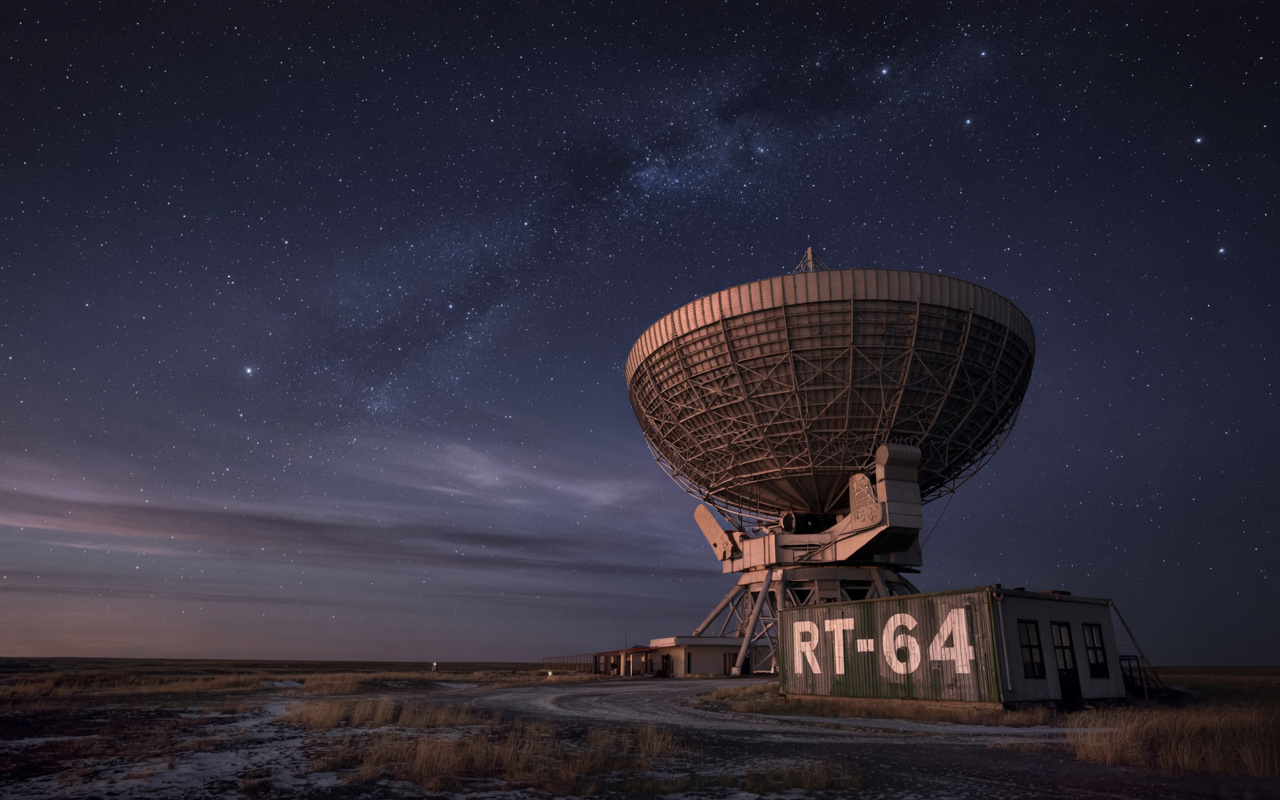
With More Than 50 Years of Operation, the RT-64 Radiotelescope, a Soviet Space Exploration Device, Remains a Global Scientific Reference. Discover How the Second Largest Radiotelescope in the World Continues to Contribute to Research in the Universe
Few scientific instruments manage to span half a century of continuous operation while maintaining international relevance. This is the case of the RT-64 Radiotelescope, a Soviet space exploration device that remains active and continues to provide valuable data to the global scientific community. Built during the Cold War, it became a symbol of technological innovation and continues to impress engineers and astronomers with its robustness and operational capacity.
The Construction of the RT-64 Radiotelescope in the Soviet Union
The project for the RT-64 radiotelescope began in the 1970s, during the space race against the United States, came into operation in 1980, and was completed in 1992, in the post-Soviet transition period. Located in Kalyazin, the equipment was designed to strengthen Soviet capabilities in radioscience and space communications.
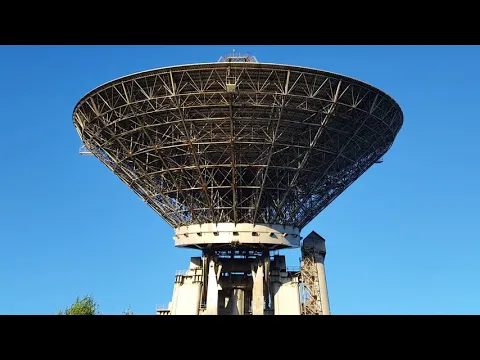

The giant parabolic antenna, measuring 64 meters in diameter, was designed to track satellites and interplanetary probes, in addition to capturing cosmic signals from distant sources. For its time, it represented one of the greatest achievements of Soviet engineering, placing the USSR in a prominent position in the scientific exploration of space.
-
350-year mystery may have been solved: remains of a soldier who inspired the hero of The Three Musketeers found beneath a church in the Netherlands.

-
NASA photographed a nearly perfect square with 3 km sides on Mars, 13 times larger than the Great Pyramid of Giza, but the official explanation is natural erosion; still, no one has explained why the four sides have almost identical lengths.

-
Starlink breaks the barrier of 10,000 satellites in orbit and takes its expansion to an unprecedented level, with a direct impact on global internet, technological competition, and the race for space.

-
Japan finds an alternative to oil amid rising prices by transforming ocean balance into electricity with a new technology that maintains efficiency even when the sea changes.


Besides its scientific function, the RT-64 had strategic value, allowing the Soviet Union to monitor international space activities and maintain data on interplanetary missions in almost real-time.
Why is the RT-64 One of the Largest Radiotelescopes in the World?
Although there are now larger radiotelescopes, such as the FAST (500 m, China) or the Green Bank (100 m, USA), the RT-64 remains one of the largest radiotelescopes in operation worldwide. Its size, combined with durability and the ability to be upgraded, keeps the equipment relevant for international scientific projects.

The telescope can detect extremely weak radio signals emitted by pulsars, quasars, and distant galaxies. The engineering of its structure allows for precise millimeter movements, essential for tracking objects in low Earth orbit and probes sent to planets like Mars and Venus.
Original Functions of the Soviet Space Exploration Device
The Soviet space exploration device RT-64 was conceived with multiple functions:
- Monitoring of Interplanetary Probes: support for the Venera, Mars, and other Soviet probes.
- Space Communications: ensuring data transmission from missions and the collection of scientific information.
- Radio Astronomy: observation of pulsars, quasars, and active galactic nuclei.
- Studies of Near-Earth Space: analysis of the ionosphere and the space environment.
During the Cold War, in addition to science, it served strategic functions for space surveillance, reflecting the dual use of civilian and military technologies.
Modernizations That Keep the Radiotelescope Active
Over the years, the RT-64 Radiotelescope has undergone several modernizations. Electronic systems, signal receivers, and analysis software have been updated to keep the equipment competitive. These improvements have ensured that the RT-64 remains integrated into international Very Long Baseline Interferometry (VLBI) projects, enabling extremely precise measurements of astronomical phenomena.
The telescope can form, together with other radiotelescopes, a virtual antenna the size of the Earth. This type of network allows for the study of distant objects with unprecedented resolution, a technological advancement that keeps the RT-64 relevant even in the face of modern radiotelescopes.
Scientific Contribution After 50 Years
Even after five decades, the RT-64 continues to provide valuable data:
- Astronomical Observations: maps of quasars, pulsars, and distant galaxies.
- Participation in International Networks: cooperation in studies of gravity, galaxy formation, and space-time dynamics.
- Geoscience: monitoring of Earth’s rotation and tectonic plates, showcasing the versatility of the equipment.
This data reinforces its importance in areas that extend beyond astronomy, contributing to applied sciences and geophysics as well.
A Symbol of Soviet Engineering
More than a research instrument, the RT-64 is a milestone of Soviet engineering. Its robustness, precision, and longevity impress even modern engineers. Projects of this magnitude require detailed planning, quality materials, and continuous maintenance, characteristics that have ensured the survival of the telescope for over five decades.
It also symbolizes the scientific legacy of the Soviet Union, demonstrating how a Soviet space exploration device can transcend generations and remain functional and relevant.
Radiotelescopes and the Importance for Space Exploration
Radiotelescopes capture radio waves emitted by celestial bodies, providing information that optical telescopes cannot obtain. With this, it is possible to study:
- Black holes and their interactions with the galactic environment.
- Gravitational waves and other extreme cosmic phenomena.
- Structure and evolution of galaxies and quasars.
The RT-64 radiotelescope performs these functions, maintaining its central role in scientific exploration and monitoring of deep space.
Comparison with Other Large Radiotelescopes
Despite the emergence of larger radiotelescopes, the RT-64 maintains its historical and technical relevance. Examples of other important equipment include:
- FAST (China, 500 m): Largest radiotelescope in the world.
- Green Bank (USA, 100 m): Reference for sensitivity and precision.
- Effelsberg (Germany, 100 m): Recognized for high-quality observations.
The RT-64 differentiates itself by its longevity, reliability, and participation in international astronomical observation missions.
Cultural and Scientific Value of the RT-64 Radiotelescope
The RT-64 is more than science; it is culture. Its imposing structure attracts curious onlookers and photographers, becoming a visual icon of Soviet engineering. Moreover, the telescope is remembered in scientific and digital communities as a symbol of grand projects’ ability to withstand the test of time.
The equipment represents the intersection of history, science, and culture, demonstrating how a well-planned project can create a lasting impact, even amid political and technological changes.
Why Does the RT-64 Radiotelescope Remain Relevant?
The RT-64 radiotelescope is proof that well-designed scientific infrastructure can last for decades. It survived the dissolution of the Soviet Union and remains active in astronomical and geophysical research. Its involvement in international networks and cutting-edge observations demonstrates that it still plays a strategic role in global science.
Moreover, it is an example of long-term investment, showing that quality technology combined with continuous maintenance yields lasting results.
The Legacy of the RT-64 Radiotelescope
The journey of the RT-64, one of the largest radiotelescopes in the world, illustrates the persistence of science beyond ideological borders. The RT-64 radiotelescope, built by the Soviet Union as a Soviet space exploration device, has become a pillar of international astronomy.
Its longevity impresses engineers and scientists, who still use it for advanced research. More than a relic of the Cold War, it is a reminder that knowledge and innovation can span decades and maintain relevance.
The RT-64 is not just a giant functioning antenna, but a living symbol of humanity’s ability to design solutions that endure over time. Its legacy reinforces the importance of investing in science and preserving structures that, even built in the past, continue to open windows to the future.







Seja o primeiro a reagir!