





 Portuguese
  English
  Spanish
  7 min of reading
  30 comments


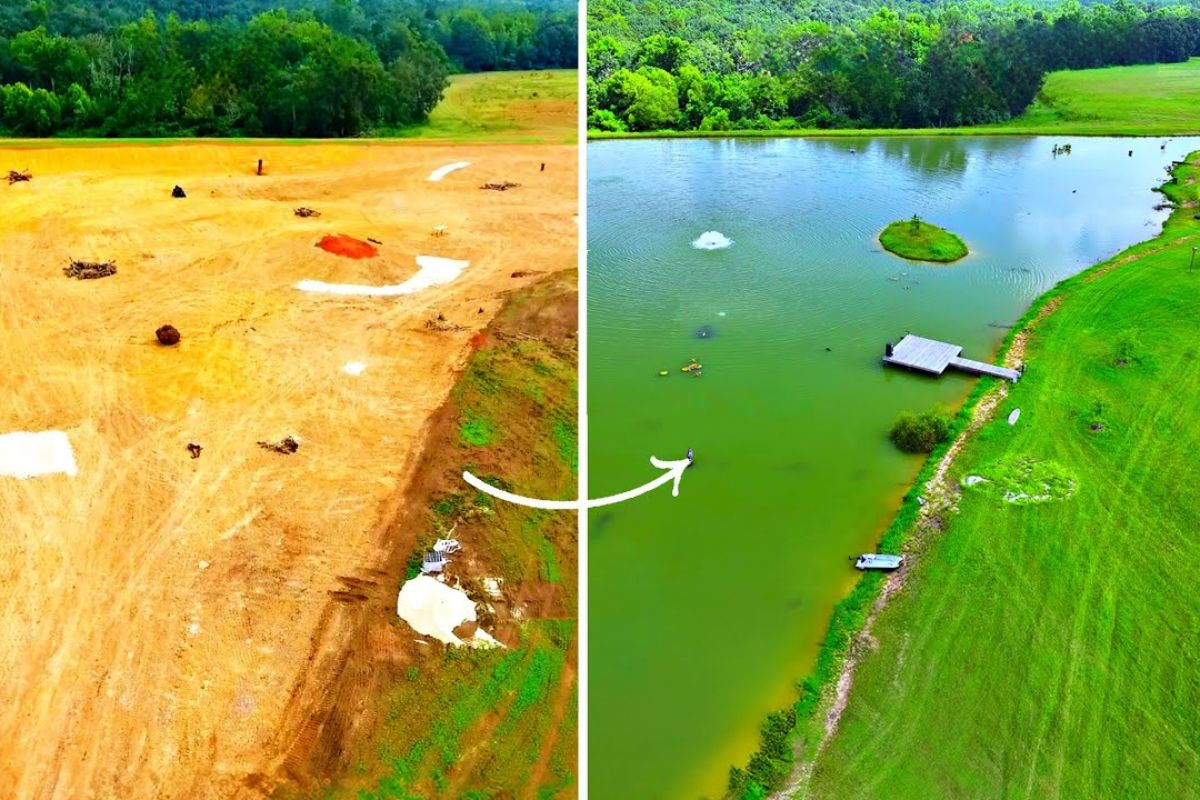


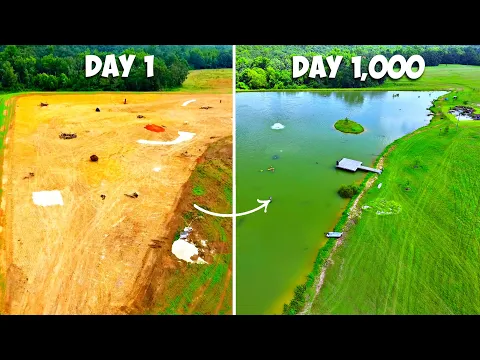
A 5-Acre Lake Created For Striped Bass Required Dissolved Oxygen Control, Water Quality, And Submerged Structure, But In About Six Months Attracted Wildlife: Bald Eagles, Deer, Ducks, And Predators. In 1,000 Days, The Farm, Located In Southern Alabama, Stopped Being A Peanut Field And Became A Natural Habitat Laboratory.
The 5-acre lake was born as a striped bass cultivation project, focusing on lake structure, water quality, and dissolved oxygen checks. The plan was technical and focused on fish, but the surrounding landscape began to react sooner than expected, with clear signs of ecological change.
About six months later, the routine of the 5-acre lake began to include increasing wildlife, and not just quick visits. Bald eagles, deer, waterfowl, raccoons, and predators began using the water as a stopover point, and some of them stayed, transforming the farm’s management into a effort divided between lake and land.
From Fish To Ecosystem: What Changed In Six Months

In the first months, the goal was to establish a functional habitat for striped bass, adding structure, adjusting parameters, and monitoring the aquatic environment.
-
The Argentine government celebrates the lowest poverty rate in 7 years, but experts warn that the methodology has changed, real wages have fallen, unemployment has risen, and the number of people on the streets of Buenos Aires has increased by 57% since Milei took office.

-
7.8 magnitude earthquake in Indonesia frightens the population, triggers tsunami alert, and hits an island with over 200,000 inhabitants this Thursday.

-
Google will finally let you change that embarrassing Gmail address you created in your teenage years without losing any accounts, logins, or old emails: the feature is already available in the United States.

-
Heading to Brazil in a Bonanza F33 single-engine aircraft: a couple departs from Florida on a visual flight, makes technical stops in the Caribbean to refuel and organize paperwork, and begins the staged crossing until they reach the country.

Attention focused on ensuring that the 5-acre lake sustained fish and remained stable.
The turning point came when wildlife began to appear regularly.
The report mentions bald eagles, deer, osprey, waterfowl, and raccoons.
The repeated appearances of the same animals indicated that the 5-acre lake was no longer just a new body of water but had become a site of continuous use.
Deer Near The Camera And The Breaking Of Shy Patterns

One of the clearest signs was the behavior of the deer.
In the described area, deer are usually shy, but on the farm, they began to stay close and even lie down in the back without reacting much to human presence.
Coexisting with deer became part of the daily life of the 5-acre lake and helped to reorient priorities.
This change in behavior appears as increased tolerance in an environment with water, food, and a predictable routine.
The practical effect was a broadening of focus: half of the effort remained on the lake and half migrated to agricultural land, with measures to sustain conditions for the fauna’s permanence and enhance wildlife observation.
The Eagle-Shaped Tower And The Plan For Nesting

The arrival of bald eagles had a milestone: seeing the first bald eagle drinking water from the lake.
Previously, the farm was described as “a large peanut field,” where eagles flew over without reason to stop.
The introduction of tilapia and rainbow trout changed this scenario, providing food and incentive for residency.
The practical response was to build an eagle-shaped tower, equipped with gear to position it properly.
Dimensions were cited as about 45 feet tall, with a height of 6 feet and a base of 6 feet x 6 feet, and the structure was immediately used as a fishing tower.
When eagles started bringing nesting material, the project entered an adjustment phase.
Nesting Adjustments: Wind, Gaps, And Falling Material
The record shows that nesting material was falling through gaps and that side panels were missing, leaving straw and twigs vulnerable to the wind.
With guidance from specialists, the platform received improvements, and a nest was started with branches woven in a circular shape to “kickstart” the process.
The tower also became a viewing point for other species.
The kingfisher appears as a frequent visitor. Crows show up with a little fish in their mouth.
At night, a owl named Hooter visits the structure. And young eagles inspect the area, described as possible candidates for a first nesting site.
Ducks, Owls, And Predators: Coexistence At Risk
In the 5-acre lake, the diversity of ducks is growing: Carolina ducks, mallards, diving ducks, and others.
The first pair to settle as permanent residents was the black-bellied whistling ducks, with a record of 10 ducklings.
Coexistence does not eliminate risk. There are mentions of predators such as bald eagles and owls, and territorial conflicts involving “two owls” and “two ducks,” with the duck surviving.
The duck named Romeo is described as extremely sociable, trying to befriend a cat, crow, and others, and remaining in the lake even under attempts by the owls Hooter and Al Capone.
The presence of ducks and deer reinforces the lake’s transformation into a wildlife sanctuary.
Raccoons, Squirrels, And The Cascade Effect In The Surroundings
The terrestrial fauna is also reorganizing. A fox squirrel named Foxy follows the lake’s advancement and collects peanuts for the winter.
To bring them closer and observe, a “peanut picnic table” was set up, but the animal initially could not find the feeding point.
Later, a squirrel house was built 6 feet high in a large oak tree, attempting to attract residents.
Another squirrel, Chip, shows up.
Next, a rat named Gusgus occupies the space. A raccoon tries to squeeze through the door and enters, creating competition.
The alternating use is described as: Chip during the day, Gusgus at night, until an encounter occurs and a quick dispute arises, with Gusgus retreating.
The events include the arrival of a cat and a planned escape: Gusgus chews through a window and creates an exit route.
The picture is one of rapid adaptation in an environment that began to concentrate water and food, keeping the 5-acre lake as the core of activity.
Cedar Falls: A Smaller Lake To See What The Large One Hides
In addition to the 5-acre lake, a second body of water called Cedar Falls emerges, described as an ecological lake of 20,000 gallons, with stones, trees, and a cascading waterfall.
The objective there is different: clean, clear water to allow a top-down view of what occurs beneath the surface.
In this environment, a specific behavior is recorded: the tilapia gathers its fry in its mouth when it senses danger, signaling them to swim for protection.
There is also a record of successful spawning of striped bass, with baby striped bass swimming.
Striped Bass And Food Chain: Aggressiveness, Energy Expenditure, And Weight Gain
The striped bass appears as the driving force behind the project. The first striped bass caught in the 5-acre lake was named Tigre and went through 55-gallon and 300-gallon aquariums before going to Cedar Falls.
The system also incorporates other species, such as smallmouth bass from the Tennessee River and spotted bass, highlighting their aggressiveness.
With an underwater camera, feedings become recurring scenes.
In rare moments, the water in the 5-acre lake becomes clear enough to visualize schools of fish by drone.
There is record of a striped bass leaping to capture mating dragonflies.
And there is an observation of efficiency: larger females stay behind a log and eat only two or three bluegills per day, burning almost zero energy, and are associated with the highest weight gains.
To sustain the forage demand, giant freshwater shrimp are introduced, described as similar to a crawfish and a shrimp.
In the third year of cultivation, the result is described as the most productive.
The record associates this protein supply with the weight jump of some striped bass, from 2 pounds to 7 pounds in less than three years.
The annual routine includes starting with 5 to 7 thousand post-larvae, which need brackish water to reproduce but survive in freshwater after the post-larval phase.
Snow, Crops, And Food Supply Around The Lake
A climatic event becomes a reference: a snowstorm with a total of 11 inches.
It is described as the first time animals, fish, and wildlife saw snow, and the presence of flowing water in the waterfall is associated with keeping the system thawed.
The record includes deer, raccoon, kingfisher, and the owl Hooter on the tower.
To maintain food, crops of corn, soybeans, and sorghum for the deer are planted, along with sunflowers for birds and brown millet.
The described strategy is to rotate crops throughout the year to keep a food source close to the 5-acre lake.
An extra boost comes with sweet potatoes brought from a local farm, distributed in piles where animals usually eat. Deer and raccoons appear consuming, and a skunk named Mr. George Jones also shows up with twin babies.
Interactive Farm: Cameras, Feeders, And Real-Time Participation
After 1,000 days, the proposal evolves into live broadcasting and interaction.
The plan mentions several cameras and feeders: three in the 5-acre lake, one in Cedar Falls, and others near the woods.
The idea is to set up control panels with entries and exits to allow people to activate a feeder in real-time and see the responses, including underwater views and nighttime records with lighting.
The goal is to make the 5-acre lake a space of continuous observation, with a component of learning about wildlife and feeding dynamics, without reducing the system to just fish cultivation.
Tagging And Data: Weights, Recaptures, And Names Of Fish
The monitoring stage includes an identification kit, with a scanner and single-use tags applied with a needle.
Each fish captured is registered with a number and weight, and some have names. Among the cited examples are Reaper (2.60 pounds), Frosty (4.12 pounds), Bandam (2.77 pounds), Valkyrie (1.63 pounds), and Nero (1.25 pounds).
The recapture becomes an indicator of habit: Reaper is cited as caught three times in three months, near the feeder.
Valkyrie is described as an original male striped bass of 2 inches, three years old and low weight, swimming in the deepest part of the 5-acre lake.
Nero is described as a fish removed and placed in a cage during spring research, but who would have escaped and remained in the lake.
What began as a 5-acre lake aimed at striped bass has become a structure that attracts and sustains wildlife, with bald eagles, deer, and other species integrated into the routine.
If you follow habitat management, let us know in the comments which part of this project you consider most decisive: water, food, structure or monitoring.
In your view, can a 5-acre lake become a wildlife sanctuary without creating new predator risks and conflicts?









This is a wonderful project.
I learned that insects get eaten while mating.
Alright I’m a biologist and this is biology 101. You make a man made pond and yes believe it ot not it will draw wildlife, not a shocker, biology 101. Will the animals get along are you joking, what are you going to do when the raccoons start eating the frogs. Now don’t freak out if beavers show up.