





 Portuguese
  English
  Spanish
  6 min of reading
  1 comment


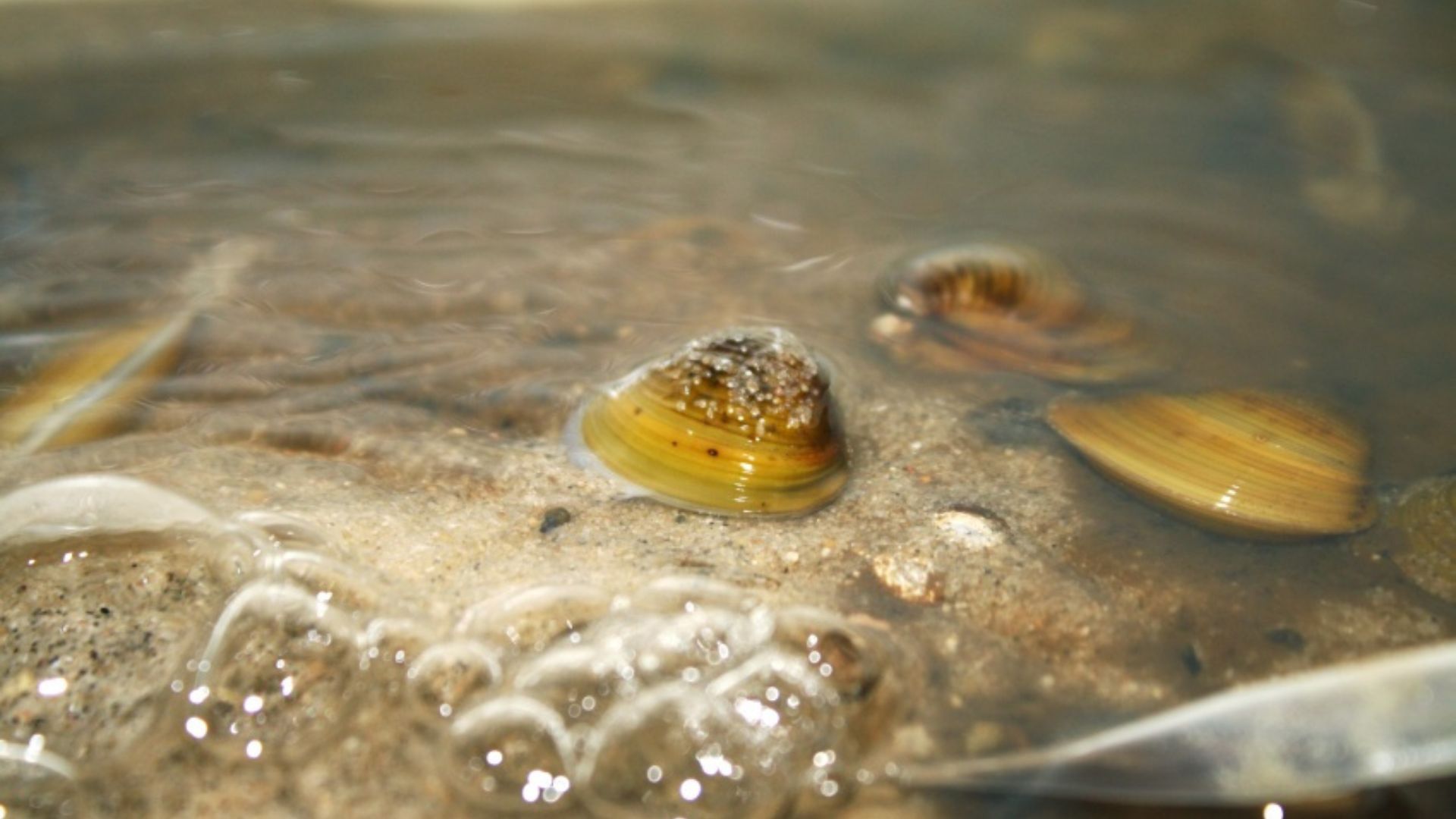


Invader Clam Spread Across Multiple Continents Alters Water Clarity And Reorganizes Invisible Flows Of Energy And Nutrients In Rivers, Lakes And Reservoirs, According To Technical Reports And Scientific Literature. Change Begins With The Filtration Of Particles And Advances To The Bottom, Affecting Food Webs And Biogeochemical Processes.
The Asian clam Corbicula fluminea, a freshwater bivalve that has spread beyond its native area in southern and eastern Asia, has been associated with concrete changes in rivers, lakes, and reservoirs where it establishes itself in large densities.
The most visible effect for those observing the surface is the alteration of clarity: by filtering suspended particles, the clam interferes with the material that makes the water murky, and with that, can modify the amount of light that passes through the water column.
What seems to be merely an “optical” change is described in environmental assessments as a set of impacts that reaches the food chain, the circulation of nutrients, and the way energy becomes concentrated at the bottom.
-
From sertanejo star to international investor: Ana Castela invests millions in a mansion in the USA, creates a themed accommodation in Orlando, and shows that the “boiadeira” also wants to grow away from the stage.

-
The 10 most stunning motorhomes in the world: a $3 million trailer with a rooftop nightclub and garage for a Ferrari, “palaces on wheels” with Italian marble, private cinema, and five-star hotel luxury for billionaires.

-
Trump wanted to spend $400 million on the White House, but the courts prohibited the million-dollar construction.

-
How the Egyptians erected giant structures like pyramids, temples, and obelisks without modern technology, cranes, or engines still amazes the world and reveals the power of engineering based on ramps, levers, ropes, and colossal organization.

Water Filtration And Transparency In Rivers And Reservoirs
The starting point lies in the feeding mode.
Corbicula fluminea is a filter feeder, capable of removing fine particles and microorganisms from the water flow, including portions of plankton and particulate organic matter.
By reducing the load of suspended solids in certain contexts, filtration influences transparency and alters the availability of particles that support part of the food web in the environment.
In technical evaluations that synthesize the scientific literature on the species, this behavior appears as one of the central mechanisms to explain why the invasion is not limited to the presence of another animal at the bottom but involves a reorganization of the ecological functioning of the system.

Light At The Bottom And Changes In Primary Production
With more light reaching deeper layers, the structure of primary production may change.
The increased illumination at the bottom favors organisms that directly depend on light near the sediment, such as benthic algae and submerged aquatic plants in shallow areas, whenever local conditions allow.
This alteration at the base of the ecosystem may reflect on habitat use by invertebrates and fish, as submerged vegetation and benthic biofilms influence shelter, feeding, and reproduction in different groups.
In parallel, by removing particles and cells from the plankton, the clam alters the composition of food available to consumers that depend on the water column, changing the relationship between those feeding in the “medium” of the environment and those exploiting resources concentrated at the bottom.
Biodeposition And Energy Shift To Sediment
The shift of energy to the sediment is reinforced by what happens after filtration.
Part of the material captured returns to the environment in the form of feces and pseudofeces — aggregated organic material that tends to settle at the bottom and concentrate organic matter in areas where animals aggregate.
This process, described as biodeposition in works cited by environmental agencies, favors the transfer of carbon and nutrients to the sediment and may increase microbial activity around the colonies.
Thus, not only “what” is available as food changes, but also “where” that food accumulates, creating conditions for benthic communities to respond differently to the flow of organic matter.
Nutrients, Phosphorus, And Nitrogen In Internal Recycling
The dynamics of nutrients enter this scenario through two pathways observed in studies compiled in ecological risk assessments.
One of them is excretion: like other filter feeders, the bivalve releases dissolved compounds, such as forms of nitrogen, during its metabolism.
The other pathway is the influence on exchanges between sediment and water, as the deposition of organic matter and the alteration of the microenvironment at the bottom can intensify decomposition processes and transform the local availability of nutrients.
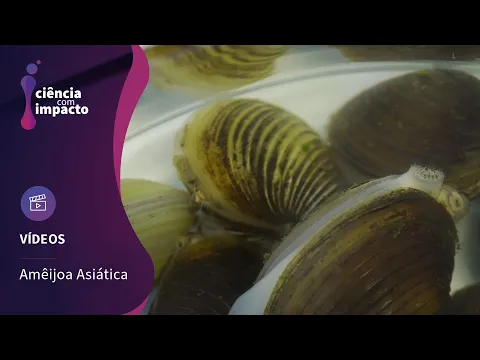

In technical syntheses, the species is associated with changes in water quality parameters and in biogeochemical processes that determine the productivity and composition of aquatic communities.
Food Chain And Coupling Between Water Column And Bottom
The broadest consequence of this set of mechanisms is the reconfiguration of the food chain.
By reducing suspended particles and redistributing organic matter to the bottom, Corbicula fluminea alters the balance between the energy circulating in the pelagic zone and the energy that sustains the benthic zone.
This shift has been described in studies analyzing the influence of invasive bivalves on planktonic and benthic communities, with repercussions on the relative abundance of groups and on how the ecosystem processes organic matter.
In environments where plankton is the dominant base, the continuous removal of particles represents a direct pressure on the food of native filter feeders and of organisms that depend on suspended material in larval phases.
Competition With Native Species And Effects On Substrate
The interaction with native species is one of the most sensitive points in regions where established freshwater bivalves are present, such as freshwater mussels of the family Unionidae in parts of North America.
Assessments by the U.S. Fish and Wildlife Service compile studies addressing competition for food and indirect effects on the survival and performance of native organisms in scenarios of high density of the invasive clam.
In addition to competition, episodes of mass mortality of the invader, recorded in different locations and discussed in the literature cited by environmental agencies, may temporarily alter the chemistry of water and sediment in areas with large biomass accumulation, which increases managers’ interest in monitoring the species.
Dispersal Routes And Global Invasion
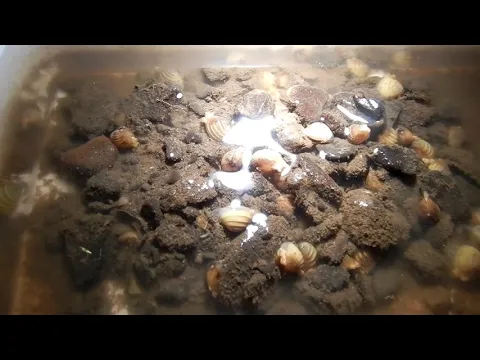
The global expansion of the bivalve is attributed to a set of biological characteristics and documented dispersal routes.
The species tolerates environmental variations and spreads across watersheds with the support of water flows and human activities, including accidental transport in boats, equipment, and the movement of materials.
Therefore, the invasion pattern tends to repeat itself in distant environments, with records of establishment in large rivers, reservoirs, and intake channels.
In recent technical documents, the clam is also presented under different common names, such as “Asian clam” and “basket clam,” reflecting its wide circulation in biosecurity and management reports.
Clogging Of Pipelines And Impact On Water Intakes
In addition to the ecological impact, there is an operational dimension often described in public reports: the clogging of water infrastructure.
The formation of aggregations in pipelines, screens, and intake systems is a problem reported internationally, with records of high maintenance costs and interruptions in facilities that depend on raw water, including plants and industrial systems.
This effect arises as a direct consequence of the ability to reach high densities in points with continuous flow and constant availability of particulate food, combining the biology of the invader and the characteristics of hydraulic works.
Monitoring Indicators And Signals In Water Quality
In the field of environmental monitoring, the presence of Corbicula fluminea is associated with changes that can be tracked by water quality indicators and by measurements of biological community, such as variations in the concentration of suspended solids, in transparency, in the structure of plankton, and in the composition of bottom organisms.
In ecological risk assessments, the species is classified as of high interest for managers precisely because its impact does not depend on a single factor, but on a sequence of interconnected processes that begins with filtration and ends in changes in how the ecosystem distributes energy and recycles nutrients.
In practical terms, this transforms a discreet animal into an agent capable of remodeling the appearance of water and the internal functioning of the environment.







Estão misturando mexilhão dourado com amejoas nesta reportagem. Esqueceram de dizer que as larvas grudam em aves.