





 Portuguese
  English
  Spanish
  5 min of reading
  2 comments




In A Stony And Arid Soil, A Pistachio Orchard Is Designed With GNSS And Then Redone After The Removal Of Rocks Up To 2 Meters, Opening Pits And Barriers. Grafting Is Planned In The Nursery, And Manual Irrigation, Tree By Tree, Sustains The Start For Fifteen Business Days
A pistachio orchard doesn’t appear by chance in an environment that already begins to lose the battle against erosion. What changes the game is the technical sequence: own nursery, wild pistachio rootstock, fixed calendar grafting, marking with GNSS, and a removal of stones that reaches 2 meters to create truly plantable pits.
The work occurs on sloped fields, near an irrigation canal and, in some stretches, alongside a stream, where the soil can be washed down and even return floodwater to the land. Without government support, the strategy combines stone barriers, boundary corrections, and manual irrigation as an initial phase, precisely to maintain fine control before automating anything.
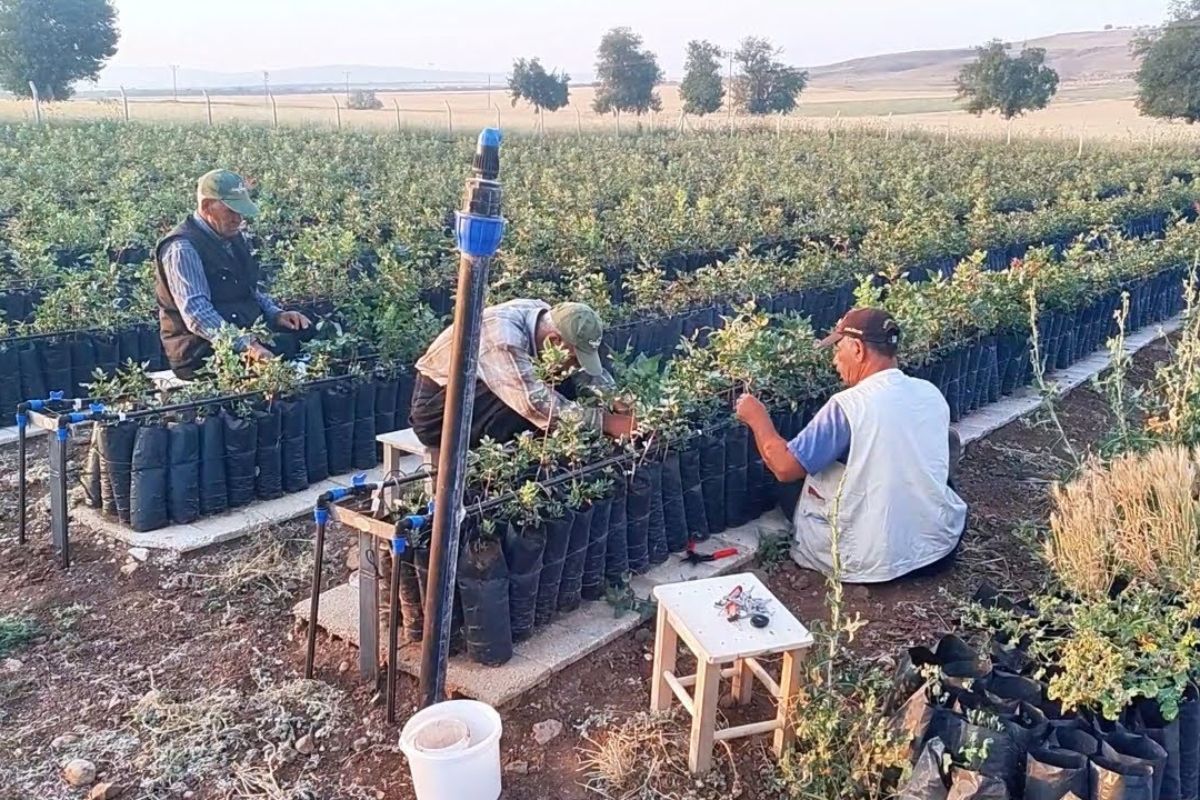
Own Nursery: Scale, Soil Mixture, And Planned Grafting

The foundation of the project starts in the nursery because relying on ready-made seedlings does not solve the challenge of standardizing rootstock and growth on a large scale.
-
The sugar-energy sector advances with agricultural technology, but agricultural productivity still raises concerns.

-
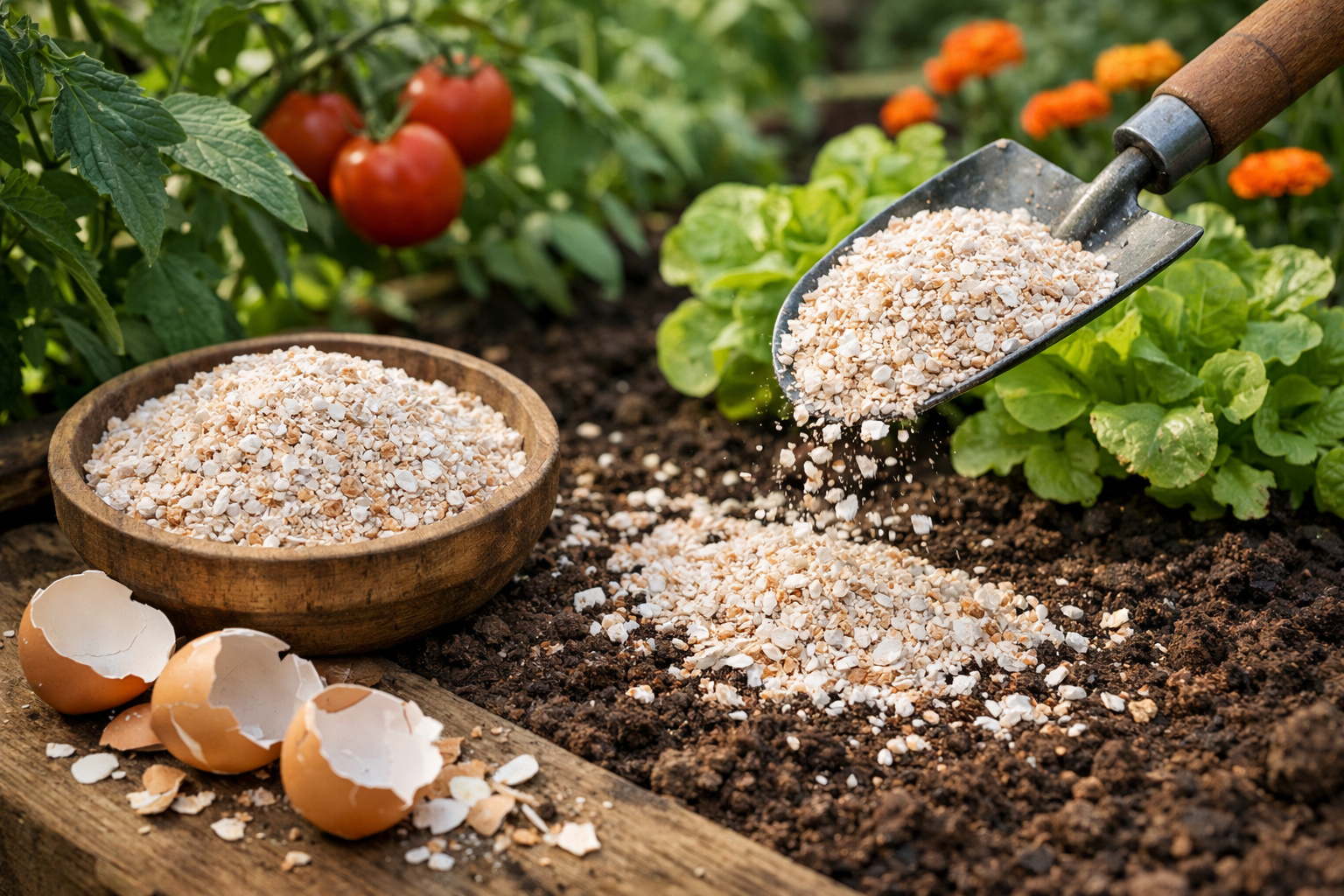
The eggshell that almost everyone throws away is made up of about 95% calcium carbonate and can help enrich the soil when crushed, slowly releasing nutrients and being reused in home gardens and vegetable patches.
-
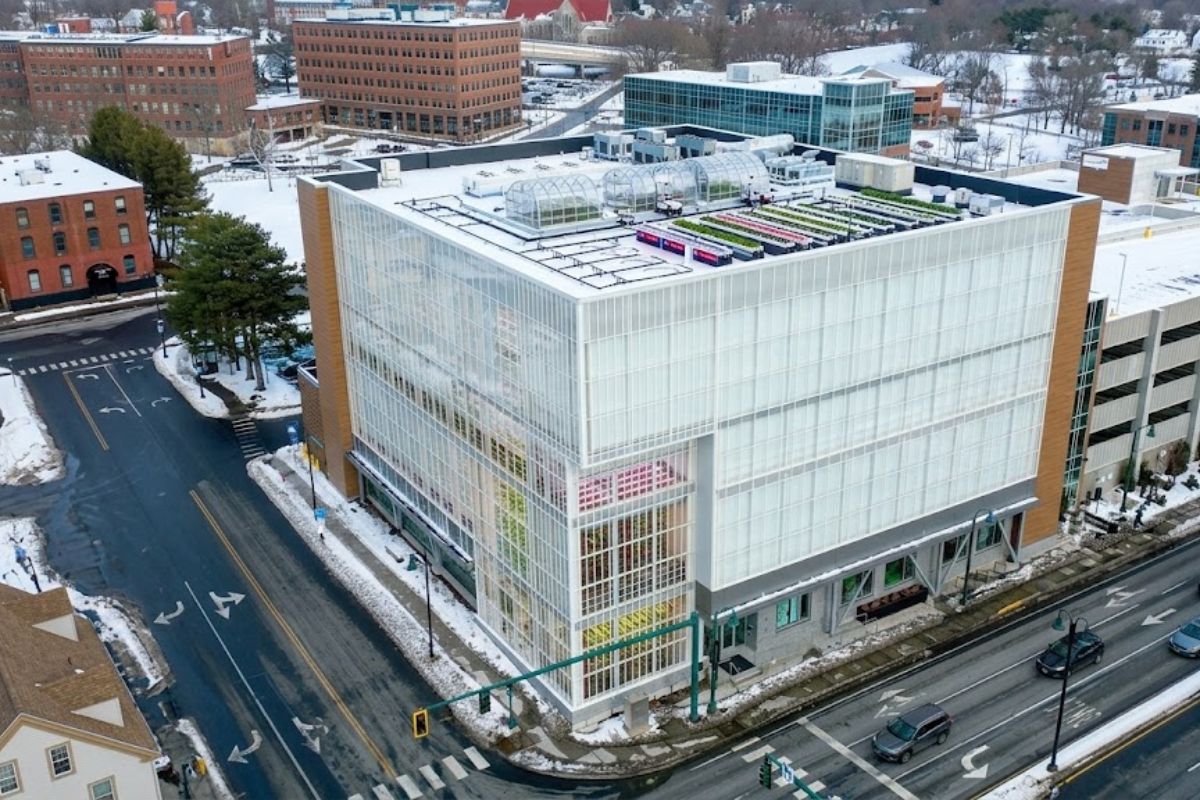
This farm in the United States does not use sunlight, does not use soil, and produces 500 times more food per square meter than traditional agriculture: the secret lies in 42,000 LEDs, hydroponics, and a system that recycles even the heat from the lamps.
-
The water that almost everyone throws away after cooking potatoes carries nutrients released during the preparation and can be reused to help in the development of plants when used correctly at the base of gardens and pots, at no additional cost and without changing the routine.


The filling mixture consists of one-third well-decomposed sheep manure, one-third sand, and one-third soil, sifted to remove stones, debris, and lumps, ensuring a more uniform substrate.
The operation is scaled for volume: 40 sets of rows were organized, with 800 tubes per row, totaling 32,000 tubes.
In this system, 100,000 seeds were sown, with three seeds per tube, using wild pistachio (Pistacia khinjuk) as rootstock.
The grafting occurs two years after sowing, prioritizing taller seedlings and successful grafting at the time of planting to reduce variation within the pistachio orchard.
GNSS As A Digital Project And Control Of Repetition In The Field

The operational differential is to treat the implementation as grid and coordinate, not just as a provisional visual marking.
The trees are positioned in a grid of 5×7 meters within the cadastral limits, with points marked using a GNSS receiver before the heavy soil preparation stages.
The declared precision is 7 mm, and this changes post-planting: even if the markers disappear during excavation, machine traffic, and cleanup, the GNSS allows for re-marking and relocating points.
This detail makes it replicable to number, label, and even replant in the same spot if a seedling dries out, keeping the pistachio orchard design consistent over the years.
Deep Removal Of Rocks And The Real Cost Of Making The Soil Plantable
The initial area is described as very arid, with stones dominating both the planting sites and the spaces between them.
The solution is straightforward and labor-intensive: each marked point is excavated down to 2 meters, with removal of stones from the pits.
To accelerate and standardize, an excavator with a screening bucket comes in, separating rock from soil and allowing unwanted material to be taken far away.
The removal is not limited to the pits. There is also cleaning of the entire field, including between seedlings, because without this it would be impossible to later enter with a tractor for weed control.
In areas next to the stream, care includes keeping a minimum distance of 3 meters during the excavation of the barrier base, in addition to removing discarded trash from the bed.
The removal here is not aesthetic; it is a prerequisite for any mechanizable agriculture in hostile terrain.
Stone Barriers Against Erosion: Protecting The Field And The Canal

With sloped fields, the problem is not just planting; it’s preventing the little useful soil from being washed away into the irrigation canal or the stream.
The answer is to build an elevated line with the stones extracted from the subsoil, forming a ridge between field and canal, and then organizing this ridge with the excavator into a wall shape.
There is also a second barrier in relation to a neighboring pasture, which channeled floodwaters from the hills into the area.
The stone barrier acts as containment infrastructure, reducing sediment loading, protecting the canal, and preventing valuable soil from being buried under the structure itself; therefore, the foundation is excavated deeper to stabilize the set.
Planting, Manual Drill, And Manual Irrigation As A Control Phase
After tilling with a cultivator to loosen compacted soil and reduce irregularities, the points need to be marked again.
This occurs because the tilling itself erases stakes and signs, requiring a third and final re-marking with GNSS before planting.
In the planting, the final drilling is done with a gas manual drill to avoid altering the tree coordinates, operated by two people to reduce the risk of recoil.
While two people advance opening holes, two others follow planting, compacting the soil as much as possible to avoid air pockets around the roots.
In areas of steep slope, soil basins are built around the seedlings to maximize absorption in the first days.
And then comes the most labor-intensive point: manual irrigation completely changes the pace of the pistachio orchard because each seedling is watered one by one with a tractor and water truck.
Manual irrigation was organized to reduce effort, with a rope-and-lever mechanism that allows the driver to control the valve from a distance.
Still, the schedule shows the size of the challenge: it took 15 business days to water all the seedlings with just one operator.
The decision not to automate at this stage is technical: between the first and fifth years, root diameter and wet area needed change significantly, and an early fixed system may waste water, under-serve some plants, and lose flexibility.
Replicability And Failures: What The Method Anticipates Before The Fifth Year
The argument for replicability lies not in promising immediate productivity, but in creating traceability.
By recording the positions of live trees and creating a virtual grid based on them, it becomes possible to identify also where there used to be trees that dried out, even without having used GNSS in an older pistachio orchard.
This type of reconstruction avoids random replanting and reduces the chance of distorting spacing over time.
But the method also exposes limits.
The deep removal and transportation of stones require machinery, logistics, and access, and the initial irrigation consumes real human time, even with adaptations.
The choice for manual irrigation is a response to the stage of the seedling, not an eternal solution, and the transition to automation only makes sense when the pistachio orchard stabilizes growth and when the hydraulic design can keep up with the expansion of the root system without “freezing” management.
In your scenario, would you bet first on GNSS to lock down the pistachio orchard design, or on speeding up the removal and making the marking simpler, accepting more replanting in the future? And, if it were up to you, how long would manual irrigation be acceptable before it becomes a bottleneck?










Onde está acontecendo?
Quantos anos para a primeira colheita?
Mais uma ideia fantástica, utilizando terreno que fora preparado para produzir alimentos, enquanto outros países fabricam armas para descrição em massa, esse plantio de :PISTACHE, Árvores que vam utilizar-se da própria umidade da natureza.