





 Portuguese
  English
  Spanish
  3 min of reading
  0 comments


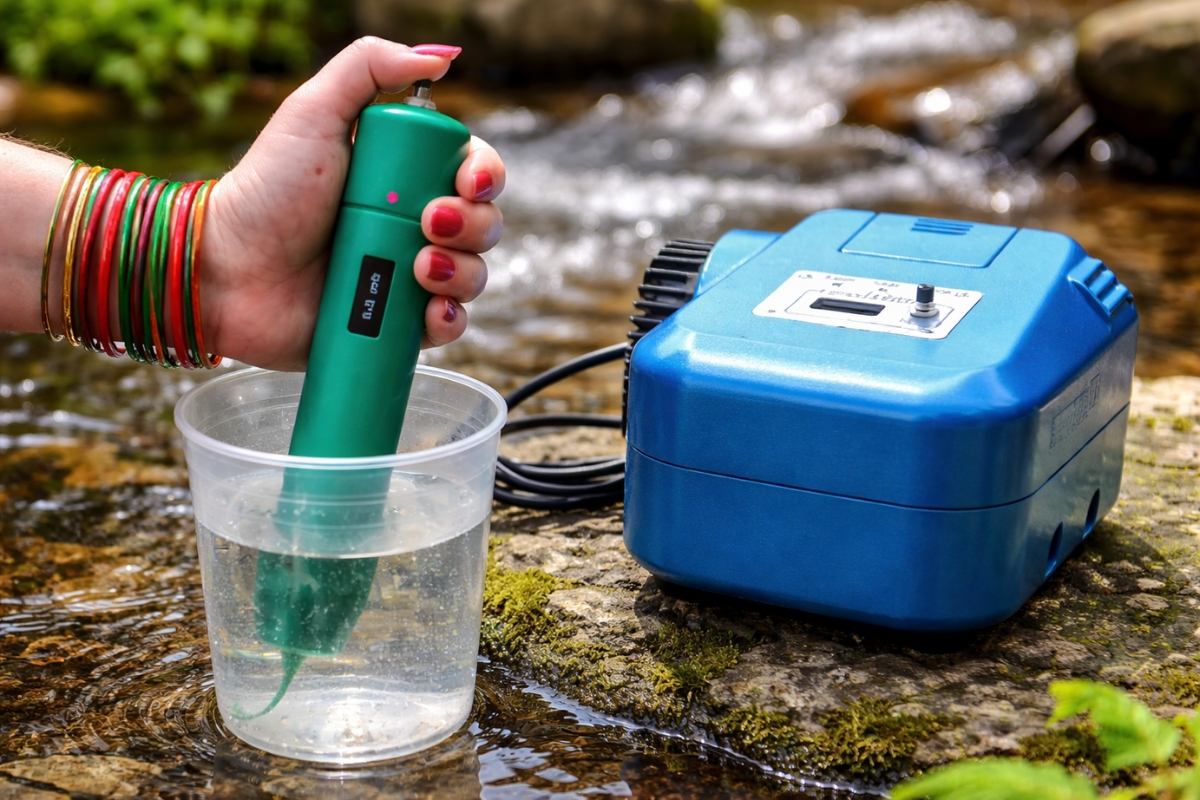
The RealtimeWAS Technology Promises To Track Bacteria in Water With Continuous Measurements, Without Complex Infrastructure, Allowing Faster Decisions in Wells, Rivers, Reservoirs, and Community Networks
An international team of researchers has developed a low-cost portable sensor capable of real-time monitoring of bacterial contamination in drinking water, an innovation with significant potential to strengthen water security, especially in vulnerable communities.
The Invisible Threat in Water
Access to safe drinking water still represents a global challenge. Waterborne diseases from contaminated water continue to be one of the leading causes of illness in various regions of the world, especially in low- and middle-income countries. The presence of bacteria such as Escherichia coli (E. coli) is one of the main indicators of fecal contamination and risk to human health.
Traditional methods of bacterial detection typically require laboratory analyses, microbiological cultures, and specialized equipment. This process can take days to produce results and requires infrastructure that is often unavailable in remote or resource-limited areas.
-
Motorola launched the Signature with a gold seal from DxOMark, tying with the iPhone 17 Pro in camera performance, Snapdragon 8 Gen 5 that surpassed 3 million in benchmarks, and a zoom that impresses even at night.

-
Satellites reveal beneath the Sahara a giant river buried for thousands of kilometers: study shows that the largest hot desert on the planet was once traversed by a river system comparable to the largest on Earth.

-
Scientists have captured something never seen in space: newly born stars are creating gigantic rings of light a thousand times larger than the distance between the Earth and the Sun, and this changes everything we knew about stellar birth.

-
Geologists find traces of a continent that disappeared 155 million years ago after separating from Australia and reveal that it did not sink, but broke into fragments scattered across Southeast Asia.

An Accessible and Portable Solution
In light of this scenario, researchers from the University of York (United Kingdom), in collaboration with the Phutung Research Institute (Nepal) and the University of São Paulo (Brazil), developed a system called realtimeWAS (Water Assessment System).
The device is similar in size to a small portable box and was designed to allow for quick and practical water quality analysis without the need for complex laboratories or highly specialized technicians.
How the Technology Works
The sensor employs a lens-free fluorescence detection system, capable of identifying fluorescent proteins associated with bacteria present in the water. Unlike conventional culture-based methods, which can take up to 48 hours or more, the new technology allows for much faster detection of potentially harmful microorganisms.
According to the researchers, the system was developed to achieve sensitivity levels compatible with international drinking water safety standards, allowing for the identification of relevant bacterial concentrations for public health protection.
Impact on Public Health and Environmental Monitoring
The ability to perform real-time analyses represents an important advance in the prevention of waterborne disease outbreaks. The sensor can be used to monitor wells, rivers, community reservoirs, and supply systems, facilitating rapid responses to potential contaminations.
Additionally, the portable and low-cost nature expands the potential for application in regions where continuous water quality monitoring is still limited by financial or structural constraints.
International Collaboration for a Global Challenge
The development of the realtimeWAS demonstrates how international scientific cooperation can generate technological solutions aimed at problems of significant social impact. The partnership between institutions from the United Kingdom, Nepal, and Brazil reinforces the importance of joint initiatives to address challenges related to water security.
Researchers continue to work on improving the system, seeking to make it even more accessible and adaptable to different geographic and social contexts.
The information used to prepare this article was obtained from an official statement published by the University of York (United Kingdom), titled “Researchers Develop Low-Cost Portable Sensor to Detect Deadly Microorganisms in Drinking Water”, released on August 8, 2024, on the university’s official website.








Seja o primeiro a reagir!