





 Portuguese
  English
  Spanish
  4 min of reading
  0 comments


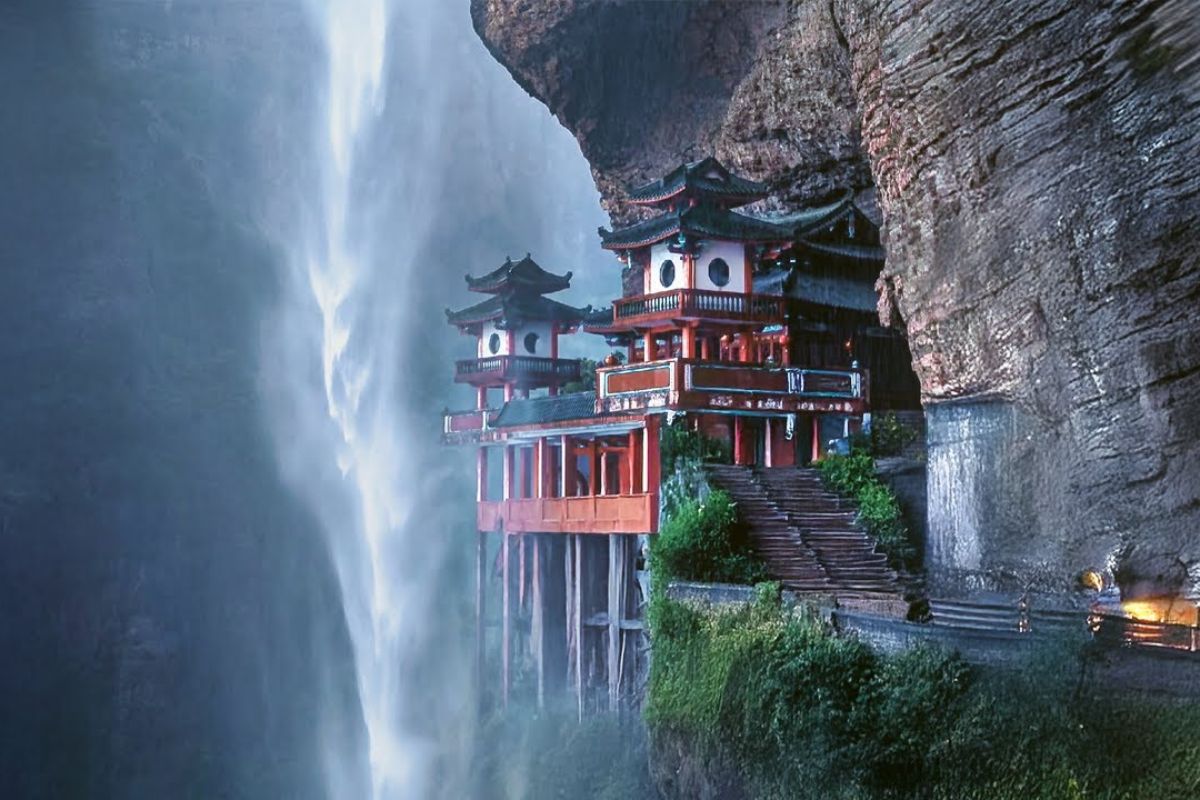
The Hidden Temple In The Mountain, Erected More Than A Thousand Years Ago In Fujian Province, Impresses With Its Cliff-Hanging Architecture And The Ingenuity Of The Ancient Chinese, Who Built It Without Modern Machines
On a steep slope in Pinghe County, in the Chinese province of Fujian, lies the hidden temple in the mountain, known as Lingtong, a word that in Chinese means “spiritually connected.” Built over a thousand years ago, during the Tang Dynasty, the sanctuary defies the logic of modern engineering by remaining firm on a cliff, supported by few wooden pillars fitted directly into the rock.
The ancestral work is surrounded by legends. It is said that the site was a meeting point for immortals, attracted by the landscape and the spiritual energy of the mountains. Even in a time without machines or complex tools, the builders erected a structure that has stood for centuries, balancing faith, art, and ingenuity in one of the most impressive settings in southern China.
The Temple That Came From The Mountain
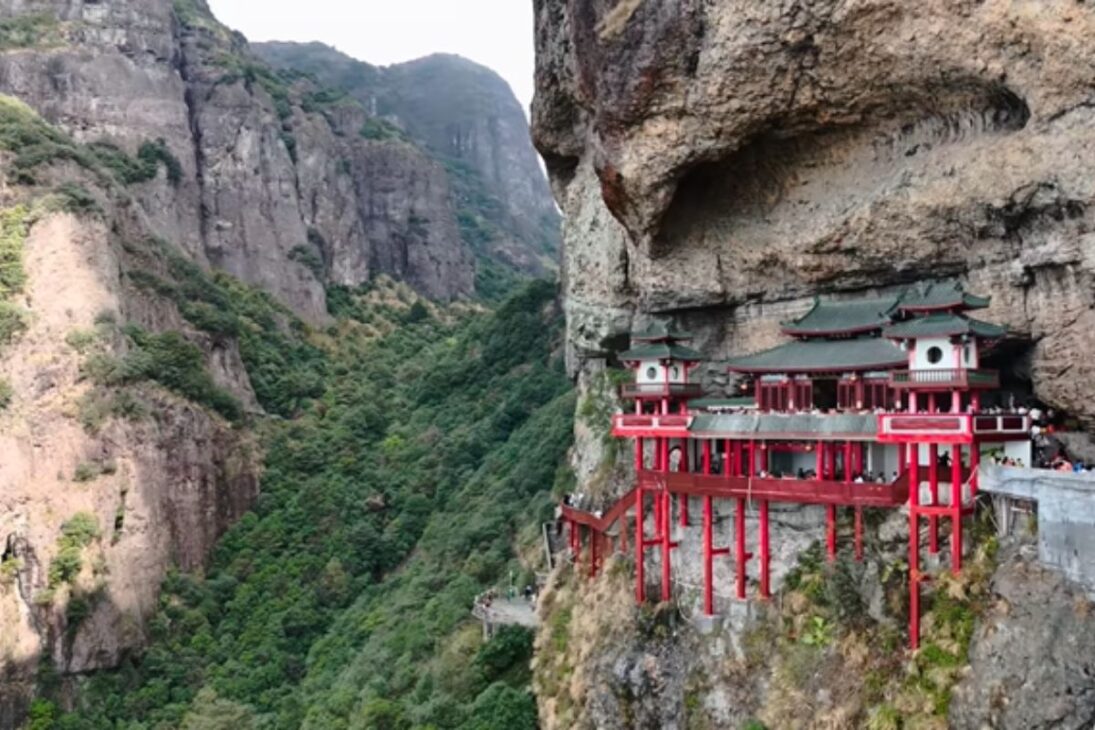
The hidden temple in the mountain is part of an architectural ensemble sculpted into the stone, surrounded by steep stairs and observation platforms that reveal the grandeur of the Zhangzhou valley.
-
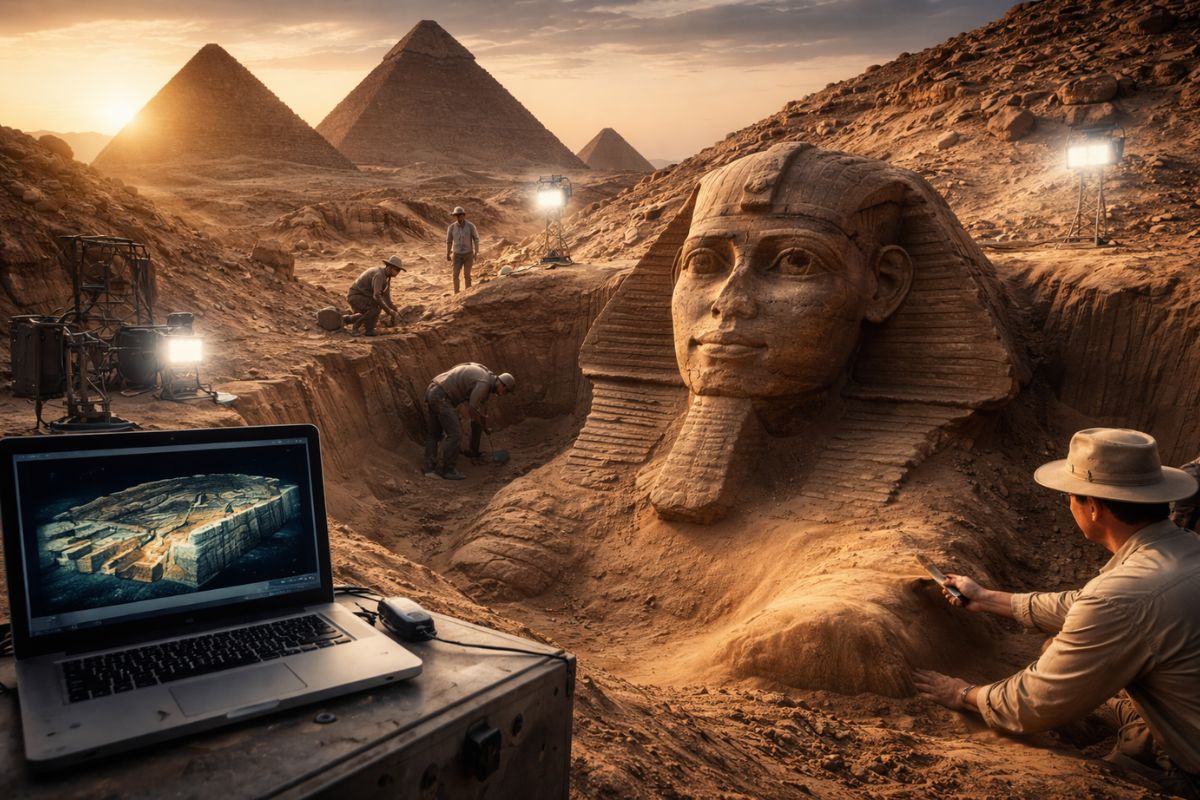
Italian researchers have detected what appears to be a second Sphinx buried under the sands of Egypt, and satellite scans reveal a gigantic underground megastructure hidden beneath the Giza Plateau for over 3,000 years.
-
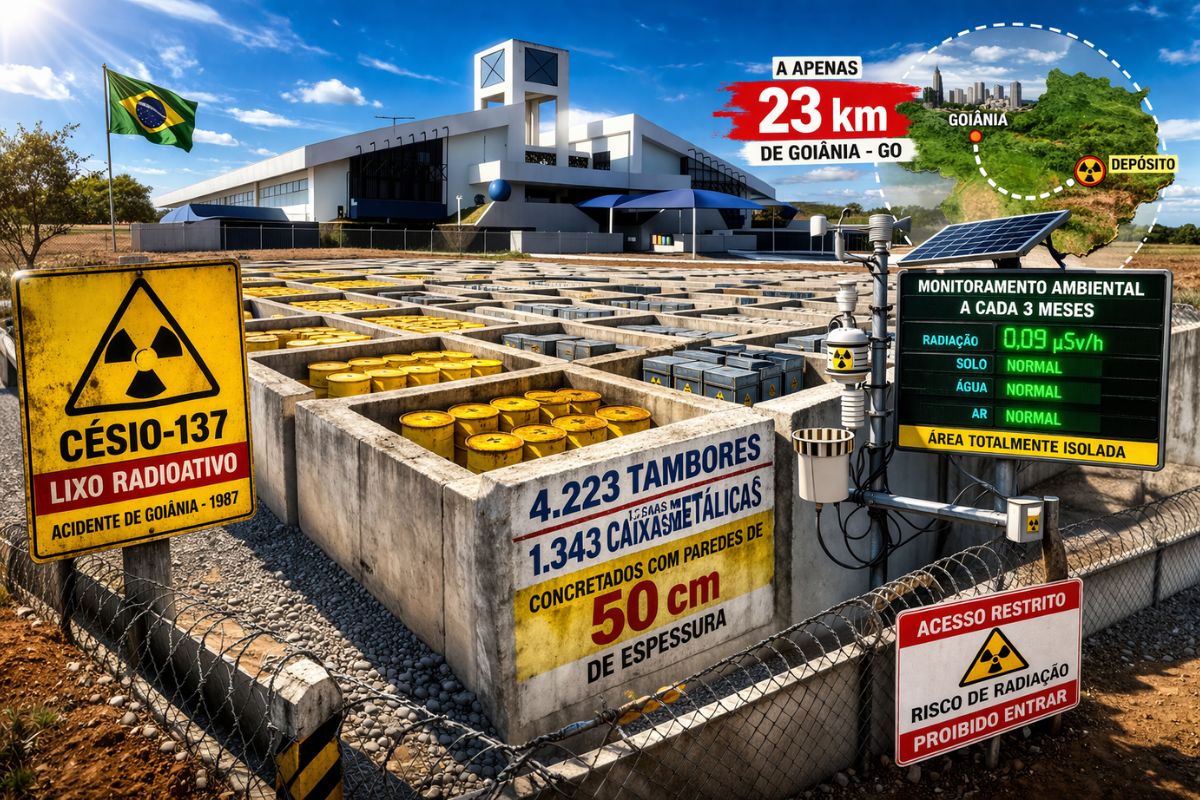
There are 4,223 drums and 1,343 metal boxes concreted with 50-centimeter walls that store the radioactive waste from Cesium-137 in the worst radiological accident in Brazil, just 23 kilometers from Goiânia, with environmental monitoring every three months.
-
Giant Roman treasure found at the bottom of Lake Neuchâtel in Switzerland reveals an advanced trade system, circulation of goods, and armed escort in the Roman Empire about two thousand years ago.

-
He buried 1,200 old tires in the walls to build his own self-sufficient house in the mountains with glass bottles, rainwater, and an integrated greenhouse.

Located in a remote area that is little known even among the Chinese, Lingtong remains a destination for spiritual pilgrimage and architectural curiosity.
During rainy days, the site reveals a natural spectacle: a waterfall descends from the top of the mountain next to the temple, creating the impression that the building floats between the water and the clouds. According to local tradition, this waterfall symbolizes spiritual purification and the connection between the human world and the divine.
Engineering Without Machines And Ancient Wisdom
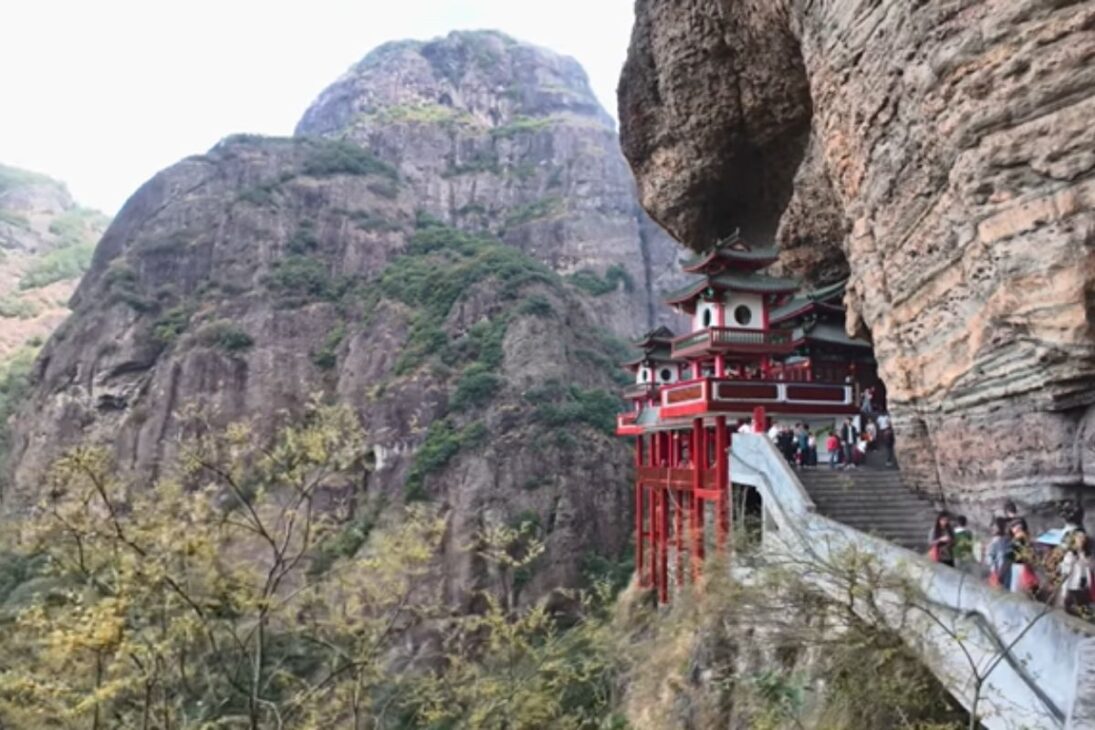
The main structure of the hidden temple in the mountain is supported by wooden columns that rest directly on the rock, without the use of nails or concrete. Each fitting has been carefully sculpted to withstand the weight and climatic variations of the region.
It is a combination of artisanal precision and natural intuition, typical of ancient Chinese architecture, which was based on observation of the terrain and harmony with the environment.
The main pillars support a worship hall dedicated to Taoist deities and Buddhist bodhisattvas, revered by generations.
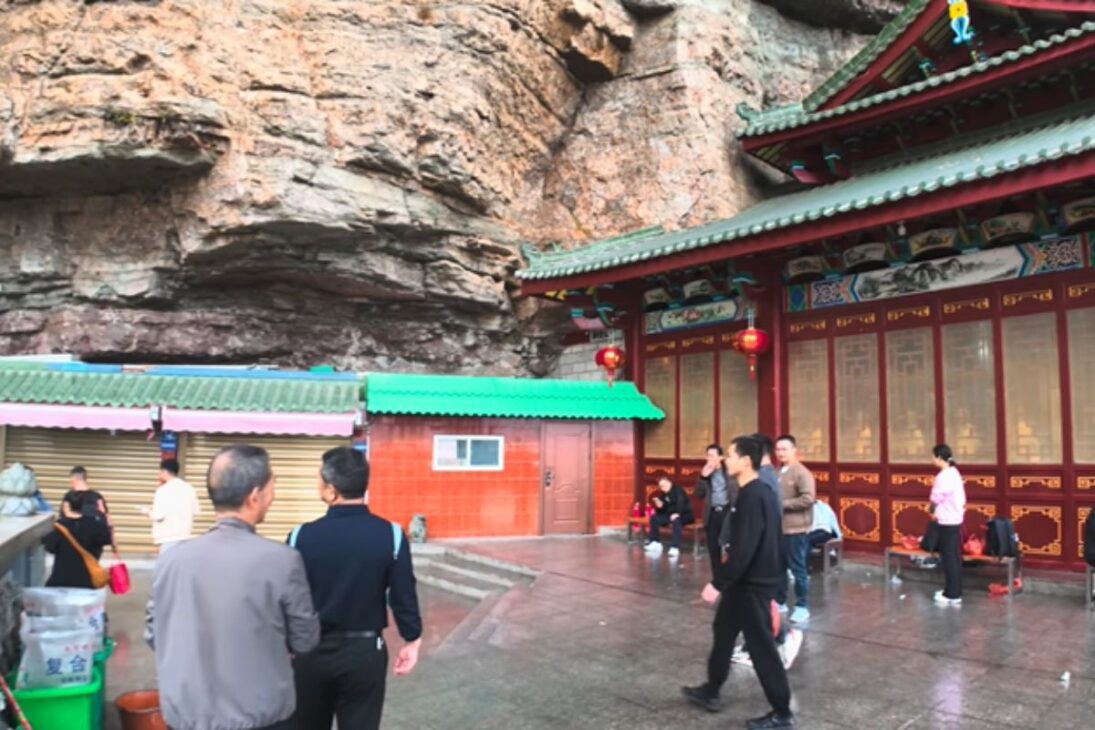
Even with the passing of the centuries, the structure remains preserved, thanks to periodic restorations made by local monks and the devotion of pilgrims who keep the temple active.
A Path Between Rocks, Faith, And Vertigo
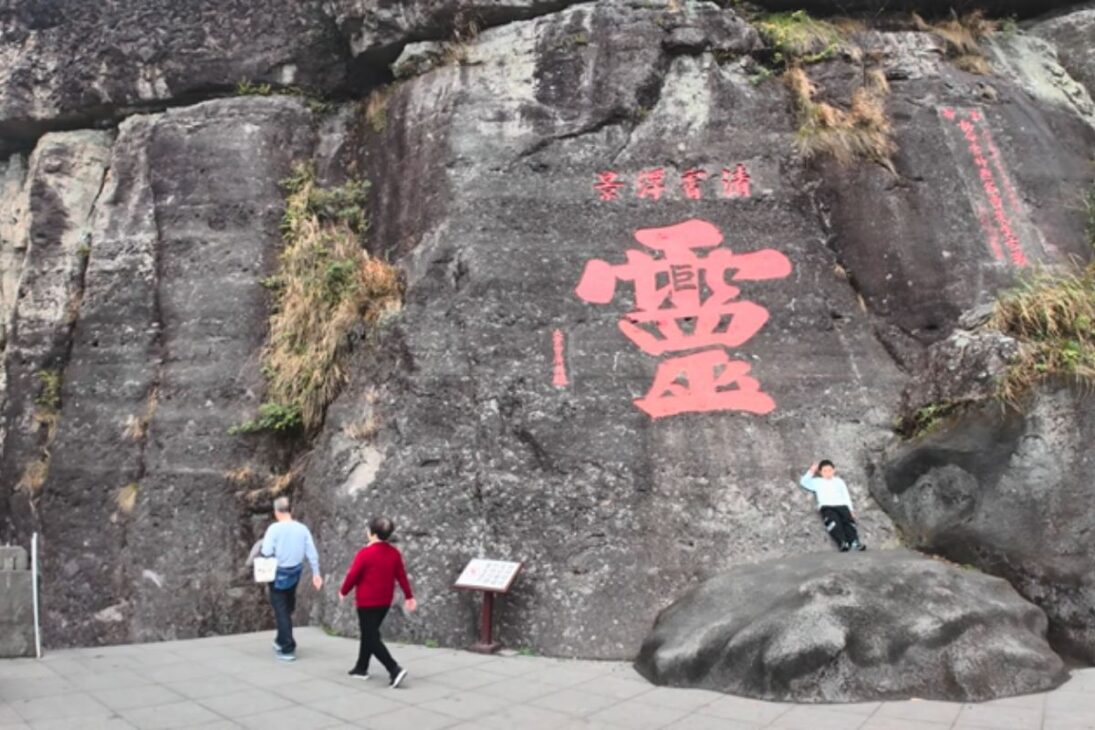
Reaching Lingtong is, in itself, a spiritual experience. Access is via a long and winding trail, carved into the stone, which requires physical preparation and heightened attention.
The narrow walkways have been embedded directly into the crevices of the cliff, with hand-carved steps and small pavilions for rest.
Along the way, it is common to find altars and votive caves where visitors deposit coins and ritual papers.
Each cave represents a type of request for prosperity, health, protection, or wisdom. The rituals are accompanied by incense, bells, and, on festive dates, fireworks, an ancestral tradition to drive away evil spirits.
Cultural Heritage And Natural Beauty
Besides its spiritual value, the hidden temple in the mountain is a jewel of Asian engineering history. It reflects the capacity of ancient Chinese builders to integrate architecture, nature, and religion within the same space.
The reddish rocks, the valley covered in mist, and the sound of the wind create an environment of introspection and reverence.
From above, the visitor has a panoramic view of the Fujian mountains, with green fields and tiny villages scattered among the hills.
On rainy days, the scene transforms into a living painting: the waterfall descends beside the main pavilion, while the temple seems to emerge from the mountain itself as if nature and man were a single work.
Between modern temples and historical monuments, the hidden temple in the mountain is still one of the greatest proofs of human ingenuity. Would you have the courage to climb to the top to see this suspended construction in the clouds up close?










-

-

2 pessoas reagiram a isso.