





 Portuguese
  English
  Spanish
  2 min of reading
  0 comments


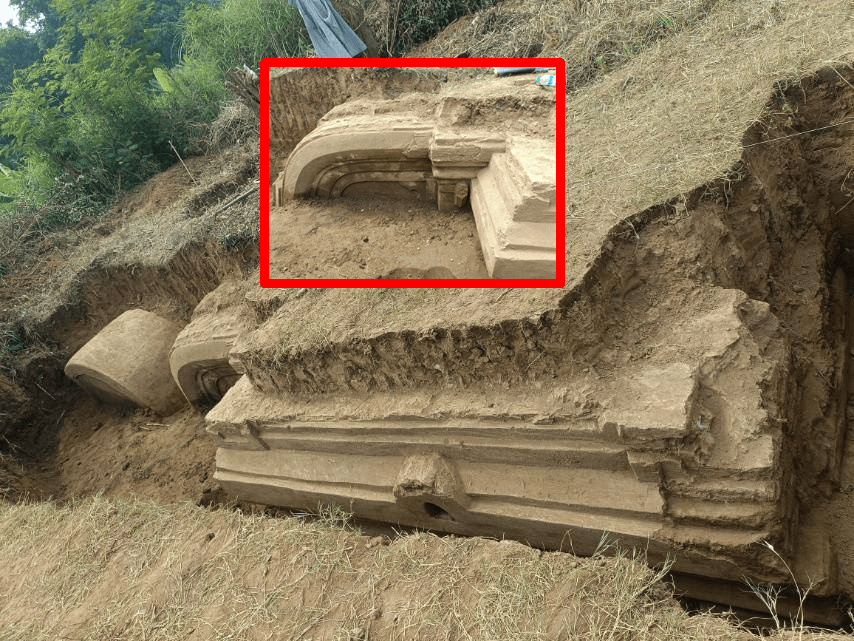
The 7.7 Magnitude Earthquake That Hit Myanmar Caused Impacts Beyond the Shocks. The Quake Revealed Ancient Monuments Hidden Beneath the Earth at an Archaeological Site, Surprising Archaeologists.
A 7.7 magnitude earthquake that occurred on March 28, 2025, in central Myanmar, not only caused destruction and deaths, but also revealed an important archaeological find. In the municipality of Tada-U, near the ancient city of Inwa, the ruins of a structure belonging to the Konbaung Dynasty, the last monarchy of the country, emerged.
Discovery After the Quake
The strong earthquake caused significant geological changes, opening deep fissures in the ground. These cracks brought to the surface elements of architecture long buried, such as part of an ancient staircase.
According to the Department of Archaeology and the National Museum, the site may have been a water royal residence of the Konbaung era.
-
A forgotten cord on the floor of a basement in Vienna leads a plumber to a box containing 30 kilograms of gold with Mozart’s face, hidden before World War II. The treasure, worth 2.3 million euros, was just centimeters away from a worker who ignored the sign a day earlier.

-
A couple buys an old chalet, breaks the kitchen floor for renovation, and finds over a thousand coins of gold and silver hidden since the English Civil War over 4 centuries ago.

-
Rigid bags with their days numbered: new trend prioritizes comfort in 2026.

-
YouTuber creates an excavator equipped with a giant 4.5-meter sword to challenge his brother to a rematch, and the invention quickly goes viral on social media.


Although the first traces appeared in 2009, when residents found steps while making bricks, it was the recent natural disaster that allowed for progress in excavations.
With the new scenario, researchers were able to begin a more comprehensive analysis of the area.

Start of Excavations
Test excavations began on April 6, 2025, conducted by the Mandalay branch of the Department of Archaeology.
Among the items discovered are a handrail from the eastern staircase, brick platforms, and structures with specific dimensions, such as a step of 45 centimeters and a platform 3.25 meters long.
The discovery initially generated excitement over the possibility that it could be the “water royal pavilion” mentioned in ancient palm leaf manuscripts, the “Pura-pike”. In them, Minister Letwe Nawrahta described a building with five large staircases and various halls shaded by trees.

Current Interpretation of Archaeologists
Despite compatible descriptions, archaeologists now believe that the discovered structure was a traditional wooden residence, measuring 60 to 76 meters by 60 meters. The building had typical elements of Burmese architecture, such as wooden columns and colorful staircases.
The style resembles monastic buildings in the region, such as the Bahakara Monastery in Inwa and Mandalay’s Golden Palace. The site is also related to traditional rituals, such as the Thingyan Water Festival and royal hair washing ceremonies.
Authorities are working to preserve the site and ensure that it is used for educational and cultural purposes. The discovery is considered a milestone in valuing Burmese history and identity.









Seja o primeiro a reagir!