





 Portuguese
  English
  Spanish
  6 min of reading
  1 comment


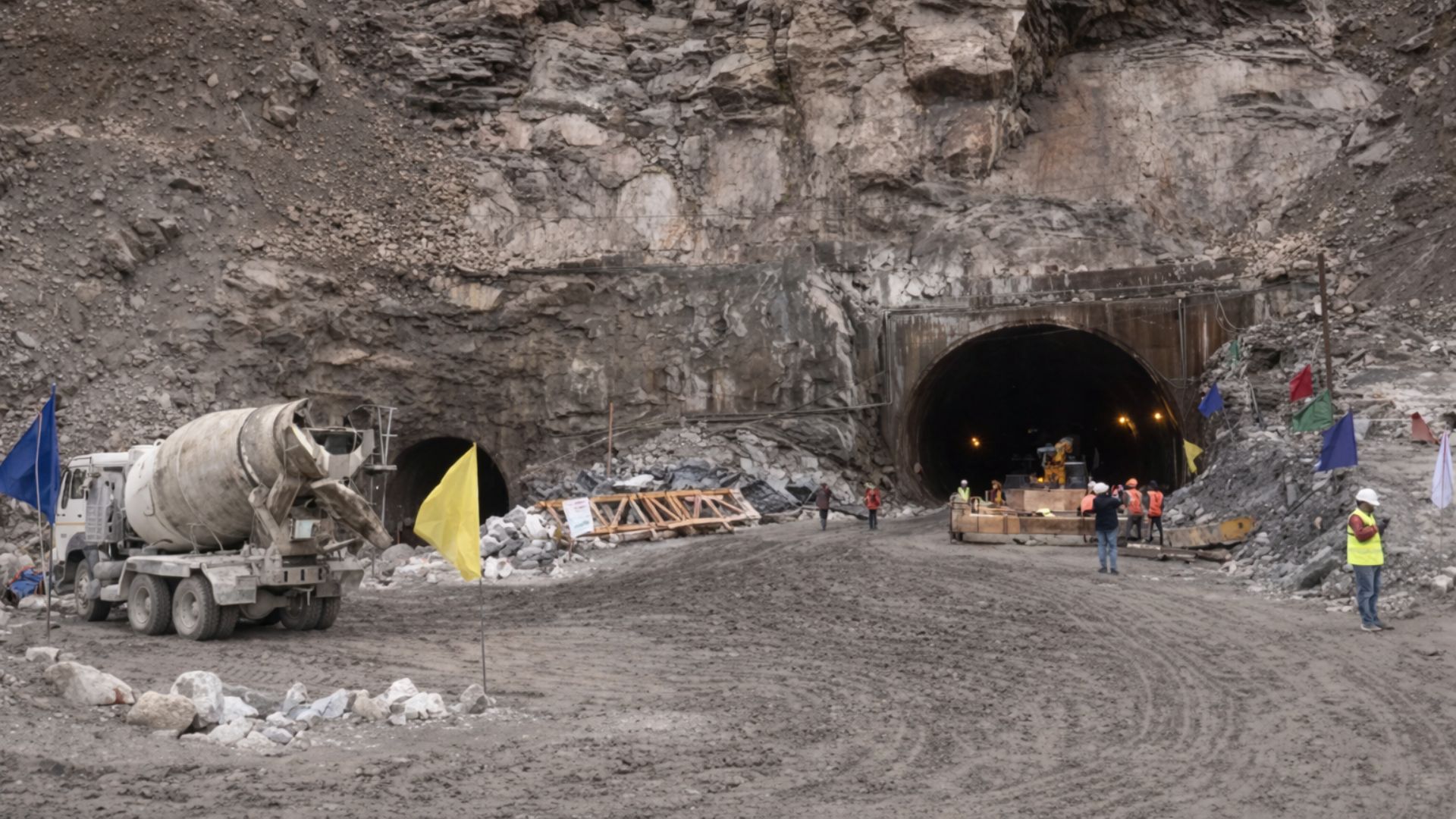


High Altitude Tunnel System Changes Link With Tawang By Bypassing Snow, Curves, And Restrictions At A Famous Himalayan Pass, With Work Attributed To Border Roads Organisation. Project Combines Two Tunnels And Access Roads, Promises To Shorten Distance And Travel Time And Strengthens Transport Predictability.
A tunnel system excavated in high mountains, in one of the most difficult regions to cross in northeastern India, has begun to redesign how people, services, and goods reach Tawang, in the state of Arunachal Pradesh.
The project is presented as a permanent shortcut on a stretch known for snow, narrow curves, and traffic restrictions, with the promise of transforming a seasonal path into a more predictable link year-round.
The set is called the Sela Tunnel System and was built, according to the Border Roads Organisation (BRO), in an area about 13,000 feet high.
-
Abandoned house for 15 years disappears in the woods, shocks owner with unrecognizable scenery and is reborn in an intense transformation after almost 90 hours of work in just 10 days.
-
In just three hours, a natural stone floor transforms the entrance of the house with an organic effect, immediate drainage, and a sophisticated non-slip finish that doesn’t puddle water, dries quickly, and impresses with the final result.
-
‘Interlocking brick’ made of earth arrives in the construction industry with cost reductions of up to 40% on the project.

-
Espírito Santo will receive the largest engineering project in its history with the duplication of BR 262, which will have 50 viaducts, 28 bridges, and 2-kilometer tunnels cutting through the most challenging mountainous region of the entire state.
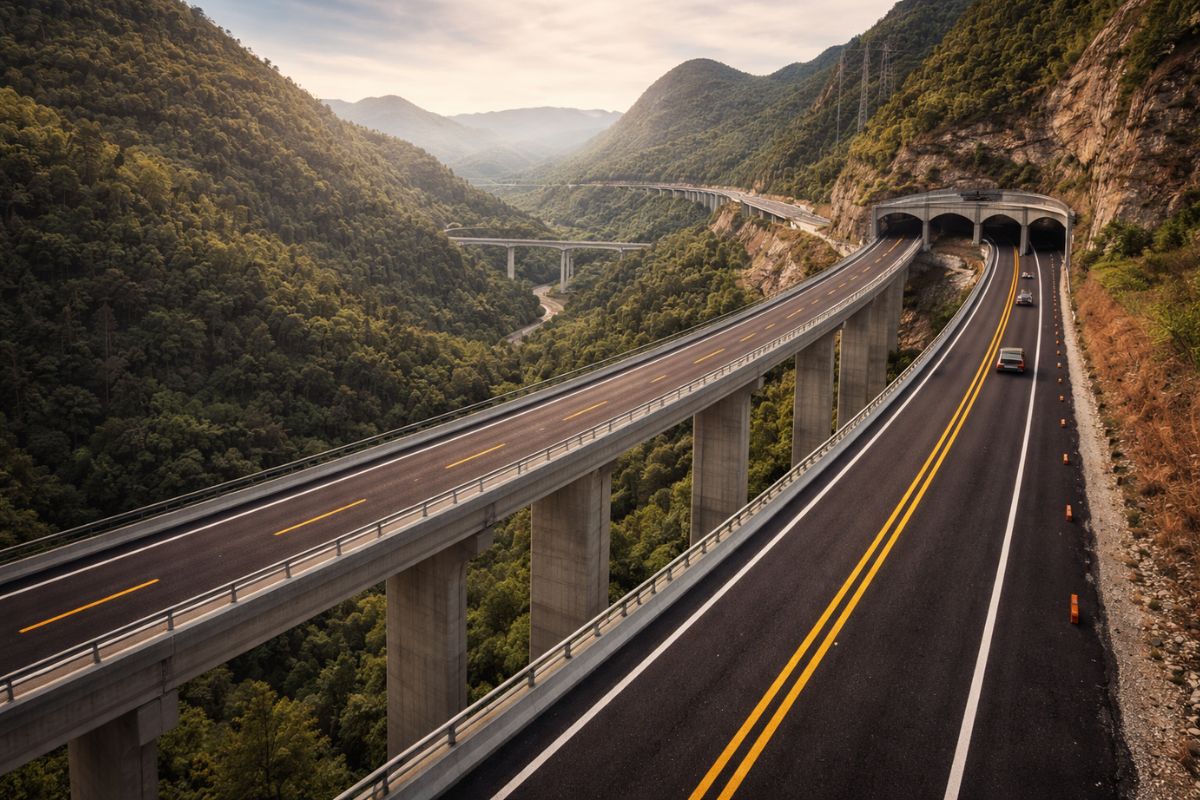

The structure seeks to bypass the section that required vehicles to climb to the Sela Pass, a high point that in winter often imposes slowdowns and interruptions.
The core change lies in creating a route protected from extreme weather: instead of relying on the exposed section prone to ice and low visibility, travel now occurs under rock, with defined operational parameters and less variation in travel time.
Reduction Of Time And Distance On The Journey To Tawang
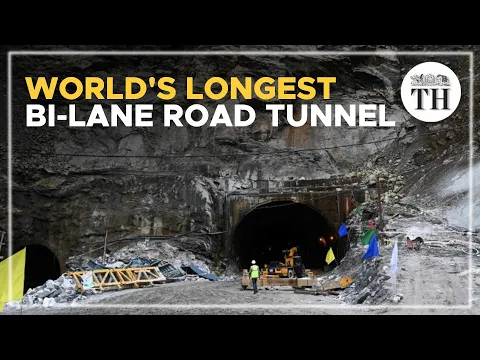

The BRO informed that the system reduces the travel distance by more than eight kilometers and cuts travel time to Tawang by one hour.
The difference becomes significant in a corridor serving remote communities that also requires constant transportation of supplies, ambulances, and heavy vehicles.
In the same statement, the organization attributed a direct role to the project in improving “all-weather” connectivity, a term used to indicate year-round access in areas where the weather often blocks roads.
Official Inauguration And Impact On Traffic In Snow Area
The inauguration was linked to an official agenda of infrastructure delivery, with the participation of Indian Prime Minister Narendra Modi, who dedicated the project to the nation in a ceremony held in Itanagar.
Although the event is a political and institutional milestone, the practical impact of the tunnel is expressed in the daily life of a region where the road previously had physical limitations for certain types of vehicles.
According to the BRO, the route to the top of Sela had single-lane connectivity and curves considered dangerous, which prevented heavy trucks, containers, and long combinations with trailers from passing, restricting logistics during critical periods.
Medical Evacuation And Predictability In Winter
The work is also presented as a response to a basic need for mobility in a hostile environment.
According to the BRO, patient evacuation was hindered in winter due to adverse conditions on the route through the pass.
By moving the pathway inside the tunnels, the declared expectation is to allow medical emergencies and essential transportation to occur with fewer interruptions, reducing exposure to snow blockages and the associated risk of a winding and narrow section.
Two Tunnels, Access Roads And Operational Safety
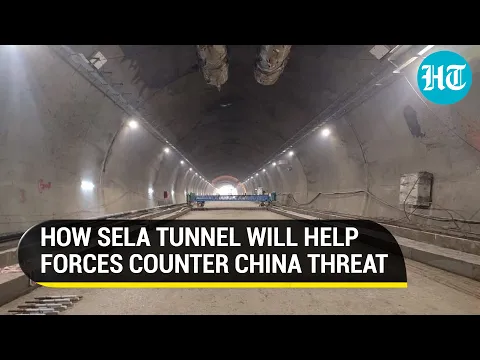
The Sela Tunnel System is described as consisting of two tunnels, measuring 1,003 meters and 1,595 meters, as well as access and connection roads totaling 8.6 kilometers.
This design combines an underground section with approach roads, repositioning traffic before and after the galleries.
The engineering also incorporates a solution associated with international safety standards: the second tunnel includes an escape tube alongside the main road, connected by cross passages every 500 meters, to be used in emergencies, including the passage of rescue vehicles and evacuation of people in case of incidents.
Capacity, Speed And Flow Of Trucks And Cars
The estimated operation was designed for significant flow.
The BRO stated that the system was designed for traffic density of 3,000 cars and 2,000 trucks per day, with a maximum speed of 80 km/h.
In an environment where average speed can drop drastically due to weather and road geometry, defining an operational limit and a theoretical capacity helps explain why the tunnel is treated as a piece of logistical change, rather than just a local improvement in highway.
Connection With The BCT Road And Corridor Bottlenecks
The project is connected to the Balipara–Charduar–Tawang (BCT) road, a roadway axis cited by the BRO as the access route to the West Kameng district and to the Tawang sector.

The execution is also connected to a set of interventions that, in the organization’s description, seeks to remove historical bottlenecks in the corridor, mentioning points like Nechiphu, Bomdila Town, and the Sela Pass itself.
In this context, the tunnel functions as part of a strategy for road continuity: when a stretch was blocked due to weather or design, the underground infrastructure emerges as an alternative to sustain flow.
Strategic Importance And Regional Development In Arunachal Pradesh
Besides civilian transport, the BRO framed the Sela Tunnel as a work of strategic importance for defense preparation, as it is in a sensitive area close to borders.
The organization stated that the system should enhance the readiness of armed forces and, at the same time, promote socioeconomic development in the surrounding area.
The coexistence of these two arguments—security and daily life—is common in infrastructure projects in border regions, where the road simultaneously serves residents, commerce, and institutional movements.
Construction In Himalayan Geology And NATM Method
The construction was executed using the method known as the New Austrian Tunneling Method (NATM), noted by the BRO as widely used in tunnels, especially in Himalayan geology.
The method relies on the interaction between excavation and the behavior of the rock mass, with support stages adjusted according to progress.

To scale the effort, the BRO disclosed figures associated with the construction site, stating that the execution consumed more than 90 lakh man-hours, with about 650 people working daily over five years.
Also mentioned were inputs and equipment: 71,000 metric tons of cement, 5,000 metric tons of steel, 800 metric tons of explosives, and 162 plants and machines dedicated to the project.
Project Cost And Access Sections
In total costs, the BRO reported the figure of Rs 825 crore, about R$ 478 million. Although the conversion to other currencies varies according to exchange rates and periods, the number helps to position the Sela Tunnel among large-scale works by regional standards, especially because it involves high altitude, extreme environment material logistics, and additional security requirements.
The project also includes approach roads, such as a seven-kilometer access to the first tunnel and a 1.3-kilometer link between the two tunnels, as described by the organization.
First Convoy And Start Of Civil Use
The opening of the system was marked by a symbolic and practical gesture: after dedicating the project to the nation, Narendra Modi signaled the start of civil use with the departure of an initial convoy, consisting of two buses, leaving Tawang.
The scene reinforces the narrative that the tunnel is not just a technical structure but a piece intended to alter the regularity of movement for those who live, work, and rely on services in an area where the road has always meant uncertainty.








Nossa!!! Isso vai mudar a minha vida.