





 Portuguese
  English
  Spanish
  5 min of reading
  12 comments


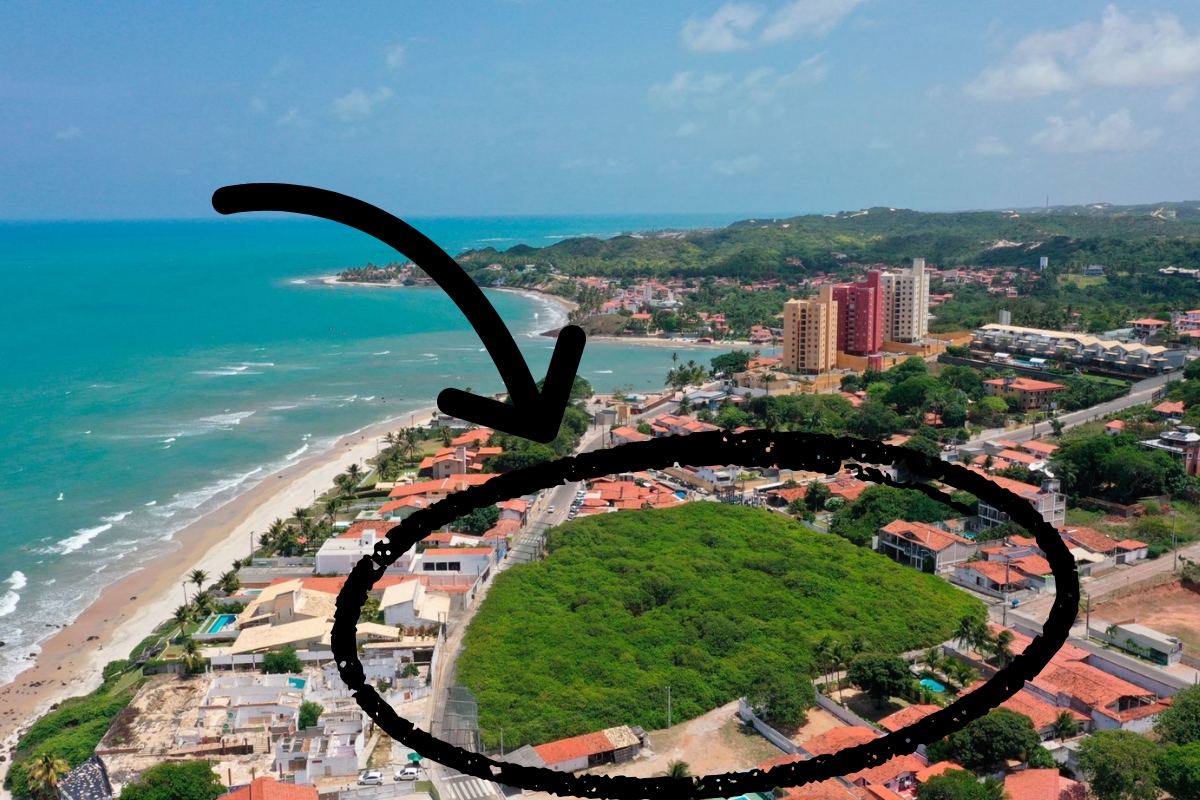


Considered the Largest Cashew Tree on the Planet Since 1994, the Pirangi Cashew Tree Grows Laterally, Forms Roots on Its Branches, Covers an Area the Size of Football Fields, and Transforms the Idea of What a Tree Can Be
On the Northeast coast of Brazil, just a few kilometers from Natal, there is a tree so large that many visitors mistake it for a small forest: the Pirangi Cashew Tree, considered the largest cashew tree on the planet. This green giant has become a symbol of the region and one of the most surprising natural attractions in the country.
Where It Is and Why It Is Famous
The Pirangi Cashew Tree is located on the beach of Pirangi do Norte, in the municipality of Parnamirim, in the state of Rio Grande do Norte, very close to the city of Natal. The location, in front of a coastline with warm waters and natural pools, makes a visit to the tree easily combined with a day at the beach. Since 1994, it has been listed in the Guinness Book of Records as the largest cashew tree in the world, a recognition that consolidated its international fame. Today, it receives around 300,000 visitors a year and is considered a natural, historical, and tourist heritage of the state.
A Genetic Phenomenon That Looks Like a Forest

At first glance, visitors see an immense mass of vegetation extending in all directions, but in reality, it is a single individual. What makes the Pirangi Cashew Tree so extraordinary is a genetic anomaly that alters its growth pattern: instead of predominantly growing upwards, many branches extend horizontally and, upon touching the ground, create roots and begin functioning as new trunks, all while remaining connected to the original tree. Over the decades, this process has repeated itself countless times, creating a network of cloned branches and “trunks” that form a large continuous canopy.
-
Motorola launched the Signature with a gold seal from DxOMark, tying with the iPhone 17 Pro in camera performance, Snapdragon 8 Gen 5 that surpassed 3 million in benchmarks, and a zoom that impresses even at night.

-
Satellites reveal beneath the Sahara a giant river buried for thousands of kilometers: study shows that the largest hot desert on the planet was once traversed by a river system comparable to the largest on Earth.

-
Scientists have captured something never seen in space: newly born stars are creating gigantic rings of light a thousand times larger than the distance between the Earth and the Sun, and this changes everything we knew about stellar birth.

-
Geologists find traces of a continent that disappeared 155 million years ago after separating from Australia and reveal that it did not sink, but broke into fragments scattered across Southeast Asia.

Currently, the cashew tree occupies an area of about 8,500 to 9,500 square meters of canopy, an area comparable to several football fields and equivalent, according to local estimates, to about 70 regular cashew trees combined into a single organism. Its perimeter approaches 500 meters, and the average height is around 8 meters, reinforcing the sensation of walking under a canopy of foliage rather than next to a solitary tree.
History, Age, and Curiosities
The true story of its origin mixes science and legend. A popular version attributes the planting of the tree to a fisherman named Luís Inácio in the late 19th century, which would make it over 120 years old. Another theory points to an ancient landowner, a former mayor of Natal, as the responsible party for the planting. The third hypothesis, considered the most accepted from an ecological standpoint, suggests that a cutia, a small rodent that buries seeds, dispersed the cashew nut that gave rise to the current tree.
Whatever the true version may be, what is certain is that the Pirangi Cashew Tree has witnessed the development of the region for over a century and has become part of the local identity. Over time, its uncontrolled growth necessitated periodic pruning, not only to preserve the houses and streets around it but also to maintain the tree’s health and accommodate the thousands of visitors that come every year.
A Giant That Still Bears Fruit

Despite its old age, the cashew tree continues to produce cashew nuts and fruits every year. In the 1990s, exceptional harvests were recorded, such as in 1995 when it produced about 70,000 cashews, equivalent to approximately 2.5 tons of fruit, leading locals to say that “it rained cashew.” Over time, production has declined due to factors such as the age of the tree, variations in rainfall, and urbanization of the surroundings, but fruiting remains a highly anticipated time.
The harvest occurs mainly between November and January, although other sources mention a broader period between September and December, depending on the conditions of each year. During these months, visitors can see the fruits hanging from the branches, taste the freshly harvested cashew in natura, and even receive cashew juice as a courtesy included in the entrance fee. An interesting detail is that, despite the tree’s enormous size, the fruits retain the common appearance and flavor for the species, which highlights the specific nature of the anomaly: it affects the growth of the canopy, not the shape of the fruit.
Visiting the Pirangi Cashew Tree Today
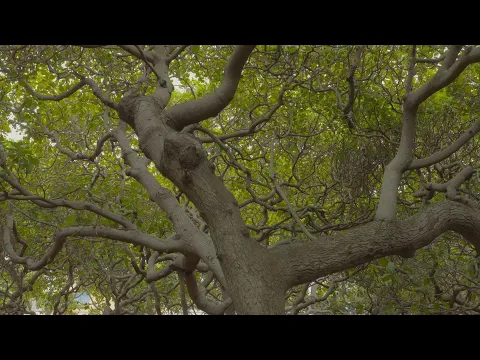

The area where the tree is located functions as a small park, managed by environmental agencies and local entities. The visit typically begins in the region of the main trunk, where guides regularly provide explanations about the history, biology, and economic and tourist importance of the cashew tree. From there, visitors walk along walkways constructed between the branches, allowing them to move under the canopy without damaging the tree.
The park also features an elevated lookout point where visitors can appreciate the size of the canopy in its entirety and observe how the branches intertwine to resemble a true vegetal maze. The infrastructure includes craft stalls, sales of cashew-derived products, and basic services for tourists, reinforcing the economic significance of the attraction for the community: it is estimated to generate around 1,300 direct jobs and to receive up to 350,000 visitors in the best years.
The opening hours are usually daily, approximately from 7:30 AM to 5:00 PM or 5:30 PM, with an entrance fee and discounts for children, students, teachers, and seniors. It is possible to arrive by private car, on excursions from Natal, or by combining the visit with boat tours to the natural pools of Pirangi. For many travelers, visiting the Pirangi Cashew Tree is a unique experience: it’s not every day that one walks inside the canopy of a single tree that, due to its size and shape, challenges the very idea of what a tree can be.
Main Sources: Wikipedia (Pirangi Cashew Tree), Viagem e Turismo, Portal N10, local tourism blogs, and visitor reports on travel sites.








Como dar credibilidade numa notícia sem português o estagiário sabe escrever
Tem um Cajueiro no Piauí, na cidade de Cajueiro da Praia, o nome é Cajueiro Rei
Já conheci esse cajueiro em uma viagem a Natal. É grande mesmo .Se for visitar Natal não deixe de conhece-lo. Passeio imperdível.