





 Portuguese
  English
  Spanish
 5 min of reading
  0 comments


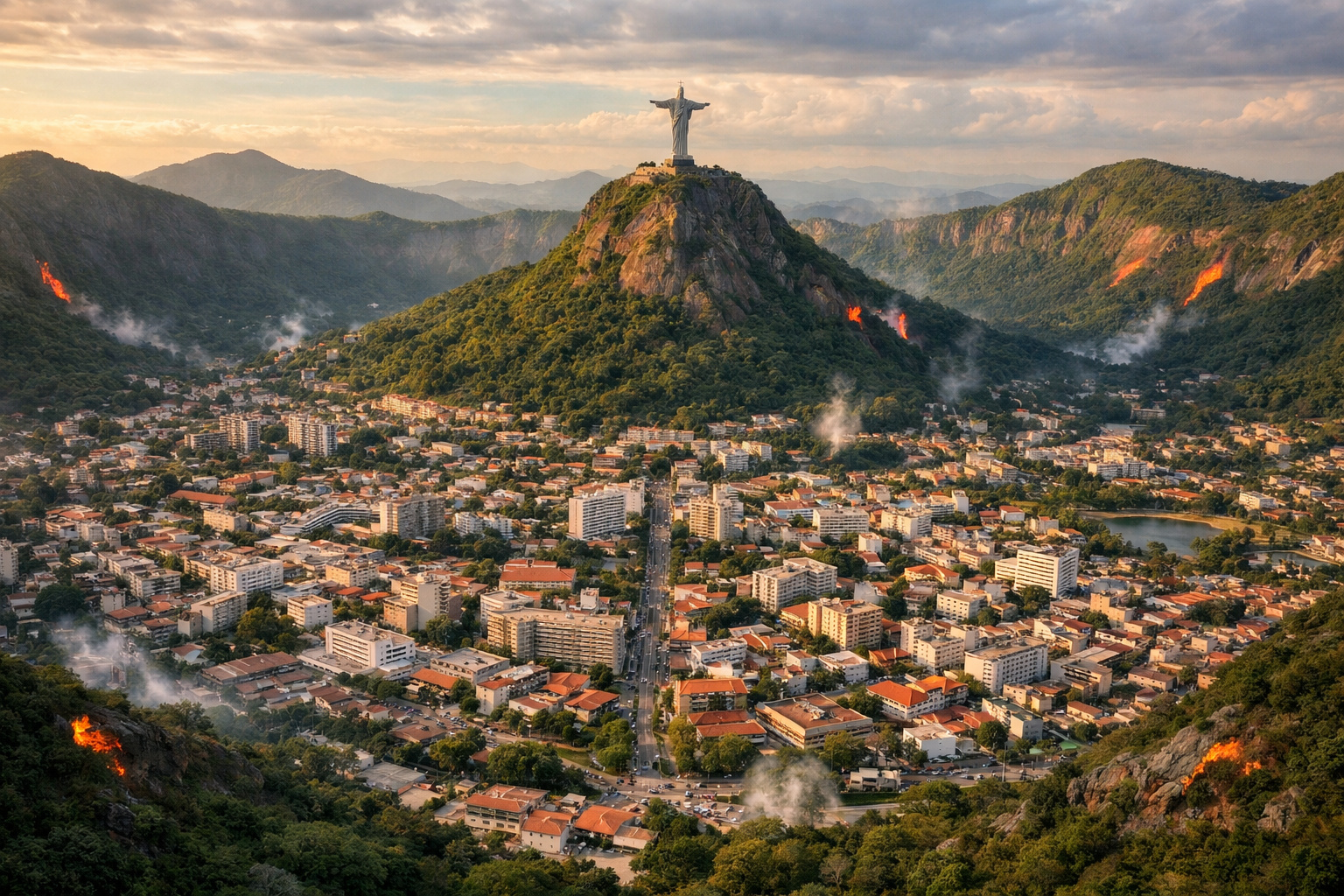
Built Inside the Crater of an Extinct Volcano, the Mining Town Combines Therapeutic Sulfurous Waters, Historical Legacy of the Brazilian Empire, High Human Development Index, and Landscapes That Blend Science, Tourism, and Spirituality
Poços de Caldas, located in Southern Minas Gerais, about 460 kilometers from Belo Horizonte and 260 kilometers from São Paulo, is one of the most unique cities in Brazil. Unlike other traditional tourist destinations, the municipality was literally built inside the caldera of an extinct volcano, a rare geological feature that shaped its history, economy, and even the local lifestyle.
This volcanic formation favored the emergence of naturally heated sulfurous waters at around 45 °C, which spring from the ground and have been used for therapeutic purposes for over a century. Since the Brazilian Empire, these waters have attracted visitors seeking healing, relaxation, and well-being, consolidating Poços de Caldas as one of the most traditional hydromineral resorts in the country.
The information was disclosed by Correio Braziliense, in the Radar section, and reinforced by historical, tourist, and statistical data showing how the city has managed to transform a natural phenomenon into a vector for human and economic development over the decades.
-
Friends have been building a small “town” for 30 years to grow old together, with compact houses, a common area, nature surrounding it, and a collective life project designed for friendship, coexistence, and simplicity.

-
This small town in Germany created its own currency 24 years ago, today it circulates millions per year, is accepted in over 300 stores, and the German government allowed all of this to happen under one condition.

-
Curitiba is shrinking and is expected to lose 97,000 residents by 2050, while inland cities in Paraná such as Sarandi, Araucária, and Toledo are experiencing accelerated growth that is changing the entire state’s map.

-
Tourists were poisoned on Everest in a million-dollar fraud scheme involving helicopters that diverted over $19 million and shocked international authorities.


How Thermal Tourism and Geology Shaped One of the Highest HDIs in the Interior of Brazil

Over time, Poços de Caldas has managed to go beyond health tourism. The city has been able to leverage its geological and economic base to build a strong network of public services, urban infrastructure, and quality of life. As a result, it has a Human Development Index (HDI) of 0.779, according to data from the Brazilian Institute of Geography and Statistics (IBGE), one of the highest among municipalities in the Brazilian interior.
Additionally, the historical exploration of bauxite, a mineral essential for aluminum production, contributed to strengthening the local economy. This balance between industrial activity, tourism, and urban planning has allowed the municipality to invest consistently in education, health, and safety, directly reflecting in the longevity and well-being of the population.
On the other hand, walking through the streets of Poços de Caldas is to perceive elegant urbanism, with well-maintained squares, tree-lined parks, and an active cultural calendar. Even after the end of the casino era, the city preserved a cosmopolitan atmosphere, keeping alive the architectural and cultural heritage of the early 20th century while modernizing to serve residents and visitors.
Handcrafted Crystals, European Tradition, and Cultural Tourism in the Heart of Minas Gerais
In addition to the thermal waters, Poços de Caldas hosts a handcrafted tradition that crossed oceans. Families of Italian glass masters, responsible for founding companies like Cristais Cá d’Oro and Cristais São Marcos, brought the original techniques from the Isle of Murano in Venice to the city.
Although it is not a simple reproduction, the crystals produced in Poços de Caldas follow the same traditional European method: hand-blown glass, shaped while still glowing with extreme precision and skill. Today, these pieces are exported to several countries and are considered true jewels of Brazilian craftsmanship.
For the tourist, the experience goes beyond shopping. It is possible to visit the “factory floor,” observe the artisanal process, and understand why the local crystals have become one of the most sophisticated souvenirs in the region. This fusion of European technique and Minas Gerais identity reinforces the unique cultural character of the city.
Thermas Antônio Carlos, Christ the Redeemer, and Landscapes Shaped by Ancient Volcanic Activity
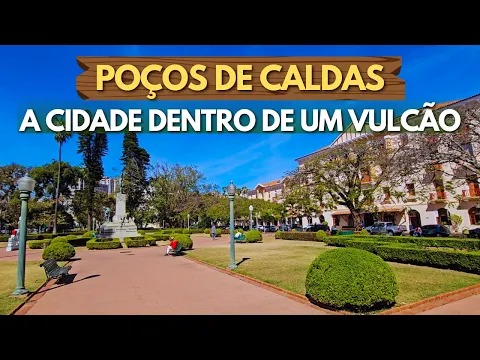

Among the most emblematic symbols of Poços de Caldas is the building of Thermas Antônio Carlos, inaugurated in 1931. Built in a neoroman style, the space is more than a historical monument: it still operates today as a center for therapeutic treatments using local sulfurous water.
Immersion baths, saunas, and massages are part of the experience, allowing visitors to relax in the same marble bathtubs that have already welcomed presidents, aristocrats, and historical figures. It is a rare example of an accessible historical spa, where past and well-being coexist.
However, the volcanic geography also offers stunning landscapes. Christ the Redeemer, located at the top of the Serra de São Domingos, can be accessed by a cable car that crosses the city and provides panoramic views of the urban area and native vegetation. This contrast between nature, faith, and urbanization is one of the most unexpected postcards of Southern Minas.
Other spots reinforce this connection with the natural environment, such as the Japanese Retreat, the Antas Waterfall, the Source of Loves — featuring a marble sculpture by the Italian artist Giulio Starace — and the Baloon Stone, a rock formation typical of volcanic origin that allows a privileged observation of the region.
Mountain Climate, Cold Nights, and the Perfect Contrast with Waters at 45 °C
Located at an average altitude of 1,300 meters, Poços de Caldas has a tropical highland climate, with cool nights even in summer. This climatic factor enhances the city’s charm and creates a striking contrast with the heat of the thermal waters.
According to historical climate averages from Climatempo, temperatures vary by season:
- Summer (December to March): between 18 °C and 28 °C, with rains that keep waterfalls full and lush vegetation.
- Autumn (April to June): from 12 °C to 24 °C, a period of dry weather and clear skies, ideal for hiking.
- Winter (July to August): a minimum of 8 °C and a maximum of 22 °C, a setting conducive to wines, fondues, and thermal baths.
This climatic combination makes the city an attractive destination year-round, whether for relaxation, cultural tourism, or quality of life.
Poços de Caldas synthesizes a rare Brazilian equation: healing through waters, art of glass, imperial history, volcanic landscapes, and high standard of living. Choosing this destination means experiencing a therapeutic immersion bath, acquiring a handcrafted crystal directly from the artisan, tasting typical mineiro sweets, and understanding how science, nature, and culture can coexist harmoniously.
Source: Correio Braziliense










-

-

-

-

-

-

43 pessoas reagiram a isso.