





 Portuguese
  English
  Spanish
  4 min of reading
  9 comments


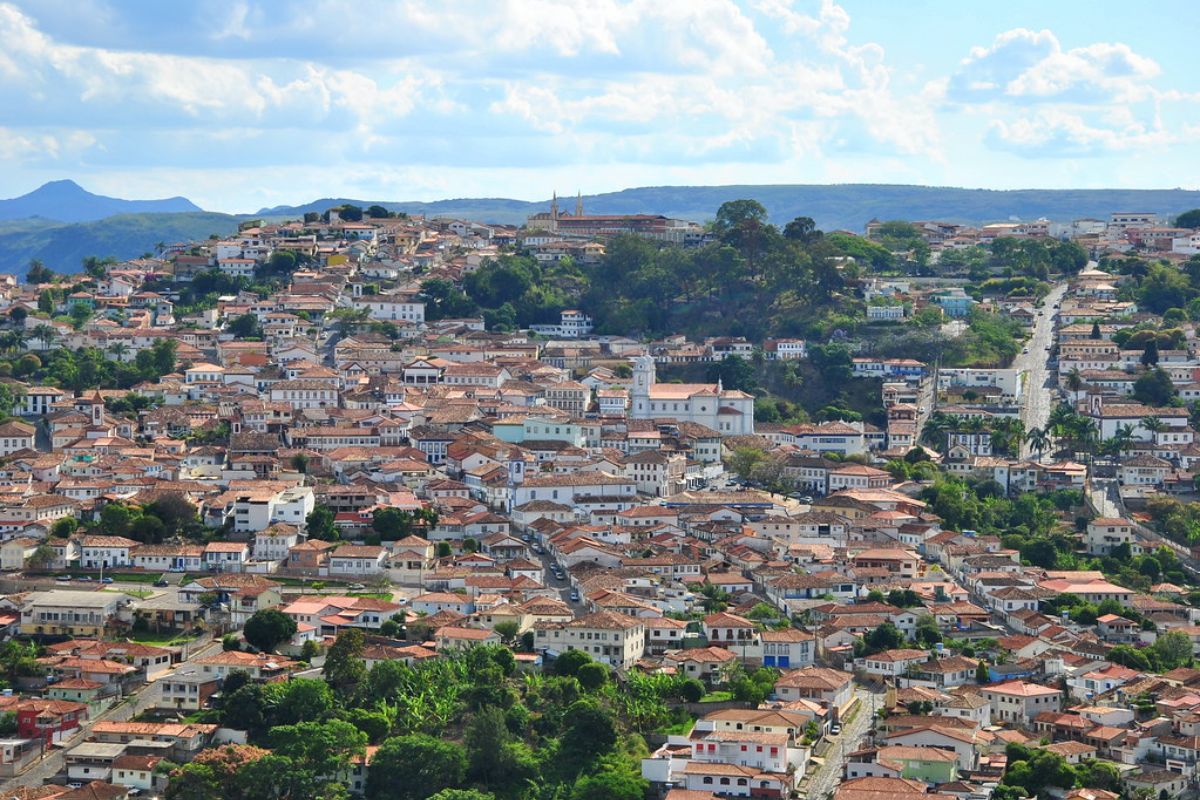


In The Heart Of The Serra do Espinhaço, In Minas Gerais, Diamantina Rests On Ancestral Rocks That Held A Fortune In Diamonds, Shaping Its History And Culture. Discover The Legacy Of This Unique Mining City.
Diamantina, recognized as a UNESCO World Heritage Site, is a mining town whose history is intrinsically linked to the hidden riches beneath its rocky surface. Built on geological formations dating back billions of years, the region proved to be one of the world’s most important diamond districts, a fact that profoundly defined its economy, society, and vibrant culture.
This article explores the fascinating geology of the Serra do Espinhaço, the saga of the discovery of the diamonds that named this iconic Mining City, and how this geological and historical heritage continues to influence the present and future of Diamantina, a treasure in the heart of Brazil.
The Geological Cradle Of Diamantina: The Ancestral And Diamond-Rich Rocks Of The Serra Do Espinhaço
The Serra do Espinhaço, where Diamantina is nestled, has a geological history of immense depth. Its predominant rocks are quartzites and conglomerates of Precambrian and Mesoproterozoic age. It is in one of these units, the “Conglomerate Sopa” of the Sopa-Brumadinho Formation, that the famous diamonds are found.
-
More than one million North Americans were ordered to close their windows and stay indoors because the air in the southern United States became so toxic that pollution levels reached 18 times above the World Health Organization’s safety limit.

-
China has accumulated up to 1.4 billion barrels of oil in strategic reserves, invested 25 years in renewable energy, and purchased 80% of cheap Iranian oil: how Beijing has prepared for decades for the crisis that is now shaking the world.

-
A single lake holds 20% of the planet’s non-frozen freshwater and is also the deepest and oldest on Earth.

-
How 5,000 Indian dabbawalas manage to deliver around 200,000 lunchboxes a day in Mumbai for over 130 years using bicycles, crowded trains, and a manual system that continues to operate with impressive accuracy.

About 1.8 billion years ago, the region was a vast desert. Heavy and rare rains swept the landscape, transporting pebbles, including the resilient diamonds, which were deposited and subsequently buried and lithified, forming the conglomerates that today are the source of wealth for this Mining City.
The Diamond Fever: The Birth And The Peak Of The Arraial Do Tijuco, The Future Mining City Of Diamantina

The Portuguese occupation of the area began around 1722, initially in search of gold. However, the discovery of diamonds around 1720-1721 transformed the Arraial do Tejuco, the original name of Diamantina, into a center of attraction. The news of the wealth converged ambitions to the region, which flourished with “splendor and great luxury”.
From 1771, the Portuguese Crown established the Diamond District, taking direct control of the exploitation to maximize profits. Life in the district was rigidly controlled. A stratified colonial society emerged, with powerful figures like contractor João Fernandes de Oliveira and the emblematic Chica da Silva. In 1831, the settlement was elevated to the status of city, receiving the name Diamantina.
The Urban Form And The Unique Architecture Of This Mining City Nestled In The Mountains
The physical configuration of Diamantina is an expression of its adaptation to the geology and topography of the Serra do Espinhaço. Its urban layout developed in a “spontaneous” manner, with winding streets following the contour lines, a result of the logic of mineral exploration in rugged terrain.
The building materials reflect the local geology, with prominent use of stone, wood, adobe, and wattle and daub. The architectural style is an adaptation of the Minas Gerais Baroque, with functional simplicity. This unique architectural and urban ensemble has been recognized as a UNESCO World Heritage Site.
Mining: The Rich Cultural Heritage, Traditions, And The Identity Of The People Of Diamantina
The geology and mining history have permeated the culture of Diamantina. The Vesperata is its most emblematic cultural manifestation: a musical spectacle where musicians perform from the balconies of colonial mansions for the audience on the street.
Religious festivities such as the Festa do Rosário, with strong Afro-Brazilian elements, reflect the history of labor in mining. Folklore, including narratives about Chica da Silva, and the Diamond Museum, which portrays the extraction process, are guardians of the memory and identity of this Mining City.
Diamantina Today: Between The Valuable Preservation Of Heritage, The Promising Geotourism, And The Future Challenges Of The Mining City


Currently, the economy of Diamantina has diversified, with historical-cultural tourism and education (through the Federal University of the Vales do Jequitinhonha and Mucuri – UFVJM) as pillars. Geotourism emerges as a promising branch, valuing the geological uniqueness of the Serra do Espinhaço, with initiatives such as the “Caminho dos Diamantes” and the Geopark Espinhaço project.
However, the Mining City faces challenges, such as the still low tourist flow compared to other historical cities and the threat of new large-scale mining activities, such as the “Mosquito Project”. The future of Diamantina lies in its ability to transform its mining past into a source of knowledge and sustainable development, protecting its invaluable geological and cultural heritage.
If any reader has images or comments about the history of Diamantina, please include them in the comments.






Estive em Diamantina no feriadao de maio. Linda cidade, fui visitar e conhecervum amogo Rominson, conhecemos atraves de um grupo de WhatsApp de motos Custon. Lugar lindo e ele uma pessoa muito acolhedora e bacana. Em julho retornarei a cidade na minha motocicleta eu e minha esposa
A Diamantina de 25 anos atrás era maravilhosa. A Diamantina de hj é uma cidade em franca decadência. Tráfico, violência e destruição do patrimônio vieram junto com a universidade federal e com a mineração de ferro.
Para conhecer mais um pouco sobre Diamantina e cidades próximas em que o garimpo era atividade principal, sugiro que leiam o livro “Memórias do Distrito Diamantino”, de Joaquim Felício dos Santos.