





 Portuguese
  English
  Spanish
  3 min of reading
  1 comment


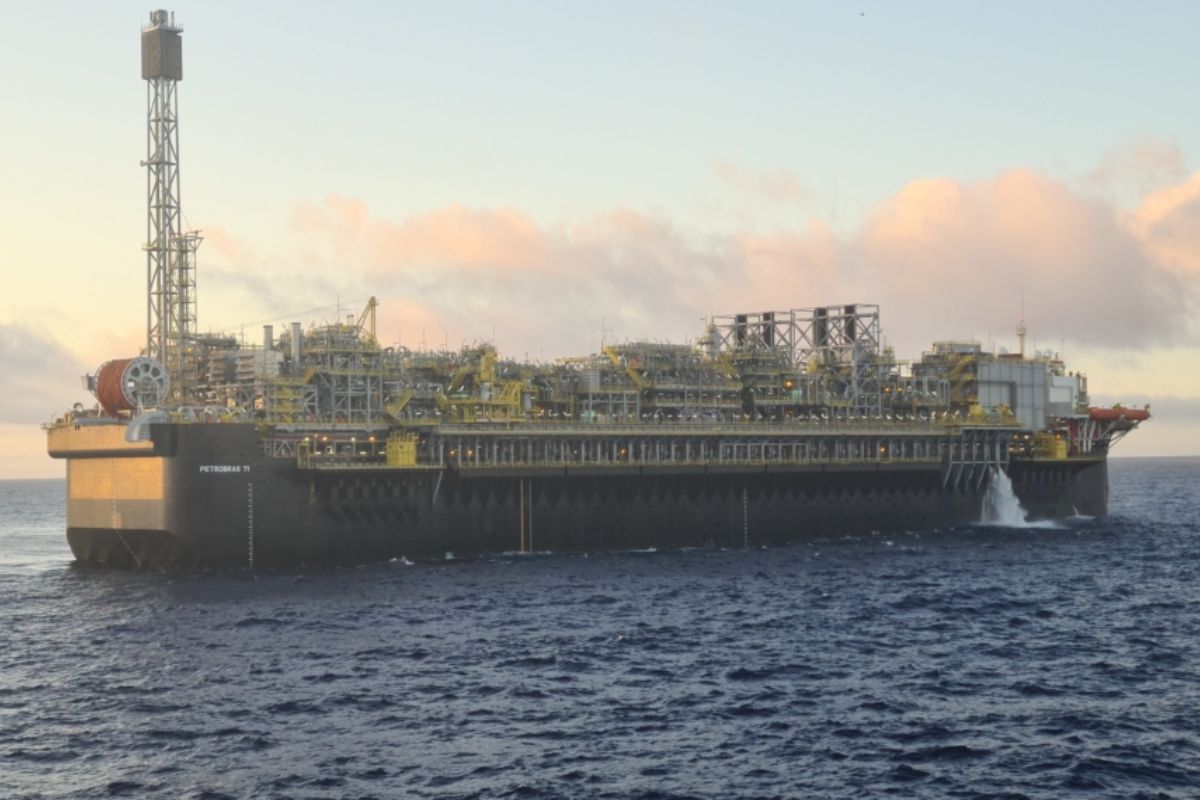


With a Capacity of 150,000 Barrels Per Day, the FPSO P-71 Operates at 2,010 Meters Depth in the Itapu Field, a Milestone in Engineering in the Pre-Salt
In the global energy landscape, Petrobras’ FPSO P-71 stands out as one of the deepest platforms in Brazil. Positioned 200 km off the coast of Rio de Janeiro, in the Itapu field of the Santos Basin, this production, storage, and offloading unit is a milestone in deepwater engineering, operating in an environment that was once dubbed “the end of the world.”
The successful operation of the P-71, which in 2025 will be in full production, represents the overcoming of extreme technical challenges and consolidates Brazil’s technological leadership in pre-salt exploration. It is proof that what was once an almost inaccessible frontier is now a productive and strategic reality for the country.
What Is the P-71 and Its Mission in the Pre-Salt of the Santos Basin
The P-71 is a gigantic FPSO (Floating Production, Storage, and Offloading) platform, an autonomous vessel that processes, stores, and offloads oil and gas extracted from the seabed. Measuring 316 meters in length and 54 meters in width, it is the sixth and final unit in a series of “replicating platforms” developed by Petrobras.
-
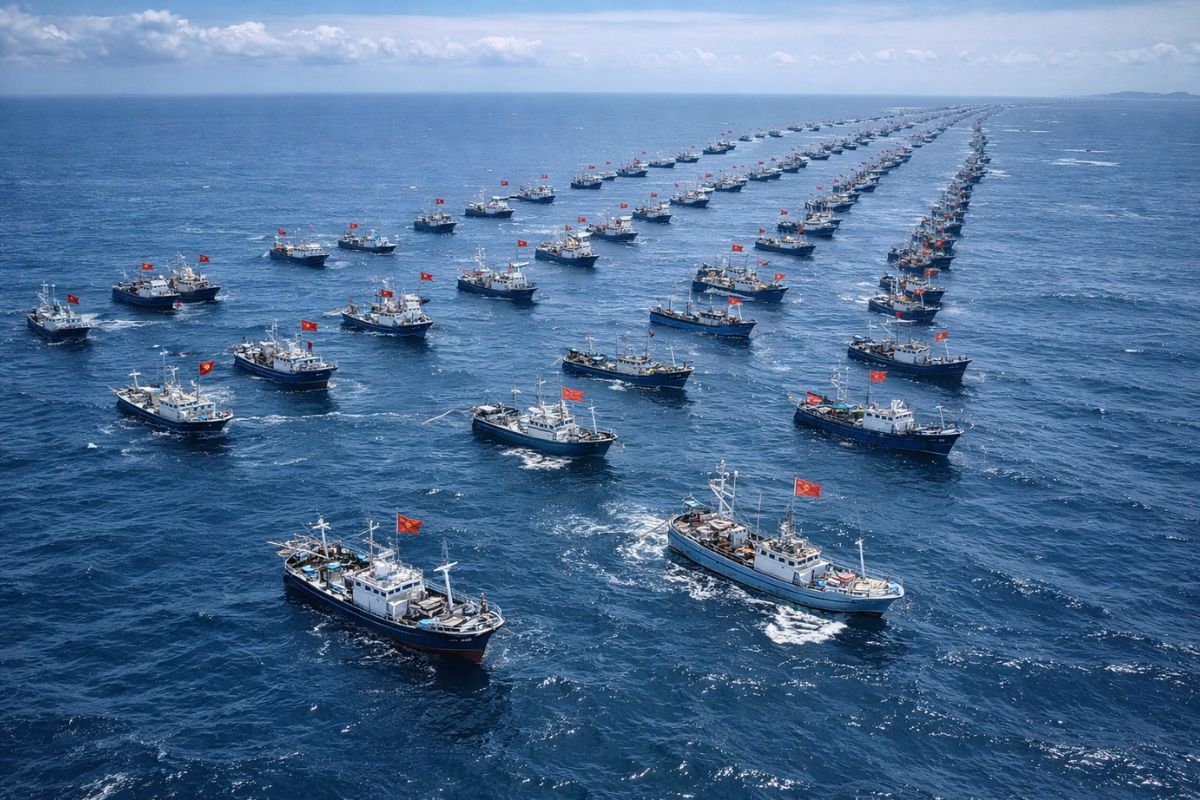
Neither Brazil nor the USA: China produces over 60% of the world’s farmed fish and accounts for about 40% of all global seafood, using industrial-scale aquaculture megafarms to influence the international market and supply billions of people.
-
Archaeologists opened the only Etruscan chamber never looted in 2,600 years and found four individuals lying on stone beds with 110 intact objects around them, and the inscriptions found in the tomb have not yet been deciphered because the Etruscan language is a mystery that science has not yet solved.
-
Health issues urgent alert for flu and calls for the vaccination of the elderly, children, and pregnant women this Saturday with Day D and drive-thru in Curitiba.

-
What seemed like waste has turned into a barrier, and now human hair collected from salons helps retain debris in the water of ancestral channels in Latin America.

This strategy of using a standardized design allowed the company to accelerate construction and reduce costs to explore the vast pre-salt reserves. The mission of the P-71 is to operate in the Itapu field, an asset 100% owned by Petrobras, which is essential for the company’s plan to increase national production.
The Record of 2,010 Meters, Engineering to Operate in Ultra-Deep Waters
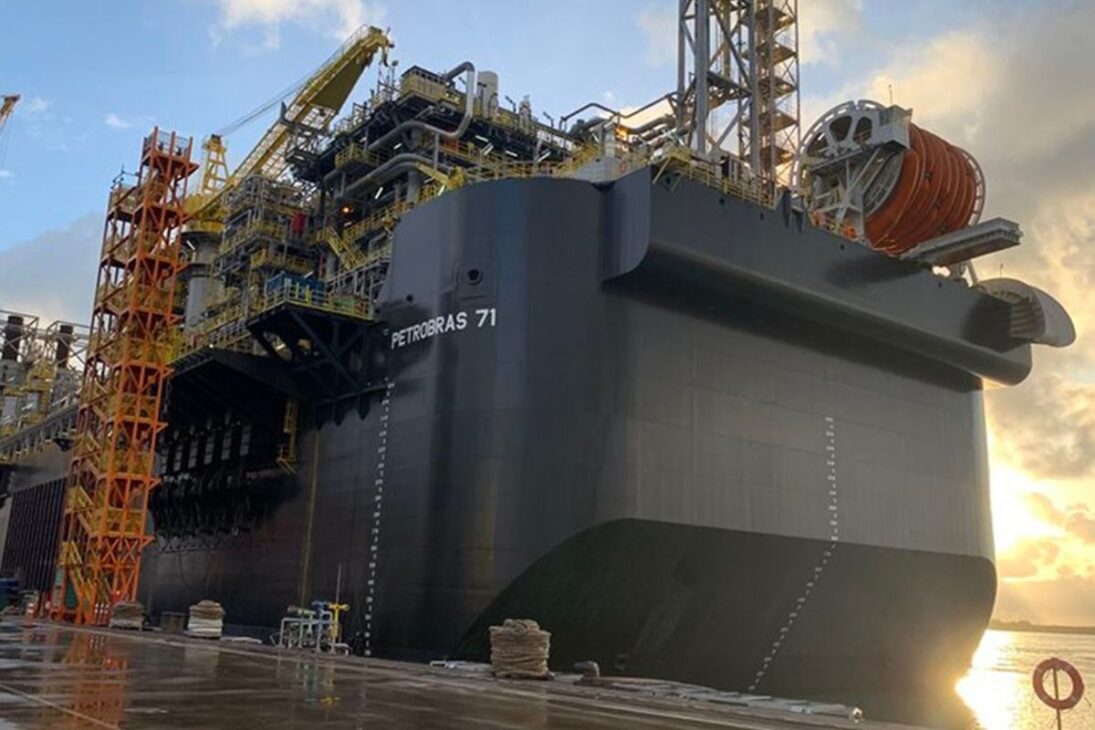
The main credential of the P-71 is its operational depth. It is anchored in a water depth of 2,010 meters, making it one of the deepest platforms in Brazil in operation. Operating at this depth requires cutting-edge engineering to withstand immense hydrostatic pressure — over 200 times the atmospheric pressure at sea level — as well as low temperatures and the challenges of drilling thousands of meters through rock and salt.
The ability to extract oil safely and efficiently under these extreme conditions is the result of decades of innovation by Petrobras, which has established itself as a world leader in technology for deep and ultra-deep waters.
Reaching 150,000 Barrels Per Day, Performance and Production of the Deepest Platform in Brazil
The P-71 began production on December 21, 2022, ahead of schedule. In less than a year, on November 13, 2023, the platform had already reached its maximum production capacity of 150,000 barrels of oil per day.
In addition to oil, the unit can process up to 6 million cubic meters of natural gas per day and has a storage capacity of 1.6 million barrels of oil. This rapid “ramp-up” in such a complex platform demonstrates Petrobras’ operational efficiency and its mastery over the challenges of the pre-salt.
The System That Reduces Gas Flaring in the Atmosphere
This platform also incorporates technologies focused on sustainability. The P-71 is equipped with a Flare Gas Recovery System (FGRU), which captures gas generated during the process and reuses it instead of flaring it into the atmosphere, transforming what would be a polluting waste into energy for the platform itself and increasing the overall efficiency of the project.
This technology significantly reduces greenhouse gas emissions and aligns with Petrobras’ broader decarbonization strategy, which includes CO₂ reinjection into reservoirs (CCUS) and the development of future “All Electric” platforms with increased energy efficiency.
The Legacy of the P-71 Platform in 2025, Consolidation in Brazil
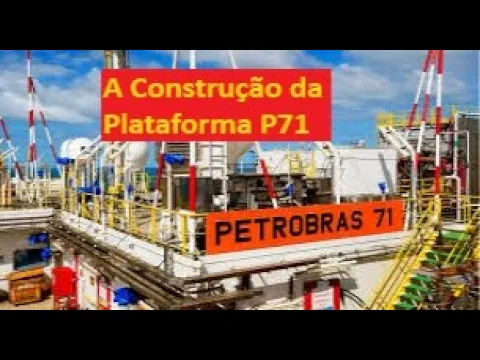

In 2025, the P-71 is in full operation, significantly contributing to Petrobras’ production goals. It is not just an isolated achievement, but the culmination of decades of investment in research and development.
The success of this platform symbolizes Brazil’s ability to transform its geological potential into economic reality. By mastering the technology to operate at the “end of the world,” one of the deepest platforms in Brazil not only reinforces the country’s energy security but also serves as a powerful symbol of Brazilian technological capacity, proving that the ‘end of the world’ is just another frontier to be surpassed by national engineering.






Petróleo do fim do mundo é sentido dúbio, além de mal gosto, a meu ver…
Orgulho da Engenharia brasileira!!