





 Portuguese
  English
  Spanish
  5 min of reading
  8 comments


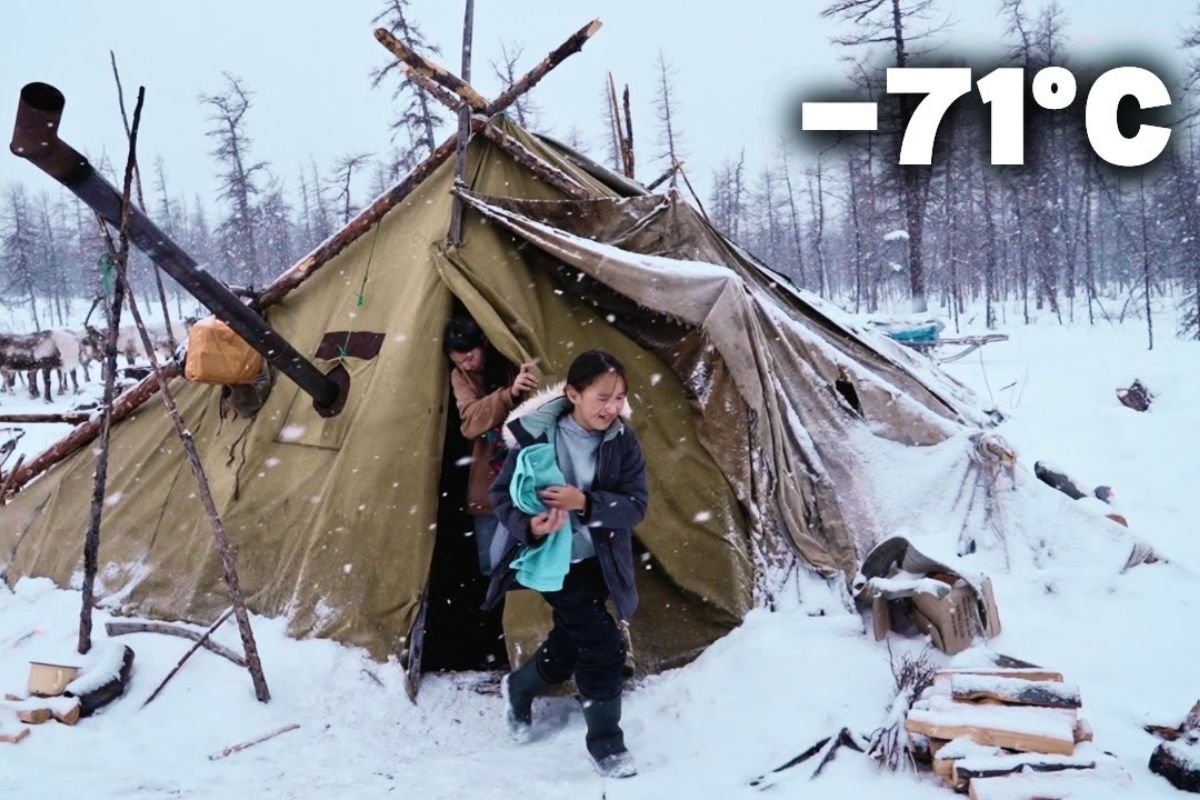


In The Tundra Of Yakutia, Valentina And Vasiliy Wake Up Before 7 AM To Keep The Fire And Organize Bath And Laundry. Saiaan, 11, Cuts Ice From The Lake To Melt. Without Running Water And Without A City For Thousands Of Kilometers, The Canvas Tent And The Stove Define Weekly Survival In The Arctic
In the tundra of Yakutia, the Stepanov family goes through the year following the reindeer and maintaining a routine that allows no improvisation. In a setting where the cold reaches 71°C below zero, the tent and the stove cease to be a choice and become essential infrastructure to keep the camp functional.
Sunday there does not mean rest. Valentina keeps the fire, Vasiliy organizes the day, and Saiaan, 11 years old, gets into the rhythm of tasks that repeat week after week: lake ice to turn into water, firewood to warm up, and laundry done by hand. In the tundra of Yakutia, the basics take hours.
Sunday Routine: Bath And Laundry In The Tundra Of Yakutia

In the tundra of Yakutia, the day begins around 7 AM with Valentina ensuring that the fire does not go out and that the family has hot food before heading out.
-
Friends have been building a small “town” for 30 years to grow old together, with compact houses, a common area, nature surrounding it, and a collective life project designed for friendship, coexistence, and simplicity.

-
This small town in Germany created its own currency 24 years ago, today it circulates millions per year, is accepted in over 300 stores, and the German government allowed all of this to happen under one condition.

-
Curitiba is shrinking and is expected to lose 97,000 residents by 2050, while inland cities in Paraná such as Sarandi, Araucária, and Toledo are experiencing accelerated growth that is changing the entire state’s map.

-
Tourists were poisoned on Everest in a million-dollar fraud scheme involving helicopters that diverted over $19 million and shocked international authorities.


Sunday is reserved for baths and laundry, tasks that require planning because there is no running water and the wind can pick up quickly.
Saiaan goes to the lake with his uncle to cut ice and bring blocks back to the camp to melt.
Kira and Alina start washing clothes while the makeshift bathhouse is still warm.
For the Stepanovs, Sunday is the marker of the week: weekly baths, clean clothes, and melted water.
Tent And Stove: The Minimal Infrastructure Of The Stepanovs

The Stepanov family lives in a tent all year round.
The current shelter is a canvas tent, chosen for being quicker and more practical than traditional structures made with wooden posts and reindeer hides.
In the center, the stove made of metal is the critical source of heat and needs to be constantly fed with firewood.
Even with the stove, the cold seeps in through the cracks.
At night, inside the tent, everything can freeze, and frost appears by morning.
Valentina describes a routine where the children sleep and wake with visible signs of freezing, including eyelashes that turn into icicles, without that interrupting the cycle of tasks.
Water Without Plumbing: Lake Ice Turns Into Bath And Drink

In the tundra of Yakutia, without running water, the Stepanovs depend on the frozen lake.
The process repeats: cut blocks, transport, melt, and set aside for drinking and bathing.
It’s constant physical work, especially when the camp needs to maintain supplies at the pace of the cold.
Baths do not happen every day. Because it requires collecting ice, setting up a temporary bathhouse, and hours of heating, the family takes a bath only once a week.
When the wind picks up at dusk, Saiaan needs to finish quickly and run back to the tent.
Reindeer At The Center: Work, Protection And Continuity In The Tundra Of Yakutia

The reindeer organize the life of the Stepanovs. Vasiliy and the men drive the herd and bring the reindeer back closer to the tent before nightfall, seeking to protect them from wolves and keep the group safe.
The family carries ancient practices, including a care cited as a custom from their ancestors to treat injuries with urine.
Without a store for thousands of kilometers, the reindeer are part of their food and everyday materials.
In the tundra of Yakutia, the herd is not just scenery: it is the basis of movement and supply.
Food And Supplies: What Comes To The Table When There Is No Store
The described breakfast includes fried pies, jam, and hot tea with milk, preparing the family for a long day of tasks.
At lunch, Valentina makes reindeer sausage and calls Kira to help, in a careful task that takes up part of the Sunday.
The cited food base remains simple and repetitive: reindeer meat, fish, bread, and wild fruits as dessert.
At dinner, the family gathers with reindeer meat and freshly baked bread, reinforcing a pattern that depends on what the camp can produce and store.
Children In The Cold: Saiaan, Kira And Alina Between Tradition And Choices
Saiaan is 11 years old, spends most of his time with his grandparents and learns what he considers necessary to become a reindeer herder.
He says he likes life in nature, does not want to go back to the city, and wants to stay there, trying to follow the path of herding.
Kira and Alina wash clothes by hand and learn essential tasks, such as gathering firewood and ice, cooking, and cleaning.
At the same time, desires linked to modern life appear: Kira wants to work at a daycare, and Alina hopes to open a store or become a doctor.
Why The Tundra Of Yakutia Demands Everything From The Body And Time
The Stepanov family traverses the tundra, a biome where tree growth is limited by extreme cold.
For most of the year, the landscape is frozen, with few trees, long winters, and strong winds.
The coldest months can still drop temperatures below 60°C below zero.
In this environment, survival means keeping fire, water, and shelter functioning without interruption. In the tundra of Yakutia, tent, stove, and reindeer are the gears that keep the Stepanov family in motion.
Life in the tundra of Yakutia continues as continuous work: weekly baths, lake ice, hand-washed clothes, and a stove that cannot go out.
What aspect of the tundra of Yakutia surprises you the most: keeping the stove on constantly, cutting ice for water and baths, or seeing Saiaan grow learning to take care of the reindeer?










Pelo que eu sei temperaturas muito baixas de mais de 60 graus negativos congelaram os pulmões de pessoas em questão de segundos fora o risco de ipotermia essa história está sendo Fantasiosa pouco demais.
gostaria de saber como eles conseguem lenha no meio do gelo
E as vezes eu acho a minha vida difícil! Que pecado!