





 Portuguese
  English
  Spanish
  5 min of reading
  0 comments


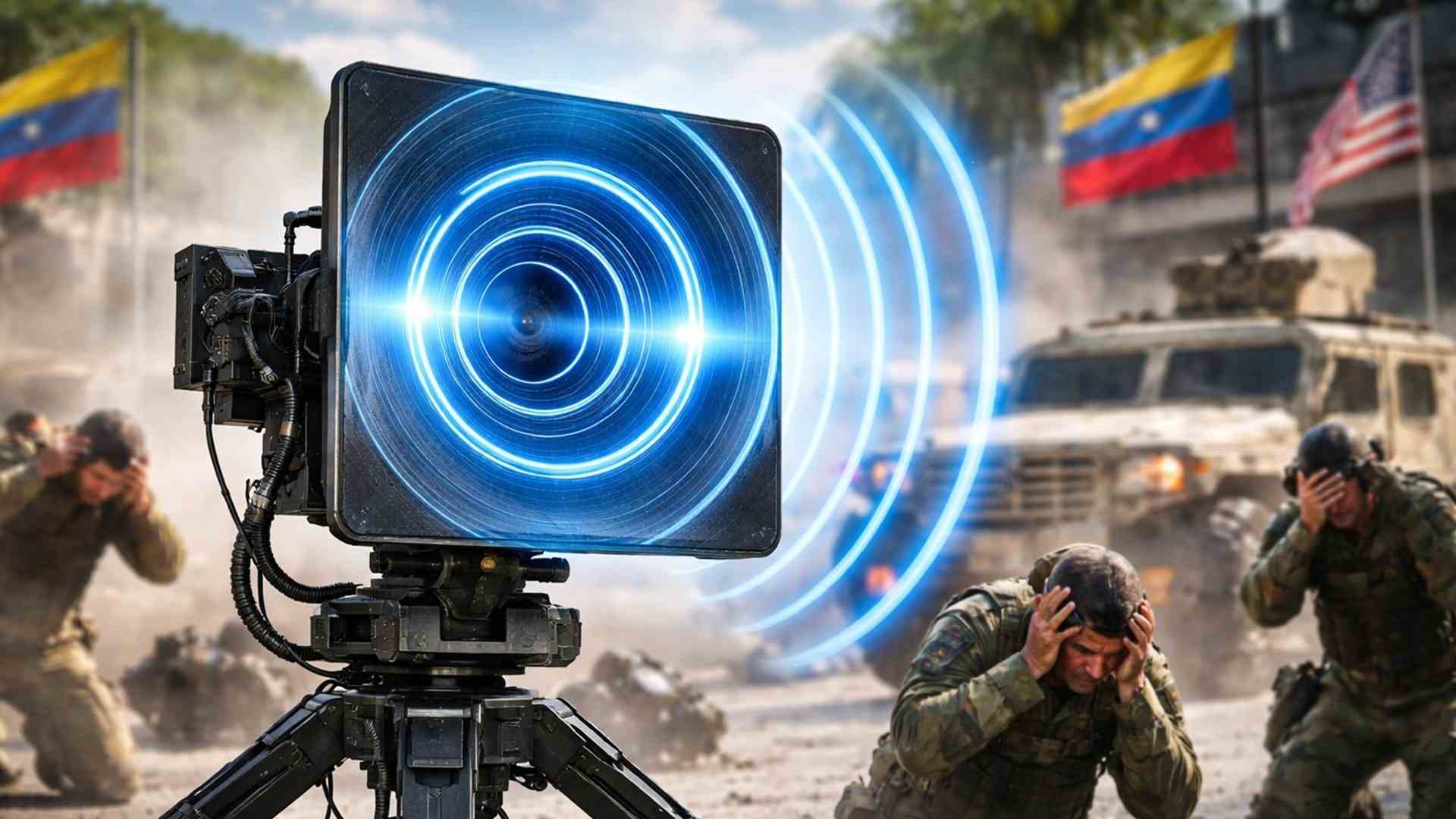
Video Account of a Venezuelan Guard, Amplified After the Capture of Nicolás Maduro in January 2026, Attributes Bleeding, Disorientation, and Physical Inability to a Supposed Sound Effect Used by American Forces, Despite the Absence of Official Confirmation or Independent Evidence
Following the U.S. operation that resulted in the capture of Nicolás Maduro, in January 2026, allegations circulated that American forces had used a “sonic weapon” to incapacitate Venezuelan guards, an account still without independent verification and without official confirmation.
Allegations Arising After the Operation and the Video That Propelled the Rumor
After the American action, social media was flooded with claims that a mysterious sound technology had been crucial in dominating Venezuelan security forces. The center of the rumor is a widely shared video interview online.
In the recording, an unidentified Venezuelan guard describes an overwhelming force that left him bleeding, disoriented, and unable to move. According to the account, other defenders exhibited similar symptoms during the incursion.
-
With a cost per shot close to zero, the DragonFire laser could change naval warfare in 2027 and provide British ships with nearly unlimited defense against drones.

-
A British startup creates tires that generate electricity in electric vehicles when passing over potholes, speed bumps, and cracks.

-
Scientists have created robots made with living cells that have their own nervous system, swim on their own, explore the environment, and self-organize without any genetic engineering, and now they want to do the same with human cells.

-
Students create a solar-powered ambulance that operates without a plug, without fuel, and still keeps medical equipment running in remote areas.


The interviewee claims that an intense sound effect caused nasal bleeding, vomiting, and complete loss of reaction ability. He maintains that this allowed a smaller American contingent to quickly overcome local resistance.
The narrative gained even greater reach after being republished by White House press secretary Karoline Leavitt on January 10, 2026, with encouragement for followers to read the disclosed content.
Lack of Official Confirmation and Institutional Silence
Despite the widespread circulation of the video and political repercussions, no independent confirmation has emerged to corroborate the account presented by the Venezuelan guard. The allegations remain based solely on unverified testimony.
The Pentagon and U.S. Southern Command declined to comment beyond the statements already released regarding the operation. The institutions cited operational security reasons for not providing additional details.
This silence has contributed to the proliferation of interpretations and online speculation. Nevertheless, U.S. authorities have not acknowledged the use of any sound, acoustic, or directed energy systems during the mission.
The absence of technical data, medical records, or independent documentation precludes, so far, any factual validation of the claims made in the widely shared video.
What Is Known About U.S. Research on Non-Lethal Technologies
The United States has been researching non-lethal and less-lethal technologies for decades aimed at incapacitating adversaries without using conventional firearms. Some of these initiatives have already been publicly acknowledged.
One of the most well-known examples is the Active Denial System, known by the acronym ADS. The device uses millimeter waves to rapidly heat the skin’s surface, causing intense pain and forcing immediate withdrawal.
The ADS has been publicly demonstrated and used in a limited capacity for evaluation. However, there has never been official confirmation of its operational use in real combat, despite its widespread publicity as an experimental technology.
Another frequently cited system is the Long Range Acoustic Devices, known as LRADs. They emit extremely loud and directed sounds, primarily used for communication and alerting in hostile environments.
Known Limitations of ADS and LRAD in Relation to Reported Symptoms
Although LRADs can cause auditory pain and disorientation, their use is criticized due to the risk of permanent hearing damage. Still, it is not known that they cause bleeding, vomiting, or prolonged loss of mobility.
Both The War Zone and Forbes highlight that the injuries described in the video do not fit the known effects of the ADS or LRAD systems.
This discrepancy has led to the hypothesis that the guards may have misinterpreted what they experienced. Another possibility considered is the simultaneous occurrence of multiple stimuli, such as explosions and stun devices.
The combination of physical and psychological effects in an intense combat environment can lead to distorted perceptions of events, especially when no objective records are available.
The EPIC Project and Hypotheses Raised by Specialized Analyses
Forbes revisited a lesser-known project from the late 2000s called Electromagnetic Personnel Interdiction Control, known by the acronym EPIC. The concept is described in patents and early documents.
According to these descriptions, EPIC was designed to use radiofrequency energy with the aim of interfering with the vestibular system, responsible for human balance and spatial orientation.
Theoretically, a system of this type could cause falls, loss of motor coordination, and extreme nausea. However, there is no public evidence that the project has progressed beyond laboratory tests.
There is also no indication that EPIC has been operationally deployed or incorporated into the active arsenal of the U.S. armed forces, despite historical interest in the concept.
Plausible Explanations, Trauma, and Misinformation
The deputy editor of The War Zone, Joseph Trevithick, emphasizes that there is no evidence of the use of exotic directed energy weapons in the operation. He points to alternative explanations more compatible with armed confrontation scenarios.
Among them are exposure to overpressure from explosions, moral effect grenades, or the combination of physical shock, extreme stress, and injuries in a chaotic shootout. These factors can cause symptoms similar to those described.
Studies on memory indicate that distortions after traumatic events are common, especially in high-stress combat environments. This can influence later accounts without any deliberate intent to deceive.
There is also the possibility of exaggeration or conscious invention. Attributing defeat to a “superweapon” may protect internal morale, shift tactical responsibilities, or amplify the adversary’s image of technological superiority.
A Recurring Narrative in Asymmetrical Conflicts
The republication of the account by a senior White House official raised questions about the potential deterrent or psychological value of this type of narrative, regardless of its factual veracity.
Historically, asymmetrical conflicts tend to generate stories about mysterious, almost mythical weapons. The War Zone draws parallels with past claims involving electric bombs and alleged microwave weapons.
In many of these cases, subsequent investigations demonstrated misinterpretations or instances of misinformation amplified by the emotional and political context of the confrontation.
This pattern helps to explain why accounts of this type find fertile ground in geopolitical tension environments, even without adequate technical or documentary evidence.
An Outstanding Question
So far, the alleged use of a “sonic weapon” in Venezuela remains unproven. There is no concrete evidence that such a system is in operational service in the United States or has been employed in this mission.
However, the episode exposes the existence of real research, albeit opaque, on non-lethal and directed energy technologies. It remains to be seen whether new data will emerge or if the story will be lost among war myths and modern misinformation, even in the face of intense public scrutiny.







-

Uma pessoa reagiu a isso.