





 Portuguese
  English
  Spanish
  6 min of reading
  0 comments


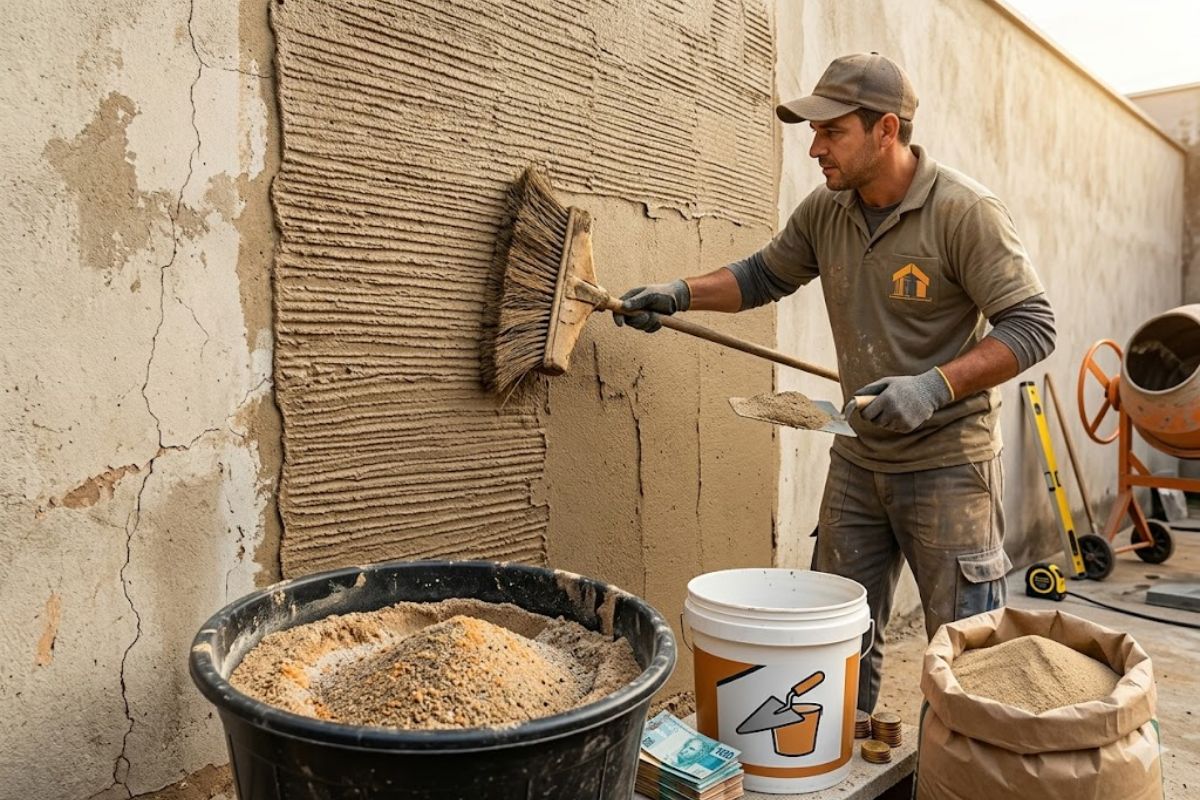
The Simple Mixture Made With Acrylic Mass, Common Sand, and Old Broom Appears as a Practical Solution to Create Resistant Texture on Plastered Walls, Increase Application Yield, Thicken Material, Facilitate Finishing, and Open Space for Internal and External Renovations With a More Controlled Cost Without Requiring Complex Techniques
The simple mixture with acrylic mass, common sand, and old broom stands out because it combines three easily available elements and transforms a common application into a textured finish. The most immediate effect is in the visual gain and material utilization, since the sand thickens the mass and helps create a surface with more presence.
The test shown was conducted in a small area, precisely because there was little acrylic mass available, but even in this short space, it was already clear why the technique attracts masons and those looking to renovate without spending too much. The promise is not a miracle, but rather a combination of yield, relief, and practicality that can work well on plastered walls, internally or externally.
What This Simple Mixture Delivers in Practice
The first advantage of the simple mixture is the yield. By incorporating common sand into the acrylic mass, the material becomes thicker and covers the surface with more volume, which helps those who need to create texture without depending on a large amount of pure product. This reduces the feeling of waste and gives the applicator more freedom to work with the wall’s relief.
-
Italian researchers have detected what appears to be a second Sphinx buried under the sands of Egypt, and satellite scans reveal a gigantic underground megastructure hidden beneath the Giza Plateau for over 3,000 years.

-
There are 4,223 drums and 1,343 metal boxes concreted with 50-centimeter walls that store the radioactive waste from Cesium-137 in the worst radiological accident in Brazil, just 23 kilometers from Goiânia, with environmental monitoring every three months.

-
Giant Roman treasure found at the bottom of Lake Neuchâtel in Switzerland reveals an advanced trade system, circulation of goods, and armed escort in the Roman Empire about two thousand years ago.

-
He buried 1,200 old tires in the walls to build his own self-sufficient house in the mountains with glass bottles, rainwater, and an integrated greenhouse.

The second advantage lies in the final aspect. The very presence of common sand facilitates the creation of a resistant texture, because the relief begins to appear even during application. Instead of a smooth and uniform layer, the surface gains controlled irregularities, which can enhance worn areas and hide small imperfections in the plaster.
Another important point is that the technique was presented as a practical solution for those who want to save money without sacrificing durability. The acrylic mass is already considered resistant to rain and sun, and the addition of sand acts less as a substitute and more as a reinforcement of body and finishing. The attraction lies precisely in this combination of lower cost and stronger appearance.
It also counts that the simple mixture does not require sophisticated tools. With a trowel, masonry trowel, old broom, and the prepared mass itself, the effect can already be executed. This increases interest in small works, home maintenance, and quick interventions, where simple solutions tend to be more appealing than excessively technical finishes.
How Material Preparation Influences the Result
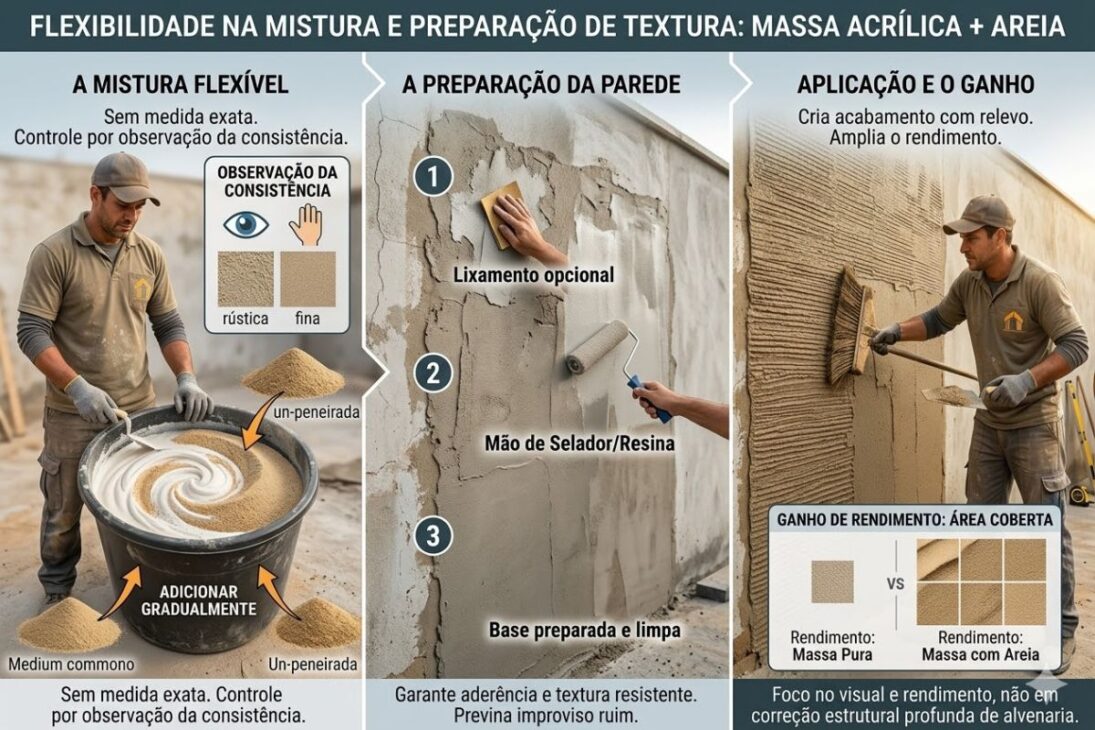
The preparation shown did not follow a strict, exact measurement. What appears is a gradual addition of common sand to the acrylic mass, with new portions coming in slowly until reaching a point considered good for applying. This detail is decisive because it shows that consistency control comes more from observation than from a rigid recipe. No fixed numerical proportion was presented, and inventing this relationship would be a mistake.
The sand used was described as medium and not sifted, although the possibility of sifting was mentioned. This suggests that the simple mixture can accept some variation, as long as the applicator understands the finish they want to achieve. Coarser sand tends to make the relief more evident, while a more filtered material can create a less aggressive texture. In both cases, the role of common sand remains to give body, facilitate texture creation, and increase yield.
Before application, the wall also needs to be taken into account. It was indicated that the surface should be plastered and prepared, which may include sanding, a coat of resin, or sealer before the acrylic mass. This step avoids poor improvisation and helps the material behave better in terms of adhesion, especially when the intention is to form a resistant texture that will not easily come off once finished.
In practice, this answers a central question of any low-cost work: where does this technique make the most sense. It tends to work better where there is already a minimally regular and clean base, because the focus of the simple mixture is not to correct structural defects in the wall, but to create a finish with relief. The gain is in the visual and yield, not in solving deep masonry problems.
Why the Old Broom Completely Changes the Finish
The old broom is the element that transforms a common application into texture. After spreading the acrylic mass with the trowel, the next step is to use the old broom to scratch the entire applied area. This movement creates the marks that will give identity to the finish. Without this step, the mixture would just be thickened mass with sand, not a decorative effect so evident.
The most important detail is that the scratching done by the old broom does not end the process. Next, the trowel comes back to remove excess and organize the design. The indicated movement is always from top to bottom, gently pressing to set the mass and leave the relief cleaner. This return of the tool is what prevents the wall from being left just scratched and without pattern.
It is precisely in this sequence that the resistant texture begins to appear strongly. The simple mixture already goes on thick on the wall, the old broom opens the paths of the relief, and the trowel refines the excess. The finish arises from the combination of these three actions, not from just one of them. This explains why the technique attracts attention in short videos and quick demonstrations: the visual effect appears almost immediately.
Another relevant aspect is the repetition of the gesture. If the applicator wants to tighten the texture further, they can go back again, always in the same direction. This provides some control over the final pattern and avoids totally random marks. The old broom, in this scenario, ceases to be a precarious improvisation and becomes a decisive tool to give personality to the coating.
Where the Technique Can Work and Why It May Become a Trend
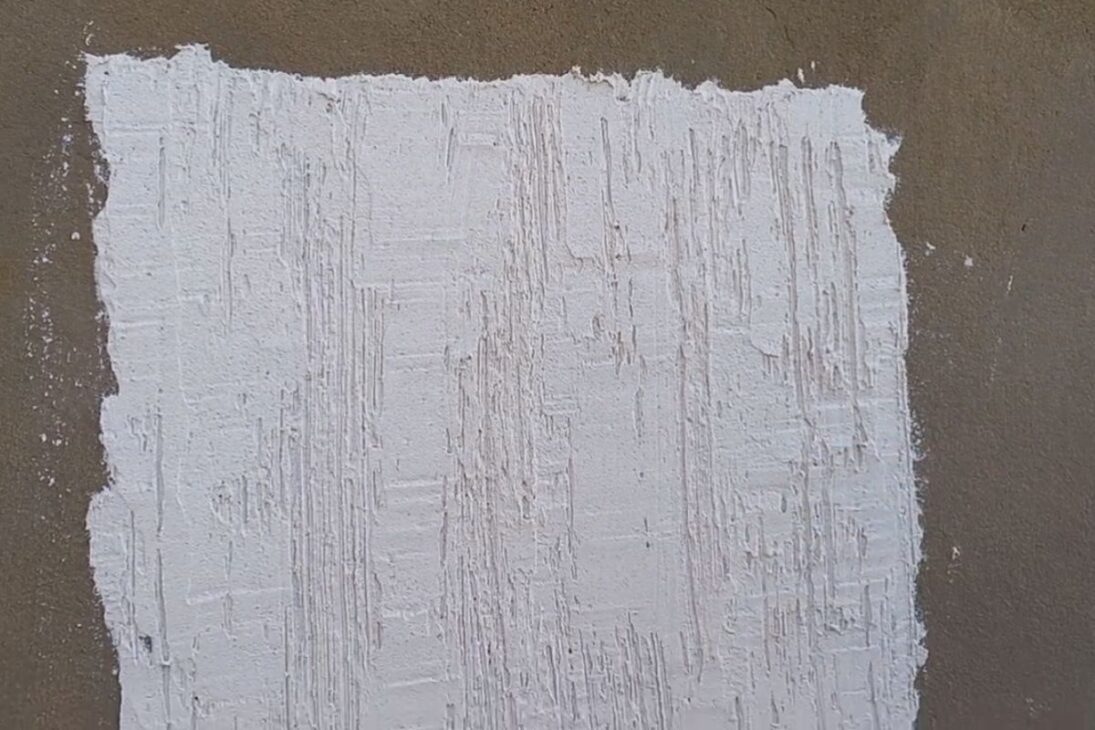
The simple mixture was presented as usable on both internal and external walls. This matters because it significantly expands the field of interest. When the base is acrylic mass, the argument of resistance to sun and rain strengthens the idea that the finish is not only suitable for an isolated decorative corner but can reach more exposed areas. This reach helps explain why the technique generates so much curiosity.
There is also a social factor in this potential expansion. Masons, small renovators, and homeowners who enjoy testing low-cost solutions tend to be interested in methods that deliver visual impact without requiring a high investment. The presence of common sand and old broom reinforces this perception, showing a technique that is accessible and possible to adapt to small work and home maintenance realities.
Another point is the possibility of painting after drying. It was mentioned that, once dry, the finish can still receive color, including the use of pigment, which expands the visual repertoire of the resistant texture. This means that the simple mixture does not have to stop at the raw effect of the mass. It can serve as a base for a more personalized finish, with relief and color working together.
But there is a clear limit that cannot be ignored. The method was demonstrated in a short space and as practical advice, not as a comprehensive technical system for any situation. What is seen is a functional and inexpensive solution, especially useful for textured finishing, and not a universal formula. Nevertheless, the combination of low cost, ease of application, and striking appearance is strong enough to make the technique a recurring topic of discussion in construction, workshops, and renovations.
The simple mixture with acrylic mass, common sand, and old broom stands out because it solves several demands at once: thickens the material, improves yield, helps create resistant texture, and delivers a finish with strong visual appeal without depending on expensive structures. The appeal grows precisely because the technique seems to fit within the budget and routine of those who work with walls every day.
In your opinion, can this simple mixture really become a trend in construction, or does it work better only in small areas and finishing tests?










-

-

-

-

-

-

37 pessoas reagiram a isso.