





 English
  Francês
  Alemão
  Italiano
  Japonês
  Norueguês
  Portuguese
  Spanish
  4 min of reading
  4 comments


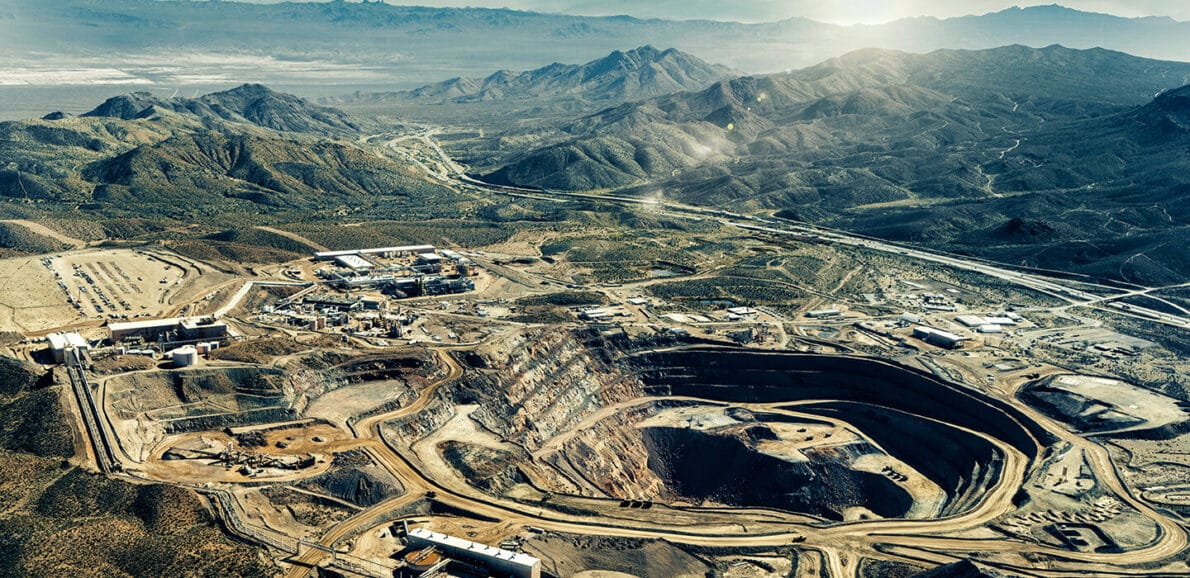


Discovery Of A Massive Rare Earth Deposit In Extinct Volcano. Can This Mineral Mining Change The Future Of Europe? Read More About This Amazing Advance
A deposit that could satisfy 10% of the rare earth demand in Europe was discovered by geologists from the Norwegian mining company Rare Earths Norway (REN). The Fen Carbonatite Complex, located in Telemark County, hosts the largest deposit of rare earth elements (REE) discovered in continental Europe.
Discovery Of The Rare Earth Deposit In The Heart Of An Extinct Volcano In Norway
The Fen Carbonatite Complex may be key for Europe to secure a supply chain of rare earth elements following the discovery of a massive deposit at the site.
The heart of an ancient volcano in Norway houses the largest deposit of rare earth elements in Europe, according to the mining company Rare Earths Norway. On June 6, the company published a report about the deposit, revealing that there are approximately 8.8 megatons of rare earth oxides available at the outcrop. About 1.5 megatons of this is expected to be rare earth magnets, used in wind turbines and electric vehicles.
-
Brazil extracts 26.3 million tons of ore from what was previously treated as waste, transforming residues into wealth, producing over 3 million tons of sand, and demonstrating how national mining is relearning to generate value.
-
A $3.5 billion megaproject in Latin America pumps desalinated seawater at 1,050 liters per second over 194 km to keep a copper supermine in the Andes operational for another 20 years.
-
Oncorp wins auction and enables biodiesel and gas thermal plants in Brazil, with strategic projects in Suape and Xavantes Aruanã.

-
New shoe factory in Ceará is expected to create 400 jobs and strengthen the local economy.


Transformative Potential Of The Deposit
The resource estimate underscores the deposit’s potential to be a truly transformative asset, capable of sustaining a secure rare earth value chain for Europe.
Alf Reistad, CEO of Rare Earths Norway
The deposit, known as the Fen Carbonatite Complex, is located southwest of Oslo, near Lake Norsjø. About 580 million years ago, the complex was the conduit of an active volcano. Now, long after its extinction, the top of the volcano has eroded, exposing this chimney filled with magma, which is approximately 2 kilometers in diameter, to the surface.
The magma solidified into carbonatite, a rock filled with minerals containing certain forms of carbonate molecules. According to Rare Earths Norway, this once-molten magma now contains economically significant rare earth elements, such as neodymium, a metallic element used to make magnets, and praseodymium, also used in magnets as well as other applications like aircraft engines.
The company’s estimate focuses on the upper portion of the former volcano’s insides, up to 468 meters below sea level. According to the company’s statement, it is likely that there are deposits up to about 1,000 meters below sea level.
Exploration And Processing Plan
The company plans to continue with exploratory drilling and will also build a pilot plant near the outcrop to process the ore into pure rare earth elements. According to a 2023 report from the Oxford Institute for Energy Studies, approximately 70% of the global supply of rare earth elements is extracted in China, and 90% of all rare earth elements are processed there.
Source: rareearthsnorway.com
What Are Rare Earths


Rare earths are a group of 17 chemical elements that include the 15 lanthanides, along with scandium and yttrium. These elements have similar chemical properties and are located in the f block of the periodic table. Despite the name, many of these elements are not particularly rare in the Earth’s crust, but are usually dispersed and not found in economically exploitable concentrations. mining
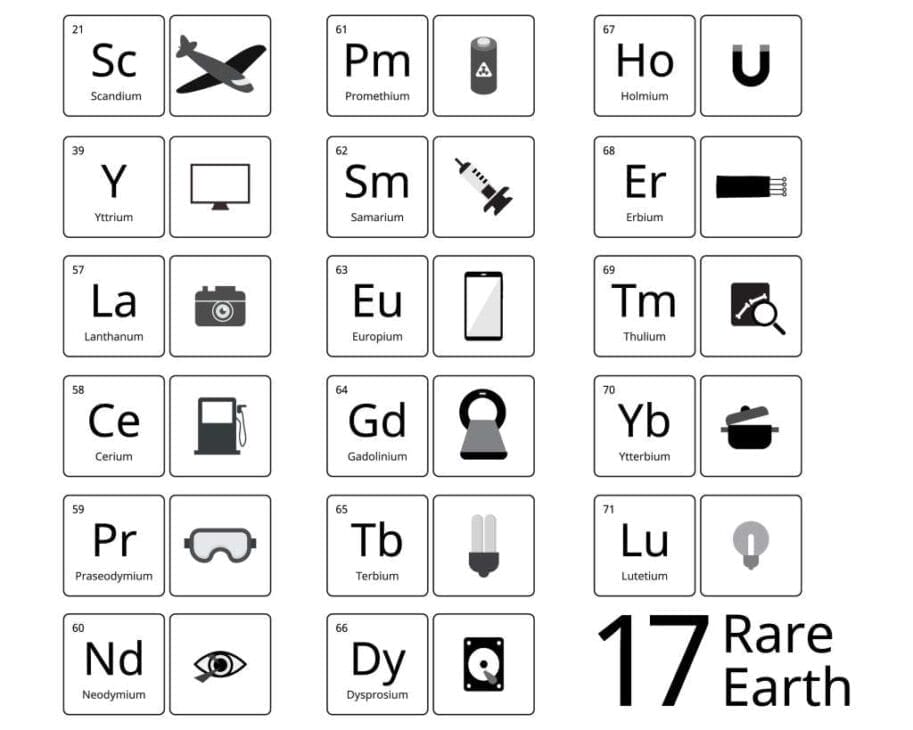
The rare earth elements are:
- Lanthanum (La)
- Cerium (Ce)
- Praseodymium (Pr)
- Neodymium (Nd)
- Promethium (Pm)
- Samarium (Sm)
- Europium (Eu)
- Gadolinium (Gd)
- Terbium (Tb)
- Dysprosium (Dy)
- Holmium (Ho)
- Erbium (Er)
- Thulium (Tm)
- Ytterbium (Yb)
- Lutetium (Lu)
- Scandium (Sc)
- Yttrium (Y)
Applications Of Rare Earths
Rare earths are essential in many modern technologies due to their unique magnetic, optical, and electronic properties. Some of their applications include:
- Permanent Magnets: Used in electric motors, wind turbines, and hard drives.
- Catalysts: In the petrochemical industry and in automotive catalytic converters.
- Phosphors And Screens: In televisions, cellphone screens, and fluorescent lamps.
- Rechargeable Batteries: Especially in nickel-metal hydride batteries used in hybrid vehicles.
- Lasers And Fiber Optics: In medical and telecommunications applications.
- Alloys: To improve the strength and durability of certain materials.
Extraction And Supply
Rare earth mining can be complex and costly, often resulting in significant environmental impacts due to the use of chemicals in the refining process. China is the world’s largest producer of rare earths, controlling a large portion of the global supply. mining
Strategic Importance
Rare earths have great strategic importance due to their use in advanced technologies and defense, leading several countries to seek to diversify their supply sources and develop recycling technologies to reduce dependence on imports. mining






Excelente reportagem
O Brasil é um dos principais protagonista quando o assunto é terras raras. A região de Guarapari no Espírito santo até os anos 90 l, era um grandes exportador. Hoje a Fenrir do Brasil, explora em Araxá MG e Sergipe SE.
Parabéns e meus cumprimentos pelo interessante e instrutivo artigo@👍🏾👍🏾👍🏾👏🏾👏🏾👏🏾 Keep walking! Jacareí -SP- Brasil
Obrigado !