





 Portuguese
  English
  Spanish
  3 min of reading
  0 comments



Accelerated Growth of Informality Reveals Silent Conflicts and Shows Why Documental Officialization Has Become Essential
As of November 5, 2025, data released by IBGE showed that, in 2022, stable unions surpassed civil and religious marriages in Brazil.
This advancement occurred for the first time in history.
Additionally, the 3rd Panel of STJ unanimously recognized a homoaffective stable union post mortem in REsp 2.203.770/GO.
This decision relaxed the requirement of publicity due to the discriminatory context faced by the couple for 30 years.
This scenario reinforced the importance of registering the relationship.
Census Reveals Troubling Data on Children and Shows Protection Failures
From the preliminary results of the 2022 Demographic Census, IBGE identified 34,000 children and adolescents up to 14 years old living in informal marital unions.
This number raised alarms about child exploitation and abusive arrangements present in various regions.
However, on the same day this data was released, the Chamber of Deputies approved the PDL 3/2025.
This measure altered guidelines for assisting girls who are victims of rape.
This decision was criticized for occurring in contrast to the severity of the presented numbers.
This contrast exposed the lack of alignment between data and public policies.
Lack of Formalization Turns Coexistence into Lengthy Legal Disputes
The stable union is recognized as a constitutional family entity, according to Article 226, §3 of the Federal Constitution.
This model forms without formalities.
In contrast, civil marriage requires qualification, proclamations, witnesses, and certification.
This structure prevents questioning about its existence.
However, since the stable union dispenses with registration, many couples coexist without a written agreement.
This absence opens the door to property disputes, emotional struggles, and legal conflicts.
These conflicts intensify when separation or death occurs.
-
The new Civil Code could revolutionize marriages in Brazil with “express divorce” and changes that could exclude spouses from inheritance.
-
Banco do Brasil sues famous influencer for million-dollar debt and intensifies debate on delinquency, risks of seizure, and direct impact on Gkay’s credibility.

-
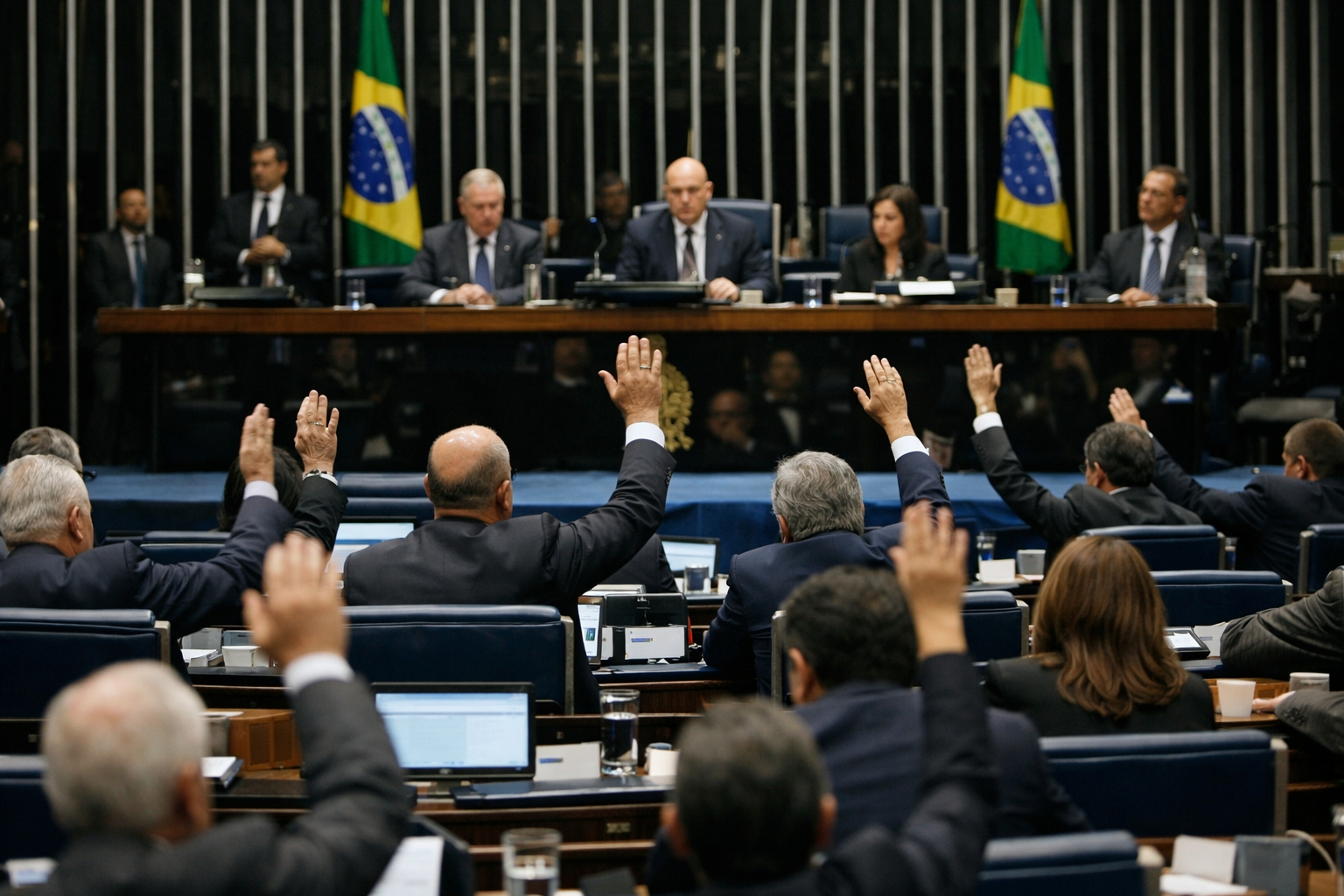
The Senate approves a bill that criminalizes misogyny, hatred, or aversion towards women, and includes the crime in the Racism Law with a penalty of up to 5 years.
-
Chamber Approves Bill That Allows Pepper Spray for Women Over 16 and Imposes Strict Rules for Purchase, Possession, and Use as Self-Defense


Changes in the Law Made Recognition Easier but Also Increased Doubts
According to Article 1,723 of the Civil Code, the stable union requires a public, continuous, and lasting relationship, with the intention of forming a family.
However, recent decisions eliminated requirements like cohabitation and minimum duration.
This flexibility broadened situations where a long dating relationship may be interpreted as a stable union.
This understanding catches many people off guard, especially in legal conflicts.
Absence of a Written Agreement Opens Space for Financial and Succession Disputes
Experts recommend that, after about two years of relationship, the couple discuss formalizing the bond.
This conversation is important even when they wish to state that there is not yet a stable union during that period.
This registration helps define the property regime and avoid future disputes.
Without this care, many couples face lengthy processes.
These processes become even more difficult when one partner attempts to deny the union for financial reasons.
This situation is common in recognition and dissolution actions.
Death Without Registration Leaves Partners Vulnerable and Strengthens Family Disputes
The lack of documentation is even more serious when one of the partners dies.
Heirs may deny the stable union to exclude the survivor.
This delays the inventory and prolongs the grief.
In 2025, in the previously mentioned judgment, Minister Nancy Andrighi stated that denying a homoaffective union of 30 years would be “invisibilizing a stigmatized layer of society.”
This position ensured justice in the case.
This interpretation reinforced the need for written formalization.
Without Registration, Third Parties Control the Couple’s Story
The absence of a written agreement gives third parties the power to decide about the existence of the union.
This interference transforms a real relationship into a lengthy judicial process.
Moreover, years can be lost in disputes that could have been avoided with a simple private contract.
A public deed would also resolve these issues safely.
This negligence creates serious and unnecessary risks.
And You, How Would You Protect Your Relationship?
In light of the rise of informality, what should be a priority for Brazilian families: let the relationship unfold naturally or formalize the stable union to ensure security and avoid future conflicts?










-

Uma pessoa reagiu a isso.