





 Portuguese
  English
  Spanish
  4 min of reading
  0 comments


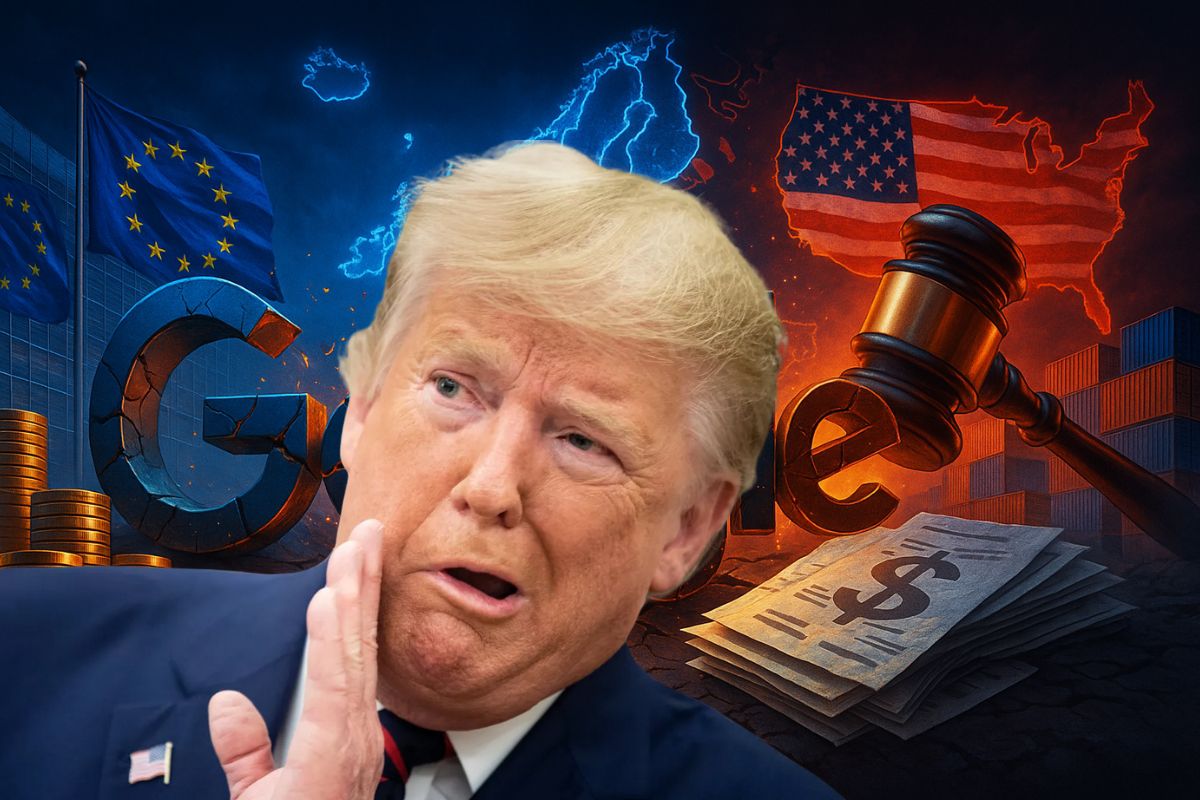
European Commission Concluded That Big Tech Favored Its Own Digital Advertising Services, But Waited for Trade Negotiations Between Europe and the United States Before Announcing the Penalty.
The European Union imposed a fine of R$ 18.75 billion against Google, accusing the company of distorting competition in the advertising technology market by favoring its own services. According to CNBC, the decision was strategically held back until talks about tariffs with the U.S. advanced, involving the reduction of barriers against European cars.
Analyst Felipe Machado explained that the sanction was not just an isolated regulatory measure, but part of a larger context of trade negotiations and political disputes. The case shows how digital competition, diplomacy, and international trade tariffs intertwine on the same board.
How the European Fine Came About
The European Commission, the executive arm of the European Union, concluded that Google violated competition rules by favoring its own digital advertising services.
-
Brazilian city bets on the business environment to generate jobs and attract investments in the energy sector — secretary reveals strategy at Macaé Energy 2026.

-
50 viaducts, 4 tunnels, 28 bridges, and 40 kilometers of bike paths: BR-262 in Espírito Santo will receive 8.6 billion reais for the largest engineering project in the state’s history, inspired by the Immigrant Highway in São Paulo.

-
Brazil produces too much clean energy and doesn’t know what to do with it: over 20% of solar and wind capacity was wasted in 2025 while investors flee and 509 renewable generation projects were abandoned in the last year.

-
Piauí will produce a new fuel that replaces diesel without needing to change anything in the truck’s engine and reduces pollutant gas emissions by half: truck drivers from all over the Northeast are already celebrating the news that will arrive later this decade.


The penalty was assessed at R$ 18.75 billion (about $3.04 billion) and requires the company to cease the practices deemed abusive.
What stands out is that, according to CNBC, the announcement was calculatedly postponed.
While the United States and Europe negotiated tariffs on vehicles, the fine was reportedly held back as a bargaining chip, reinforcing that economic and political decisions go hand in hand.
Direct Relation to Tariffs with the U.S.
The most sensitive point of the case is the connection with tariffs with the U.S..
According to monitoring cited by CNBC, the European Union only moved forward with the announcement of the fine after receiving the green light that Washington might reduce barriers against European cars.
Felipe Machado noted that this type of maneuver illustrates how international trade influences even the pace of regulatory decisions.
The fine against Google, in this context, would have been used as leverage in trade discussions.
Google’s Difficult Week in the U.S.
The announcement of the European fine occurred in the same week that Google faced three significant events in the United States:
Partial victory in an antitrust lawsuit from the Department of Justice (DOJ), where the judge rejected the argument of absolute monopoly due to competition from artificial intelligence.
Privacy fine, after the U.S. courts ruled the use of data from services like Gmail and Search as abusive. Google has already announced it will appeal.
Dinner at the White House with Donald Trump and CEOs of major tech companies, including Mark Zuckerberg, Tim Cook, and leaders from Google and OpenAI, where billions in investments in the country were discussed.
The day after the meeting, the “European bomb” against Big Tech was dropped, increasing pressure on the company on two continents.
Differences Between the U.S. and the European Union
For Felipe Machado, Google will have a harder time overturning the decision in Europe than in the United States.
European regulation is historically stricter with Big Techs, and the current political environment favors a tough stance against market-consolidating companies.
In the U.S., recent court decisions have shown greater openness to considering technological innovation as sufficient competition, while the European Union continues to focus on limiting abusive practices and ensuring competitive balance.
Political and Commercial Consequences
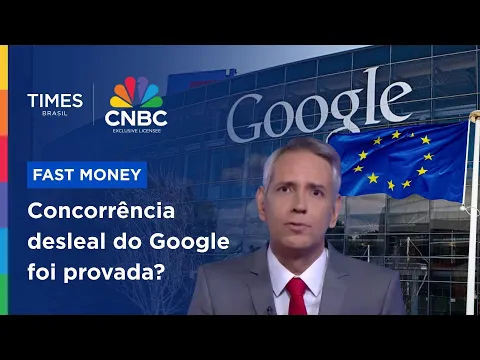

The European fine increases the risk of diplomatic tensions between the U.S. and the European Union, especially if Donald Trump chooses to retaliate with new trade barriers.
Felipe Machado warns that the measure could reignite the tariff war, as Washington views the penalty as a direct affront to one of its largest companies.
For Google, the challenge is to manage simultaneous regulatory pressure on two continents, amidst disputes over privacy, digital advertising, and new artificial intelligence competitors.
The European Union’s fine against Google exposes the intertwining of digital competition, tariffs with the U.S., and diplomatic disputes.
More than just an economic sanction, the case shows how technology is at the center of global politics.
What do you think, did the European Union act with regulatory independence or did it use the fine as a bargaining chip in tariff negotiations with the United States? Please leave your opinion in the comments — we want to hear from those closely following the impact of this clash.









-

-

-

-

-

-

30 pessoas reagiram a isso.