





 Portuguese
  English
  Spanish
  4 min of reading
  0 comments


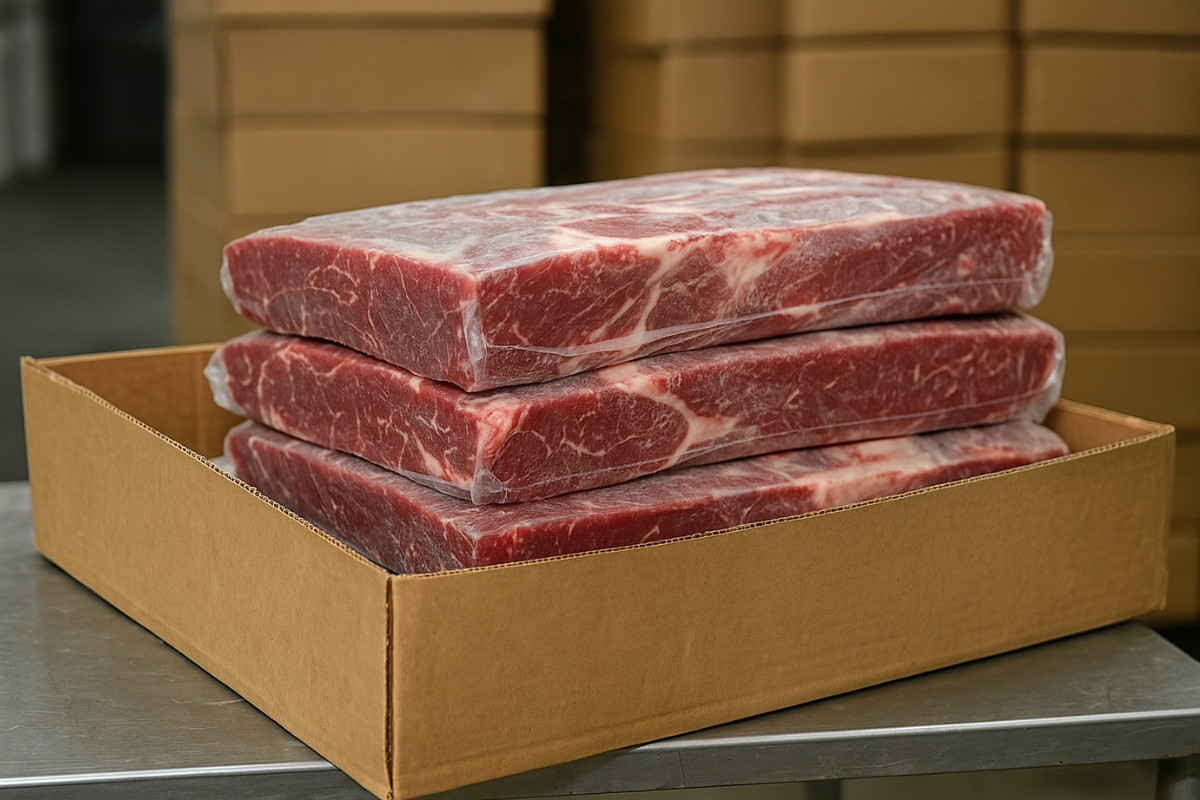
Withdrawal Affected Small Volumes of Frozen Meat and Pressures Adjustments in Certification Required for Export to the European Market
The European Union recalled batches of Brazilian beef after identifying estradiol, a hormone banned in the bloc.
The confirmation was made last Friday, (12), by Eva Hrncirova, health spokesperson for the European Commission. The shipment involved small volumes of frozen meat incorrectly certified for export.
The exact quantity was not disclosed. The affected shipments were collected by European authorities.
-
This farm in the United States does not use sunlight, does not use soil, and produces 500 times more food per square meter than traditional agriculture: the secret lies in 42,000 LEDs, hydroponics, and a system that recycles even the heat from the lamps.

-
The water that almost everyone throws away after cooking potatoes carries nutrients released during the preparation and can be reused to help in the development of plants when used correctly at the base of gardens and pots, at no additional cost and without changing the routine.

-
The sea water temperature rose from 28 to 34 degrees in Santa Catarina and killed up to 90% of the oysters: producers who planted over 1 million seeds lost practically everything and say that if it happens again, production is doomed to end.

-
An Indian tree that grows in the Brazilian Northeast produces an oil capable of acting against more than 200 species of pests and interrupting the insect cycle, gaining ground as a natural alternative in soybean, cotton, and vegetable crops.


What Happened and Why It Gained Attention
The recall gained weight for involving a hormone that cannot be present in meat intended for the European market.
The Brazilian Mission to the European Union, linked to the Ministry of Foreign Affairs, informed that Brazilian authorities communicated to the Europeans the identification of estradiol.
The note also classified the episode as a rare occurrence and stated that coordinated efforts were made to withdraw the shipments.
What Is Estradiol and Why It Becomes a Target for Control
Estradiol is a hormone naturally produced by cows. It can also be applied to synchronize estrus.
Synchronization allows females to enter estrus at the same time, which helps organize reproductive procedures.
This use is not confused with growth hormones, which are a sensitive topic in international debates about meat.
What Are the European Union Rules and What Applies in Brazil
The European Union prohibits the use of estradiol in meat destined for the bloc, which requires stringent control in the certification process for export.
In Brazil, the use of growth hormones is banned in livestock. There is permission for hormone use for therapeutic purposes, for disease treatment, and for reproduction, in the case of estradiol.
The Brazilian rule allows this hormone only in cows for reproductive purposes, which increases the need for tracking when the destination is a market with different requirements.
How Certification Works and What the European Commission Wants from Brazil
The spokesperson for the European Commission stated that discussions are ongoing with Brazilian authorities regarding corrective measures and an action plan.
The focus is to ensure that Brazil maintains a certification system that complies with the bloc’s rules on food safety and public health.
The situation also reinforces the importance of procedures to prevent incorrect certification when the meat is destined for the European Union.
Traceability Measures Created to Meet the Bloc’s Requirements
In January 2025, the Brazilian Association of Audit and Traceability Certification Companies (ABCAR) created the Protocol for Exporting Female Cattle (PEFB).
The proposal aims to ensure the traceability of females treated with estradiol and to ensure that only animals that have never received the hormone are slaughtered for export to the European Union.
The initiative seeks to reduce the risk of failures when the destination requires total absence of the hormone, even in situations where its use is permitted in Brazil for reproduction.
Official Residue Control and What Available Data Shows
To certify compliance with the regulations, Brazil has the National Program for Residue and Contaminant Control (PNCRC), which conducts risk assessments based on technical criteria and detection history.
In 2023, 99.76% of the meat analyzed by the program was in compliance.
This type of monitoring is a pillar for supporting exports and responding to health requirements of more restrictive markets.
Political Debate in Europe Increases Attention on the Topic
The confirmation of the recall occurred a week before a meeting of the European Council to decide on adherence to the agreement between Mercosur and the European Union.
The treaty still faces opposition from European countries, particularly France, where there is fear of losing local agricultural market share with the free trade of Mercosur food, especially from Brazil.
In 2024, French lawmakers went so far as to claim that Mercosur meat would be full of growth hormones and antibiotics, a claim contested by sector representatives and researchers.
The European Union recalled batches of Brazilian beef after identifying estradiol, with a record of incorrect certification involving small volumes of frozen meat.
The episode increases the demand for traceability and for a certification system aligned with the bloc’s rules, with a direct impact on exporters and on the chain that sells to this market.







-

-

-

-

-

-

15 pessoas reagiram a isso.