





 Portuguese
  English
  Spanish
  4 min of reading
  0 comments


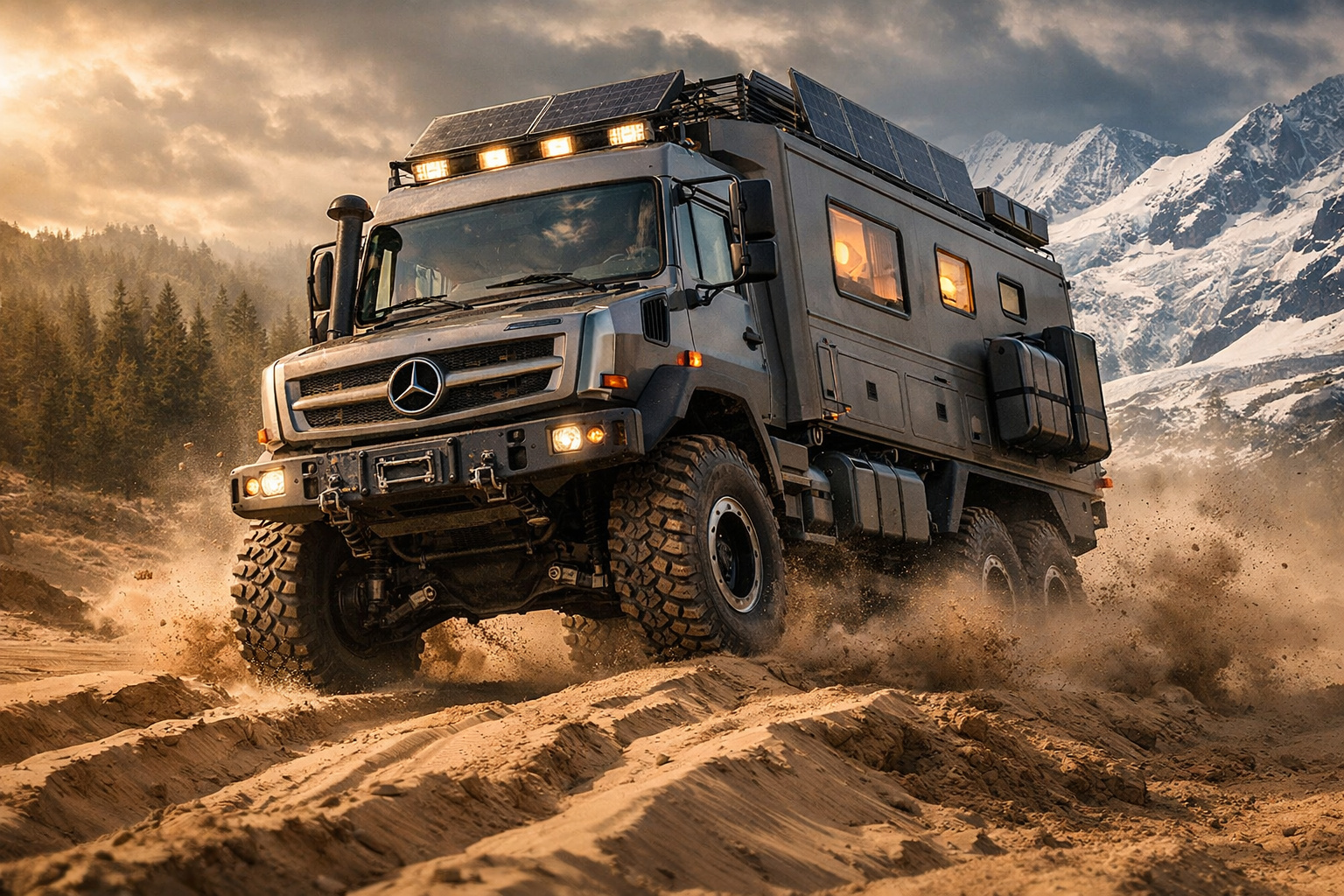
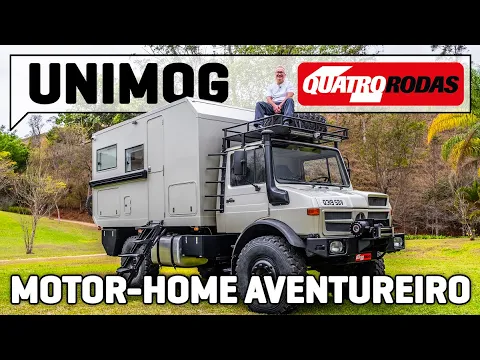
With 231 hp, 900 Nm, portal axles, and a ground clearance of up to 500 mm, the Unimog U4023/U5023 turns into an extreme house capable of crossing deserts, ice, and forests without relying on roads.
Few vehicles in the world carry the reputation of “going anywhere” with as much legitimacy as the Mercedes-Benz Unimog. Originally created for military, agricultural, and heavy industrial use, it has become the most extreme platform ever used for expedition motorhomes.
When converted into a mobile home, the Unimog does not just turn into a house on wheels. It transforms into a livable base capable of operating where practically no other vehicle can reach.
Why the Unimog is Considered the Most Versatile Truck in the World
The Unimog does not follow the logic of conventional trucks. It was designed to operate in roadless environments, with permanent traction, articulated suspension, and the ability to overcome natural obstacles.
-
A French brand placed a car on four huge red balloons to prove that its suspension made the vehicle “float,” and the surreal scene became one of the most iconic and unusual images in automotive history.

-
Jeep Avenger begins production in Brazil, debuting as the brand’s new entry-level SUV and inaugurating an unprecedented phase by becoming the first national Jeep manufactured outside of Goiana, as part of a R$ 3 billion plan.
-
Costing R$ 12,490, the new Shineray Urban Lite 150 “cheap one” arrives in Brazil with a CVT transmission, digital dashboard, and LED lights, making it more affordable than the Biz and targeting those who want to abandon the bus.
-
Ducati brings to Brazil the Superleggera V4 Centenario: 228 hp that become 247 with a track kit, carbon fiber and carbon-ceramic brakes, estimated price between R$ 1.5 and 2 million, deliveries only in 2027.


This versatility is what makes it ideal for real expeditions, not for light tourism. Deserts, deep snow, mud, dense forests, and flooded regions are all part of the scenery for which it was created.
Engine OM 934: Constant Torque for Extreme Environments
In the U4023 and U5023 models, the Unimog uses the OM 934 LA engine, with 231 hp of power and 900 Nm of torque at just 1,400 rpm.
This low RPM torque is essential for movement on difficult terrain, allowing climbs, loose sand, and technical trails without putting excessive strain on the mechanical system.
Portal Axles: The Secret to the Unimog’s Incredible Height
The big technical differentiator of the Unimog is the portal axles. Unlike conventional axles, they position the differential above the center of the wheels.
In practice, this creates a ground clearance of about 500 mm, allowing the vehicle to pass over rocks, logs, ice, and deep mud without touching the chassis to the ground.
Water Crossing of Up to 1.2 Meters Without Preparation
Another impressive figure is the ability to cross water up to 1.2 meters. This means crossing rivers, flooded areas, and deep marshes without improvised snorkels or external adaptations.
Only a few civilian vehicles can operate with this level of water resistance safely and continuously.
Articulated Suspension Maintains Traction Where Others Lose Contact
The Unimog’s suspension is designed for extreme articulation, keeping the wheels in contact with the ground even on uneven terrain.
This ensures constant traction, something essential for a heavy vehicle that carries a complete livable cell on its back.
The Livable Cell: Reinforced Home for the End of the World
When converted into an expedition motorhome, the Unimog receives a livable cell isolated from the chassis, usually mounted on a flexible subframe to follow the torsion of the terrain.
These cells are built to withstand vibration, extreme cold, and intense heat, functioning as a residential capsule in hostile environments.
Water Autonomy: Hundreds of Liters for Long Stays
Documented projects of Unimog expedition motorhomes can have up to 480 liters of potable water, in addition to tanks for gray water and rainwater reuse.
This volume allows weeks of staying away from any support point, even with showers, cooking, and basic cleaning.
Off-Grid Energy to Operate Outside Civilization
In terms of energy, these motorhomes utilize solar panels on the roof, robust battery banks, and charging systems in motion.

This ensures energy for lighting, refrigeration, air conditioning, and electronic equipment, without relying on noisy generators or power lines.
Functional Interior, Not Luxurious
Unlike motorhomes based on road trucks, the Unimog prioritizes functionality over luxury.
The interior usually includes a fixed bed, compact kitchen, enclosed bathroom, and storage areas, all designed to withstand constant impacts and vibrations.
Why the Unimog is Not for Just Any Type of Trip
Despite being impressive, the Unimog is not comfortable on long roads like a bus or road truck. It is tall, slow on fast roads, and requires logistical planning. It is a vehicle made to reach places where there are no roads, not to rush across highways.
Transformed into a home, the Unimog ceases to be just an extreme truck and becomes a mobile survival base with total autonomy.
It does not compete with luxury motorhomes. It competes with hostile environments, where comfort means shelter, water, energy, and safety.
When Living on Wheels Means Overcoming the Environment
The Unimog U4023/U5023 converted into a motorhome represents the functional limit of life on wheels. With 231 hp, 900 Nm, portal axles, a 1.2-meter water crossing capacity, and real water and energy autonomy, it allows habitation in areas where most vehicles simply stop.
It is not the largest or the most luxurious — but it is undoubtedly the most capable motorhome on the planet when the world ends and the road ceases to exist.










Seja o primeiro a reagir!