





 Portuguese
  English
  Spanish
  6 min of reading
  0 comments


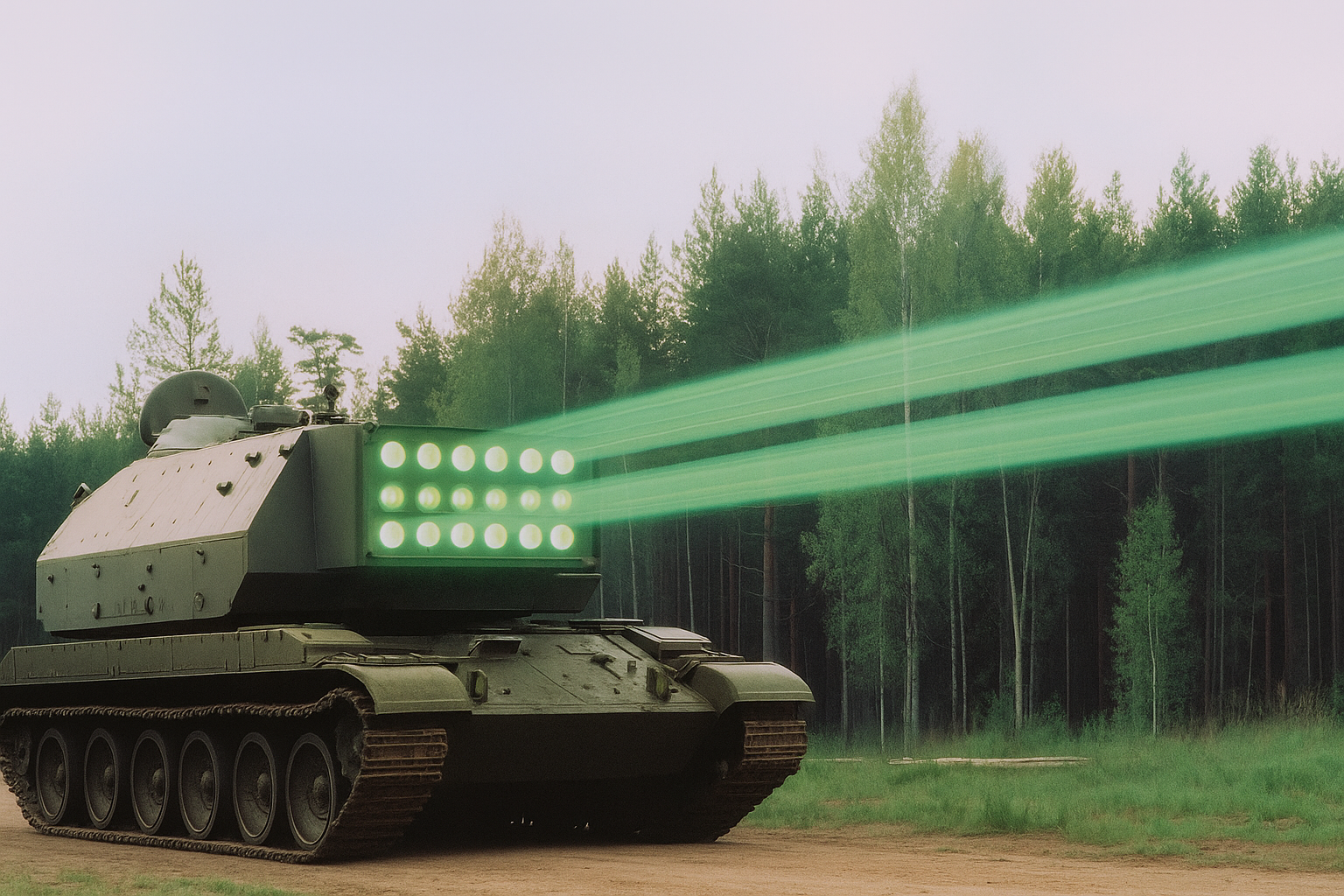
The USSR Created a Secret Laser Weapon in the 80s: The 1K17 Szhatie Project Used Ruby Crystals to Blind Satellites and Enemy Sensors. After the Soviet Collapse, the Vehicle Disappeared and Became a Military Legend.
During the final years of the Cold War, while the United States advanced with the “Star Wars” project, the Soviet Union was also pursuing technological supremacy in directed energy weapons. Amid this climate of paranoia and military arms race, the 1K17 Szhatie was born, a secret Soviet laser weapon designed to incapacitate enemy satellites and optical sensors.
Unlike what many think, the 1K17 Szhatie was not a laser fighter but rather a land-based armored vehicle equipped with a high-power laser system. Its operation involved nothing less than synthesized ruby crystals used to amplify laser beams capable of “blinding” optical equipment — from spy satellites to targeting systems in planes, tanks, and missiles.
The project is shrouded in mystery: after the dissolution of the USSR in 1991, the 1K17 simply disappeared from the Russian military inventory. Only one specimen was preserved, now displayed in a museum, while its true potential remains surrounded by speculation to this day.
-
Friends have been building a small “town” for 30 years to grow old together, with compact houses, a common area, nature surrounding it, and a collective life project designed for friendship, coexistence, and simplicity.

-
This small town in Germany created its own currency 24 years ago, today it circulates millions per year, is accepted in over 300 stores, and the German government allowed all of this to happen under one condition.

-
Curitiba is shrinking and is expected to lose 97,000 residents by 2050, while inland cities in Paraná such as Sarandi, Araucária, and Toledo are experiencing accelerated growth that is changing the entire state’s map.

-
Tourists were poisoned on Everest in a million-dollar fraud scheme involving helicopters that diverted over $19 million and shocked international authorities.


What Was the 1K17 Szhatie? The “Ruby Weapon” of the Soviet Union
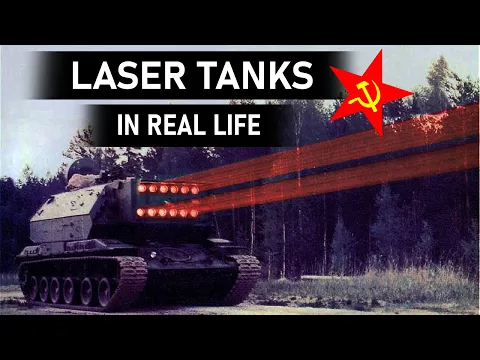

The 1K17 Szhatie (Сжатие, meaning “compression” in Russian) was developed between 1979 and 1990 by the Soviet institute Ural Optical and Mechanical Plant (UOMZ), as part of a series of experiments with mobile laser weapons. It was mounted on a modified chassis of an antitank vehicle 2S19 Msta-S, a self-propelled artillery platform with high mobility and armored protection.
The great differentiator of the Szhatie was in its turret: a battery of 12 laser emitters based on synthesized ruby crystals, each with its own cooling and optical control system. These crystals were arranged in a circular formation, resembling a kind of “energy cannon,” visually very similar to science fiction devices.
The primary function of the Szhatie was not to destroy physical targets, but rather to blind or permanently damage optical sensors, cameras, and guidance systems — especially those of spy satellites, drones, guided missiles, and reconnaissance planes.
How Did the Soviet Laser Weapon Work?
The operation of the 1K17 Szhatie involved a relatively simple concept, but executed with extremely high technical complexity: to use concentrated laser beams at specific wavelengths to damage CCD-based sensors, infrared, or optical systems.
These beams were generated from ruby crystals (Al2O3 with chromium ions), which function as a laser gain medium when energized by intense light pulses — typically from xenon lamps. The process is similar to that of a solid-state laser, but operating at high power, with pulsed emission.
The generated beam was then directed by precision optical systems, and could be emitted in single shots or rapid succession. If an enemy optical sensor was “looking” at the source of the beam, it could be instantaneously damaged, melted, or deactivated — without firing a single conventional projectile.
This concept made the Szhatie one of the first mobile ground laser weapons ever created, with potential use both against satellites and in ground combat.
Why Did the USSR Develop This Weapon?
The creation of the 1K17 Szhatie was a direct response to the United States’ Strategic Defense Initiative, better known as “Star Wars,” launched by President Ronald Reagan in 1983. The American idea of developing space shields and energy weapons motivated the Soviet Union to accelerate its own unconventional defense projects.
Recognizing that the future of combat would involve electronic warfare and sensor neutralization, the USSR invested heavily in directed energy weapons. The Szhatie was the culmination of years of testing with laser beams, starting with prototypes in laboratories, through systems mounted on ships (like the Dixon Project) and culminating in this ground vehicle.
The goal was clear: to prevent American satellites from observing Soviet troops, or to interfere with guided weapons that depended on visual sensors. The idea was to neutralize the enemy without causing physical destruction, a subtle and sophisticated form of electronic warfare.
Why Did the 1K17 Project Disappear?
Despite the technological sophistication and the promise of tactical superiority, the 1K17 Szhatie project was terminated with the collapse of the Soviet Union in 1991. With the end of the USSR, many ultra-secret military programs were discontinued due to lack of resources, administrative disorganization, or changes in priorities.
The production of the Szhatie never went beyond the advanced prototype stage. It is estimated that only two vehicles were built. One of them was preserved and is now on display at the Artillery Museum in St. Petersburg, Russia. The other has disappeared without a trace.
Several factors contributed to its abandonment:
- Exorbitant production costs (primarily due to the synthesized ruby crystals);
- Complex support infrastructure, requiring auxiliary vehicles and constant maintenance;
- Rapid technological evolution, with sensors more resistant to optical interference;
- New Russian military doctrine, focused on more conventional and nuclear weapons.
Thus, the Szhatie became a technological relic of the Cold War — a demonstration of what the USSR could have done if it had more time and money.
Does Anything Like That Still Exist Today?
Yes. Although the Szhatie has disappeared, the idea of laser weapons for optical warfare remains alive — and is growing. Countries like the United States, China, and even Israel are currently developing laser systems to destroy drones, missiles, and even satellites.
Russia has also resumed investing in directed energy technologies, with projects like:
- Peresvet: a mobile laser system revealed in 2018, allegedly capable of neutralizing satellites and missiles.
- Zadira: another Russian military laser project, mentioned as an alternative missile defense.
However, none of them have officially confirmed the use of ruby crystals, as in the Szhatie, and little is known about their real capabilities. Most information remains classified or obscured by strategic misinformation.
Curiosities About the 1K17 Szhatie
- The system required a highly trained technical team, composed of engineers, radar operators, and optical specialists.
- Its name “Szhatie” (compression) likely refers to the compression of laser pulses to increase their intensity.
- The system was so expensive that the ruby crystals used were treated as military jewels — literally too valuable for regular testing.
- Some theorists claim that the 1K17 could, in theory, damage satellites in low Earth orbit (LEO), although there are no confirmed records of real use.
The 1K17 Szhatie is a fascinating example of how the USSR sought radical technological solutions to win the Cold War — even if it meant building weapons with ruby crystals to blind satellites. It was a project as bold as it was secret, combining cutting-edge science with the geopolitical urgency of a declining superpower.
Its disappearance after the Soviet collapse only adds to the mystery: to this day, the fate of the second prototype remains unknown, nor whether modern Russia still maintains research based on its architecture.
Today, the 1K17 survives only in museum photographs, technical documents, and rumors. But its real existence proves that, in the final years of the Cold War, the line between science fiction and military technology was dangerously thin.
In your opinion, do laser weapons like this still have a place in modern warfare?
Comment on what you think about the future of military technology and share your ideas with other readers.










Seja o primeiro a reagir!