





 Portuguese
  English
  Spanish
  5 min of reading
  0 comments


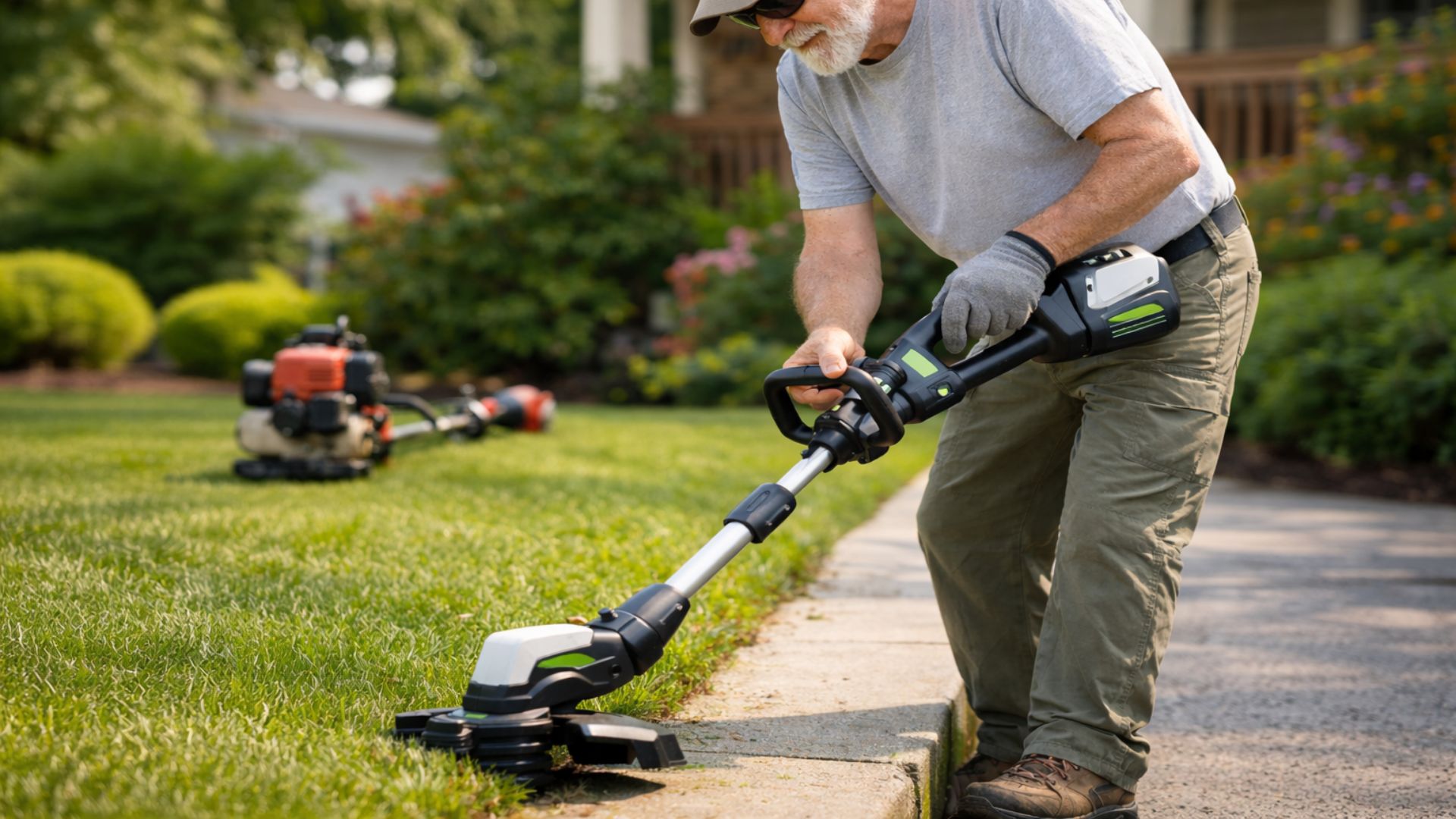
Silent transition in the garden gains strength with advancement of battery, environmental pressure, and change in residential consumption in the United States, where equipment once seen as limited begins to compete with traditional gasoline-powered models.
The gasoline lawn mower has started to lose ground in the United States to battery-powered versions, in a movement that has ceased to be sporadic and has begun to gain scale in retail, environmental regulation, and consumer behavior.
For years treated as a secondary solution for small finishing tasks, this type of equipment now appears as a viable alternative for routine tasks, especially in medium-sized yards and urban areas where noise levels directly influence purchasing decisions.
Change in retail accelerates adoption of battery-powered equipment
This advancement is not only due to individual preference but also to a strategic reorganization of the retail sector, which has begun to prioritize electric solutions in light of regulatory changes and demand for simpler-to-operate equipment.
-
Researchers from UFJF analyzed an audio tape from 1955 and concluded that Chico Xavier got 88% of the information about 18 deceased people in Portugal whom he had never met, and the international scientific journal Explore has just published the study that is reigniting the debate between science and spirituality 71 years later.

-
Few people know, but potatoes: neither in the refrigerator nor next to the onion! Check out the correct way to store this vegetable.

-
Retired from construction, he built a Stonehenge in his backyard in Michigan using wooden levers, small stones, and gravity to demonstrate how one man can move giant blocks.

-
Measuring almost 15 meters in length, with 29 watchmen and space for 6 men for 6 weeks, the Ben Franklin spent 30 days drifting in the Gulf Stream without surfacing on a mission so unusual that NASA treated it as a trial for a space station.

In this context, Home Depot, one of the largest retailers in North America, reported that it expects that by the end of the fiscal year 2028, more than 85% of garden equipment sales in the United States and Canada will be powered by rechargeable batteries.
The projection includes everything from push mowers to portable items like blowers and trimmers, reinforcing a trend that has been reiterated by the company in its corporate reports and indicates that the energy transition remains at the center of its business strategy.
Environmental regulations in the US pressure the abandonment of gasoline

Alongside the retail movement, regulatory pressure has played a decisive role in accelerating this change, especially in states that have decided to restrict the sale of combustion engine equipment due to environmental impacts.
In California, the California Air Resources Board approved a regulatory update in December 2021 that mandates that most new small off-road engines, a category that includes gardening machines, be zero-emission starting from the 2024 models.
According to the agency, this set of engines has already surpassed passenger cars in smog-forming emissions within the state, reinforcing the need to limit the entry of new fossil fuel-powered equipment into the market.
Although the rule applies to the manufacture and sale of new devices, the use of existing gasoline-powered equipment has not been prohibited, which maintains a coexistence between technologies during the transition period.
Even so, some cities have chosen to go beyond state guidelines and have begun to adopt stricter measures to accelerate replacement at the local level.
In Menlo Park, also in California, the city government has begun to require the use of zero-emission gardening equipment and has initiated enforcement prioritizing blowers and string trimmers, the term used in the American market for lawn trimmers.
According to the municipality, the rule applies to residential, commercial, and public properties, expanding the reach of the measure and consolidating electrification as the expected standard within the city limits.
Less noise and maintenance drive consumer choice
In everyday use, the advancement of battery models has gained strength because this type of tool is often used in short or medium sessions, for tasks such as edging, cutting around trees, and maintaining flower beds.
In these situations, immediate start-up, without the need for a pull cord, fuel mixture, or exhaust odor, has become a significant practical gain for residential users.

Traditional manufacturers in the sector, such as Husqvarna, describe their battery models as quieter, lighter, and more balanced equipment, while emphasizing the reduction of vibration, noise, and maintenance needs compared to gasoline machines.
Additionally, the absence of a tank and combustion engine tends to reduce operational costs over time, especially for those who use the equipment with moderate frequency in urban environments.
This set of characteristics has gained importance in noise-sensitive and air quality-sensitive areas, such as regions near schools, hospitals, parks, and shopping centers, where quieter operation has become a concrete advantage.
Performance of electric models now rivals gasoline
The idea that battery-powered devices would be limited to light tasks has also begun to lose strength as independent tests have shown consistent improvements in the performance of these devices.
In an analysis published in May 2024, Consumer Reports indicated that battery-powered trimmers start easily, operate quietly, and do not produce exhaust emissions during use.
In the same evaluation, the organization pointed out that gasoline and battery models achieved equivalent results in the cutting test, signaling that the historical performance gap has been narrowing in the most recent generations.
More recent reports reinforce this trend by indicating that the best electric models now operate at the same level as gasoline devices, and in some cases even surpass them in certain performance criteria.
This advancement helps explain why the migration has gained momentum in a segment where power has always been considered the main argument in favor of conventional engines.
Despite this, the replacement does not occur uniformly for all usage profiles, as certain characteristics still favor combustion-powered equipment in specific contexts.


According to Consumer Reports, gasoline models maintain an advantage in continuous runtime, as long as fuel is available for refueling, which remains relevant in intense professional routines or prolonged work.
On the other hand, in residential scenarios where use tends to be intermittent, the practicality of immediate start-up and quieter operation becomes more significant in the choice of equipment.
Another element that has begun to influence purchasing decisions is the design of the machine itself, as features such as shaft shape and ergonomics directly impact the user experience in daily use.
As indicated in manufacturer guides, curved shaft models tend to be lighter and more suitable for smaller areas, while straight shaft versions are aimed at more demanding jobs and hard-to-reach places.
Thus, the comparison between gasoline and battery has ceased to be restricted to raw power and has begun to consider balance, ergonomics, coverage area, and frequency of use, factors that gain relevance in everyday practice.
The replacement of gasoline trimmers with battery models has therefore advanced, driven by a combination of structural factors involving retail, environmental regulation, and technological evolution of equipment.
In this scenario, electric equipment has ceased to occupy a secondary role and has begun to compete for prominence in a transforming market, where criteria such as user comfort, noise level, and operational cost gain space in purchasing decisions.




Seja o primeiro a reagir!