





 Portuguese
  English
  Spanish
  3 min of reading
  0 comments


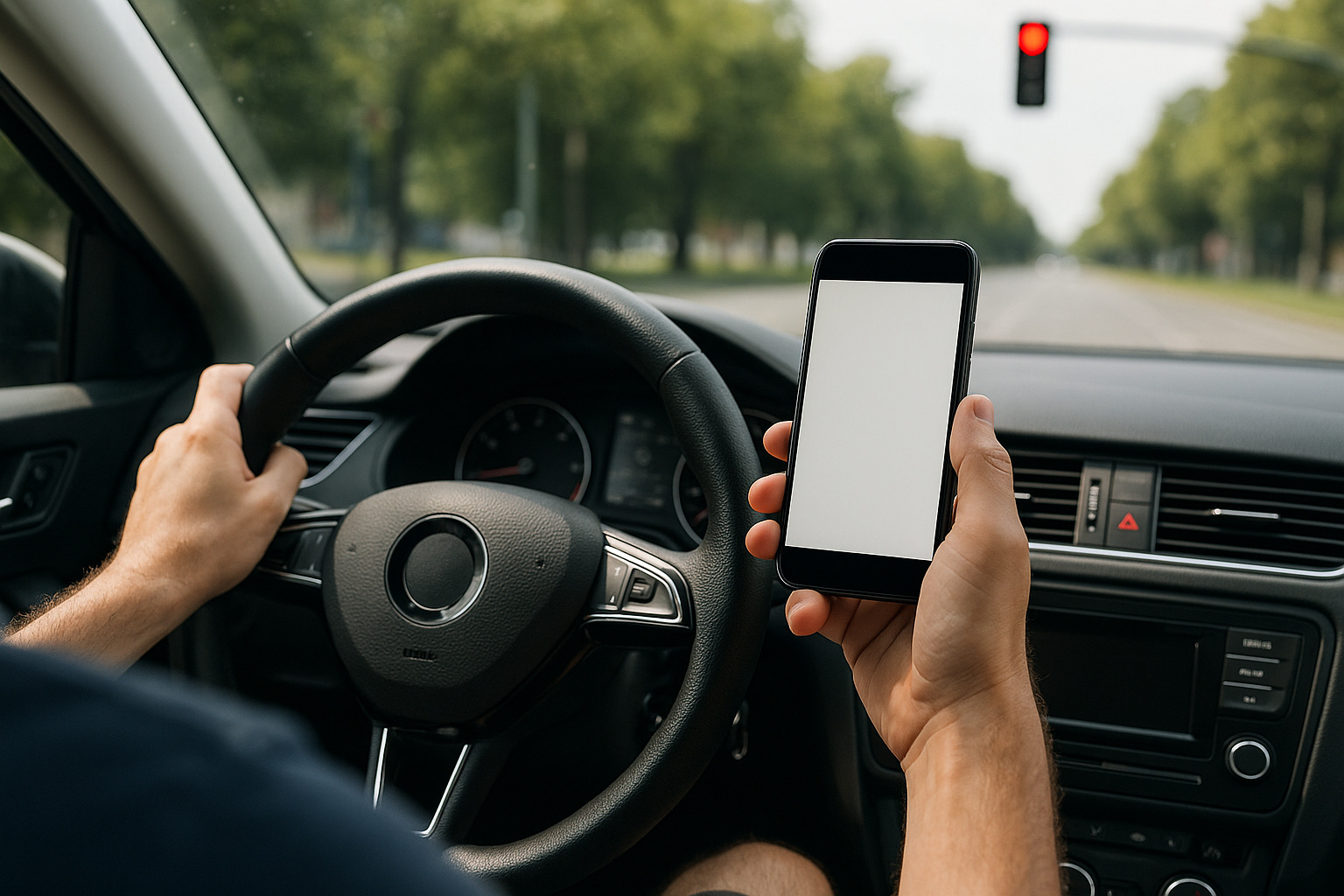
Learn How the Traffic Code Applies Penalties for Drivers Using Cell Phones While in Motion or Even Stopped at Traffic Lights
The use of a cell phone while driving still causes numerous fines in Brazil, according to data released in 2024 by the Municipal Authority for Traffic and Citizenship (AMC) of Fortaleza. Furthermore, the Brazilian Traffic Code (CTB), in effect since 1997 and updated until 2021, states that using a cell phone while in motion or stopped at a traffic light constitutes a serious offense. As a result, the driver must pay a fine of R$ 293.47 and will lose seven points on their driver’s license.
How the Law Treats Cell Phone Use While Driving
The CTB expressly prohibits handling the device with one or two hands, even if the car is stopped at a traffic light. Additionally, as noted by André Luís Barcelos, manager of inspection at AMC, this behavior reduces the driver’s field of vision and compromises their attention, significantly increasing the risk of accidents.
On the other hand, using a cell phone in a fixed mount is allowed, as long as the vehicle remains stopped and touches are quick and occasional. Thus, drivers can adjust the GPS map with pinch movements without committing an offense.
-
The noise law will no longer be in effect at 10 PM starting in June with a new rule valid during the 2026 World Cup.

-
The Chamber opens a debate on driver’s licenses at 16 years old as part of a reform that includes around 270 proposals to change the Brazilian Traffic Code and may redesign rules for licensing, enforcement, and circulation in the country.
-
The new Civil Code could revolutionize marriages in Brazil with “express divorce” and changes that could exclude spouses from inheritance.
-
Banco do Brasil sues famous influencer for million-dollar debt and intensifies debate on delinquency, risks of seizure, and direct impact on Gkay’s credibility.


However, talking on the cell phone while resting the device against the face or shoulder, even with headphones, constitutes a medium offense. In this case, the penalty results in a fine of R$ 130.16 and four points on the driver’s license.
Values and Classifications of Offenses
- Handling a cell phone with one or two hands, while in motion or stopped at a traffic light
Offense: serious
Fine of R$ 293.47 and seven points on the driver’s license - Talking on the cell phone with the device against the face or shoulder, even while using headphones
Offense: medium
Fine of R$ 130.16 and four points on the driver’s license - Using a cell phone in a fixed mount, with occasional touches, only with the vehicle stopped
Allowed and does not generate a fine
Research Confirms the Risks
According to the World Health Organization (WHO), in an alert issued since 2011, drivers who use cell phones while driving are four times more likely to be involved in accidents.
Moreover, the danger increases when texting. In 2016, researchers from the University of Pennsylvania stated that texting while driving can increase the probability of collisions by up to 23 times. According to the study, two seconds of distraction is equivalent to traveling 28 meters without looking at the road, which represents a significant risk to road safety.
Consequences for Brazilian Drivers
The improper use of cell phones while driving results in heavy fines, loss of points on the driver’s license, and the risk of suspension of the license in case of reoffending. Additionally, according to the National Department of Traffic (Denatran), this offense remains among the most reported in 2023 and 2024 in major Brazilian capitals.
Although many drivers use their cell phones as a work tool in transport and delivery apps, authorities constantly reinforce that the device should only be handled in a fixed mount and with the vehicle stopped. This makes it possible to ensure greater road safety and reduce accidents.
Inspection and Safety First
The strict enforcement of the law aims to reduce the number of accidents caused by distractions while driving. Furthermore, experts emphasize that safety must always come first, surpassing any momentary need to use a cell phone.
While some drivers call for more flexibility for those who depend on the device as a work tool, the statistics show that the risk accelerates when the cell phone is used improperly.
Thus, the final reflection remains relevant: is it worth putting lives at risk for a few seconds of distraction while driving?










Seja o primeiro a reagir!